Quick Answer: To treat a rooster with sour crop, confirm the diagnosis by palpating his crop at dawn — it should feel like a water balloon and smell sour or yeasty. Withhold feed for 12–24 hours, massage the crop gently 2–3 times daily, and start antifungal treatment (Nystatin is the gold standard) alongside daily probiotics. Reintroduce food gradually over 5–7 days, and call a poultry vet if there’s no improvement after 5–7 days of home treatment.
Watching your rooster stand hunched with a swollen, squishy crop is alarming. Knowing how to treat a rooster with sour crop quickly can be the difference between a full recovery and a serious decline. Sour crop is a Candida albicans yeast infection that causes crop contents to ferment rather than pass normally. It’s treatable at home in mild-to-moderate cases, but it needs prompt, targeted action — not guesswork.
What Is Sour Crop and Why Does It Affect Roosters?
Sour crop occurs when Candida yeast overgrows in the crop, turning feed into a fermenting, foul-smelling mess. The crop becomes soft, fluid-filled, and enlarged. Unlike a healthy crop that empties overnight, a sour crop stays bloated come morning.
Sour Crop vs. Impacted Crop vs. Pendulous Crop
These three conditions are often confused, but getting the diagnosis right matters — the treatments are completely different.
- Sour crop — soft, squishy, fluid-filled; foul or yeasty odor; caused by Candida overgrowth
- Impacted crop — firm or hard, like a packed ball of material; little to no strong odor; caused by a physical blockage
- Pendulous crop — a chronically drooping, stretched crop that hangs low on the chest; often a long-term consequence of repeated sour crop episodes
Press gently on the crop first thing in the morning. If it feels like a water balloon with a gurgling sensation, that’s sour crop. If it feels like a packed lump of dough, suspect impaction instead.
Why Roosters Are More Vulnerable Than Hens
Roosters tend to eat faster, more aggressively, and in larger quantities than hens. They’ll gulp down whole corn kernels, large vegetable scraps, and fibrous plant matter without much ceremony. That combination of speed and volume can overwhelm the crop — especially when grit isn’t available to help the gizzard grind things down.
Large-breed roosters (10–15 lb) hold significantly more crop volume, so sour crop can become quite severe before an owner notices anything is wrong.
Which Rooster Breeds Are Most Commonly Affected?
No breed is immune, but some are more prone than others:
- Brahma and Buff Orpington — heavy eaters with large crop capacity; gut motility can be slower in these big-bodied birds
- Silkie — feathered crests can physically hide early crop swelling, delaying detection
- Rhode Island Red and Easter Egger — active, enthusiastic foragers who readily consume fibrous plant material
One practical note: if you keep an aggressive breed like an Asil or Old English Game rooster, have a second person help during crop massage and treatment. Trying to restrain a determined rooster solo while performing a hands-on procedure is a recipe for injury — yours or his.
Causes of Sour Crop in Roosters
Dietary Triggers
The most common culprits are foods that are hard to digest or that ferment quickly in the warm, moist crop environment:
- Long grass clippings — the single biggest dietary trigger
- Stringy fibrous scraps: celery strings, leek tops, tough brassica stems
- Bread — ferments rapidly
- Excess scratch grains or mash feed
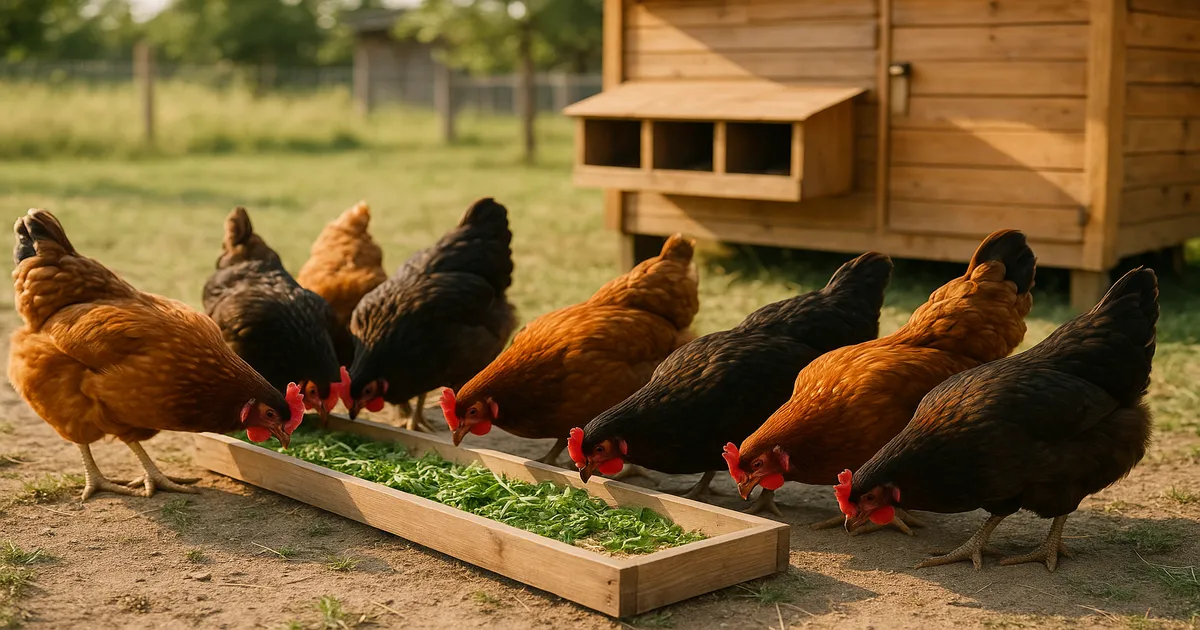
- Overeating driven by feeder competition
Insufficient grit is a major and often overlooked factor. Without insoluble granite grit, fibrous material can’t be ground down in the gizzard, so it sits in the crop and ferments. Always offer #3 or #4 turkey/grower grit free-choice to adult roosters.
Medical Causes
A course of antibiotics — even a necessary one — wipes out the beneficial gut bacteria that normally keep Candida in check. This is one of the most common triggers of sour crop in otherwise healthy birds. A heavy worm burden slows gut transit time, and Marek’s disease can impair crop motility. Vitamin A deficiency weakens the mucosal lining of the crop, making it more vulnerable to yeast overgrowth.
Stress and Environment
Stress changes eating behavior. A rooster under predator pressure, in an overcrowded coop, or adjusting to flock changes may gorge when feed is available rather than eating steadily throughout the day. Contaminated or stagnant water is another route for Candida to enter the system.
Symptoms of Sour Crop in Roosters
Crop Feel, Smell, and Sound
Always check the crop first thing in the morning, before your rooster has had access to feed. A healthy crop empties overnight to roughly grape-sized. A sour crop will be:
- Softball-sized or larger — noticeably soft and squishy
- Fluid-filled — feels like a water balloon
- Foul-smelling — a sour, yeasty, or fermented odor from the beak
- Gurgling — you may hear or feel liquid shifting when you gently press the crop
Secondary Symptoms
Beyond the crop itself, watch for lethargy, a hunched or fluffed posture, and reduced appetite. Your rooster may pick at food without really eating. He may lose weight despite a visibly full crop. White, cheesy patches inside the mouth or on the tongue indicate oral candidiasis — a sign the infection is more advanced. Watery or foamy droppings, a pale comb and wattles, and reduced crowing are also common.
Warning Signs That Need Immediate Veterinary Care
If your rooster is regurgitating, refusing all food, or showing neurological signs like head shaking or loss of balance, stop home treatment and contact a vet. These indicate the Candida infection may have spread systemically — a life-threatening situation.
How to Treat a Rooster with Sour Crop: Step-by-Step
Step 1: Confirm the Diagnosis (Day 1 Morning)
Palpate the crop at dawn before he’s eaten. Healthy feels grape- to golf ball-sized and mostly firm. Sour crop feels soft, squishy, fluid-filled, and smells foul. Use a flashlight to check inside his mouth for white plaques, which confirm Candida is present.
Weigh your rooster and write it down. Reweigh every two days during treatment — weight loss is one of the clearest indicators of whether things are improving or declining.
Step 2: Withhold Feed and Add Apple Cider Vinegar (Day 1)
Remove all feed for 12–24 hours. It’s uncomfortable to do, but continuing to feed an overloaded, infected crop makes things worse. Fresh water must remain available at all times.
Add 1 tablespoon of raw, unpasteurized apple cider vinegar (ACV) with “the mother” per gallon of water. The acidity lowers the crop’s pH and inhibits Candida growth. Never use ACV in metal waterers — it will corrode them.
Step 3: How to Perform Crop Massage Safely
Crop massage helps move fluid contents and stimulates the crop to begin emptying. Do this 2–3 times daily for 2–5 minutes per session.
- Hold the rooster securely under your arm in a “football hold” with his head slightly elevated — never lower than his body
- Use your fingertips to massage the crop in gentle circular motions, working from the bottom upward
- You should feel the fluid shifting; stop if he shows signs of distress
- Keep him upright for 10–15 minutes after each session
Do NOT turn the rooster upside down to drain the crop. This outdated practice causes aspiration pneumonia. Fluid inhaled into the lungs can be fatal.
Step 4: Antifungal Treatment — Nystatin, Fluconazole, and OTC Options
Nystatin oral suspension is the gold standard for treating sour crop in roosters. It works locally in the crop and GI tract without being absorbed systemically, making it very safe for poultry.
- Dosage: 100,000 units per kg of body weight, twice daily for 7–14 days
- A 6 lb (2.7 kg) rooster needs approximately 270,000 units twice daily
- Available through poultry vets or compounding pharmacies
For severe or Nystatin-resistant cases, a vet may prescribe Fluconazole at 5–10 mg/kg once daily for 5–7 days. This is a systemic antifungal and should only be used under veterinary guidance.
If you can’t access a vet quickly, two OTC options can support mild cases:
- Copper sulfate — ¼ teaspoon per gallon of drinking water for 3–5 days; has antifungal properties but is considerably less effective than Nystatin; do not use in metal waterers
- Miconazole 2% cream — a pea-sized amount applied to visible oral plaques twice daily; supportive only and does not treat the crop infection itself
Step 5: Restore Gut Flora with Probiotics
Sour crop disrupts the entire gut microbiome, not just the crop. Start probiotics on Day 1 and continue through recovery. Use a poultry-specific probiotic in water daily or offer 1–2 teaspoons of plain, unsweetened yogurt with live cultures mixed into soft feed. Yogurt provides Lactobacillus species that compete directly with Candida.
Do not use yogurt and ACV on the same day. The acid kills the probiotic cultures. Alternate them on different days.
Step 6: Reintroduce Feed Gradually (Days 2–7)
After the fast, bring food back slowly:
- Day 2: Plain cooked oatmeal (no sugar, no additives) — 2–3 tablespoons
- Day 3: Small amounts of probiotic-rich soft feed — yogurt mixed with crumbles
- Day 4: Normal pellets at 50% of his usual ration
- Days 5–7: Return to full ration if the crop is emptying overnight
Make sure grit is available before you reintroduce any whole grains or fibrous material.
Step 7: Monitor Recovery
Check the crop every morning at dawn. Within 3–5 days of starting treatment, it should be noticeably smaller each morning.
Signs of improvement: crop empties overnight, rooster resumes crowing, appetite and energy return, foul odor from the beak resolves.
Seek veterinary care immediately if: there’s no improvement after 5–7 days, your rooster stops eating entirely, weight loss exceeds 10–15% of starting body weight, vomiting or regurgitation occurs, or neurological symptoms develop.
Step 8: Isolate the Rooster During Treatment
Move your rooster to a clean hospital pen — minimum 4 sq ft with roost access — kept at 65–75°F (18–24°C). Candida spreads through shared water sources, so keeping him separate protects the rest of your flock. Disinfect feeders and waterers daily with a 1:10 bleach solution and rinse thoroughly before refilling.
When to See a Poultry Veterinarian
Home treatment is appropriate for mild-to-moderate sour crop. These situations require professional care:
- No improvement after 5–7 days of consistent home treatment
- Complete anorexia — rooster refuses all food
- Weight loss exceeding 10–15% of body weight
- Regurgitation or vomiting
- Neurological symptoms: head shaking, stumbling, loss of balance
- Oral plaques spreading or worsening despite treatment
A poultry vet will perform a physical exam and crop palpation, and may conduct a crop lavage to flush and clear the infection. They’ll prescribe Nystatin or Fluconazole at appropriate doses and may test for underlying conditions — worm burden, Marek’s disease, or nutritional deficiencies — that could be driving repeated episodes.
Not every vet treats backyard poultry, so call ahead. The Association of Avian Veterinarians (AAV) maintains a searchable directory at aav.org. When you call, specifically ask whether they treat backyard poultry roosters, not just parrots or exotic birds.
Feeding and Management to Prevent Sour Crop in Roosters
Feed Your Rooster the Right Diet
Roosters should never eat layer feed. The high calcium content (3.5–4.5%) is formulated for laying hens and will damage a rooster’s kidneys over time. Feed your rooster all-flock or flock raiser pellets at 18–20% protein and 0.8–1.0% calcium.
A standard adult rooster needs roughly 0.25–0.33 lb (113–150 g) of feed per day. Offering feed twice daily — morning and about two hours before dusk — reduces gorging compared to free-choice feeding. Pellets are strongly preferred over mash. Fine mash particles compact easily in the crop and ferment; pellets slow eating and reduce waste.
Avoid these high-risk foods or offer them only sparingly: long grass clippings, stringy vegetables, bread, and excess scratch grains. Lower-risk treats — mealworms, cooked egg, chopped leafy greens, berries — are fine in moderation. Keep all treats under 10% of daily intake.
Grit, ACV, and Water Quality
Without insoluble granite grit, a rooster’s gizzard cannot grind fibrous material. That material sits in the crop and ferments, setting the stage for Candida overgrowth. Offer #3 or #4 turkey/grower grit free-choice in a separate container at all times. An adult rooster will consume roughly 1–2 teaspoons per week on his own.
Used preventively, ACV keeps the crop environment acidic and inhospitable to Candida. Add 1 tablespoon of raw, unpasteurized ACV with “the mother” per gallon of water, 2–3 days per week. Clean waterers at least weekly — Candida spreads through contaminated water.
Coop Space and Feeder Setup
Overcrowding is a direct sour crop trigger. Stressed roosters eat fast and erratically. Minimum space requirements are 4 sq ft per bird inside the coop and 10 sq ft per bird in the run. For heavy breeds like Brahma or Jersey Giant, aim for 10 sq ft inside.
Elevate feeders to the back height of your rooster. This slows eating, reduces air gulping, and discourages smaller birds from monopolizing the feeder. Maintain a ratio of 1 rooster per 8–12 hens. Too many roosters in one space creates constant feeder competition — one of the clearest behavioral pathways to sour crop.
Frequently Asked Questions About Sour Crop in Roosters
How do I know if my rooster has sour crop or impacted crop?
Check the crop first thing in the morning before he eats. Sour crop feels soft and squishy — like a fluid-filled balloon — and you’ll notice a sour or yeasty odor from his beak. Impacted crop feels firm or hard, like a packed ball of dough, with little to no odor. Treatment is completely different for each condition, so getting the diagnosis right before you start matters.
Can sour crop resolve on its own without treatment?
Mild cases occasionally improve with fasting and dietary correction alone, but sour crop does not reliably resolve without antifungal treatment. Candida is a fungal infection — it won’t clear up the way a minor digestive upset might. Without treatment, the infection typically worsens, spreads to the mouth and throat, and can become systemic. Don’t wait more than 24–48 hours before starting antifungal support.
How long does it take to treat sour crop in a rooster?
Most mild-to-moderate cases respond within 5–7 days of consistent treatment. Severe cases, or those involving oral plaques, may require a full 14-day course of Nystatin. Continue checking the crop each morning at dawn — steady overnight emptying is your clearest sign of recovery.
Is sour crop contagious to my other chickens?
Candida can spread through shared water sources, so isolating your rooster during treatment is important. Healthy birds with a balanced gut microbiome are generally resistant, but birds that are stressed, recently treated with antibiotics, or immunocompromised are at higher risk. Disinfect shared waterers daily with a 1:10 bleach solution during any outbreak.
Can I prevent sour crop from coming back?
Yes. The most effective prevention strategy combines several habits: feed pellets instead of mash, offer granite grit free-choice at all times, avoid long grass clippings and bread, add ACV to water 2–3 days per week, and always follow any antibiotic course with a probiotic. Address feeder competition by maintaining proper rooster-to-hen ratios and elevating feeders to back height.