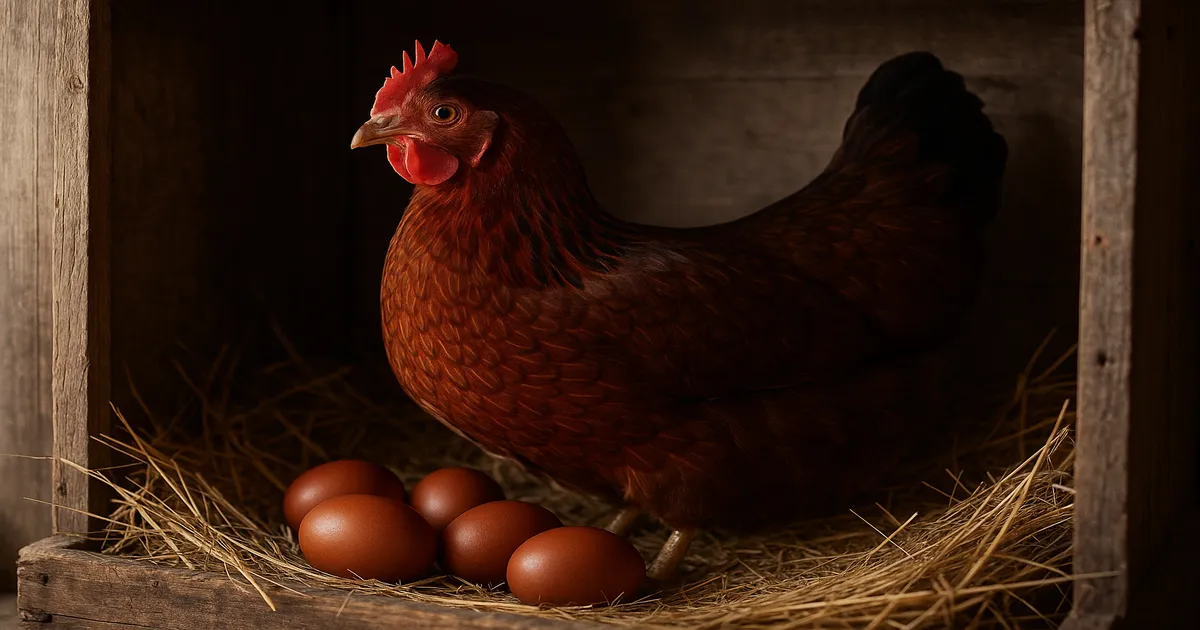
Quick Answer: A Welsummer chicken is a medium-weight, dual-purpose heritage breed developed in the Netherlands in the early 1900s. It’s best known for its stunning deep terracotta to chocolate-brown speckled eggs, striking partridge-patterned plumage, and lively foraging personality — making it a standout choice for backyard flocks that want beauty and function in one bird.
What Is a Welsummer Chicken?
If you’ve ever wanted a chicken that looks like it belongs on a vintage farm painting and lays eggs that look like they came from an artisan market, the Welsummer might be your breed. It’s an active, intelligent heritage breed with a personality to match its good looks — curious, alert, and genuinely fun to keep.
Recognized by the American Poultry Association (APA) in 1991 under the Continental class, the Welsummer is a true dual-purpose bird: a respectable egg layer with enough body mass to serve as a table bird. Production won’t rival a high-output hybrid, but those gorgeous dark eggs and an independent foraging nature more than compensate — especially for keepers who want a low-maintenance bird once it’s established.
Welsummer Chicken Origin and Breed History
Where Did the Welsummer Come From?
The Welsummer takes its name from the small village of Welsum in the eastern Netherlands, near the IJssel River. Local farmers began selectively developing the breed around 1900, with serious breeding work continuing through roughly 1913. The goal was a practical farmyard bird — good eggs, decent meat, and hardy enough to handle the Dutch climate.
What Breeds Make Up the Welsummer?
The Welsummer’s rich plumage and dark eggs come from a carefully blended ancestry. Breeders crossed local Dutch farmyard chickens with:
- Partridge Cochin
- Partridge Wyandotte
- Partridge Leghorn
- Barnevelder
- Rhode Island Red
The Barnevelder influence is likely most responsible for the deeply pigmented brown eggs. The breed was standardized and first exhibited around 1921, admitted to the British Poultry Standard in 1930, and recognized by the APA in 1991.
The APA recognizes a single variety — the Partridge coloring — under the Continental class. Silver Duckwing, Gold Duckwing, Red Partridge, and Black-Red varieties exist in Europe but have not received APA recognition.
One fun piece of trivia: the Welsummer rooster’s bold stance and brilliant orange-red plumage is widely believed to have inspired Cornelius, the iconic Kellogg’s Corn Flakes rooster. Whether or not that’s true, it’s a fitting claim to fame.
Welsummer Chicken Appearance
What Does a Welsummer Hen Look Like?
The Welsummer hen is medium-sized with an upright, well-proportioned body — broad back, full breast, and a compact silhouette. Her plumage is rich reddish-brown with fine black penciling across the neck and back, golden hackle feathers with black striping, and a warm salmon-colored breast. She’s genuinely one of the prettier production-oriented hens you can keep.
Physical details: a single 5-point red comb, red wattles, white earlobes (a useful breed identifier), a short horn-colored beak, clean yellow legs, and reddish-bay eyes.
What Does a Welsummer Rooster Look Like?
The rooster is a showstopper. He carries the classic black-breasted red pattern — brilliant orange-red hackle and saddle feathers cascading over a jet-black breast and body, with a tail that catches the light with a green iridescence. He’s the kind of rooster that makes visitors stop and stare.
Welsummer Size and Weight
Welsummers are a medium-weight breed:
- Roosters: 7–8 lbs (3.2–3.6 kg)
- Hens: 5.5–6.5 lbs (2.5–3.0 kg)
A Bantam Welsummer also exists, recognized in Europe at approximately 2 lbs. Bantams lay smaller eggs but maintain the same beautiful dark speckled coloring.
Welsummer Chicken Temperament
Are Welsummer Chickens Friendly?
Welsummers are noticeably more engaged with their surroundings than many other breeds — curious, alert, and quick to investigate anything new in the yard. Hens are generally friendly and docile, especially when handled regularly from the chick stage. They won’t typically run to your lap the way a Buff Orpington might, but they’re far from flighty. Roosters can be assertive, though outright aggression is not typical of the breed.
How Do Welsummers Behave in a Flock?
They hold their own in the pecking order without being bullies. Active foragers by nature, they stay busy rather than picking fights with flockmates, and they integrate reasonably well into mixed flocks. Their moderate noise level is worth noting for suburban keepers — hens aren’t particularly vocal outside of the usual post-lay announcement, which makes them a more neighbor-friendly choice than some other heritage breeds.
Are Welsummers Good for Free-Ranging?
This is where they truly shine. Welsummers have an exceptional foraging drive and will cover large areas daily hunting insects, seeds, and greens. A free-ranging Welsummer is a happy Welsummer, and that diverse diet shows up directly in the deep orange color of the egg yolks.
They can tolerate a well-sized run, but cramped conditions bring out boredom behaviors: feather pecking, restlessness, and reduced laying. Plan for at least 15–20 sq ft per bird in a confined run, and provide enrichment if free-ranging isn’t possible.
Welsummer Egg Production
How Many Eggs Do Welsummer Chickens Lay Per Year?
Expect 3–4 eggs per week from a healthy Welsummer hen — roughly 160–250 eggs per year, with 180–200 being a realistic backyard average. That’s lower than high-production hybrids like the Leghorn (280–320 per year), but very competitive for a dual-purpose heritage breed. Production peaks in years one and two, then declines approximately 15–20% annually, which is standard across heritage breeds.
What Color and Size Are Welsummer Eggs?
This is the breed’s signature feature. Welsummer eggs range from deep terracotta to rich chocolate brown, and many are covered in distinctive dark speckles. Those speckles are part of the bloom — the egg’s natural protective cuticle — and can be partially rubbed off a freshly laid egg, which is completely normal. Eggs are large to extra-large, typically 55–65 grams, with excellent shell integrity.
When Do Welsummer Hens Start Laying?
First eggs typically arrive at 5–6 months (20–26 weeks). That’s slightly later than fast-maturing breeds like the Leghorn but in line with other heritage breeds such as the Plymouth Rock or Rhode Island Red. Watch for squatting behavior, a reddening comb, and increased interest in the nesting boxes as signs that laying is approaching.
Do Welsummers Lay in Winter?
Like most breeds, Welsummers follow daylight cues. When days drop below 14 hours of light, production slows significantly — sometimes stopping altogether during the molt. If consistent winter eggs matter to you, add supplemental lighting to maintain 14–16 hours of total light per day using a simple timer and a warm-white LED bulb. Production typically surges back in late February and March as natural daylight returns.
Are Welsummer Chickens Broody?
Broodiness is low to moderate — they’re not reliable setters. Some hens will go broody in spring and make adequate mothers if allowed to hatch. If egg production is your priority, break broodiness early by moving the hen to a wire-bottomed broody-breaker cage for 3–5 days, which interrupts the hormonal cycle.
Coop and Housing for Welsummer Chickens
How Much Space Do Welsummer Chickens Need?
Given their active nature, Welsummers do best with generous space. Aim for:
- Indoor coop: 4–6 sq ft per bird (minimum 4 sq ft)
- Outdoor run: 10–15 sq ft per bird (minimum 10 sq ft)
- Free-range: They’ll cover a quarter acre or more per bird daily and love every inch of it
Overcrowding leads to feather pecking, bullying, and measurable drops in egg production.
Roost Bars, Nesting Boxes, and Ventilation
Roost bars should offer 8–12 inches of linear space per bird. Position them 18–36 inches off the floor and use 2–4 inch diameter untreated pine or poplar — the rounded-flat surface lets birds cover their toes with their breast feathers on cold nights. Avoid metal bars (they conduct cold) and plastic (too slippery).
For nesting boxes, a 12×12 inch box is the minimum; 14×14 inches is more comfortable for a Welsummer-sized hen. One box per 3–4 hens is the standard ratio. Place boxes 12–18 inches off the floor, always lower than the roost bars to discourage sleeping in them, and add 2–4 inches of pine shavings or straw.
Moisture and ammonia are bigger threats than cold. Provide at least 1 sq ft of ventilation per 10 sq ft of floor space, positioned high near the eaves so damp air escapes without drafts at bird level. If you can smell ammonia when you crouch to bird level, ventilation is inadequate — ammonia above 25 ppm causes respiratory damage. The deep litter method (6–8 inches of pine shavings, turned regularly) manages moisture well and is an excellent fit for Welsummer coops.
Welsummers handle temperatures down to around 0°F (-18°C) reasonably well, but their single combs are frostbite-prone below 20°F (-7°C). Apply petroleum jelly to combs and wattles during extreme cold snaps, and keep the coop dry above all else.
Predator-Proofing Your Coop
Chicken wire is not predator-proof — raccoons can tear through it, and snakes pass right through the gaps. Use ½-inch, 16-gauge welded hardware cloth on all openings. Key measures:
- Hardware cloth apron: Extend 12–18 inches outward from the coop base, buried 6 inches or laid flat on the ground to stop diggers
- Door latches: Use carabiner clips or two-step latches — raccoons can open simple hook-and-eye hardware
- Covered run: Essential for hawk protection, a real daytime threat to free-foraging birds
- Automatic coop door: A light-sensor or timer-based door that closes at dusk is one of the best investments you can make
Feeding Welsummer Chickens
What Should You Feed Welsummer Hens?
The foundation of a Welsummer’s diet is a quality layer feed at 16–18% crude protein — pellets or crumbles both work well, though pellets produce less waste. Plan on approximately ¼ lb (110–120 g) of feed per hen per day. A flock of six hens will go through roughly 10–11 lbs of feed per week.
A gravity feeder or treadle feeder hung at back height minimizes waste and limits rodent access. Fresh water is equally critical — hens drink 1–2 cups per day under normal conditions, more in summer heat.
Calcium, Grit, and Supplements
Layer feed provides 3.5–4.5% calcium, which covers most hens’ needs. Still, offer oyster shell free-choice in a separate container at all times — hens self-regulate their intake based on what their bodies need. Never mix oyster shell directly into feed; excess calcium above 5% can stress the kidneys over time.
Crushed baked eggshells also work as a calcium supplement. Bake at 250°F (121°C) for 30 minutes and crush thoroughly before offering — this eliminates any association between the shells and the eggs in the nesting box.
Free-ranging Welsummers typically pick up adequate grit on their own. Confined birds need insoluble granite grit offered free-choice in a separate container. Grit and oyster shell serve completely different functions — don’t substitute one for the other.
Molt, Treats, and Foods to Avoid
During the annual molt, feather regrowth demands extra protein — feathers are roughly 85% protein. Temporarily switch to a 20–22% protein feed like Flock Raiser, or supplement with dried mealworms, black soldier fly larvae, or fish meal until feathers are fully regrown and laying resumes.
Follow the 10% rule for treats: they should never exceed 10% of total daily intake. Good options include dried mealworms, leafy greens, squash, berries, and plain yogurt. Avoid entirely: avocado (persin is toxic and can cause heart failure), chocolate, onions, raw dried beans, salty foods, and any moldy feed. Scratch grains are a treat, not a staple — at only 8–10% protein, they’ll dilute the nutritional balance of your layer feed if offered too freely.
Common Health Issues in Welsummer Chickens
Marek’s Disease
Marek’s disease is a highly contagious herpesvirus that causes tumors, leg paralysis, and immunosuppression. There’s no cure, but vaccination at hatch is highly effective. Most hatcheries offer it for $0.25–$0.50 per chick — one of the best small investments you can make. The virus persists in shed feather dander for years, so any unvaccinated bird entering a contaminated environment is at serious risk.
Coccidiosis
Coccidiosis is the primary killer of chicks between 3–6 weeks old. Symptoms include bloody or watery diarrhea, lethargy, ruffled feathers, and a hunched posture. Prevent it by using medicated chick starter containing Amprolium during the brooding period. If an outbreak occurs, treat with Corid (Amprolium) in the drinking water — 2 teaspoons of the 9.6% liquid solution per gallon for 5–7 days. Adult birds generally develop immunity through gradual exposure.
Frostbite on the Single Comb
The Welsummer’s single comb is its main cold-weather vulnerability. Below 20°F (-7°C), comb tips can freeze quickly — especially in a damp coop. Apply a thin layer of petroleum jelly before extreme cold arrives, and prioritize keeping the coop dry and draft-free over heating it.
General Biosecurity
A few consistent habits go a long way:
- Quarantine new birds for 30 days before introducing them to your existing flock
- Clean feeders and waterers weekly; scrub with a dilute bleach solution monthly
- Monitor ammonia levels — if you can smell it, fix ventilation before respiratory issues develop
- Remove wet bedding promptly and refresh the deep litter layer regularly
Frequently Asked Questions About Welsummer Chickens
What is a Welsummer chicken best known for?
Welsummers are best known for their deep terracotta to chocolate-brown speckled eggs — among the darkest laid by any common backyard breed. They’re also recognized for their striking partridge plumage, the rooster’s brilliant orange-red and black coloring, and an active, curious personality that makes them engaging birds to keep.
How many eggs does a Welsummer chicken lay per year?
A Welsummer hen typically lays 160–250 eggs per year, with most backyard flocks averaging 180–200 annually — roughly 3–4 eggs per week. Production is lower than high-output hybrids but strong for a dual-purpose heritage breed.
Are Welsummer chickens good for beginners?
Yes, with a few caveats. Their docile temperament, moderate noise level, and low-maintenance foraging nature make them a solid beginner breed. They do need more space than the bare minimum and won’t thrive in cramped conditions, so plan your setup accordingly before bringing them home.
How cold-hardy are Welsummer chickens?
Welsummers handle cold reasonably well down to around 0°F (-18°C), but their single combs are vulnerable to frostbite below 20°F (-7°C). Keep the coop dry and draft-free, apply petroleum jelly to combs and wattles during extreme cold snaps, and they’ll come through winter in good shape.
Where can I buy Welsummer chickens?
Welsummers are available from most major hatcheries, including Meyer Hatchery, Cackle Hatchery, and Murray McMurray. For show-quality birds with true dark egg genetics, seek out a breeder through the Society for the Preservation of Poultry Antiquities (SPPA) or a breed-specific Facebook group, where you can ask to see egg color samples before purchasing.