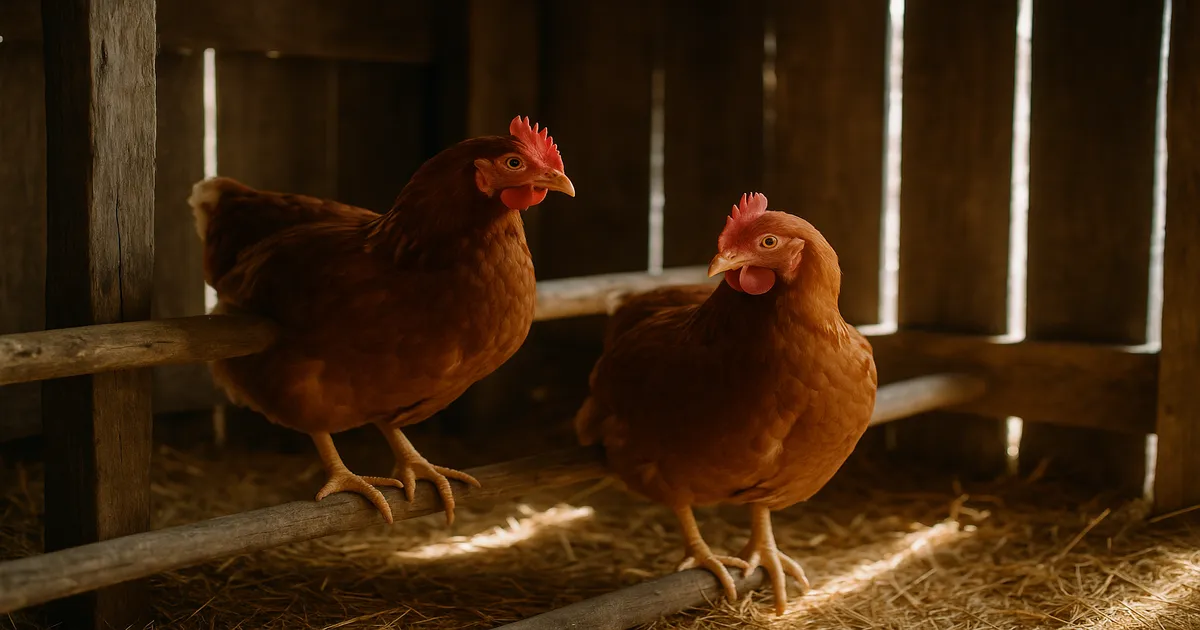
Quick Answer: Yes, you can breed Red Ranger chickens — they’re physically capable of reproducing, and far more breedable than Cornish Cross. But because Red Rangers are a proprietary hybrid, their offspring won’t reliably inherit the fast growth, meaty build, or foraging drive you love about the parents. Expect significant variation in the F2 generation, and plan for years of selective breeding if you want a stable line.
Can You Breed Red Ranger Chickens? The Short Answer
Red Rangers can mate, fertilize eggs, and hatch healthy chicks without any special intervention. That part is straightforward. The challenge is that offspring of two hybrid parents are genetically unpredictable — some will grow fast, some slowly, and most won’t match their parents’ performance.
This is fundamentally different from the Cornish Cross situation. Cornish Cross birds are so physiologically extreme that roosters often can’t mount hens effectively, and even when they do, the resulting chicks are unreliable. Red Rangers are a more genetically diverse hybrid, which means home breeding is genuinely possible. It’s just not simple.
Red Rangers Are a Hybrid, Not a True Breed
No hatchery has published the exact parent lines behind their Red Rangers, Freedom Rangers, or Red Broilers. The genetics likely involve New Hampshire Reds, Rhode Island Reds, Plymouth Rocks, and possibly some Cornish influence — but that’s educated guesswork based on appearance and performance, not confirmed fact.
Because the parent cross is unknown and proprietary, you’re breeding with a black box. You can select for the traits you want, but you won’t know exactly what you’re selecting from. That uncertainty is the core challenge of any Red Ranger breeding program.
Red Ranger Chicken Background: What You’re Working With
Proprietary Hybrid Origins and Label Rouge Inspiration
Red Rangers were developed in the United States in the 1990s and 2000s, drawing inspiration from France’s Label Rouge program — a government-backed slow-growth broiler system that prioritizes flavor, mobility, and pasture access over sheer speed of growth. The result is a bird that reaches market weight in 9–11 weeks on pasture (versus 6–7 weeks for Cornish Cross), forages actively, and produces meat with noticeably better texture and flavor.
That slower growth is a feature, not a bug. It’s what makes Red Rangers well-suited to small farms and homesteads where birds actually have room to move.
Which Hatcheries Sell Red Rangers
Several hatcheries sell birds under similar names: Freedom Ranger Hatchery in Pennsylvania sells their specific branded “Freedom Rangers,” Hoover’s Hatchery sells birds under the Red Ranger name, and various regional hatcheries offer slightly different crosses. This matters for breeding because a bird from one hatchery may not be genetically identical to a “Red Ranger” from another. If you’re trying to build a consistent line, your starting stock matters — and you still won’t know exactly what’s in it.
The names Red Ranger, Freedom Ranger, and Red Broiler are often used interchangeably, which causes real confusion. None are APA-recognized breeds. For practical breeding purposes, the differences between them are less important than the fact that all share the same core limitation: unknown, proprietary genetics that don’t breed true.
What Happens When You Breed Red Ranger Chickens?
Why Hybrid Offspring Are Unpredictable
When you cross two purebred lines to create an F1 hybrid, you get consistent, vigorous offspring — that’s hybrid vigor at work. Breed two F1 hybrids together, though, and the F2 generation is where things get messy. The genes that were carefully combined in the parent cross now segregate randomly, producing a wide range of outcomes.
Think of it like shuffling two decks of cards together and dealing a hand. You might get a great hand, or you might not — and there’s no way to predict which chicks will inherit the fast-growth genes and which won’t.
Trait Variation to Expect in F2 Chicks
Breed a Red Ranger rooster over Red Ranger hens and expect your chicks to vary considerably:
- Growth rate — some will reach weight in 10–11 weeks; others may take 14–16 weeks or never hit an acceptable market weight
- Body size and conformation — breast width, leg strength, and overall frame will differ bird to bird
- Feather color — expect a range from deep brick red to lighter buff, with some white or black flecking
- Foraging drive — one of the most desirable Red Ranger traits, but not guaranteed to pass consistently
Some chicks will be excellent. Most will be average. A few will be disappointingly small or slow-growing. That’s the honest reality.
How Many Generations Before Traits Stabilize?
Stabilizing a line through selective breeding typically takes 5–7 generations minimum, with rigorous record-keeping and culling at every step. Commercial hatcheries spend years and significant resources developing these crosses. Replicating that at home is a long-term project, not a single season’s work. For most backyard keepers, that level of commitment isn’t practical — but if you’re genuinely interested in developing your own meat bird line, Red Rangers are a more viable starting point than Cornish Cross.
Setting Up a Red Ranger Breeding Flock
Rooster-to-Hen Ratio and Selecting Breeders
A ratio of 1 rooster to 8–10 hens works well for Red Rangers. Drop below 1:6 and you risk over-mating, which causes feather damage and stress on hens. Go above 1:12 and fertility rates may drop.
Don’t keep the first birds you grab — be selective. Your breeding flock should be your best performers:
- Fastest-growing birds with the broadest breast development
- Strong legs and feet — no splayed legs, lameness, or bumblefoot
- Active foragers that range widely rather than camping at the feeder
- Good temperament — calm but alert, not aggressive or flighty
- Structurally sound — avoid birds with crooked keels, weak pasterns, or poor posture
Cull aggressively. The quality of your F2 chicks depends entirely on the parents you select.
Egg Collection, Incubation, and Hatch Rates
Red Ranger hens typically begin laying at 22–26 weeks of age, producing medium-to-large brown eggs at roughly 3–4 per week. Collect eggs daily, and store them pointed-end down at 55–65°F (13–18°C) for no more than 7–10 days before setting.
Red Rangers have low-to-moderate broodiness, so plan on using a quality incubator — the Brinsea Ovation 28 Advance is a reliable choice for small breeding flocks — or a dedicated broody hen from another breed. Buff Orpingtons and Silkies are both dependable surrogate mothers. Incubate at 99.5°F (37.5°C) with 50–55% humidity through day 18, then raise humidity to 65–70% for lockdown.
Housing Your Red Ranger Breeding Flock
Coop Space and Roost Design
Red Rangers are larger than standard dual-purpose birds. Plan for 5–6 sq ft per bird inside the coop and a minimum of 10 sq ft per bird in an outdoor run — though these birds genuinely thrive with more. Ideally, offer 250–500 sq ft per bird in a rotational pasture system. Crowding them undermines both health and breeding performance.
Keep roost bars 18–24 inches off the ground — no higher. Red Rangers are heavy, and jumping down from a 4-foot roost repeatedly leads to leg injuries and keel damage. Use 2×4 boards laid flat-side up rather than round dowels; the flat surface lets birds cover their feet while roosting, which reduces frostbite risk in cold climates. Space multiple bars 12–18 inches apart horizontally to prevent crowding.
Nesting Boxes, Ventilation, and Predator-Proofing
Standard 12×12-inch nest boxes are tight for Red Ranger hens. Go with 14×14×14 inches where possible, at a rate of 1 box per 4–5 hens. Position boxes 18–24 inches off the floor but always lower than the roost bars — otherwise hens will sleep in them and foul the nesting material. Use 4–6 inches of pine shavings or straw and refresh regularly.
Ventilation is non-negotiable. Aim for 1 sq ft of ventilation per 10 sq ft of coop floor space, positioned high on the walls near the roofline so moisture and ammonia escape without drafting on the birds. A damp coop is far more dangerous than a cold one.
For predator protection, use ½-inch hardware cloth (19-gauge minimum) on all openings — not chicken wire, which raccoons tear through easily. Extend hardware cloth 12–18 inches outward as an apron around the coop perimeter, or bury it 12 inches deep. An automatic coop door adds a reliable layer of overnight security; the ChickenGuard Extreme is a popular option that handles heavy birds without jamming .
Feeding Red Rangers Kept for Breeding
Breeder Feed, Vitamins, and Calcium
Birds raised for meat eat 20–22% protein finisher through grow-out. Breeding stock kept past market age needs a different approach. Once hens begin laying, transition to a 16–18% protein layer or all-flock feed. During active breeding season, look for a dedicated breeder feed with added Vitamin E and folic acid — these nutrients directly improve hatch rates and chick viability. If your feed doesn’t include them, supplement with 100–200 IU of Vitamin E per bird per day during breeding season. Purina Flock Raiser is a versatile base feed that works well for mixed breeding flocks .
Laying hens need 4–5 grams of calcium daily. Offer free-choice oyster shell in a separate container so hens can self-regulate . Keep it away from roosters — excess calcium damages their kidneys over time. Roosters will generally ignore the oyster shell if they don’t need it, but a separate container makes it easy to monitor.
Treats should never exceed 10% of total daily intake. Good options include mealworms, black soldier fly larvae, leafy greens, and squash. Avoid avocado (the compound persin is toxic to chickens), raw beans, chocolate, and anything moldy. Birds on pasture also need insoluble granite grit offered free-choice to grind down forage and seeds.
Health Considerations for a Red Ranger Breeding Program
Marek’s Disease, Coccidiosis, and Biosecurity
If you bought your original Red Rangers from a reputable hatchery, they were almost certainly vaccinated at hatch — confirm this before assuming. Any chicks you hatch yourself must be vaccinated on day 1, before any environmental exposure. Marek’s virus persists in feather dander for years, so even a clean-looking coop can harbor it. Quarantine any new birds for 30 days before introducing them to your breeding flock.
Home-hatched chicks are especially vulnerable to coccidiosis between 3–6 weeks of age. Use medicated chick starter containing amprolium, or treat with Corid (amprolium solution) at the label-recommended rate if you see bloody droppings, lethargy, or hunched posture. Don’t add thiamine supplements while using amprolium — it counteracts the medication.
Mites, Lice, and Bumblefoot
Do monthly checks under the wings and around the vent for mites and lice. Northern fowl mites are the most common culprit — tiny moving dots near the feather shafts. Treat affected birds and the entire coop with permethrin spray, repeating in 7–10 days to break the egg cycle.
Bumblefoot is a real risk for heavier Red Rangers, especially if roosts are too high or bedding is thin and wet. Prevention is straightforward: deep, dry bedding (4–6 inches of pine shavings), low roost heights, and a dry coop floor. Catch it early — a Grade 1 black scab treated with Epsom salt soaks and a poultry-safe wound spray like Vetericyn Plus Poultry Care heals cleanly. A Grade 4 abscess is a much harder problem.
Smarter Alternatives If You Want a Self-Sustaining Meat Flock
Heritage Breeds That True-Breed for Meat
If your real goal is a self-sustaining meat supply without the genetic lottery of hybrid breeding, true-breeding heritage breeds are the honest answer:
- Delaware — fast-growing for a heritage breed, broad breast, calm temperament, lays brown eggs
- Dark Cornish — excellent muscle development and meat-to-bone ratio, though slower-growing; lays tinted or light brown eggs
- Buckeye — cold-hardy, active forager, good meat conformation, lays brown eggs
- New Hampshire Red — fast-maturing, meaty, and likely one of the parent lines in most Red Ranger crosses; lays medium brown eggs
These breeds take longer to reach market weight than Red Rangers — typically 16–20 weeks — but what you hatch is what you get, generation after generation.
Crossing Heritage Roosters With Red Ranger Hens
One practical middle path: keep Red Ranger hens for their laying ability and foraging drive, and cross them with a heritage rooster like a Dark Cornish or Delaware. The resulting F1 cross will be more consistent than breeding two Red Rangers together, and you’ll capture some of the hybrid vigor that makes these birds grow well. It’s not a true-breeding system, but it produces a more predictable meat bird than second-generation Red Rangers.
Is Buying New Chicks Each Season More Practical?
For many homesteaders, the most pragmatic answer to “can you breed Red Ranger chickens” is: you can, but should you? Ordering 25–50 chicks from a hatchery each spring costs roughly $3–5 per chick and gives you consistent, vaccinated stock with known performance. If your goal is efficient meat production rather than genetic self-sufficiency, this is a completely legitimate approach — and often the more cost-effective one.
Frequently Asked Questions About Breeding Red Ranger Chickens
Will Red Ranger chickens breed true if you hatch their eggs?
No. Red Rangers are a proprietary hybrid, so their offspring won’t reliably inherit the parent’s growth rate, body size, or foraging traits. You’ll hatch chicks with a wide range of performance — some good, many average. Stabilizing a true-breeding line requires years of selective breeding across multiple generations.
What is the best rooster-to-hen ratio for a Red Ranger breeding flock?
A ratio of 1 rooster to 8–10 hens is ideal. This maintains good fertility without over-mating, which causes stress and feather damage on hens.
Are Red Ranger chickens the same as Freedom Rangers?
Not exactly. Freedom Ranger is a specific brand from Freedom Ranger Hatchery in Pennsylvania. Red Rangers sold by other hatcheries are similar slow-growth hybrids, but the exact crosses differ. For breeding purposes, treat them as functionally similar but not genetically identical.
What heritage breed is closest to a Red Ranger for home breeding?
The New Hampshire Red is probably the closest true-breeding heritage breed in terms of growth rate, temperament, and body type — and is likely one of the parent lines in most Red Ranger crosses. Delaware is another strong option with better breast development. Both true-breed reliably and are widely available from hatcheries.
How long before Red Ranger hens start laying eggs?
Red Ranger hens typically begin laying at 22–26 weeks of age, producing brown eggs at roughly 3–4 per week — around 150–200 eggs per year. Production drops significantly in winter without supplemental lighting.