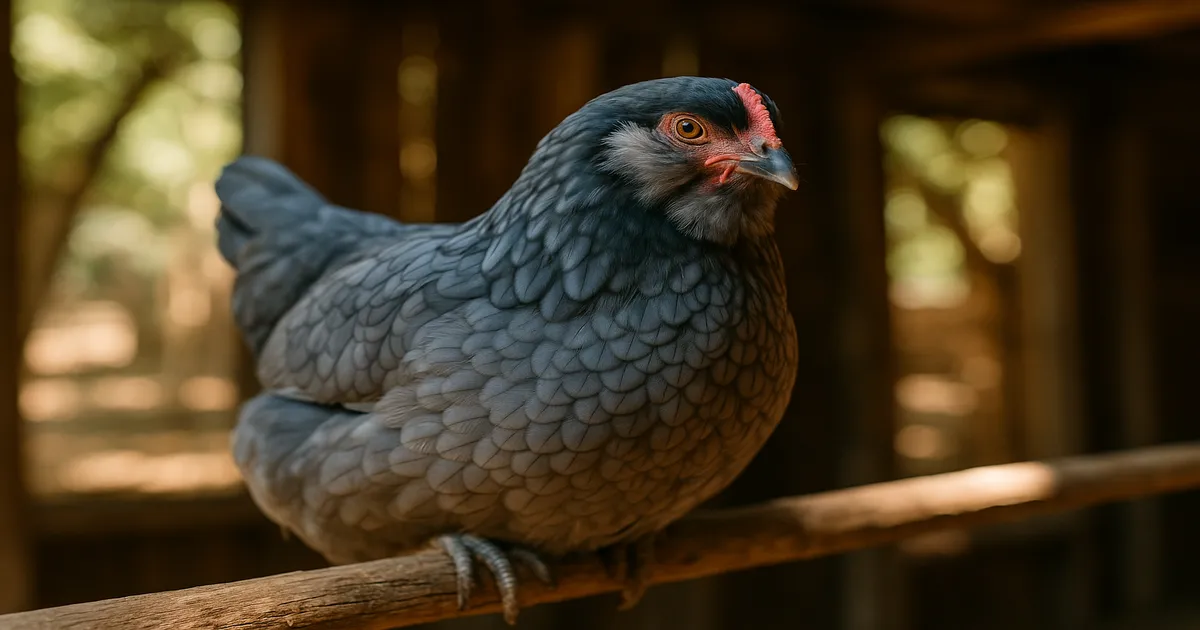
Quick Answer: An Ameraucana chicken is a US-developed breed recognized by the American Poultry Association in 1984, prized for its consistent sky-blue eggs, distinctive muffs and beard, and calm temperament. It was selectively bred from Chilean Araucana stock to eliminate lethal genes that caused high embryo mortality. True Ameraucanas are often mislabeled or confused with Easter Eggers — a critical distinction every buyer should understand before purchasing.
What Is an Ameraucana Chicken?
If you’ve been searching for the breed behind those beautiful blue eggs, the Ameraucana chicken is likely what you’re looking for. Developed in the United States during the 1970s and officially recognized by the American Poultry Association in 1984, the Ameraucana has earned a loyal following among backyard keepers for its striking appearance, even temperament, and reliable blue egg production.
Breed at a Glance
| Trait | Details |
|---|---|
| Origin | United States (1970s) |
| APA Recognition | 1984 |
| Hen Weight | ~5.5 lbs (2.5 kg) |
| Rooster Weight | ~6.5 lbs (3 kg) |
| Egg Color | Sky blue (consistent) |
| Eggs Per Year | 150–200 |
| Eggs Per Week | 3–4 |
| Temperament | Calm, curious, moderately assertive |
Why Ameraucanas Are Confused With Easter Eggers
Before you buy, know this: most large hatcheries sell mixed-breed birds labeled “Ameraucana” — or even “Araucana” — that are actually Easter Eggers. Easter Eggers are not a recognized breed. They’re hybrids that may lay blue, green, pink, or brown eggs with no consistency from hen to hen. If you want true Ameraucanas, source from a reputable breeder, ideally one listed in the Ameraucana Breeders Club directory.
Ameraucana Breed History and Origin
From Araucana to Ameraucana
The story starts in Chile with the Araucana — a tufted, rumpless bird that lays blue eggs. When Araucanas were imported to the United States, breeders quickly discovered a serious problem. The genes responsible for the ear tufts and rumpless trait were lethal in double doses, causing up to 25% embryo mortality in purebred Araucana hatches. That’s a devastating loss rate for any breeding program.
American breeders spent the 1970s selectively working those lethal genes out of the bloodline while preserving the blue egg trait, the pea comb, and the muffs and beard. The result was a genetically stable, productive bird: the Ameraucana.
APA Recognition and Breed Standards
The APA officially recognized the Ameraucana in 1984, establishing a defined standard for conformation, color varieties, and physical traits. That recognition is what separates a true Ameraucana from the Easter Eggers flooding the hatchery market. The Ameraucana Breeders Club maintains a breeder directory and is your most reliable resource for sourcing purebred birds.
How to Identify a True Ameraucana Chicken
Muffs, Beard, Pea Comb, and Other Defining Traits
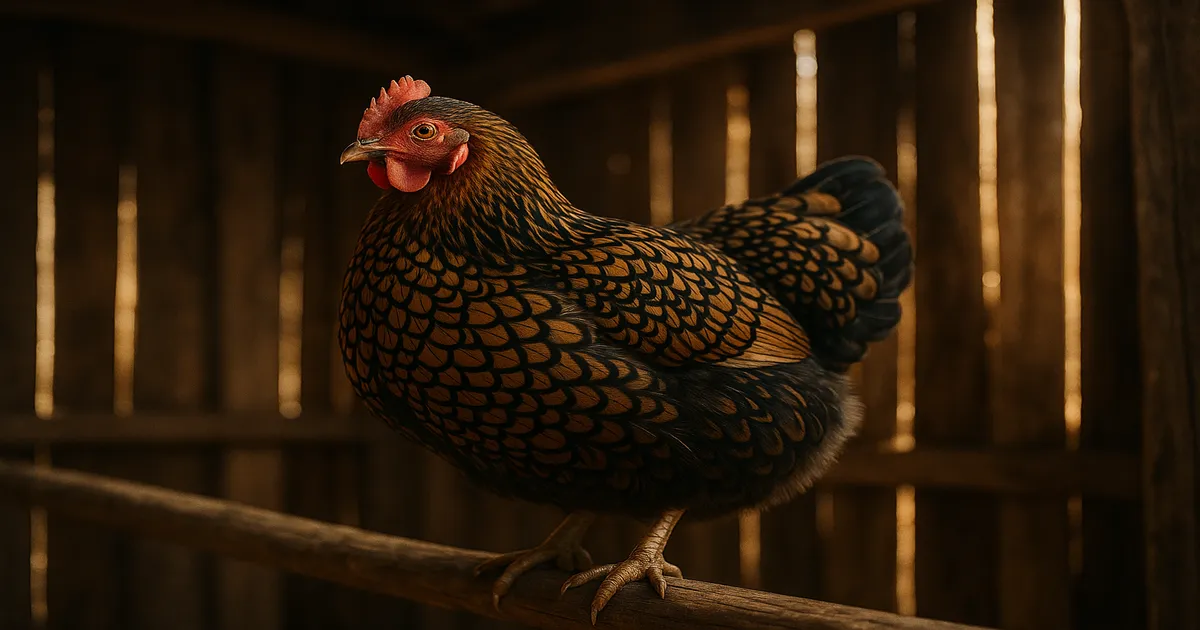
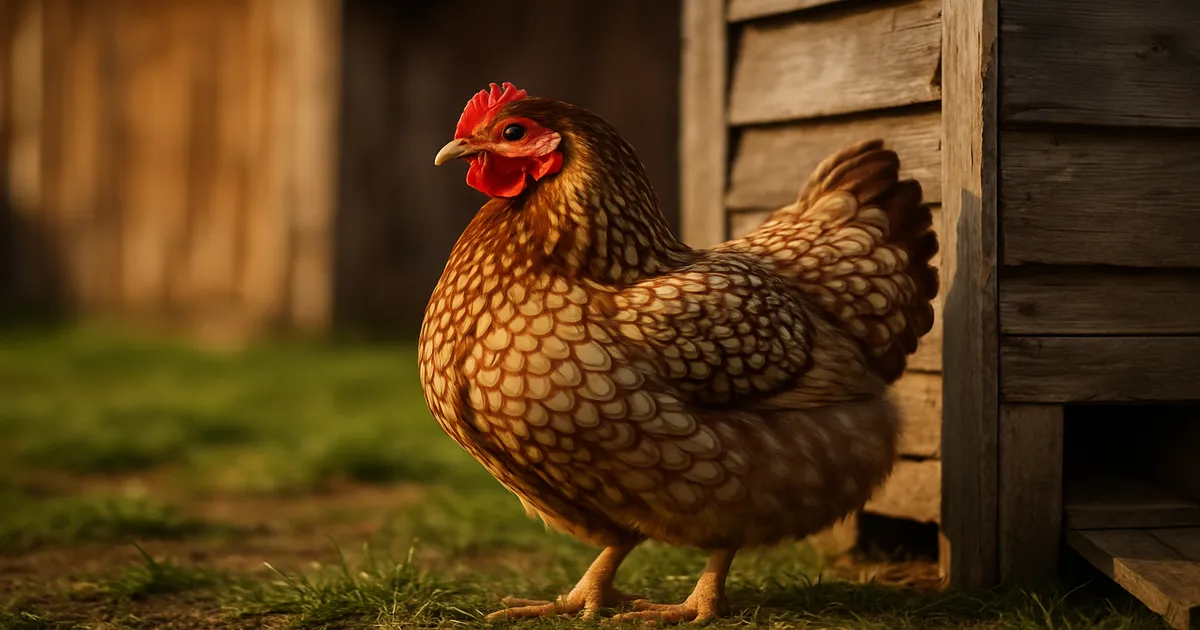
A true Ameraucana has a very specific look. The muffs — puffy feathering on the cheeks — and the beard under the chin give the bird an almost owlish, whiskered face that’s immediately recognizable. Add a small, low-profile pea comb, bay-red eyes, red earlobes, and slate-blue or black legs, and you have a bird that’s hard to mistake once you know what you’re looking at.
Other key traits: clean shanks (no leg feathering), a compact and well-rounded body, and a full, flowing tail. That tail is one quick way to distinguish an Ameraucana from an Araucana, which is rumpless.
The 8 APA-Recognized Color Varieties
The APA recognizes eight color varieties, all sharing the same physical standard — only the plumage differs:
- Black
- Blue
- Blue Wheaten
- Brown Red
- Buff
- Silver
- Wheaten
- White
Ameraucana vs. Easter Egger vs. Araucana
| Feature | Ameraucana | Easter Egger | Araucana |
|---|---|---|---|
| APA Recognized | Yes (1984) | No | Yes |
| Tail | Full tail | Usually full | Rumpless |
| Ear Tufts | None | Varies | Tufted |
| Muffs & Beard | Always present | Sometimes | None |
| Pea Comb | Always | Usually | Usually |
| Egg Color | Consistent sky blue | Blue, green, pink, brown | Blue |
| Leg Color | Slate-blue or black | Varies | Yellow or willow |
The price is a reliable tell: if a hatchery is selling “Ameraucanas” for $3–5 each, they’re Easter Eggers. Purebred Ameraucanas from reputable breeders typically cost $20–$50 per bird or more.
Ameraucana Temperament and Flock Behavior
Are Ameraucanas Good for Beginners and Families?
Yes — genuinely. Ameraucanas are calm, curious birds that tolerate handling well when socialized from a young age. They’re not lap chickens, but they’re not flighty or skittish either. Most keepers describe them as friendly and inquisitive, the type of bird that will follow you around the yard to see what you’re doing. For families with children, that even temperament is a real asset, and the novelty of blue eggs never gets old for kids.
Behavior in Mixed Flocks
Hens are moderately assertive — they hold their own without becoming bullies. Roosters can be protective, but regular handling from chick-hood keeps most manageable. As always, individual temperament varies, so early socialization makes a real difference.
Free-Range vs. Confined
Ameraucanas adapt to both setups, but they genuinely thrive with space to forage. Their active nature makes cramped runs a recipe for boredom and feather pecking. If free-ranging isn’t an option, aim for the higher end of run space recommendations and add enrichment like hanging cabbage heads or a dedicated dust bathing area.
Ameraucana Egg Production: Blue Eggs and What to Expect
How Many Eggs Do Ameraucanas Lay?
Expect 150–200 eggs per year, or roughly 3–4 per week under good conditions. That puts them in moderate production territory — not as prolific as a Rhode Island Red (250–300 eggs/year), but comparable to a Buff Orpington. For most backyard flocks, that output is more than adequate, especially when you factor in the visual appeal of those blue eggs.
Why Ameraucana Eggs Are Blue
The blue color comes from a pigment called oocyanin, which is deposited throughout the entire shell during formation — not just on the surface like brown pigment. Crack open a true Ameraucana egg and the inside of the shell is just as blue as the outside. That’s the test. Easter Egger eggs that appear blue are often a surface tint over a white shell, which is why some look greenish or fade. True Ameraucanas lay a consistent sky blue every time, and that reliability is a key reason serious keepers seek out purebred birds.
When Do Pullets Start Laying?
Pullets typically begin laying at 20–24 weeks (5–6 months). The first few will be small “pullet eggs” before settling into full size after 2–3 weeks of regular laying — slightly later than high-production breeds like Leghorns, but consistent with most heritage-type breeds.
Winter Production and Seasonal Patterns
Like most breeds, Ameraucanas are sensitive to daylight hours. Production drops noticeably when days fall below 14 hours of light. To maintain winter output, add supplemental lighting on a timer to bring total daily light exposure to 16 hours. A 40–60 watt equivalent LED bulb on an outlet timer keeps energy costs low and hens laying through the darker months.
Plan for the annual molt, typically in fall at 12–18 months. Egg production stops entirely for 6–12 weeks while hens regrow feathers. Boosting dietary protein to 20–22% during this period supports faster regrowth.
Broodiness
Ameraucanas go broody occasionally — less often than Buff Orpingtons or Silkies, more than Leghorns. When a hen does go broody, she’s generally a capable and attentive mother. To break the cycle early, move her to a wire-bottomed “broody breaker” cage with good airflow for 3–5 days. The cooler air circulation lowers her body temperature and interrupts the hormonal cycle.
Coop and Housing for Ameraucana Chickens
Space Requirements
Ameraucanas are active birds. The minimum is 4 sq ft per bird indoors, but aim for 5–6 sq ft inside and 10–15 sq ft per bird in the run. Overcrowding is the single biggest driver of feather pecking, disease spread, and stress-related production drops.
Roost Bars and Nesting Boxes
For roosts, allow 8–10 inches of space per bird and use 2×4 lumber laid flat — the wide surface lets birds cover their feet with their breast feathers in cold weather, which prevents frostbite. Mount roosts 18–24 inches off the ground and space multiple bars 12–18 inches apart so birds above don’t soil those below.
For nesting boxes, the standard ratio is 1 box per 3–4 hens. Each box should measure at least 12×12×12 inches — 14×14 inches is more comfortable for a 5.5 lb hen. Mount boxes lower than the roost bars; hens sleep at the highest point available, and boxes positioned higher than roosts will fill with sleeping (and defecating) hens overnight. Line each box with 3–4 inches of pine shavings or straw, or use commercial nesting pads for easy cleanup.
Ventilation and Cold-Weather Housing
Good ventilation prevents respiratory disease, ammonia buildup, and moisture-related frostbite. Aim for 1 square foot of ventilation per 10 square feet of floor space, with vents positioned high on the walls so moist air escapes without creating cold drafts at bird level.
The Ameraucana’s pea comb is a genuine cold-weather advantage — its small surface area dramatically reduces frostbite risk compared to large single-combed breeds. A healthy flock handles temperatures down to 0°F (-18°C) in a properly insulated, draft-free coop without supplemental heat. Skip the heat lamp unless temperatures drop below -10°F (-23°C); heat lamps are a leading cause of coop fires. The goal of winter coop management is moisture control, not active heating.
Predator-Proofing
Chicken wire keeps chickens in — it does not keep predators out. Use 1/2-inch hardware cloth on all openings, windows, and run walls. Bury it 12 inches deep around the run perimeter, or extend it 12 inches outward as a horizontal apron to stop diggers. Use carabiner clips or padlocks on all doors — raccoons open standard hook-and-eye latches easily. An automatic coop door on a light sensor or timer adds a critical layer of protection for birds that don’t make it in before dark.
Feeding and Nutrition
Layer Feed, Protein, and Fermentation
Switch from chick starter to layer feed at 18–20 weeks, or when the first egg appears. Look for 16–18% crude protein. During the annual molt, temporarily bump protein to 20–22% with a flock raiser or feather-fixer formula.
Pellets are the practical choice for most keepers — least waste, easiest to manage. Mash gets wet quickly and can harbor mold. Fermented feed is worth exploring if you’re willing to put in the prep time; it improves nutrient bioavailability and can reduce feed consumption by 20–30% while supporting gut health.
Calcium and Grit
Laying hens need 4–5 grams of calcium per day for strong shells. Layer feed provides a baseline, but always offer free-choice oyster shell in a separate container. Don’t mix oyster shell into the feed — hens self-regulate their calcium intake, and excess calcium damages the kidneys of non-laying birds and chicks. Crushed, baked eggshells (250°F for 30 minutes) are a free alternative.
Any bird eating whole grains, scratch, or foraged material also needs access to insoluble grit. Confined birds won’t find enough on their own, so offer #2 granite grit free-choice in a separate container.
Treats and Foods to Avoid
Keep treats under 10% of total daily diet. Good options include mealworms (especially during molt), leafy greens, watermelon in summer, cooked eggs, and plain yogurt. Scratch grains are a treat, not a feed supplement — a small handful per bird in the evening is plenty.
Never feed: avocado (contains persin, which is toxic to chickens), chocolate, raw beans (contain phytohaemagglutinin), onions in large quantities, salty or processed foods, or anything moldy.
Health and Preventive Care
Marek’s Disease
Marek’s disease is a highly contagious herpesvirus spread through feather dander that can persist in the environment for years. Symptoms include leg paralysis, wing drooping, weight loss, and tumors. There is no cure — vaccination at day 1 of life is the only protection. Most hatcheries offer it automatically; if you’re hatching your own chicks, request the vaccine and administer it subcutaneously on day one.
Coccidiosis
Coccidiosis is most dangerous in chicks aged 3–6 weeks as they transition to outdoor environments. Watch for bloody or watery droppings, lethargy, hunched posture, and pale combs. Treat with Amprolium (Corid) — typically 1.5 teaspoons of the 9.6% liquid solution per gallon of drinking water for 5–7 days. Medicated chick starter contains low-dose amprolium as a preventive measure.
Mites and Lice
Check birds monthly by parting feathers near the vent and under the wings. Northern Fowl Mites and Red Mites are the most common culprits — look for feather damage, restlessness, and pale combs (a sign of anemia in heavy infestations). Treat with permethrin-based poultry dust or spray, and clean and treat the coop at the same time to break the lifecycle. A consistent dust bathing area with food-grade diatomaceous earth helps as a preventive.
Frequently Asked Questions About Ameraucana Chickens
Are Ameraucana chickens good layers? Yes, for a heritage-type breed. Expect 150–200 blue eggs per year — about 3–4 per week. They’re not production powerhouses, but their consistent blue eggs and calm temperament make them a popular choice for backyard flocks.
What’s the difference between an Ameraucana and an Easter Egger? Ameraucanas are an APA-recognized breed with a defined standard, consistent sky-blue eggs, and specific physical traits including muffs, beard, and a pea comb. Easter Eggers are mixed-breed hybrids with no breed standard — they may lay blue, green, pink, or brown eggs. Most “Ameraucanas” sold by large hatcheries are actually Easter Eggers.
Do Ameraucana roosters make good flock protectors? They can be. Ameraucana roosters are alert and moderately protective, but temperament varies by individual. Early, consistent handling from chick-hood produces the most manageable roosters.
How cold-hardy are Ameraucana chickens? Very. The pea comb significantly reduces frostbite risk, and a healthy flock handles temperatures down to 0°F (-18°C) in a well-ventilated, draft-free coop without supplemental heat.
Where can I buy true Ameraucana chickens? Avoid large commercial hatcheries, which routinely sell Easter Eggers under the Ameraucana name. The Ameraucana Breeders Club maintains a breeder directory at ameraucana.org — that’s your most reliable starting point for sourcing purebred birds.