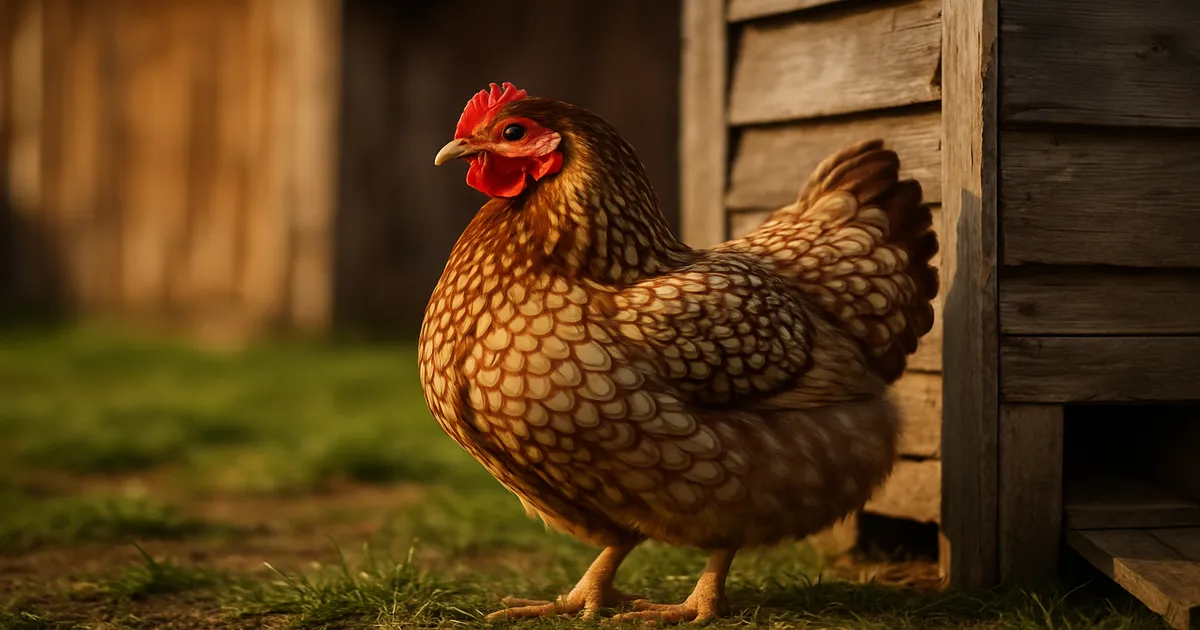
Quick Answer: The Golden Laced Wyandotte is an American heritage breed recognized by the APA in 1888, prized for its stunning black-laced golden plumage, calm temperament, and reliable egg production of 200–220 brown eggs per year. Cold-hardy thanks to its rose comb and dense feathering, this dual-purpose breed suits backyard flocks in nearly any climate.
If you’ve been searching for a chicken breed that turns heads in the run and delivers a solid egg basket, the Golden Laced Wyandotte deserves a serious look. Few breeds combine ornate beauty with genuine practicality — this bird is as useful as it is gorgeous, and it fits naturally into beginner and experienced flocks alike.
Golden Laced Wyandotte: Key Stats at a Glance
| Trait | Details |
|---|---|
| Origin | United States (1870s–1880s) |
| APA Recognition | 1888 |
| Purpose | Dual-purpose (eggs + meat) |
| Egg Production | 200–220 brown eggs/year |
| Eggs per Week | 3–5 eggs |
| Egg Size | Large |
| Temperament | Calm, docile, assertive in pecking order |
| Cold Hardiness | Excellent |
| Heat Hardiness | Moderate |
| Standard Hen Weight | 6.5 lbs |
| Standard Rooster Weight | 8.5 lbs |
| Comb Type | Rose comb |
| Broodiness | Moderate to strong |
Breed History and Origin
How the Golden Laced Wyandotte Was Developed
The Wyandotte is a proudly American breed, developed in the northeastern United States during the 1870s and named in honor of the Wyandot Nation of North America. The Silver Laced Wyandotte came first, earning APA recognition in 1883. The Golden Laced variety followed shortly after, created by crossing Silver Laced Wyandottes with Partridge Cochins and Gold Spangled Hamburgs — a combination that produced the breed’s signature warm golden plumage with crisp black lacing.
From the start, Wyandottes were bred as working farm birds: lay well, grow out for the table, and handle cold northeastern winters without much fuss. The Golden Laced variety delivered on all three counts.
APA Recognition and the Wyandotte Family
The APA recognized the Golden Laced Wyandotte in 1888, just five years after the original Silver Laced. Today the Wyandotte breed encompasses more than a dozen recognized color varieties, including White, Black, Buff, Columbian, Partridge, Silver Penciled, and Blue Laced Red, among others — making it one of the most variety-rich breeds in American poultry history.
Golden Laced vs. Silver Laced vs. Blue Laced Red Wyandotte
The core difference is color. Silver Laced Wyandottes have a white base feather with black lacing — striking but cool in tone. Golden Laced birds swap that white for a rich golden-bay, creating a warmer, almost jewel-like effect. Blue Laced Red Wyandottes feature a red or mahogany base with soft blue-grey lacing and are enormously popular, though worth noting they are not yet APA-recognized as a standard variety. All three share the same cobby body type, rose comb, and calm Wyandotte temperament.
Appearance and Physical Characteristics
The Iconic Golden Lacing Pattern
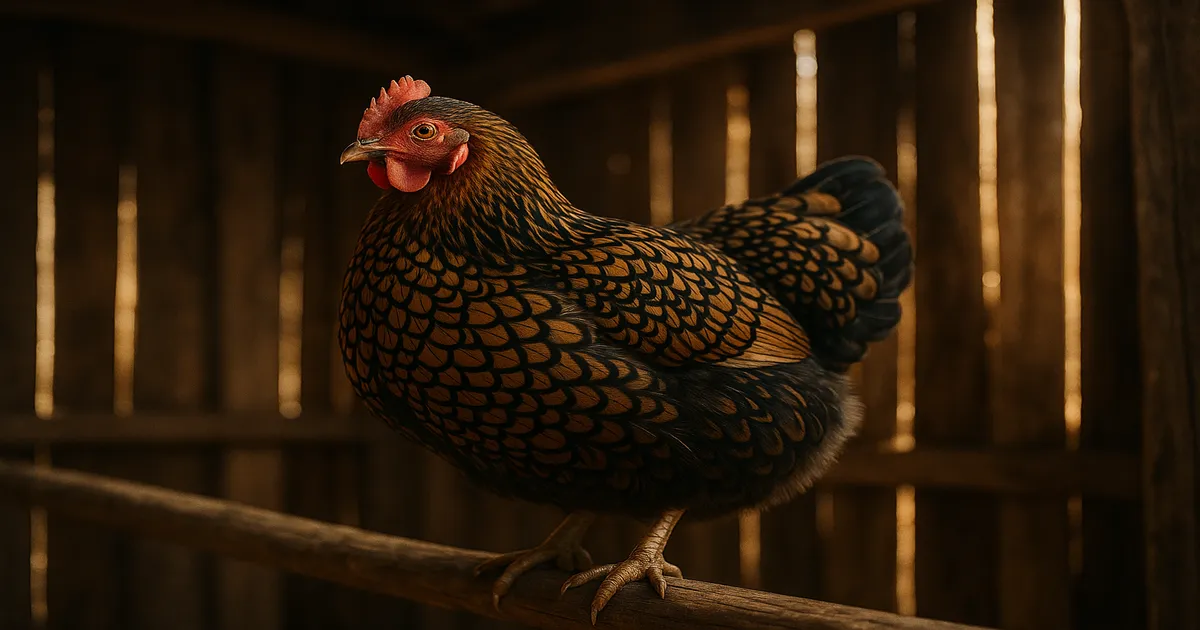
Each feather carries a rich golden-bay center edged with a sharp, defined band of black. Across the whole bird, the effect is a repeating scale-like pattern that catches the light beautifully — one of the most visually complex plumage patterns in backyard poultry.
Rose Comb: The Cold-Hardy Advantage
The rose comb sits low and flat against the skull with a short rear spike. Unlike the tall points of a single comb, it has almost no exposed tissue to freeze. Single-comb breeds like Leghorns can suffer significant frostbite during hard winters, while Wyandottes typically sail through without issue. In hot climates, however, the rose comb is less efficient at radiating heat than a large single comb, so plan for extra shade and ventilation if you’re in the Deep South or Southwest.
Size, Weight, and Body Type
Wyandottes are described as “cobby” — broad, rounded, and compact. Standard hens weigh around 6.5 lbs and roosters around 8.5 lbs, firmly in the heavy breed category. Their dense, tight feathering adds both visual fullness and cold-weather insulation. Legs are clean and yellow, eyes a warm reddish-bay, and wattles red.
Bantam vs. Standard Golden Laced Wyandotte
| Standard | Bantam | |
|---|---|---|
| Hen weight | ~6.5 lbs | ~30 oz |
| Rooster weight | ~8.5 lbs | ~36 oz |
| Eggs per year | 200–220 | 150–180 (smaller eggs) |
| Indoor space needed | 4–6 sq ft/bird | 2–3 sq ft/bird |
Bantam Wyandottes carry all the same gorgeous lacing in a much smaller package — a practical option for urban keepers with limited space.
Temperament and Flock Behavior
Are Golden Laced Wyandottes Friendly?
Generally, yes. Golden Laced Wyandottes are calm, non-flighty birds that tolerate handling well and rarely cause problems for their keepers. They’re a solid choice for families with children and for beginners who want a manageable flock. Individual personalities do vary — some hens are genuinely curious and personable, while others stay more aloof.
Pecking Order and Flock Compatibility
Wyandottes tend to rank mid-to-high in the pecking order and will assert that position. They’re not bullies by nature, but they can be persistently bossy toward more submissive breeds like Silkies or Polish. If you’re mixing breeds, pair Wyandottes with other confident, similarly-sized birds — Australorps, Plymouth Rocks, and Orpingtons all make good flockmates. Their heavier body also means they’re unlikely to clear a standard 4-foot fence, which simplifies containment compared to lighter, flightier breeds.
Raising Friendly Birds from Chick Age
Early socialization makes a noticeable difference. Handle chicks daily from the first week, offer treats from your hand, and spend time sitting quietly near the brooder. Birds raised with regular human contact are far more likely to be approachable adults. Even with the most socialized Wyandottes, expect some hens to be friendlier than others — that’s normal variation within any breed.
Egg Production: What to Expect
How Many Eggs Do Golden Laced Wyandottes Lay?
A well-fed hen in her first two laying years will produce approximately 200–220 brown eggs per year — roughly 3–5 eggs per week under optimal conditions. After year two, expect production to decline 10–20% annually. That’s a meaningful drop over time, but still respectable for a heritage dual-purpose breed.
Eggs are light to medium brown, occasionally with a slight pinkish tint early in the laying cycle. They’re classified as large, typically running 24–27 oz per dozen. Shell quality is generally good when hens have adequate calcium.
When Do Golden Laced Wyandottes Start Laying?
Most pullets begin laying at 18–20 weeks. The first few weeks often produce smaller “pullet eggs” before the hen’s system fully ramps up — completely normal and not a cause for concern.
Winter Laying and Seasonal Changes
Production slows during the annual fall molt (8–12 weeks) and again in winter as daylight shortens. Hens need approximately 14–16 hours of light per day to maintain peak production. A simple timer-controlled coop light can keep winter production at 70–80% of summer rates.
Broodiness
Wyandottes have a moderate-to-strong broody tendency, especially in spring and early summer. A broody hen stops laying and sits tight on the nest — but the upside is they’re genuinely good mothers. If you want to hatch chicks naturally, a broody Wyandotte is a willing and capable incubator.
If egg production is your priority, break broodiness early. Move the hen to a wire-bottomed broody-breaker cage with food and water but no nesting material. Three to five days of airflow under the wire cools her underside and breaks the hormonal cycle.
Coop and Housing Requirements
Space, Roosts, and Nesting Boxes
The standard minimum is 4 sq ft per bird inside the coop, but for large-bodied, assertive Wyandottes, aim for 6–8 sq ft per bird indoors. Crowded conditions amplify pecking order tensions and increase disease risk. For the outdoor run, plan on at least 10 sq ft per bird — 15–20 sq ft is significantly better. Free-ranging birds benefit from 250 sq ft or more per hen.
Keep roost height at 18–24 inches off the ground. Wyandottes are heavy, and repeatedly jumping from higher bars can cause bumblefoot over time. Skip the round dowels — a 2×4 board laid flat-side-up lets hens flatten their toes under their breast feathers on cold nights, which meaningfully reduces frostbite risk.
Plan for one nesting box per 4–5 hens. Standard 12×12-inch boxes work for most breeds, but 14×14 inches is more comfortable for large Wyandottes. Place boxes lower than the roost bars — hens naturally want to sleep at the highest point, and if nesting boxes are higher, you’ll end up with soiled eggs.
Ventilation and Predator-Proofing
More chickens are lost to respiratory illness from poor ventilation than from cold. Aim for at least 1 sq ft of ventilation per 10 sq ft of coop floor space, positioned high on the walls so moisture and ammonia escape without creating drafts at bird level. Keep vents partially open even in winter. A cold, well-ventilated coop is always safer than a warm, damp, stuffy one.
For predator-proofing:
- Use ½-inch hardware cloth on all windows, vents, and run panels — standard chicken wire won’t stop a determined raccoon
- Bury hardware cloth 12 inches deep around the perimeter, or lay it flat on the ground extending 12 inches outward, to deter diggers
- Install two-step latches or carabiner clips on all doors — raccoons can work simple hook-and-eye hardware
- An automatic coop door set to close at dusk eliminates the most common cause of nighttime predator losses
- Cover the run with overhead netting to deter hawks and owls
Feeding and Nutrition
Layer Feed, Calcium, and Daily Amounts
Switch from chick starter to a 16–18% protein layer feed at 18–20 weeks, right around the time laying begins. Pellets produce the least waste; crumbles work well for birds transitioning off starter. A standard Wyandotte hen eats roughly ¼ to ⅓ lb of feed per day. Use free-choice feeding — restricting feed in laying hens directly reduces egg production.
Keep crushed oyster shell in a separate free-choice container at all times. Hens self-regulate their intake, so there’s no need to measure it out. Don’t mix it into the feed, and don’t offer it to chicks or non-laying birds — excess calcium stresses developing kidneys.
Fresh water is equally non-negotiable. Hens drink 1–2 cups per day under normal conditions, and that doubles in hot weather. A good-quality poultry waterer with nipples or a gravity base keeps water clean and reduces spillage.
Protein During Molt and the 10% Treat Rule
During molt, feather regrowth demands extra protein. Temporarily switch to an 18–20% protein feed, or supplement with black soldier fly larvae, mealworms, or scrambled eggs. Limit mealworms to 1–2 tablespoons per bird per day — they’re high in fat and should be a supplement, not a staple. Always cook eggs before feeding them back to hens to avoid encouraging egg-eating behavior.
Treats should never exceed 10% of total daily intake. Good options include leafy greens, berries, melon, squash, and cooked grains. Keep these away from your flock entirely: avocado (persin causes heart failure), chocolate, raw dried beans (contain hemagglutinin), onions or garlic in large quantities, salty foods, and anything moldy.
Any bird eating anything beyond commercial feed also needs insoluble grit to grind food in the gizzard. Offer it free-choice in a separate container — chick grit for birds under 8 weeks, adult grit for older birds.
Health and Preventive Care
Marek’s Disease and Coccidiosis
Marek’s disease is a highly contagious herpesvirus that causes tumors, paralysis, and sudden death — there is no treatment. Vaccination at day one is the only effective prevention. Reputable hatcheries vaccinate as standard practice; confirm this when purchasing chicks. Even vaccinated birds can shed the virus, so quarantine new birds for 30 days before integration.
Coccidiosis hits hardest in chicks between 3–6 weeks old. Watch for bloody or watery droppings, lethargy, hunched posture, and a pale comb. Medicated chick starter (containing amprolium) for the first 8 weeks provides significant protection. If you see active symptoms, treat with Corid (amprolium) in the drinking water — 1½ teaspoons per gallon for 5 days as a standard treatment course, or follow label directions for your specific product. Keep brooders dry; moisture helps coccidia oocysts survive and spread.
Mites, Lice, and Bumblefoot
Check your birds monthly by parting feathers around the vent and under the wings. Mites appear as tiny moving specks; lice leave clusters of white eggs at feather bases. Heavy infestations cause feather damage, anemia, and reduced egg production. Treat with permethrin dust or spray applied to birds and coop surfaces. Diatomaceous earth in dust-bathing areas helps as a preventive measure but won’t knock down an active infestation on its own.
Bumblefoot — a Staphylococcus aureus infection starting from a small cut on the foot pad — is a real risk for heavy breeds like Wyandottes, especially when roost bars are too high or surfaces are rough and wet. You’ll notice swelling, a black scab on the bottom of the foot, and limping. For mild cases: soak the foot in warm Epsom salt water for 10 minutes, apply Vetericyn or plain Neosporin (without pain reliever), and wrap with vet wrap. Repeat daily. Moderate-to-severe cases with a deep infected core need surgical removal — seek guidance from a vet or very experienced keeper.
Monthly Health Check Routine
A quick monthly once-over catches problems early. Pick up each bird and check: body weight (sudden loss is a red flag), feather condition, eyes and nostrils (clear, not runny), vent area (clean, no matting or mites), and foot pads (no swelling or black scabs). Healthy birds are alert, have bright eyes, and move freely. Any bird that’s hunched, fluffed up, or standing apart from the flock warrants a closer look.
Frequently Asked Questions
Are Golden Laced Wyandottes good for beginners? Yes. Their calm temperament, cold hardiness, and reliable egg production make them one of the most beginner-friendly dual-purpose breeds available. They’re forgiving of minor management mistakes and rarely cause behavioral problems.
How long do Golden Laced Wyandottes live? With good care, most Wyandottes live 5–8 years. Egg production declines significantly after years 2–3, but many keepers keep hens as part of the flock well beyond peak laying age.
Can Golden Laced Wyandottes handle heat? Moderately. Their dense feathering and rose comb make them better suited to cold than heat. In hot climates, provide ample shade, good ventilation, and cool fresh water at all times. Frozen treats like watermelon or ice water can help on the hottest days.
Do Golden Laced Wyandotte roosters get aggressive? Wyandotte roosters are generally calmer than many breeds, but individual temperament varies. Early handling and consistent human interaction from chick age reduces the likelihood of aggression. Any rooster that shows persistent aggression toward people should not be kept in a family flock.
What’s the difference between a Golden Laced Wyandotte and a Blue Laced Red Wyandotte? Both are Wyandotte varieties with the same body type and temperament. The Golden Laced has a golden-bay base feather with black lacing; the Blue Laced Red has a red or mahogany base with blue-grey lacing. The Blue Laced Red is not currently APA-recognized as a standard variety, while the Golden Laced has been recognized since 1888.