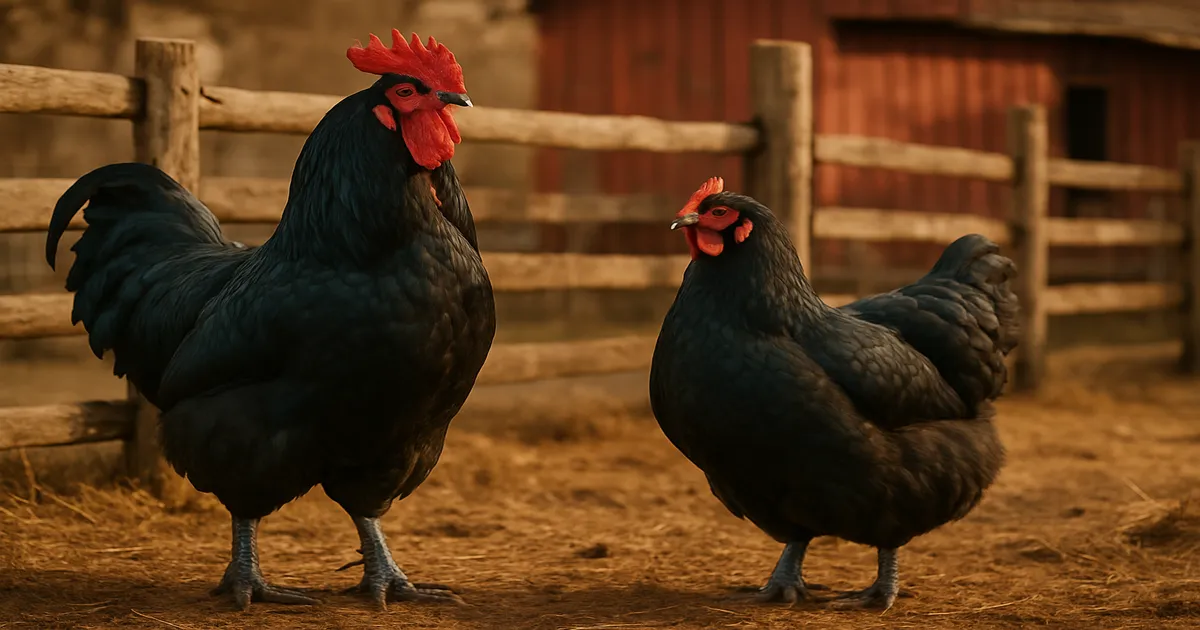
Quick Answer: Jersey Giant chickens are the largest purebred breed in the United States, with roosters reaching 13–15 lbs and hens 10–12 lbs. They’re calm, cold-hardy, and lay 150–200 large brown eggs per year — but they’re slow to mature and eat significantly more than average breeds. If you want a gentle, impressive dual-purpose bird and don’t mind the extra feed bill, the Jersey Giant chicken is hard to beat.
Jersey Giant Chickens at a Glance
Key Stats Snapshot
| Trait | Details |
|---|---|
| Origin | Burlington County, New Jersey, late 1800s |
| Rooster Weight | 13–15 lbs (up to 20 lbs in exceptional birds) |
| Hen Weight | 10–12 lbs |
| Egg Production | 150–200 eggs per year (3–4 per week) |
| Egg Color & Size | Brown, extra-large to jumbo (2.5–3 oz) |
| Age at First Lay | 6–9 months |
| Temperament | Calm, gentle, curious |
| Cold Hardiness | Excellent (tolerates down to 0°F / -18°C) |
| APA Class | English |
Is the Jersey Giant Right for You?
Pros:
- Genuinely gentle — great for families with kids
- One of the most impressive-looking birds you can keep
- Cold-hardy without needing supplemental heat
- Produces jumbo brown eggs that stand out in any egg carton
- Low flightiness; tends to stay close to the coop
Cons:
- Slow to mature — pullets may not lay until 8–9 months
- Eats 50–70% more feed than a standard hen
- Needs larger coop space and oversized nesting boxes
- Can be pushed around in mixed flocks with aggressive breeds
- Not ideal for hot climates without good ventilation
Breed History and Origin
Who Developed the Jersey Giant?
Brothers John and Thomas Black developed the Jersey Giant in Burlington County, New Jersey during the late 1800s. Their goal was ambitious: create a chicken large enough to replace turkey as the preferred market bird. The breed was originally called “Black Giants” before being renamed Jersey Giants to honor its home state.
The Breeds Behind the Size
The Black brothers crossed three heritage breeds known for bulk and calm temperament:
- Black Javas — one of America’s oldest breeds, contributing body size and dark plumage
- Dark Brahmas — massive, cold-hardy birds that added weight and a docile nature
- Black Langshans — a tall, elegant breed contributing leg length and upright carriage
The result was a bird that genuinely dwarfs most other breeds. Ironically, the commercial turkey industry expanded faster than the Jersey Giant could compete with it, so the breed found its real home in backyard and small-farm flocks.
APA Recognition Timeline
The American Poultry Association recognized the Black variety in 1922, placing it in the English Class. The White variety followed in 1947, and the Blue — the newest and rarest — received recognition in 2003.
Jersey Giant Varieties: Black, White, and Blue
Black Jersey Giant
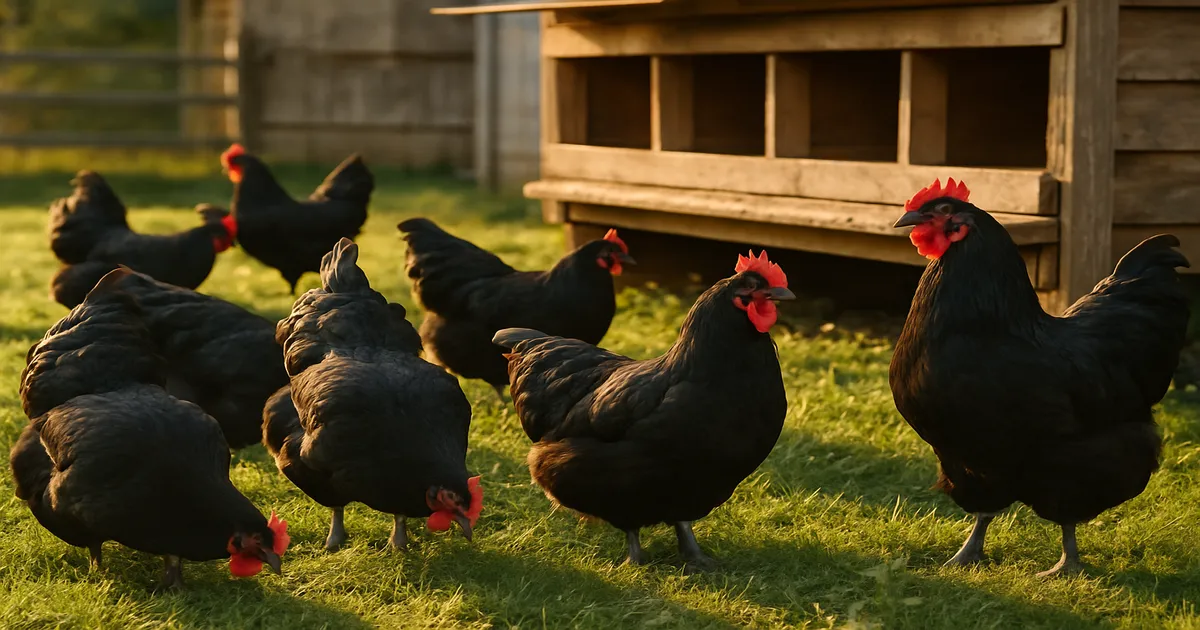
The Black is the most common variety and the one most people picture. Its plumage carries a striking beetle-green iridescent sheen in good light. The quickest way to identify Black Giants is their dark willow to greenish-black shanks.
White Jersey Giant
White Giants have pure white plumage and yellow shanks — that leg color difference is the easiest way to tell them apart from Black Giants at a glance. They’re slightly less common but share identical size, temperament, and production traits.
Blue Jersey Giant
The Blue is the rarest of the three varieties. Its plumage shows a slate-blue lacing pattern that many keepers find stunning. Because of how blue genetics work, breeding Blues together produces a mix of blue, black, and splash offspring — worth knowing if you plan to breed them.
Bantam versions of the Jersey Giant exist but are uncommon and not widely available from most hatcheries.
Jersey Giant Temperament and Flock Compatibility
Jersey Giants have earned their reputation as the gentle giants of the chicken world. They’re calm, curious, and surprisingly personable — many keepers find their birds actively seeking out human attention and becoming lap-friendly within weeks of regular handling. Roosters tend to be less aggressive than those of many other large breeds, making them a reasonable choice even for keepers who are cautious about keeping a rooster.
Their size can look intimidating to small children at first, but their slow movements and non-flighty nature actually make them easier to handle than smaller, more skittish breeds.
The one caveat worth knowing: Jersey Giants can be submissive in mixed flocks. Their calm temperament is a virtue in most situations, but it means they may get pushed off the feeder by more assertive breeds. Avoid pairing them with notoriously pushy breeds like Rhode Island Reds or Dominiques in tight quarters. Provide plenty of space and multiple feeding stations, and most mixed flocks work out fine.
Jersey Giant Egg Production: What to Expect
How Many Eggs Per Year?
Expect around 150–200 eggs per year, or roughly 3–4 eggs per week. That’s solid production for a dual-purpose breed of this size, though it’s worth keeping expectations realistic — a Leghorn will lay 280–320 eggs a year. The Jersey Giant isn’t a production machine; it’s a well-rounded farm bird that happens to lay beautiful jumbo eggs.
The eggs are brown, ranging from medium to dark in shade, and they’re big — extra-large to jumbo, typically 2.5–3 oz. If you sell eggs at a farmers market or give them to neighbors, Jersey Giant eggs tend to get noticed.
When Do Pullets Start Laying?
This is the breed’s most significant drawback. Most pullets begin laying at 6–7 months, and some don’t start until 8–9 months. Compare that to Sex-Links or Leghorns, which often start at 16–18 weeks. Plan accordingly — you’ll be feeding these birds for several months before you see your first egg.
Broodiness and Mothering Ability
Jersey Giants go broody with moderate frequency, particularly the Black variety. They make excellent mothers — calm, attentive, and large enough to cover 10–12 eggs comfortably. The main risk is their weight. A Jersey Giant hen can accidentally crush eggs or very young chicks, so check on a broody hen daily and consider moving newly hatched chicks to a brooder after the first day or two.
Coop and Housing Requirements for Jersey Giant Chickens
Space Requirements
Standard coop sizing doesn’t cut it for this breed. Jersey Giants need more room than the typical 4 sq ft per bird recommendation:
- Coop interior: 5–8 sq ft per bird
- Outdoor run: 15–20+ sq ft per bird
A flock of four Jersey Giants needs a coop of at least 24 sq ft and a run of at least 60–80 sq ft. More is always better with heavy breeds.
Roosts and Nesting Boxes
Keep roosts low — 18 to 24 inches maximum. Jersey Giants are heavy and don’t fly well; a bird repeatedly jumping down from a 3-foot roost is a bumblefoot case waiting to happen. Use flat roost bars 3–4 inches wide so feet lie flat rather than gripping a narrow dowel, which also reduces frostbite risk in winter. Allow 12–14 inches of roost bar space per bird.
Standard 12×12-inch nesting boxes are too cramped for a 10–12 lb hen. Go with 14×14 inches at minimum, ideally 16×16 inches. Position boxes 12–18 inches off the floor with a landing perch, and fill them with 4–6 inches of nesting material — straw, pine shavings, or hemp bedding all work well.
Ventilation and Cold Hardiness
Good ventilation matters more than insulation in most climates. Aim for 1 sq ft of ventilation per 10 sq ft of coop floor, positioned high on the walls or in the eaves so moisture and ammonia escape without drafts hitting birds at roost level.
Jersey Giants are genuinely cold-hardy, tolerating temperatures down to 0°F (-18°C) thanks to their large body mass. Resist the urge to heat your coop — heated coops create dependency and actually increase frostbite risk when birds step outside into cold air. Keep the coop dry and draft-free instead.
Predator-Proofing
- Use ½-inch hardware cloth on all openings — not standard chicken wire, which predators can tear through
- Bury a hardware cloth apron 12 inches deep around the run perimeter, or lay it flat 12–18 inches outward from the base
- Secure all latches with carabiner clips or padlocks — raccoons are remarkably good at working simple latches open
- Consider an automatic coop door to eliminate the risk of forgetting to close up at dusk
Feeding Jersey Giant Chickens: Nutrition by Life Stage
Feed Types and Protein Levels
| Life Stage | Feed Type | Protein Level |
|---|---|---|
| Chicks (0–8 weeks) | Chick starter | 18–22% |
| Growers (8–18 weeks) | Grower feed | 16–18% |
| Laying hens (at first egg) | Layer feed | 15–18% + calcium |
Don’t switch to layer feed until your hens actually begin laying. Jersey Giants mature slowly, and premature calcium supplementation can damage kidneys in young birds. Stay on grower feed until you see that first egg, even if it takes 8 months.
How Much Do Jersey Giants Eat?
Plan on ½ to ¾ lb (225–340 g) of feed per hen per day — roughly 50–70% more than a standard-sized hen. Free-choice pellets work well for large breeds since there’s less waste than crumbles. A sturdy hanging feeder keeps feed clean and reduces spillage. Keep an eye on confined birds for obesity, which can compound joint and foot problems.
Calcium, Oyster Shell, and Grit
Offer oyster shell free-choice in a separate container — never mix it into the main feed, since roosters and non-laying hens don’t need the extra calcium. Jersey Giants produce jumbo eggs, so laying hens may have slightly higher calcium demands than average.
Provide insoluble grit (granite or flint) in its own container for any bird eating treats, scraps, or ranging on pasture. Chicks getting anything beyond commercial starter need chick-sized grit starting around 1–2 weeks of age.
Safe Treats and Foods to Avoid
Good treats (keep to 10% of total diet or less): leafy greens, watermelon, cooked squash, berries, and mealworms — especially useful during molt when birds need extra protein.
Avoid entirely: avocado, onions, raw dried beans, chocolate, salty foods, and anything moldy.
Health Issues Common in Jersey Giant Chickens
Bumblefoot
Bumblefoot — a staph infection that enters through small cuts on the foot pad — is the most breed-specific health concern for Jersey Giants. Their weight puts constant pressure on their feet, making them more vulnerable than lighter breeds.
Prevention: Low roosts, dry bedding, no wire flooring. Treatment for mild cases: Soak the foot in warm Epsom salt water for 10 minutes, apply a poultry-safe wound spray, and wrap with vet wrap. Severe cases with deep, hard scabs need veterinary debridement. Check feet monthly.
Marek’s Disease
Vaccinate at hatch — most reputable hatcheries do this automatically, but confirm when you order. Marek’s disease causes paralysis, tumors, and sudden death, and there’s no treatment once a bird is infected. The vaccine doesn’t prevent exposure but dramatically reduces severe disease.
Coccidiosis in Chicks
Coccidiosis is most dangerous in chicks 3–6 weeks old. Watch for bloody or watery droppings, lethargy, pale comb, and hunched posture. Treat with Amprolium (Corid) — 9.6% liquid at 2 tsp per gallon of drinking water for 5–7 days in severe cases, or 1 tsp per gallon as a preventive. Medicated chick starter contains Amprolium and is a reasonable choice for Jersey Giant chicks kept on deep litter.
External Parasites: Mites and Lice
Inspect birds monthly by parting feathers near the vent and under the wings. Northern fowl mites and red mites cause feather loss, anemia, and reduced egg production. Treat with permethrin dust or spray applied to both the birds and the coop, or use Elector PSP (spinosad-based) for more resistant infestations. Always make sure your flock has access to a good dust bathing area — it’s one of the best natural defenses against parasites.
Egg Binding
Jersey Giants producing jumbo eggs are at higher-than-average risk of egg binding. Symptoms include a penguin-like stance, straining, lethargy, and a swollen abdomen.
Emergency home treatment:
- Soak the vent area in 104°F (40°C) water for 20–30 minutes
- Apply coconut oil or KY jelly to lubricate the vent
- Offer a calcium supplement
- If the egg isn’t passed within 2–4 hours, contact a vet
Biosecurity Basics
- Quarantine new birds for 30 days before introducing them to your flock
- Clean waterers weekly and feeders monthly (Harris Farms 2-Gallon Plastic Poultry Waterer)
- Full coop cleanout 2–4 times per year; use the deep litter method between cleanouts to manage moisture and ammonia
- Limit visitor access to the coop; wild birds are a primary disease vector
Raising Jersey Giant Chicks
Brooder Setup
Jersey Giant chicks grow quickly, so don’t undersize the brooder. Start with ½ sq ft per chick for the first two weeks, then expand to 1 sq ft per chick by weeks 3–4. Use 2–3 inches of pine shavings for bedding (never cedar — the fumes are harmful to chicks). Lay paper towels on top for the first 3–5 days so chicks can find feed without confusing shavings for food.
Heat and Temperature Guide
Radiant heat plates are the preferred option — safer than heat lamps and more natural, since chicks move in and out of warmth as needed. (Brinsea EcoGlow Safety 600 Chick Brooder) If you use a heat lamp, secure it with two independent attachment points and use a red bulb to discourage pecking.
Reduce temperature by 5°F (3°C) each week:
| Week | Temperature at Chick Level |
|---|---|
| Week 1 | 95°F (35°C) |
| Week 2 | 90°F (32°C) |
| Week 3 | 85°F (29°C) |
| Week 4 | 80°F (27°C) |
| Week 5 | 75°F (24°C) |
| Week 6 | 70°F (21°C) |
| Week 7+ | 65°F (18°C) |
Read your chicks, not just your thermometer. Chicks huddled under the heat source are cold; chicks spread far from it and panting are too hot. Chicks spread evenly throughout the brooder with normal activity are comfortable.
Moving Chicks Outdoors
Jersey Giant chicks are typically fully feathered and ready for outdoor transition at 7–8 weeks when daytime temperatures are reliably warm. If nighttime temps are still dipping below 50°F (10°C), wait until 10–12 weeks and introduce them to the outdoor coop gradually — days outside first, then overnight once they’re settled.
Frequently Asked Questions About Jersey Giant Chickens
How big do Jersey Giant chickens get?
Roosters typically weigh 13–15 lbs (5.9–6.8 kg) at maturity, with exceptional birds occasionally reaching 20 lbs. Hens weigh 10–12 lbs (4.5–5.4 kg). They’re the largest purebred chicken breed in the United States and noticeably larger than other heavy breeds like Brahmas or Cochins.
Are Jersey Giant chickens good for beginners?
Yes — their calm, docile temperament makes them one of the more beginner-friendly breeds available. The main challenges are practical rather than behavioral: they eat more, need more space, and take longer to start laying than most breeds. Go in with realistic expectations on those three points and Jersey Giants are very manageable.
How long do Jersey Giant chickens live?
With good care, Jersey Giants typically live 5–7 years, which is average for a large dual-purpose breed. Some birds live longer. Their size does put more stress on joints and feet over time, so keeping roosts low and bedding dry pays dividends in the long run.
Can Jersey Giants handle hot weather?
They’re not ideal for hot climates. Their large body mass — the same trait that makes them cold-hardy — means they generate a lot of heat and struggle to dissipate it. In warm regions, prioritize shade, excellent ventilation, and fresh cool water at all times. Avoid enclosed or poorly ventilated coops in summer. They can adapt to moderate heat with proper management, but they’ll never be as heat-tolerant as Mediterranean breeds like Leghorns.
Do Jersey Giant roosters get aggressive?
Jersey Giant roosters are generally calmer and less aggressive than roosters of many other breeds. That said, any rooster can become territorial, especially during breeding season. Early, regular handling significantly reduces the chance of aggression. If a rooster does show aggressive behavior, consistent boundary-setting — rather than retreating — tends to be the most effective response.