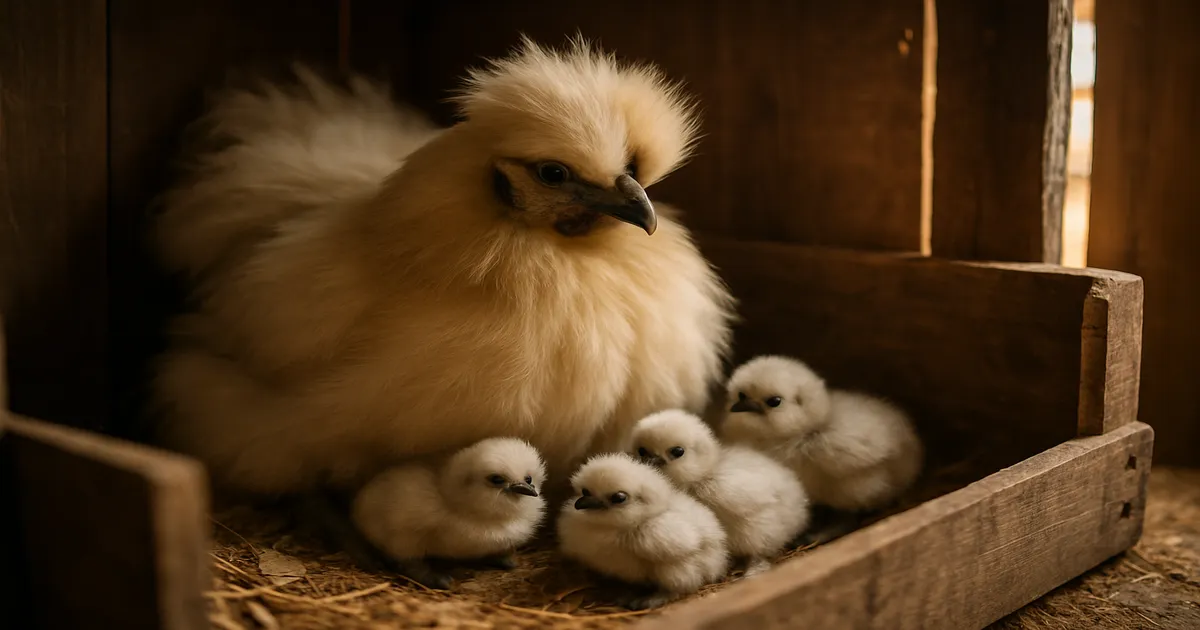
Quick Answer: A 100% hatch rate with Silkies is a genuinely rare achievement worth celebrating — and a sign your broody hen did her job perfectly. Now you need to move fast: get your brooder set up, chick starter on hand, and a plan for housing a flock that’s about to steal your heart (and your schedule).
Congratulations — a first 100% successful hatch is something most chicken keepers never pull off, and the fact that you’re now drowning in Silkies makes it even better. These fluffy, black-boned, five-toed little characters are unlike any other breed in the backyard flock. Cute as they are, a full clutch of Silkie chicks needs your attention right now. Let’s get you sorted.
Your First 100% Successful Hatch: What It Actually Means
A 100% hatch rate means every fertilized egg you set made it to hatch day. That’s remarkable. Average incubation success — even with experienced keepers — sits around 75–85%, and many first-timers see far lower. You did something right, whether that was your Silkie hen’s dedication, your incubator management, or both.
Why Silkies Are the Ultimate Broody Breed
Silkies are the gold standard for broodiness. A single hen may go broody three to five times per year, sitting tight through the full 21-day incubation with fierce dedication. They’ll hatch duck eggs, turkey eggs, and guinea eggs without complaint. That instinct is exactly why your hatch went so well — and why it’ll probably happen again soon.
Your Immediate To-Do List
Before anything else, run through this checklist:
- Brooder ready — heat lamp or radiant brooder plate set to 95°F (35°C) for week one, dropping 5°F each week after
- Chick starter on hand — 20–22% protein crumble; use unmedicated feed if chicks were vaccinated for coccidiosis
- Water source sorted — shallow chick waterer or nipple waterer; no open containers where chicks can drown
- Vet contact identified — find an avian vet before you need one urgently
- Space planned — think ahead to coop sizing now, not in six weeks when they’ve outgrown the brooder
Meet Your New Flock: The Silkie Breed at a Glance
Origins and APA Recognition
Silkies trace back to ancient China, with written references as far back as the 13th century. Marco Polo reportedly described “furry chickens” during his travels — almost certainly Silkies. The breed was formally recognized by the American Poultry Association in 1874 and listed in the Standard of Perfection. In the U.S., they’re classified as bantams, typically weighing 2–3 lbs for hens and 3–4 lbs for roosters.
The Fibromelanosis Gene: Why Silkies Are Black on the Inside
New Silkie owners are often startled the first time they see one up close. The fibromelanosis (FM) gene causes hyperpigmentation throughout the body — skin, bones, beak, and internal organs all carry a striking blue-black color. It’s completely normal, it’s a defining genetic trait, and in many Asian cuisines, Silkie meat is considered a delicacy precisely because of it.
Unique Physical Traits
Silkies stand out from every other breed in the yard. Here’s what makes them physically distinctive:
- Silk-like plumage — Silkies lack barbicels, the tiny hooks that hold feather fibers together, producing soft, fluffy plumage that looks and feels like fur
- Five toes — most chickens have four; Silkies have five, a polydactyl trait shared with only a handful of other breeds
- Walnut comb — small, dark, and nearly frostbite-proof, which is a genuine cold-climate advantage
- Turquoise earlobes — vivid blue-turquoise, one of the most striking features on the bird
- Feathered legs and feet — beautiful, but requiring extra care in wet or muddy conditions
- Crest — that pom-pom on top can significantly obstruct their vision, which has real practical implications for safety
Recognized Colors and Varieties
The APA recognizes seven standard Silkie colors: White, Black, Blue, Buff, Gray, Partridge, and Splash. White is by far the most common. Popular colors not yet APA-standardized include Lavender, Paint, Cuckoo, and Red. Both bearded and non-bearded varieties are recognized — the beard being the extra feathering under the beak and on the cheeks.
Silkie Temperament: The Lap Dog of the Chicken World
Silkies consistently rank among the top three most docile chicken breeds. They actively seek human interaction, tolerate handling from children remarkably well, and are used in therapy animal programs for exactly this reason. Roosters are notably calmer than most breeds too — a meaningful bonus if you’re new to keeping a cockerel.
Flock Compatibility
Here’s the catch with that gentle temperament: Silkies can get pushed around in mixed flocks. Their docile nature and limited vision from that crest make them easy targets for more assertive breeds. If you’re integrating them with other chickens, stick to similarly gentle companions:
- Buff Orpingtons — calm, heavy, and non-confrontational
- Cochins — fluffy, slow-moving, and easygoing
- Faverolles — famously sweet and well-matched with Silkies
Avoid housing Silkies with Rhode Island Reds, Easter Eggers, or any breed with a reputation for aggression in a mixed flock. Sudden noises, aggressive flockmates, and frequent disruptions can all cause measurable stress — reduced laying, feather-picking, and general decline in condition. Keep their environment calm and consistent, especially in the first weeks after integration.
Setting Up the Perfect Silkie Coop and Run
Space Requirements
The minimum is 4 sq ft per bird indoors, but 6 sq ft is strongly recommended. Silkies stay inside more than most breeds — they dislike wet weather, and their feathered feet suffer in mud. For the run, allow at least 10 sq ft per bird, with 15 sq ft ideal.
Roost Bar Height and Nesting Boxes
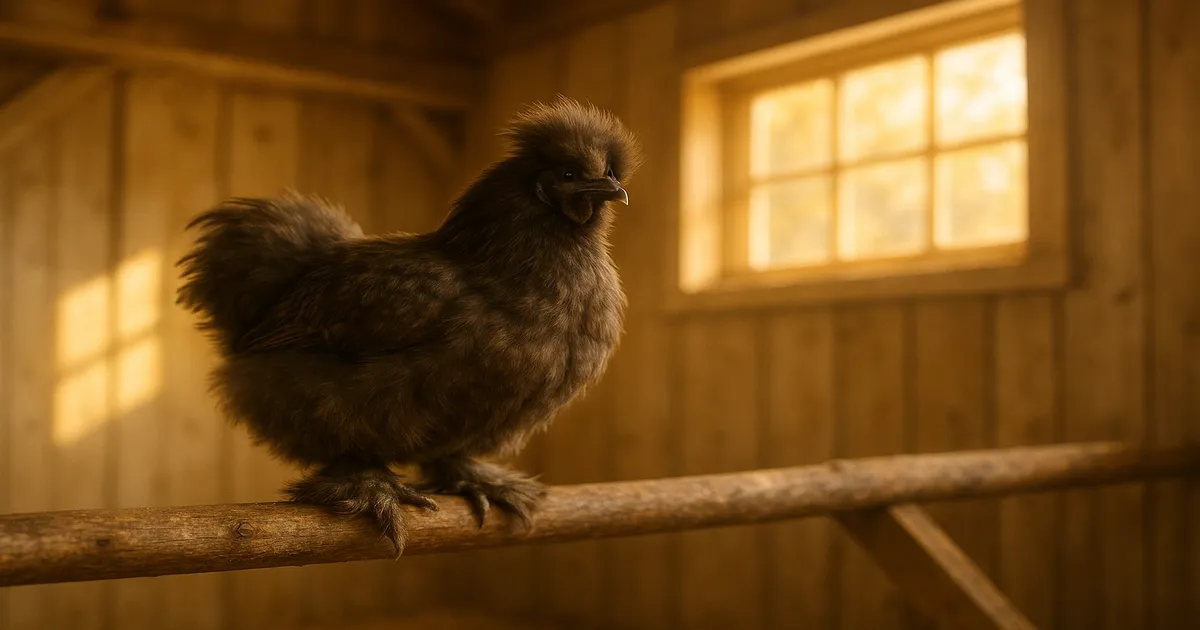
Silkies are poor flyers. Standard roost bars at 18–36 inches are too high for many of them, and jumping down can injure their legs. Aim for roost bars just 6–12 inches off the ground, with a diameter of 1.5–2 inches for comfortable gripping. Add a small ramp if any roost is higher than 8 inches. Many Silkies will simply pile together on the floor — that’s normal for the breed.
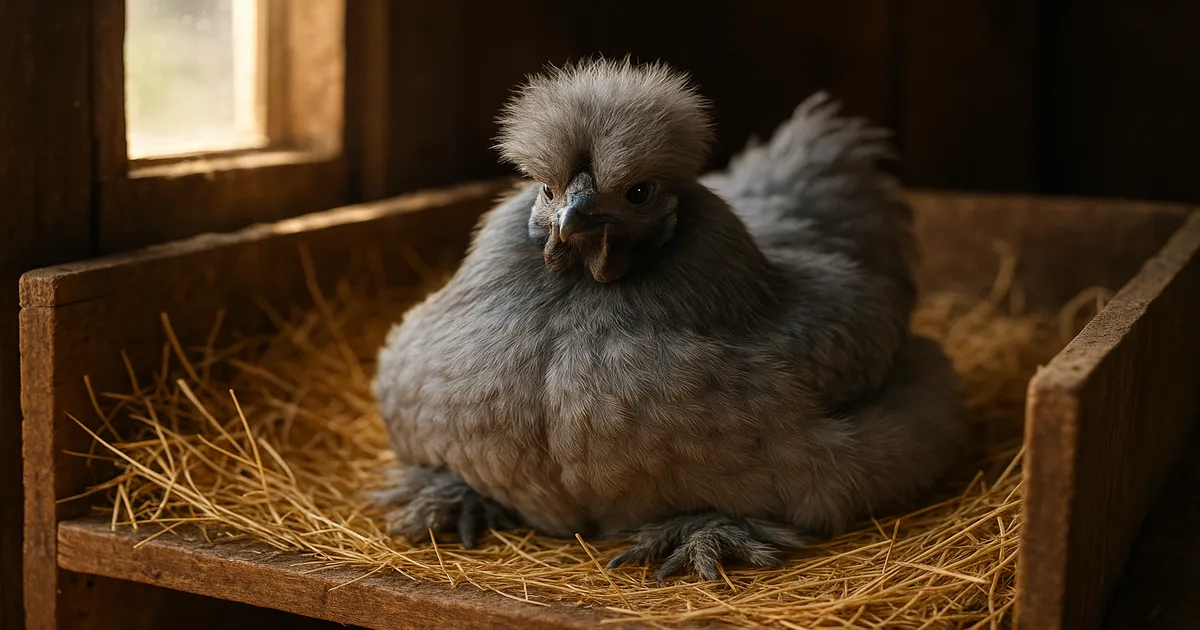
For nesting boxes, plan for one box per three to four hens, sized at 12 × 14 inches minimum. Floor-level or very low boxes are essential — Silkies often won’t use elevated boxes and will nest on the floor instead. Use soft bedding: pine shavings, straw, or hemp. Avoid cedar shavings, which are a respiratory irritant. With Silkies’ legendary broodiness, expect a hen to commandeer a box for weeks at a time, so extra boxes prevent laying pile-ups.
Ventilation, Flooring, and Heating
Ventilation openings should equal at least 1 sq ft per 10 sq ft of floor space, positioned high on the walls near the roofline. This lets ammonia and moisture escape without drafts hitting the birds at floor level. Silkies are more prone to respiratory issues from poor ventilation than tight-feathered breeds, so don’t skimp here.
The deep litter method works well for flooring — 4–6 inches of pine shavings, stirred regularly and replaced every three to six months. The critical rule: keep it dry. Wet, muddy floors are the enemy of feathered feet and a fast track to bumblefoot.
In climates that regularly drop below 20°F (-7°C), insulate walls and ceiling. Avoid heat lamps unless temperatures drop below 10°F (-12°C); a flat-panel radiant coop heater is far safer and more energy-efficient.
Predator-Proofing Your Silkie Enclosure
Silkies are at elevated predator risk because their crests genuinely block their vision — they often can’t see a hawk overhead or a dog approaching from the side. Predator-proofing isn’t optional here; it’s critical.
- Use ½-inch galvanized hardware cloth on all openings — chicken wire keeps chickens in but won’t keep predators out
- Bury an apron wire extending 12–18 inches outward from the coop base to stop diggers
- Install an automatic coop door with a light sensor
- Consider trimming your Silkies’ crests if predator pressure is high in your area — a small trim dramatically improves their field of vision
Feeding Your Silkies: Hatchlings to Laying Hens
What to Feed at Each Stage
The feeding lifecycle is straightforward:
- 0–8 weeks: 20–22% protein chick starter in crumble form
- 8–18 weeks: 16–18% protein grower feed, still crumble
- 18+ weeks (or at first egg): 15–18% protein layer feed
Crumble is the right choice for Silkies at every stage. Their small beaks and fluffy beards make pellets awkward and wasteful. If your chicks were vaccinated for coccidiosis, do not use medicated starter — the amprolium in medicated feed interferes with the vaccine.
Calcium, Oyster Shell, and Grit
This trips up a lot of beginners. Oyster shell and grit are not the same thing and serve completely different purposes.
Oyster shell provides calcium for eggshell formation. Offer it free-choice in a separate dish to laying hens only — excess calcium damages the developing kidneys of chicks and non-laying birds. Insoluble grit (granite or flint) lives in the gizzard and grinds food. It’s essential for any bird eating anything beyond commercial feed. Confined birds need it provided free-choice; free-ranging birds pick it up naturally. Use chick-grade grit for birds under eight weeks.
Treats, Feeders, and Waterers
The 10% rule applies: treats should make up no more than 10% of daily intake. Great options include mealworms (especially during molt), leafy greens, pumpkin seeds, berries, and watermelon in summer. Scratch grains are fine occasionally — think of them as chicken candy — but limit to one to two tablespoons per bird per day.
Foods to avoid completely: avocado (contains persin, which is toxic to poultry), chocolate, onions, raw dried beans, rhubarb leaves, green potato skins, and anything moldy.
Standard open waterers soak Silkie beards and crests, which leads to chilling and wet-feather problems. Nipple waterers are the better choice — they keep faces dry and reduce the risk of respiratory issues from wet feathering. Keep feeders at back height rather than on the ground, and opt for side-access feeders rather than overhead styles that force crested birds to tilt their heads awkwardly. (Little Giant Galvanized Hanging Poultry Feeder)
Drowning in Silkies: Egg Production Realities
How Many Eggs Do Silkies Actually Lay?
Set realistic expectations now. Silkies lay roughly 100–120 eggs per year, or about two to three eggs per week under ideal conditions. Compare that to a Rhode Island Red at 250–300 eggs per year and you get the picture. Silkie eggs are also small — about 1.5–1.75 oz, noticeably smaller than a USDA large egg at 2 oz — and range from cream to light brown in color.
Most Silkie hens don’t lay their first egg until seven to nine months of age, and some take until ten to twelve months. Production breeds like Leghorns start at four to five months, so don’t compare timelines. Silkies are late bloomers, full stop.
Broodiness: The Double-Edged Sword
Broodiness is why you just had a 100% successful hatch — and it’s also why annual egg totals are so low. A Silkie that goes broody four times in a year may only produce 60–80 eggs total once you account for the weeks she spends sitting and then raising chicks. It’s the breed’s defining trait, and it cuts both ways.
On the upside: Silkies will happily adopt eggs from ducks, turkeys, guineas, and even peacocks. If you ever need a surrogate mother for another species, your Silkie hen is the most willing candidate in the yard.
How to Break a Broody Silkie Hen
The wire-bottomed cage method is the most reliable approach. Place the hen in a cage with food and water but no nesting material, elevated so air flows under her vent. The airflow cools the hormonal signals driving the broody behavior. Keep her there for three to five days — success rate is around 70–80%. Return her to the flock once she’s acting normally and her breast feels cool rather than hot to the touch.
Silkie Health: Common Problems and How to Prevent Them
Marek’s Disease
Silkies are genetically more susceptible to Marek’s disease than many other breeds. Marek’s is a herpesvirus that causes tumors, paralysis, and immunosuppression — and there is no cure. Vaccinate every chick at day one; most hatcheries offer this for $0.25–$0.50 per chick. The virus survives in feather dander for months to years, so biosecurity matters: quarantine any new birds for a minimum of 30 days before introducing them to your existing flock.
Coccidiosis in Chicks
Coccidiosis is the most common killer of young chicks, with the danger window falling between three and six weeks of age. Symptoms include bloody or watery diarrhea, lethargy, ruffled feathers, and huddling. Treatment is amprolium (Corid) — 9.6% liquid at 2 teaspoons per gallon of water for five to seven days. Prevention comes down to keeping the brooder dry and uncrowded. Silkie chicks with feathered feet are especially prone to tracking fecal matter, so clean the brooder more frequently than you think you need to.
Mites, Lice, and Bumblefoot
Dense, fluffy Silkie feathering is ideal habitat for mites and lice. Inspect your birds weekly — focus on the vent area and under the wings. Treatment options include permethrin dust or spray, or spinosad-based products like Elector PSP, which is highly effective. Repeat treatment in seven to ten days to break the lifecycle. Red mites live in coop cracks rather than on birds, so treat the coop itself with permethrin spray as well. A dust bath — at least 2 × 2 feet, filled with dry soil, sand, and wood ash — is your best ongoing prevention.
Bumblefoot (plantar pododermatitis) is a bacterial infection of the foot pad, usually caused by Staphylococcus aureus. It shows up as a hard, dark scab on the bottom of the foot, often with swelling and limping. Silkies are at higher risk than clean-legged breeds because their feathered feet trap moisture and debris. Prevention is straightforward: clean dry bedding, smooth roost surfaces, and regular foot checks. Catch it early and it’s manageable; left untreated, it becomes a serious systemic infection requiring veterinary care.
Frequently Asked Questions About Silkie Chickens
How many eggs do Silkie chickens lay per year?
Silkie hens lay approximately 100–120 eggs per year, or two to three eggs per week under optimal conditions. Their eggs are small (about 1.5–1.75 oz) and cream to light brown in color. Heavy brooders may only produce 60–80 eggs annually once sitting time is factored in.
Why do Silkie chickens go broody so often?
Silkies have a strong genetic predisposition toward broodiness that has been selectively reinforced over centuries of breeding. A single hen may go broody three to five times per year, driven by hormonal cycles easily triggered by the presence of eggs in the nest. It’s the breed’s most defining trait — and essentially impossible to breed out without changing what makes a Silkie a Silkie.
Are Silkie chickens good for beginners and families with kids?
Yes. Silkies consistently rank among the top three most docile chicken breeds and are an excellent choice for first-time keepers and families with children. They tolerate handling well, seek out human interaction, and are used in therapy animal programs. Just be prepared for their special housing needs and lower egg production compared to production breeds.
Can Silkies live with other chicken breeds?
They can, but choose flockmates carefully. Silkies do best with other calm, gentle breeds like Buff Orpingtons, Cochins, and Faverolles. Their limited vision and docile nature make them vulnerable to bullying from more assertive breeds. A dedicated Silkie flock — or a carefully curated mixed flock — is always the safer option.
What is the biggest health risk for Silkie chickens?
Marek’s disease is the most serious genetic vulnerability — Silkies are more susceptible than most breeds, and the disease has no cure. Vaccinate at day one. Beyond Marek’s, the most common day-to-day issues are coccidiosis in chicks, external parasites (mites and lice) due to their dense feathering, and bumblefoot from wet or rough conditions underfoot.