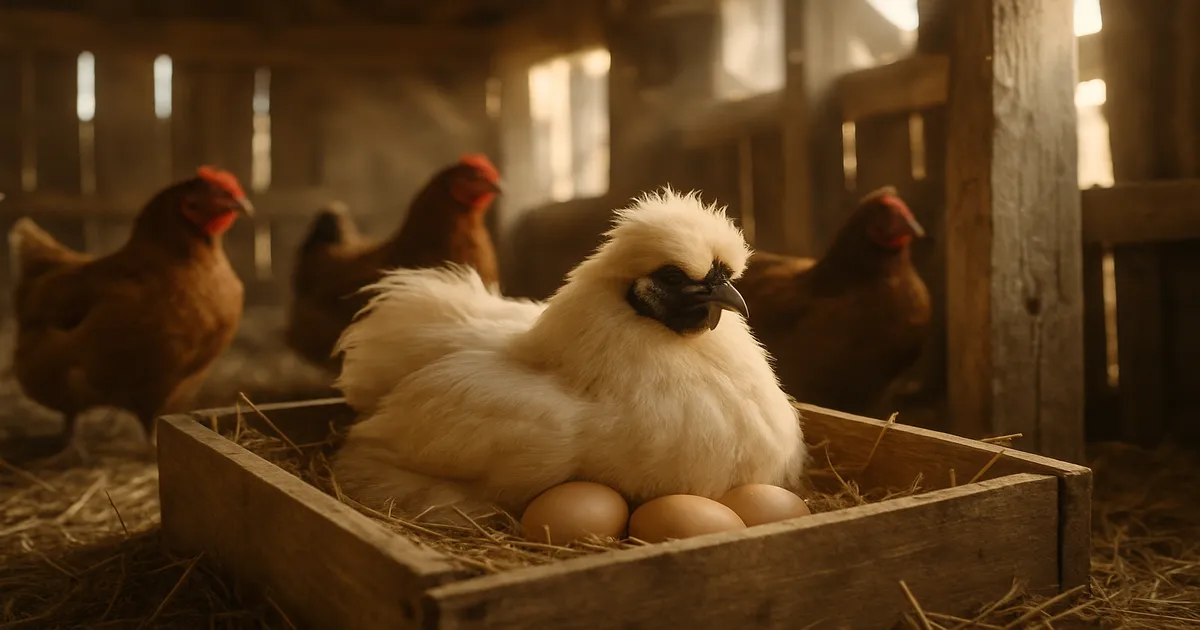
Quick Answer: You can strongly encourage a hen to go broody using environmental triggers — dark nest boxes, accumulated eggs, spring timing — but you cannot force it against her genetics. Broodiness is a heritable hormonal trait, so starting with the right breed is the single most important step. Get the genetics right first, then use the techniques below to tip a predisposed hen over the edge.
Can You Actually Make a Hen Go Broody?
Yes — but “make” is doing a lot of heavy lifting in that sentence. You can nudge a predisposed hen into broodiness using environmental cues. What you cannot do is manufacture broodiness in a hen whose genetics simply don’t support it. No amount of golf balls in a nest box will convince a White Leghorn to sit.
What Broodiness Really Is
Broodiness is a hormonally driven state triggered by rising prolactin levels, changing day length, and environmental cues like a full nest. When it kicks in, a hen stops laying completely and commits to incubating eggs — sitting nearly 24 hours a day, leaving only once or twice for 20–30 minutes to eat, drink, and defecate. Her brood patch heats to around 100–102°F (37.8–38.9°C), precisely the temperature needed for the natural 21-day incubation period. She’ll flatten herself over the clutch, fluff up dramatically, and produce a low, guttural cluck that sounds nothing like her normal voice.
Think of broodiness as a dial, not a switch. Some breeds sit reliably several times a year. Others go broody occasionally, depending on the individual hen and conditions. And some — mostly commercial laying breeds — have had broodiness so thoroughly selected out that it’s essentially gone. Knowing where your breed falls on that spectrum is step one before trying any of the techniques below.
Best Breeds for Going Broody: Start With the Right Genetics
Highly Broody Breeds
These breeds have strong, consistent broody instincts. If natural hatching is your goal, start here.
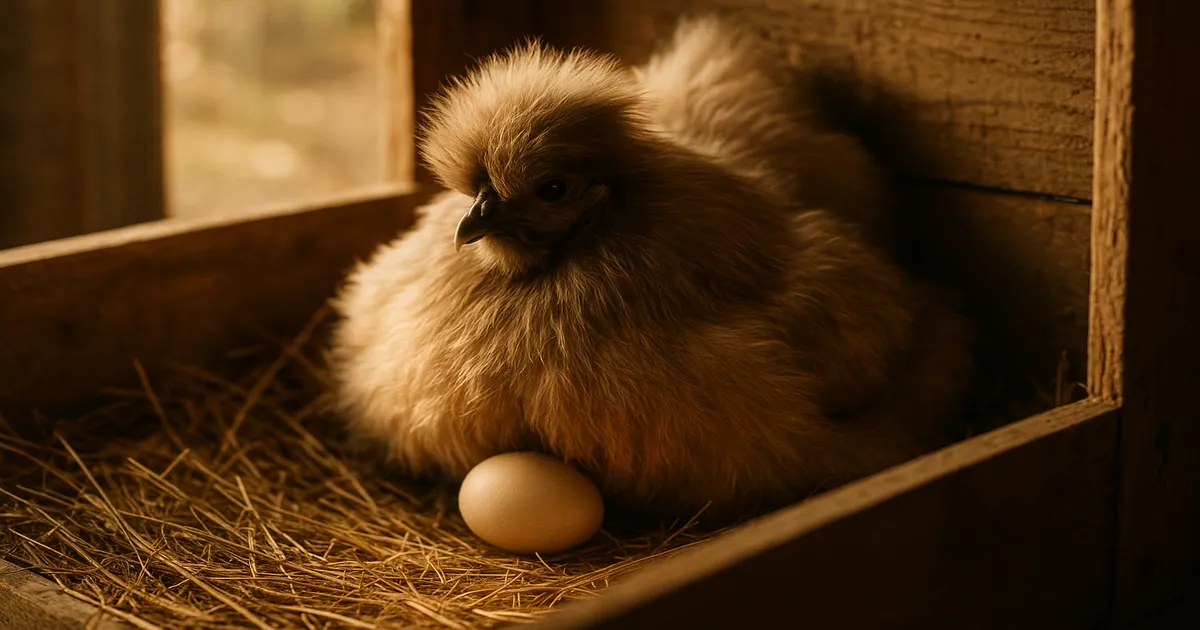
- Silkie — The gold standard. Silkies go broody 3–4+ times per year and will cheerfully hatch duck eggs, turkey eggs, or anything else you slide under them. Their small bantam size (2–3 lbs) limits clutch size, but their drive is unmatched.
- Cochin — Gentle, heavily feathered, and a reliable setter 2–3 times per year. Both standard and bantam sizes work well.
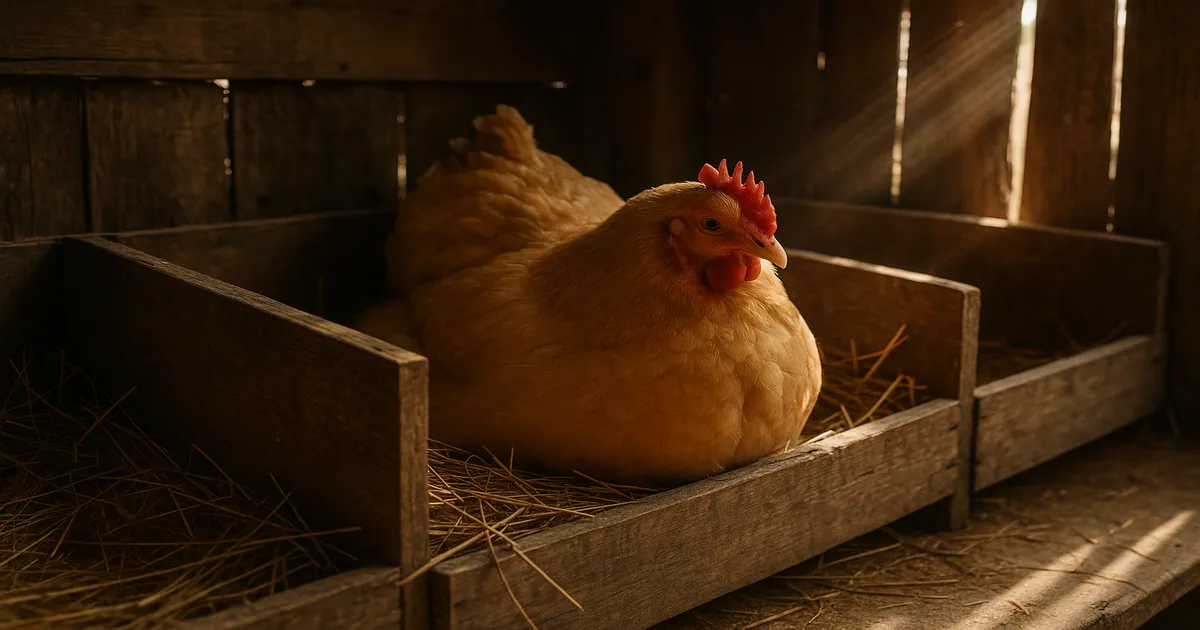
- Buff Orpington — Large, calm, and maternal. Expect 1–3 broody episodes per year. Their fluffy bodies make excellent incubators.
- Brahma — These gentle giants (hens reach 9–10 lbs) can cover 10–14 eggs at once. Moderate-to-high broodiness makes them ideal for keepers who want to hatch large clutches.
- Dominique — America’s oldest breed is hardy, self-sufficient, and moderately broody.
- Sussex — More broody than most dual-purpose breeds, particularly the Speckled variety.
Occasionally Broody Breeds
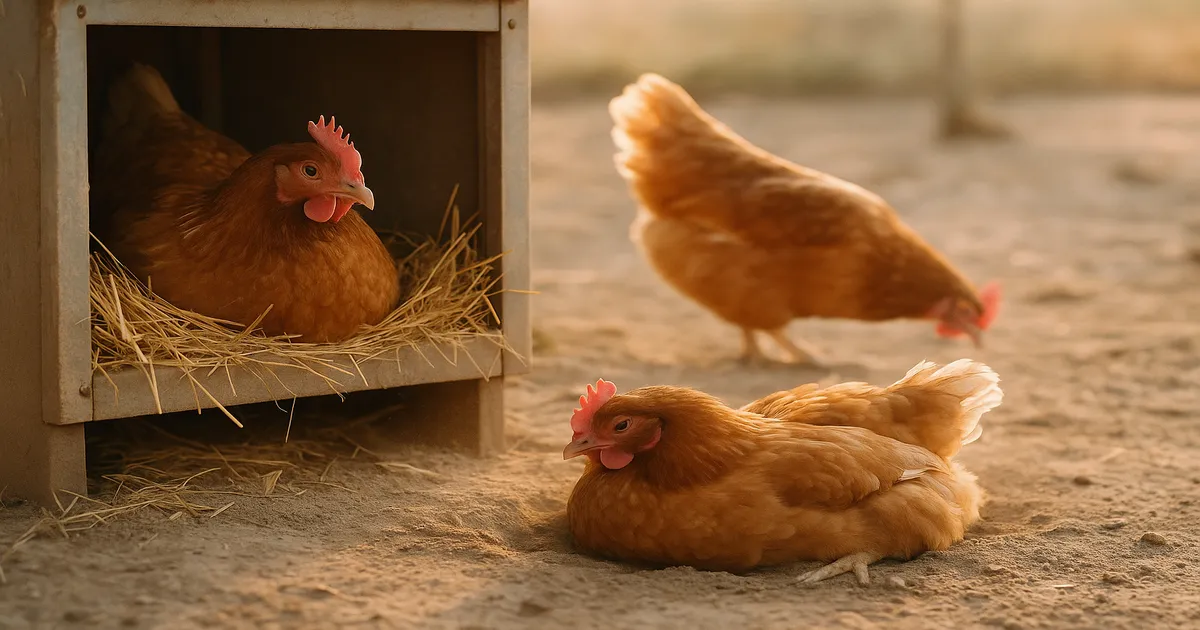
Rhode Island Red, Barred Rock, Wyandotte, Easter Egger, and Australorp hens can and do go broody — but it’s not guaranteed. Individual variation is high. An older hen in her second or third year is more likely to go broody than a pullet in her first laying season.
Breeds That Almost Never Go Broody
White Leghorns, ISA Browns, Production Reds, Anconas, Hamburgs, and Polish hens have had broodiness largely or entirely eliminated through selective breeding. If you keep these for eggs and want natural hatching too, you’ll need a dedicated broody hen from a different breed.
Breed Comparison at a Glance
| Breed | Broody Frequency | Eggs/Year | Egg Color |
|---|---|---|---|
| Silkie | 3–4+ times/year | 100–120 | Cream/tinted |
| Cochin | 2–3 times/year | 150–180 | Brown |
| Buff Orpington | 1–3 times/year | 200–280 | Light brown |
| Brahma | Moderate–High | 150–200 | Brown |
| Dominique | Moderate–High | 180–230 | Brown/buff |
| Sussex | Moderate | 200–250 | Light brown/tinted |
| Barred Rock | Occasional | 200–280 | Brown |
| White Leghorn | Almost never | 280–320 | White |
7 Proven Techniques to Encourage a Hen to Go Broody
These techniques work by lowering the threshold for a hen who already has the genetic predisposition. They don’t override biology — they work with it.
1. Accumulate Eggs (Real or Fake) in the Nest
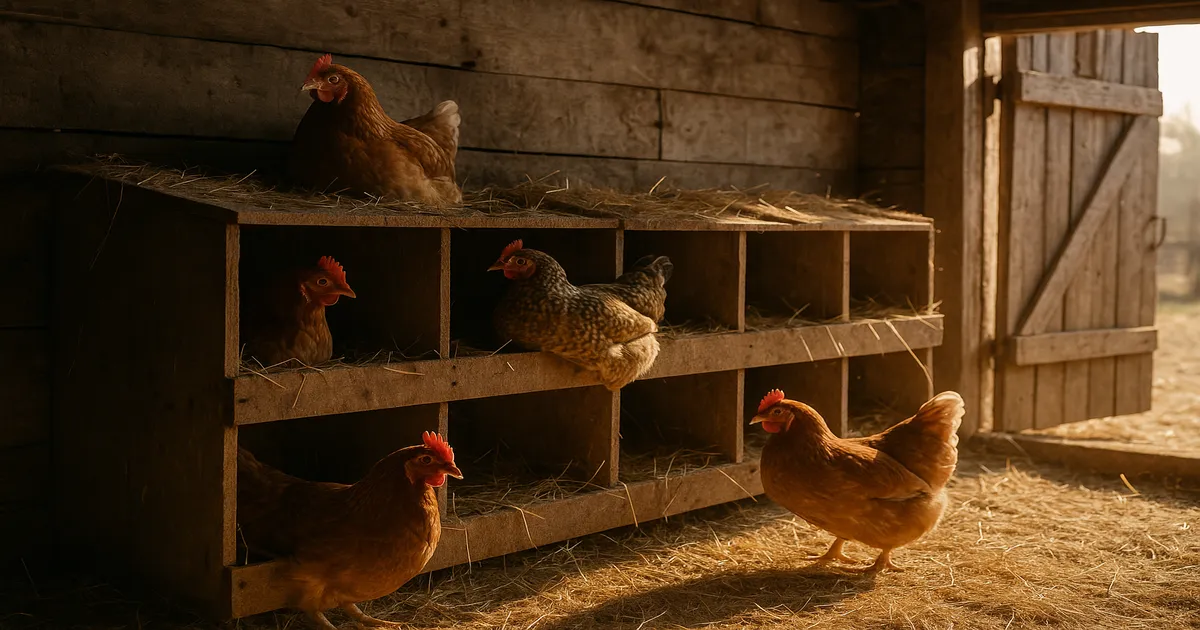
Leave 8–12 eggs in one nest box and stop collecting them daily. If you’d rather not risk leaving real eggs, ceramic nest eggs work just as well — the visual and tactile stimulus of a full clutch is one of the strongest natural triggers available.
2. Create Dark, Secluded Nest Boxes
Hang strips of burlap or dark fabric over the front of a nest box to create a curtain. This simple change mimics the privacy of a natural nesting site. Low light signals safety and seclusion — exactly what a hen needs to commit to sitting.
3. Reduce Disturbances Around the Nest Area
Foot traffic, loud noises, and frequent egg collection all disrupt the hormonal buildup needed for broodiness. Minimize activity near the nest boxes in the late morning, when hens are most likely laying or transitioning to a sitting mindset.
4. Time Your Efforts With Spring and Early Summer
The natural broody peak runs from March through June in the Northern Hemisphere, driven by longer days and warming temperatures. A smaller secondary window opens in August–September. Trying to induce broodiness in November is fighting biology — save your effort for spring.
5. Use the “Broody Buddy” Effect
Social cues are real. If one hen goes broody, others — especially of the same breed — are noticeably more likely to follow. Don’t rush to break the first broody hen if you’re hoping others will join in.
6. Maintain a Calm, Low-Stress Environment
Stress actively suppresses broody behavior. Predator pressure, overcrowding, sudden feed changes, or flock conflict can all prevent a hen from committing to a nest. A calm, stable flock is the foundation everything else builds on.