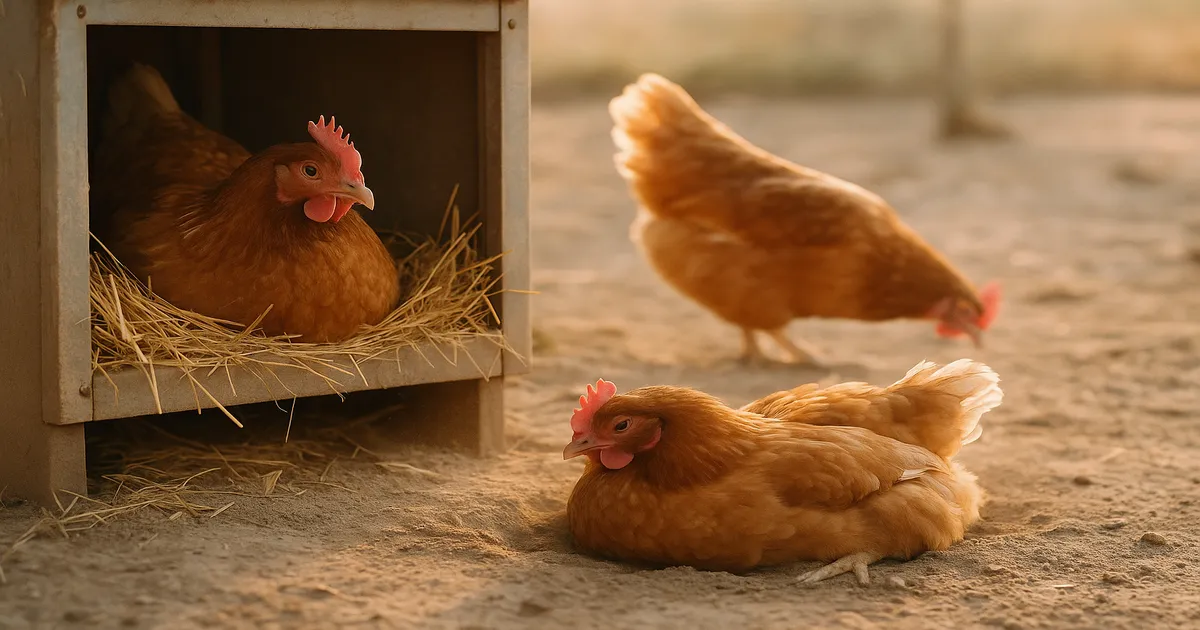
Quick Answer: Most chicken behaviors that alarm new keepers — rolling in dirt, flopping sideways in the sun, suddenly sprinting across the yard, or refusing to leave the nest box — are completely normal and rooted in instincts inherited from wild ancestors. This guide explains what your chicken is doing and why, season by season, from everyday quirks to genuine warning signs worth acting on.
What Is My Chicken Doing? Decoding Common Behaviors at a Glance
When you’re new to keeping chickens, almost everything they do looks alarming. Is that hen dead? Why is she screaming? Why did the whole flock just sprint into the bushes for no apparent reason? The good news: most of what you’re seeing is completely normal. Once you understand the “why,” it stops being stressful.
Recognizing normal behavior also makes it much easier to spot real warning signs — the subtle posture changes and behavioral shifts that signal a sick bird before things get serious.
The Wild Ancestry Behind Everyday Actions
Domestic chickens are descended from the Red Junglefowl, domesticated roughly 8,000–10,000 years ago in Southeast Asia. Despite thousands of years of selective breeding, their behavioral hardwiring hasn’t changed much. Dust bathing, scratching, alarm calls, pecking order dynamics — all of it traces back to survival strategies that kept their wild ancestors alive. Keep that in mind as you read through this guide, and the behavior starts making a lot more sense.
Normal Everyday Chicken Behaviors and What They Mean
Dust Bathing: Why Chickens Roll in Dirt
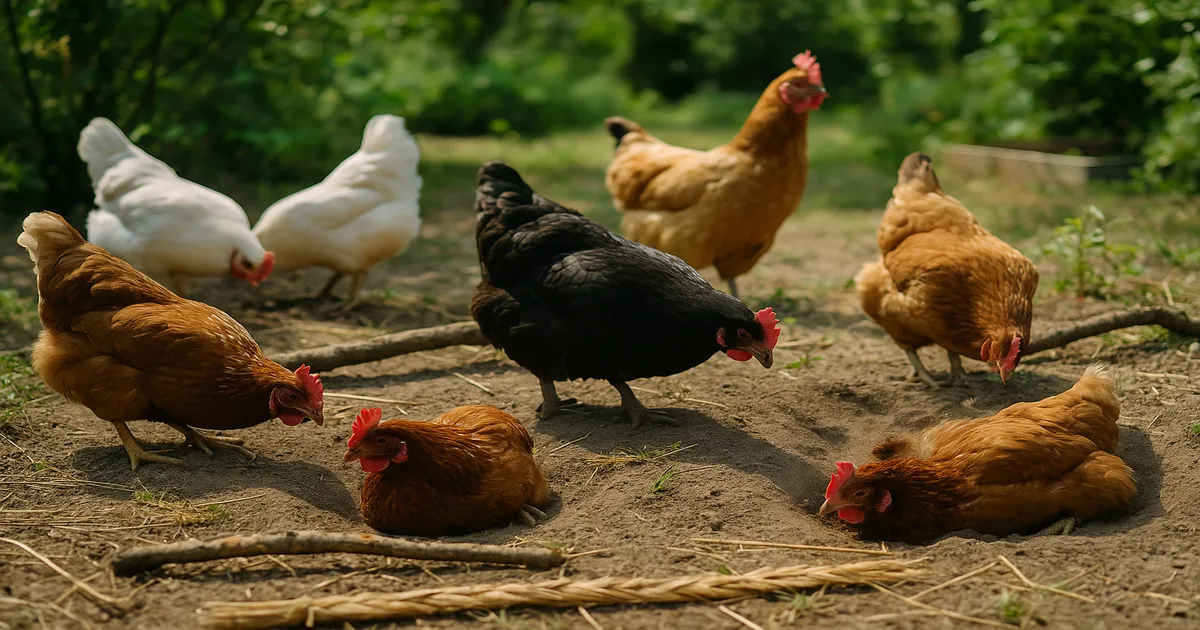
If you’ve ever watched a chicken dig a shallow bowl in the dirt, flop into it, and fling soil all over herself with apparent ecstasy, you’ve witnessed dust bathing. It looks ridiculous. It’s also essential. Chickens dust bathe to smother external parasites like mites and lice, and to regulate the natural oils in their feathers. Depriving a hen of a dust bath causes genuine stress. If your run doesn’t have a dry, loose patch of soil, offer a container filled with a mix of sand, dirt, and a small amount of food-grade diatomaceous earth.
Sunbathing and the “Dead Chicken” Flop
This one sends new keepers running in a panic at least once. A hen finds a sunny patch, stretches out on her side with one wing extended flat on the ground, closes her eyes, and goes completely still. She looks dead. She is not dead. Chickens sunbathe to synthesize vitamin D and to let the warmth drive parasites toward the surface of their feathers. To tell the difference between sunbathing and a genuinely sick bird: walk toward her. A sunbathing hen will startle awake and look mildly annoyed. A sick bird won’t react normally.
Foraging, Scratching, and Pecking at the Ground
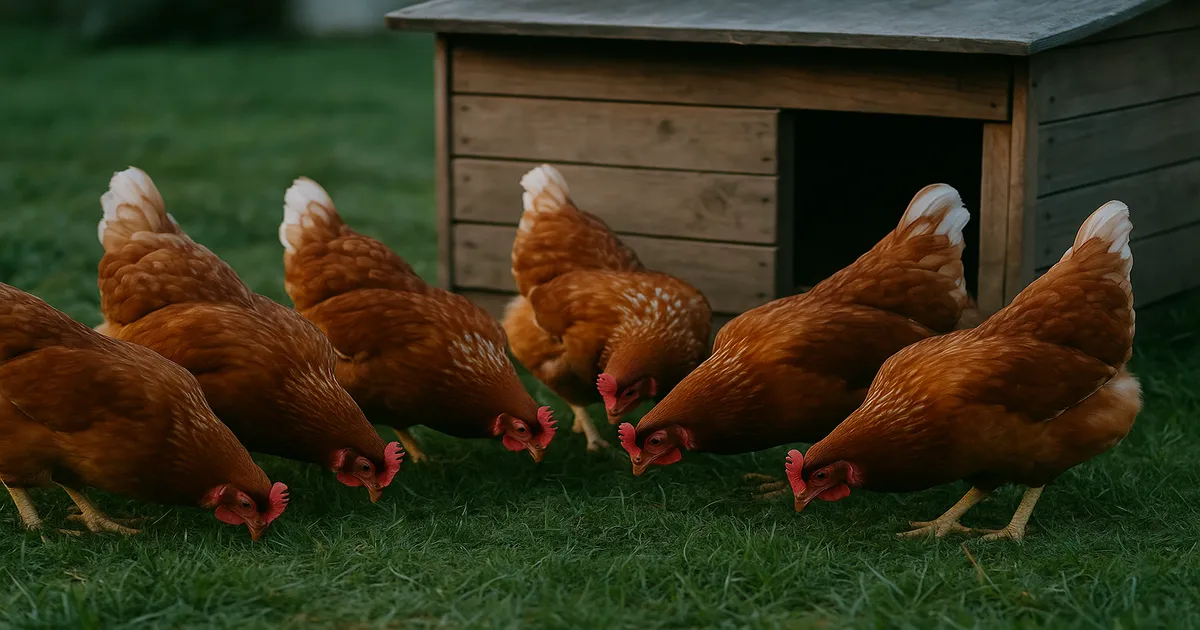
Chickens scratch constantly — it’s one of the most deeply ingrained behaviors they have. In the wild, Red Junglefowl scratch through leaf litter to uncover insects, seeds, and small invertebrates. Your backyard hens are doing exactly the same thing, even if the “leaf litter” is your garden bed. This behavior is healthy and normal. It also means any bare-dirt run will stay bare unless you rotate access or provide enrichment like scattered scratch grain or a deep litter system.
The Egg Song: Why Hens Cluck Loudly After Laying
The egg song — that loud, repetitive “bwawk bwawk bwawk BA-GAWK” — is one of the most searched chicken behaviors on the internet. It’s completely normal. Hens vocalize loudly before or after laying, and sometimes the whole flock joins in. The exact reason isn’t fully understood, but it’s thought to serve as a flock communication signal. If your neighbors are complaining, there’s not much you can do; it’s hardwired.
Preening and Feather Maintenance
You’ll often see chickens methodically running their beaks along individual feathers, or twisting to reach the preen gland at the base of their tail. Preening distributes oil from that gland across the feathers, keeping them waterproof, flexible, and properly aligned. A chicken that stops preening and lets her feathers go dull and ragged is telling you something is wrong — illness, severe stress, or a heavy parasite load can all suppress normal preening behavior.
Flock Social Behaviors: Pecking Order, Hierarchy, and Communication
How the Pecking Order Works
The pecking order is a linear dominance hierarchy, and every flock has one. The top bird gets first access to food, water, and prime roost spots; the bottom bird gets last pick of everything. It sounds harsh, but it’s actually a stability mechanism — once the order is established, conflict decreases significantly. Problems arise when it’s disrupted: introducing new birds, losing a dominant hen, or overcrowding can all trigger renewed fighting. The single most effective way to reduce aggression is adequate space — a minimum of 4 sq ft per bird inside the coop and 10 sq ft per bird in the run, though more is always better.
What Is My Chicken Saying? A Guide to Vocalizations
Chickens are surprisingly communicative. A few key calls worth knowing:
- Aerial predator alarm: A sharp, high-pitched call — the flock freezes or runs for cover
- Ground predator alarm: A lower, repetitive clucking — birds scatter and scan at ground level
- Contentment murmur: Soft purring sounds while foraging — everything is fine
- Distress call: Loud, frantic, sustained calling — something is actively wrong; investigate immediately
- Egg song: The loud post-lay announcement described above
Roosters and Tidbitting
If you have a rooster, you’ve probably seen him pick up a small piece of food, drop it, and cluck rapidly while bobbing his head near a hen. This is called tidbitting — a courtship behavior where he’s essentially saying “look what I found for you.” Hens respond well to roosters who tidbit frequently; it signals he’s attentive and a good provider. Mating itself is brief and can look alarming to new keepers, but a healthy rooster-to-hen ratio of 1:8–10 keeps things manageable.
Aggression vs. Normal Dominance Displays
Normal dominance behavior includes chest bumping, brief chasing, and occasional pecking to establish rank. This is different from sustained bullying, where one bird is cornered, prevented from eating, or pecked to the point of injury. If you see blood, remove the injured bird immediately — chickens are attracted to red and will escalate fast. Overcrowding, boredom, and low dietary protein are the most common triggers for bullying.
Broody Hen Behavior: What It Is and What to Do About It
Signs Your Hen Has Gone Broody
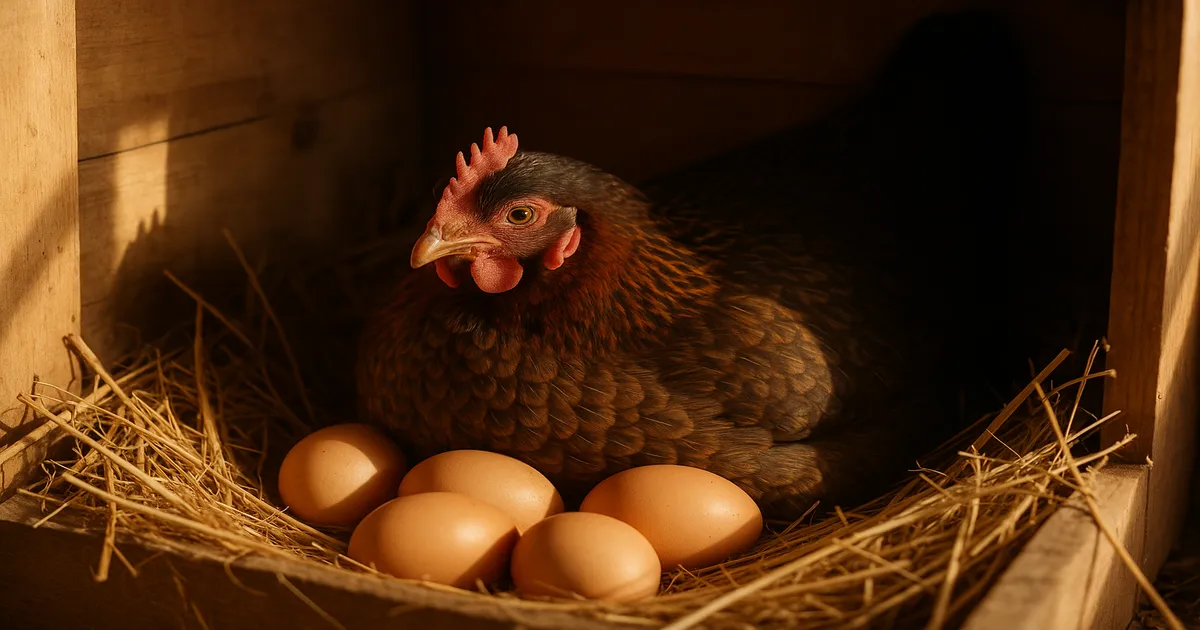
A broody hen is hard to miss. She’ll sit in the nest box 22–24 hours a day, puffed up like a football, and growl, hiss, or peck hard when you reach under her. She may pluck feathers from her breast to line the nest and create direct skin-to-egg contact for incubation. She’ll eat and drink very little, losing weight over the course of the brood. Importantly, she’ll sit on eggs whether or not they’re fertile — broodiness is hormonal, not logical.
Which Breeds Go Broody Most Often
- Frequently broody: Silkie, Cochin, Buff Orpington, Brahma, Sussex
- Occasionally broody: Plymouth Rock, Wyandotte, Rhode Island Red
- Rarely or never broody: Leghorn, Ancona, Sex-Links, Production Reds
If uninterrupted broodiness is a concern — it halts egg production entirely — stick with the rarely-broody breeds.
How to Break a Broody Hen
The most effective humane method is the wire-bottomed cage, sometimes called a “broody breaker.” Place the hen in a wire-floored cage elevated off the ground, with food and water but no nesting material. The airflow under her cools the brood patch (the bare skin on her belly), which lowers her body temperature and disrupts the hormonal cycle driving broodiness. Most hens break within 3–5 days. Simply removing her from the nest box repeatedly doesn’t work — she’ll be back within minutes.
Using a Broody Hen to Hatch Eggs Naturally
A determined broody is a tremendous asset if you want chicks. Slide fertile eggs under her at night, mark them with a pencil so you can identify and remove any new eggs added by other hens, and let her do the work. She’ll incubate for 21 days and then raise the chicks herself — far less labor-intensive than a brooder setup. Once the eggs hatch, make sure she has access to a chick starter feed rather than layer feed; layer feed is too high in calcium for young chicks.
Molting: Why Your Chicken Looks Terrible and Stopped Laying
What Is Molting and When Does It Happen?
Once a year, typically in fall (September through November), chickens shed their old feathers and grow new ones. A molting hen can look genuinely alarming — bare patches, pin feathers poking through, dull posture — but she’s not sick. The molt is triggered by decreasing daylight hours and is the body’s way of refreshing plumage heading into winter.
A hard molt is dramatic: a bird can lose most of her feathers within a few weeks, looking nearly naked before new ones grow in. A soft molt is gradual and easy to miss, with feathers replaced slowly over several months. Both are normal. Expect the full process to take 8–16 weeks.
Why Hens Stop Laying During a Molt
Growing feathers is metabolically expensive. Feathers are roughly 85% protein, and the body redirects resources away from egg production to support feather regrowth. Don’t expect eggs during a hard molt — it’s not a problem to fix, it’s biology doing exactly what it should.
How to Support Your Flock Through a Molt
- Switch to a higher-protein feed: 18–20% protein (flock raiser or a dedicated molt feed)
- Offer dried mealworms as a protein-rich treat
- Avoid handling birds with visible pin feathers — they’re blood-filled and genuinely painful when touched
- Once feathers are fully grown back and laying resumes, switch back to layer feed and offer free-choice oyster shell on the side
Behaviors That Signal a Sick or Stressed Chicken
Physical Warning Signs to Check Daily
A quick visual check every morning takes 60 seconds and can catch problems early. Look for:
- Comb: Bright red = healthy; pale, shrunken, or blue-tinged = illness or circulatory issue
- Eyes: Bright and round = healthy; sunken, cloudy, or half-closed = sick bird
- Posture: Upright and alert = normal; hunched, puffed up, tail pointed down = act today
- Droppings: Firm brown with white urate cap = normal; watery, bloody, or bright green = investigate
Behavioral Red Flags
A chicken standing apart from the flock, not foraging, not responding to food, or sleeping during the day is telling you something is wrong. Puffed feathers combined with a hunched posture are the most reliable behavioral signs of illness — healthy birds don’t do this except in extreme cold. Any bird showing these signs should be separated and assessed immediately.
Common Illnesses Behind Strange Behavior
- Lethargy + bloody droppings: Coccidiosis — treat with Amprolium (Corid) in drinking water; most dangerous in birds under 12 weeks
- Restlessness at night + feather damage around the vent: Mites or lice — check the vent area and under wings; treat with permethrin dust
- Limping + black scab on foot pad: Bumblefoot — soak in warm Epsom salt water, clean, and wrap; severe cases need a vet
- Rattling breath + nasal discharge + swollen sinuses: Respiratory infection (Mycoplasma, Infectious Bronchitis) — quarantine immediately and consult a vet
When to Call a Vet vs. Treat at Home
Mild bumblefoot, a suspected mite infestation, or a single hen with loose droppings can often be managed at home with careful monitoring. Call a vet — or a poultry-savvy extension agent — for any bird showing neurological symptoms, any respiratory illness spreading through the flock, suspected Marek’s disease, or any bird that isn’t improving after 48 hours of home treatment. Finding an avian vet before you have an emergency is genuinely worthwhile.
Laying Behaviors: Understanding the Egg-Laying Cycle
How to Tell When a Hen Is About to Lay
The most reliable sign that a pullet is approaching laying age is the submissive squat: when you reach toward her, she crouches low, spreads her wings slightly, and holds still. This mating submission posture usually precedes the first egg by 1–2 weeks. You’ll also notice her spending more time investigating the nesting boxes — she’s shopping for a spot she likes.
Why Hens Fight Over the Same Nesting Box
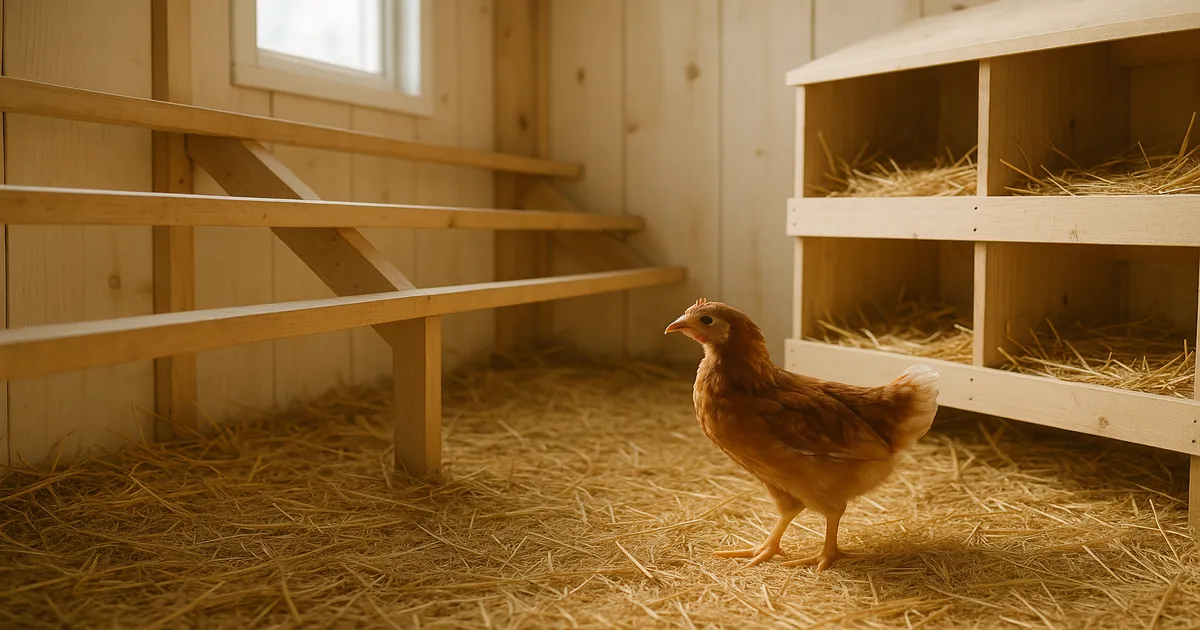
You can have six nesting boxes and six hens, and four of them will queue up for the same box while the others sit empty. Hens have strong preferences, often for darker or more enclosed boxes, or ones where they’ve laid successfully before. The standard ratio of one box per 3–4 hens is sufficient — you don’t need to match boxes to birds.
Egg Production Changes by Season
Hens need 14–16 hours of light per day to maintain peak production. As days shorten in fall and winter, production naturally drops 40–60%. To maintain winter production, add a single LED bulb on a timer to bring total daily light to 16 hours — add it in the morning rather than the evening so birds can go to roost naturally at dusk.
Egg-Laying Age by Breed
- 16–18 weeks: High-production breeds — Leghorn, Sex-Links
- 18–22 weeks: Most dual-purpose breeds — Rhode Island Red, Plymouth Rock, Black Australorp
- 24–26 weeks: Mid-weight breeds — Wyandotte, Sussex, Easter Egger
- 26–30 weeks: Heavy breeds — Brahma, Cochin, Jersey Giant
First eggs are often small, misshapen, or occasionally shell-less. It takes a few weeks for the reproductive system to calibrate.
Seasonal Behavior Changes: What to Expect Year-Round
Spring: Laying Resumes, Broody Season Begins
As daylight increases past 12 hours, laying resumes and the flock visibly perks up. Foraging activity increases, dust baths get more enthusiastic, and broodiness peaks — spring is prime broody season. If you’re planning to hatch chicks, this is your window.
Summer: Heat Stress and How to Help
A chicken managing heat stress holds her wings slightly away from her body, pants with her beak open, and seeks shade. Appetite drops, and so does egg production. These are normal thermoregulation responses, but prolonged heat above 90°F (32°C) can be dangerous. Provide shade, keep waterers full of fresh cool water, and offer frozen treats like watermelon or frozen corn. Wet the ground in a shaded area so birds can stand on cool, damp earth. Ventilation in the coop is critical — heat builds fast in enclosed spaces.
Fall: Molt Begins, Egg Production Drops
September signals the start of molt for most flocks. Birds look ragged, egg production plummets, and the flock seems quieter than usual. This is all normal and cyclical. Bump up dietary protein, leave the birds alone as much as possible, and resist the urge to add supplemental lighting until the molt is complete — forcing production during a molt puts unnecessary stress on the bird’s body.
Winter: Reduced Activity and Cold-Weather Needs
Chickens in winter roost earlier, sleep longer, and are less active during short days. Most standard breeds tolerate 0°F (-18°C) without supplemental heat as long as the coop is dry and draft-free. Frostbite on combs and wattles is the primary cold-weather risk, especially for large-combed breeds like Leghorns and Rhode Island Reds. Use a flat 2×4 roost bar laid flat-side up so birds can sit on their toes while sleeping, covering them with their breast feathers and reducing frostbite risk.
Frequently Asked Questions
Why is my chicken running around like crazy for no reason? This is called a “zoomie” or flock frenzy, and it’s completely normal. It’s often triggered by a perceived threat, a sudden noise, or simply high energy — especially in younger birds. As long as it stops quickly and no bird is injured, there’s nothing to worry about.
Why is my hen sitting in the nesting box all day but not laying? She’s likely gone broody. A broody hen will sit tight on the nest 22–24 hours a day, puff up when disturbed, and may growl or peck. She’ll do this whether or not there are eggs under her. See the broody hen section above for how to handle it.
Why did my chickens suddenly stop laying? The most common causes are shortened daylight hours (fall/winter), a molt, stress from a predator scare or flock change, illness, or a nutritional deficiency. Check for other symptoms, review recent changes to their environment, and confirm they’re on a quality layer feed with free-choice oyster shell.
Why is my chicken making a weird rattling or wheezing sound? Respiratory sounds — rattling, wheezing, gurgling — are never normal and should be taken seriously. Common causes include Mycoplasma gallisepticum, Infectious Bronchitis, or Aspergillosis. Quarantine the bird immediately and consult a vet. Respiratory illness can spread through a flock quickly.
Why does my chicken keep pecking at the other hens? Some pecking is normal dominance behavior. It becomes a problem when one bird is being relentlessly targeted, prevented from eating, or injured. The most common triggers are overcrowding, boredom, and low dietary protein. Ensure minimum space requirements are met, provide enrichment, and consider bumping protein levels temporarily.