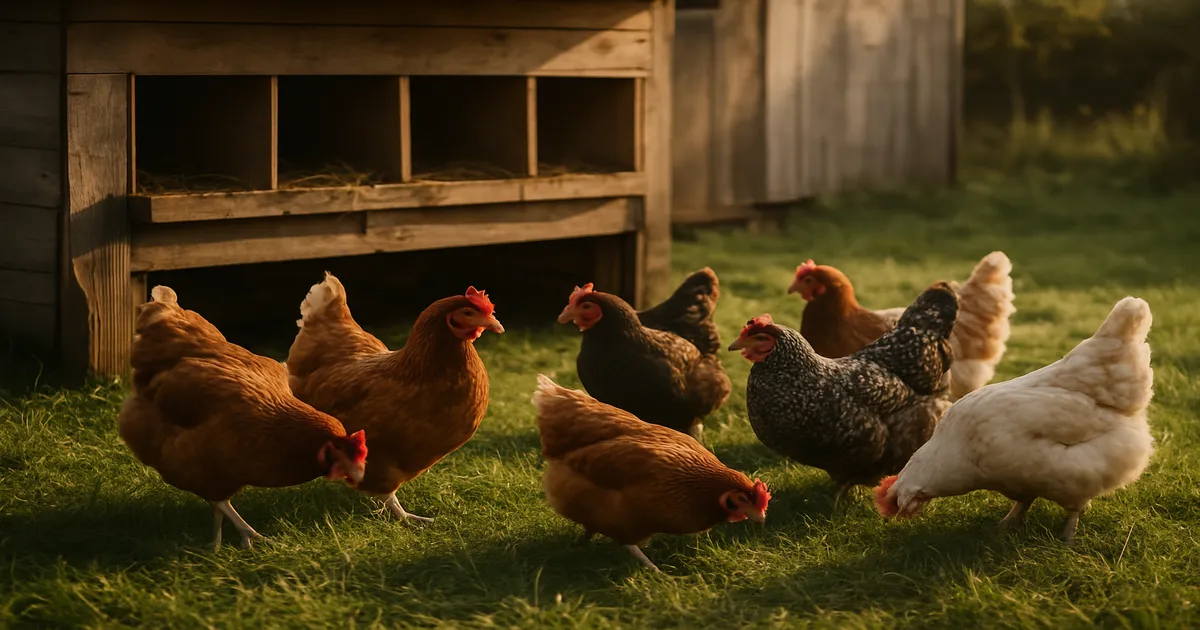
Quick Answer: For a small backyard flock of 4–6 hens, expect to spend $300–$1,000+ on startup costs (coop, chicks, and equipment) and $300–$700+ per year in ongoing expenses. Whether raising your own chickens costs less than buying eggs depends on your breed choices, how you build your coop, and how well you manage feed — but most backyard keepers find the value goes well beyond the price per dozen.
Figuring out how much it costs to raise chickens is one of the first questions every new keeper asks — and one of the hardest to answer with a single number. Costs vary widely depending on whether you build or buy your coop, which breeds you choose, and how hands-on you’re willing to be. This guide breaks down every major expense so you can budget realistically before your first chick arrives.
How Much Does It Cost to Raise Chickens? Startup Costs at a Glance
| Item | Estimated Cost |
|---|---|
| Chicks (4–6 sexed pullets) | $20–$60 |
| Brooder setup | $30–$80 |
| Coop (DIY or kit) | $200–$800 |
| Feeders and waterers | $30–$75 |
| Predator-proofing | $200–$500 |
| Total startup | $480–$1,515+ |
Most beginners land in the $500–$900 range when they build a modest DIY coop and start with day-old chicks.
Ongoing Annual Costs at a Glance
| Item | Annual Cost (4–6 hens) |
|---|---|
| Feed (conventional) | $190–$330 |
| Bedding | $60–$150 |
| Oyster shell and grit | $30–$60 |
| Health/miscellaneous | $30–$100 |
| Total annual | $310–$640 |
Is Raising Chickens Cheaper Than Buying Eggs?
At current store prices for quality eggs, the math is close — and often slightly favors store-bought once you factor in full startup costs. But most backyard keepers aren’t purely optimizing for price. They want to know where their food comes from, control feed quality, and enjoy the experience. If cost efficiency is your primary goal, focus on high-production breeds and a simple coop build. The numbers get much friendlier in year two once startup costs are behind you.
Startup Costs: What You Need Before Your First Chicken Arrives
Chick vs. Pullet: Which Is Cheaper in the Long Run?
Day-old sexed pullets from a hatchery cost $3–$10 each. Point-of-lay pullets (16–20 weeks old) run $20–$40 each — a steeper upfront price, but you skip the brooder setup entirely and get eggs weeks sooner. For a flock of 4–6 birds, buying pullets can actually be the smarter financial move once you add up brooder equipment and the extra weeks of feed before first lay.
Brooder Setup Costs (Chicks Only)
If you go the chick route, you’ll need a brooder for the first 6–8 weeks. A basic setup includes:
- Brooder box — a large plastic tote or cardboard box ($0–$20)
- Heat source — a brooder plate or heat lamp ($25–$50) (Brinsea EcoGlow Safety 600)
- Chick feeder and waterer — $10–$20
- Chick starter feed — $18–$28 per 50 lb bag
- Pine shavings for bedding — $5–$15
Total brooder budget: roughly $30–$80, not counting feed.
Coop Options and What They Really Cost
Your coop is your biggest startup expense, and the option you choose sets the tone for everything else.
- DIY build: $200–$600 in materials. Most cost-effective if you have basic carpentry skills and can repurpose lumber.
- Pre-built kit coop: $300–$800. Convenient, but read the fine print — many kit coops are advertised for more birds than they can comfortably house. Always verify actual square footage before buying.
- Repurposed shed or playhouse: $100–$400 in modifications. Often the best value going — solid structure, plenty of space, and you’re mostly adding ventilation, roosts, and nesting boxes.
- Contractor-built custom coop: $1,000–$4,000+. Beautiful, but hard to justify financially for a small backyard flock.
Essential Equipment: Feeders, Waterers, and More
Beyond the coop itself, you’ll need a few basics:
- Hanging gravity feeder: $15–$40
- Treadle feeder (rodent-resistant): $40–$120
- Standard waterer: $15–$35
- Heated waterer (for freezing climates): $50–$150
Predator-Proofing: The Cost You Cannot Skip
This is not an optional line item. Losing a flock to a raccoon, fox, or dog is devastating — and replacing six hens costs more than proper predator-proofing would have. Budget for:
- Hardware cloth (½” welded wire) on all openings: $30–$80
- Automatic coop door: $100–$250
- Predator apron (hardware cloth laid flat or buried 12” around the coop perimeter): $40–$100
Total predator-proofing budget: $200–$500. Think of it as loss prevention, not luxury spending.
Choosing the Right Breed to Control Your Costs
Breed selection is the single biggest lever you have on long-term cost. A high-production hen pays back her feed bill in eggs; a low-production hen just eats.
Best Breeds for Lowest Cost-Per-Egg
Leghorns and Black or Red Sex-Links are the gold standard for feed efficiency. Leghorns produce 280–320 white eggs per year and have lean bodies, meaning less feed goes toward maintaining body mass and more goes toward production. Sex-Links are hybrid crosses specifically bred for this ratio — they consistently deliver 250–300 brown eggs per year and are among the most cost-effective birds you can keep. Both breeds are heat-tolerant but less cold-hardy than heavier dual-purpose breeds, so factor in your climate.
Dual-Purpose Breeds: Balancing Meat and Egg Value
Rhode Island Reds, Plymouth Rocks, and Buff Orpingtons won’t match a Leghorn’s egg count, but they’re heavier birds with calmer temperaments that suit family flocks well. All three are cold-hardy breeds that handle northern winters without much fuss. A Rhode Island Red averaging 250–300 brown eggs per year while also being a viable meat bird at the end of her productive life offers real total value. Plymouth Rocks are similarly dependable — calm, cold-hardy, and consistent layers of brown eggs. Buff Orpingtons are famously docile and also lay brown eggs, though their tendency toward broodiness can cut into annual totals.
Breeds That Quietly Drain Your Budget
| Breed | Eggs/Year | Egg Color | Feed Efficiency | Relative Cost/Egg |
|---|---|---|---|---|
| Leghorn | 280–320 | White | Excellent | Low |
| Black/Red Sex-Link | 250–300 | Brown | Excellent | Low |
| Rhode Island Red | 250–300 | Brown | Good | Low–Medium |
| Plymouth Rock | 200–280 | Brown | Good | Medium |
| Easter Egger | 200–280 | Blue/Green | Good | Medium |
| Buff Orpington | 150–200* | Brown | Fair | Medium–High |
| Silkie | 80–120 | Cream/Tinted | Poor | High |
*Broodiness significantly reduces actual annual totals.
Silkies are wonderful birds with big personalities, but they’re not efficient egg producers — they’re pets that occasionally lay. Silkie egg production is also frequently overstated; realistic annual totals are closer to 80–120 eggs. If cost efficiency matters, be honest with yourself before buying ornamental breeds.
Meat Birds: Cornish Cross Cost Breakdown
Cornish Cross birds reach butcher weight in just 6–8 weeks, but they eat aggressively — expect to put 15–20 lbs of feed into each bird before processing. At $22–$35 per 50 lb bag for meat bird feed, each bird costs roughly $7–$14 in feed alone. Add chick cost ($3–$5), processing supplies, and your time, and homegrown chicken meat runs $3–$6 per pound — competitive with organic store prices, but not cheap.
Ongoing Feed Costs: Your Biggest Annual Expense
How Much Does It Cost to Feed Chickens Each Year?
A laying hen eats approximately 0.25 lbs (4 oz) of feed per day — about 90 lbs per year. For a flock of 6 hens, that’s roughly 540 lbs annually, or about 11 fifty-pound bags.
- Conventional layer feed: $32–$55 per hen per year
- Organic/non-GMO layer feed: $45–$80 per hen per year
- Flock of 6, conventional: $190–$330/year
- Flock of 6, organic: $270–$480/year
Feed Types by Life Stage
- Chick starter (0–8 weeks): 18–20% protein; $18–$28 per 50 lb bag
- Grower feed (8–16 weeks): 16–18% protein; $18–$26 per 50 lb bag
- Layer feed (16+ weeks): 15–18% protein with added calcium; $18–$30 conventional, $25–$45 organic per 50 lb bag
Calcium, Grit, and Supplements
Always offer oyster shell free-choice in a separate dish — hens self-regulate intake, and it prevents thin shells and skeletal depletion. A 5 lb bag runs $8–$15 and lasts 2–3 months for a small flock. Insoluble granite grit is essential for any hen eating anything beyond commercial pellets. A 5 lb bag costs $6–$12 and goes a long way. Confined birds always need grit offered free-choice; free-range birds pick it up naturally from the ground.
Treats, Scraps, and the 10% Rule
Kitchen scraps feel like free feed, but they come with a hidden cost if overused. Treats and scraps should never exceed 10% of your hens’ total diet. Too much scratch grain or produce dilutes the protein and calcium balance in their feed, which directly reduces egg production. Mealworms are worth the splurge during molt, when hens need extra protein to regrow feathers quickly.
How Free-Ranging Reduces Your Feed Bill
Hens with access to good pasture will forage for bugs, seeds, and greens, offsetting 10–30% of their feed intake depending on season and pasture quality. It’s not a complete substitute for balanced layer feed, but free-ranging is one of the most effective ways to trim your annual feed bill while also producing richer-yolked eggs.
Calculating Your Real Cost Per Egg
How Many Eggs Can You Expect?
For planning purposes, a good laying breed in her first two years will average 4–6 eggs per week, or roughly 200–300 eggs per year. After year two, expect production to drop 20–30% annually.
When Do Hens Start Laying?
- Production breeds (Leghorn, Sex-Links): First egg at 16–18 weeks
- Dual-purpose breeds (Rhode Island Red, Plymouth Rock): 18–22 weeks
- Heavy/ornamental breeds (Buff Orpington, Silkie): 24–30 weeks
Every week before first lay is a week of feed cost with zero return. A Silkie that doesn’t lay until 28 weeks has consumed roughly 7 lbs more feed than a Sex-Link that started at 17 weeks — before producing a single egg.
Molt, Broodiness, and Winter Slowdowns
Molt happens every fall — an 8–12 week period of feather regrowth during which hens stop laying entirely. Feed costs continue throughout. Boost protein intake during this time to shorten the molt and get birds back in production faster.
Broodiness is a separate drain. A broody hen stops laying for at least 3 weeks during incubation, then may stay off-lay for another 4–8 weeks. Buff Orpingtons that go broody twice a year might produce only 150–160 actual eggs versus their theoretical 200 — while eating the same amount of feed. If you don’t want chicks, break broody behavior promptly by moving the hen to a wire-bottomed cage with no nesting material for 3–5 days.
Winter light is the third factor. Hens need 14–16 hours of light per day for peak production. In northern climates, daylight drops to 8–10 hours from October through February, and many hens slow or stop laying. A single LED bulb on a timer adds just $3–$8 per month to your electric bill but can maintain 70–90% of normal production year-round.
How to Calculate Your Cost Per Dozen
Annual feed cost ÷ (annual eggs ÷ 12) = cost per dozen
- Leghorn example: $45/year ÷ (300 eggs ÷ 12) = $1.80/dozen
- Silkie example: $45/year ÷ (100 eggs ÷ 12) = $5.40/dozen
Add $0.50–$1.50 per dozen for amortized startup costs and bedding. Even so, a well-managed flock of efficient layers can produce eggs at a price that’s competitive with mid-range store brands.
Coop and Housing: Getting the Setup Right the First Time
Space Requirements
The minimums are 4 sq ft per bird inside and 10 sq ft per bird in the run. In cold climates where birds spend more time confined, aim for 6–8 sq ft indoors. Overcrowding is one of the most expensive mistakes a new keeper can make — it triggers feather-pecking, accelerates disease spread, and suppresses laying. Building big enough the first time is always cheaper than fixing a crowded coop later.
Roosts, Nesting Boxes, and Ventilation
Use a 2×4 laid flat (wide side up) for roost bars — this lets hens cover their toes with their breast feathers in winter, preventing frostbite. Allow 8–12 inches of roost space per bird (12–18 inches for large breeds) at a height of 18–36 inches off the floor. Too high and hens land hard, increasing bumblefoot risk. This is a $10–$20 fix that prevents a $50–$150 vet bill.
One nesting box per 3–4 hens is the right ratio. Hens share willingly — they often prefer the same box. Standard dimensions are 12×12 inches minimum, or 14×14 for heavy breeds, positioned 12–18 inches off the floor.
For ventilation, aim for 1 sq ft of ventilation per 10 sq ft of floor space, positioned above roost height to prevent cold drafts hitting birds directly. Ammonia from droppings builds up fast in a sealed coop and causes respiratory illness. Good ventilation costs nothing extra if you plan for it during the build.
Heating vs. Insulation
Cold-hardy breeds in a well-insulated, draft-free coop rarely need supplemental heat above 20°F (-7°C). Rigid foam board insulation runs $20–$60 for a small coop and is a one-time cost. Compare that to a heat lamp running $15–$30 per month all winter — plus the very real fire risk (heat lamps are the leading cause of coop fires). If you do need supplemental heat, a flat panel radiant heater is far safer and more efficient.
Health Care Costs: Preventive vs. Reactive
Think of chicken health costs in two buckets: preventive (low cost, high return) and reactive (expensive and largely avoidable).
Preventive Care
Always request Marek’s disease vaccination when ordering chicks — it costs just $0.25–$0.50 per chick at the hatchery and prevents a virus that can devastate an unvaccinated flock. Most reputable hatcheries vaccinate as standard, but confirm before you order. Basic biosecurity — quarantining new birds for 30 days, cleaning feeders weekly, keeping wild birds out of the feed area — costs nothing but habit.
Coccidiosis: The Most Common Chick Killer
Coccidiosis is an intestinal parasite that hits chicks hardest between 3–6 weeks of age. Symptoms include bloody droppings, lethargy, and failure to thrive. Prevention is straightforward: use medicated chick starter feed (which contains amprolium, a coccidiostat) or, if you prefer unmedicated feed, ensure chicks are exposed to small amounts of soil gradually to build immunity. Treatment with Corid (amprolium) costs $10–$20 and is effective when caught early. Left untreated, coccidiosis can wipe out a brooder in days.
Frequently Asked Questions
How much does it cost to raise chickens for a year? For a flock of 4–6 hens, plan on $310–$640 per year in ongoing costs (feed, bedding, oyster shell, and miscellaneous health expenses). That does not include amortized startup costs. In year one, total spending typically runs $800–$1,500 when you include the coop and equipment.
What is the cheapest way to raise chickens? Start with day-old chicks from a hatchery, build a simple DIY coop using repurposed lumber, choose high-production breeds like Leghorns or Sex-Links, and allow supervised free-ranging to offset feed costs. Avoiding ornamental breeds and oversized coops makes the biggest difference.
How many chickens do I need for a dozen eggs a week? Three to four hens of a good laying breed will reliably produce a dozen eggs per week during peak season. Keep four to account for molt, broodiness, and the occasional off-layer.
Do backyard chickens save money on groceries? Rarely in year one, but often in year two and beyond. Once startup costs are paid off, a flock of efficient layers can produce eggs at $2–$4 per dozen all-in — competitive with mid-range store eggs and well below the cost of pasture-raised brands.
How long do laying hens stay productive? Most hens lay well for 2–3 years. Production drops 20–30% each year after the first. Many backyard keepers keep hens for 5–7 years as pets even after production declines, so factor that ongoing feed cost into your long-term budget.