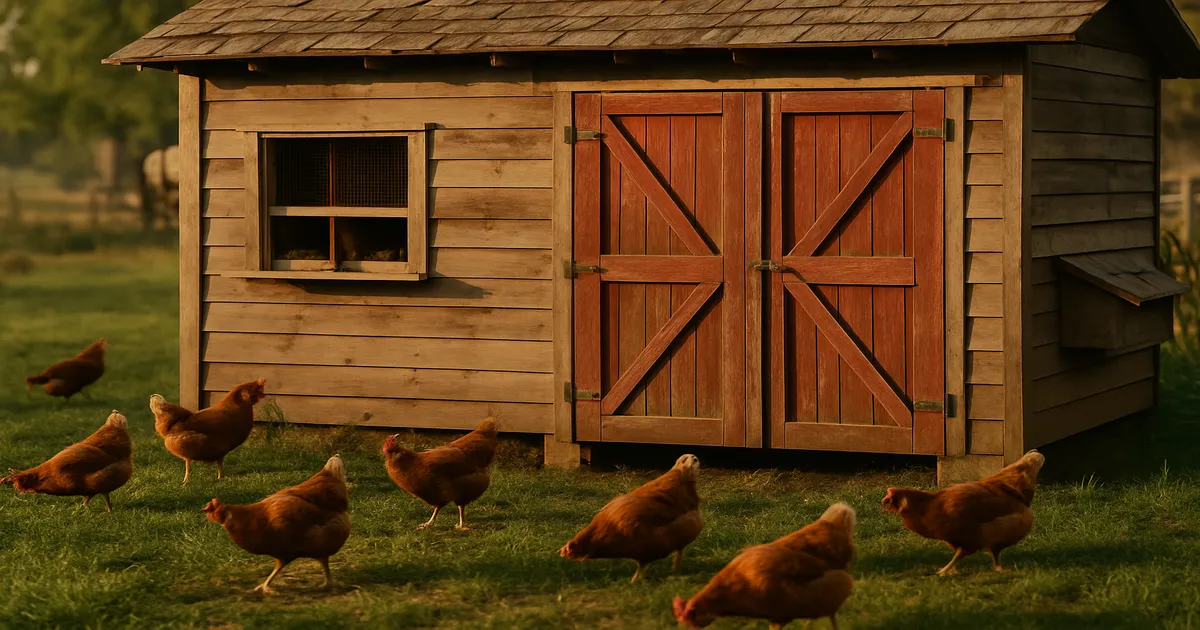
Quick Answer: In Stardew Valley, raise chickens by building a Coop, buying birds from Marnie for 800g each, feeding them hay daily, and petting them every day to boost egg quality. In real life, chickens need a secure coop with at least 4 sq ft per bird indoors, a balanced layer feed, fresh water, and the company of at least 3 flock-mates. This article covers both tracks — jump to whichever section fits your situation.
Whether you’re trying to max out your Iridium Eggs before the Stardew Valley fair or you’re seriously considering a backyard flock, learning how to raise chickens in Stardew Valley and real life reveals more overlap than you’d expect. Both reward consistency, good housing, and daily attention. This guide walks through every step of both journeys, clearly labeled so you can follow whichever track matters to you.
How to Raise Chickens in Stardew Valley: The Quick-Start Checklist
For Stardew Valley Players
- Buy chickens from Marnie’s Ranch for 800g each
- Build at least a Basic Coop before purchasing
- Feed 1 hay per bird per day, or let them graze on clear days
- Pet every chicken every single day
- Upgrade to a Deluxe Coop for Auto-Feed; add an Auto-Grabber for hands-free egg collection
- Max friendship = Iridium Eggs = serious gold, especially through the Mayonnaise Machine
For Aspiring Real-Life Chicken Keepers
- Start with 3–4 birds minimum — chickens are flock animals and suffer alone
- Plan for at least 4 sq ft per bird inside the coop and 10 sq ft per bird in the run
- Feed a quality layer pellet (about ¼ lb per hen per day), offer oyster shell free-choice, and keep water fresh and clean
- Expect 3–6 eggs per hen per week depending on breed and season
Getting Started: Buying Your First Chickens
In-Game: Purchasing Chickens from Marnie’s Ranch
Marnie sells chickens for 800g each, but you’ll need a completed Coop on your farm before she’ll let you buy one. Visit her shop between 9am and 5pm — she’s closed on Mondays and Tuesdays. Each chicken takes 3 in-game days to mature before it starts laying, so don’t expect eggs on day one.
You can also hatch chicks using the Incubator, which unlocks with the Big Coop upgrade. Place an egg inside and wait about 9 in-game days for it to hatch.
In-Game: White, Brown, and Blue Chicken Varieties Explained
Stardew Valley offers three chicken color variants — White, Brown, and Blue. The important detail: color is purely cosmetic. All three produce identical eggs and share the same stats.
The Blue Chicken is the only variant with a special unlock condition. You need to reach 8-heart friendship with Shane before it appears at Marnie’s. It’s a nice nod to his character arc, but it won’t give you a gameplay edge.
Real Life: Choosing the Right Breed for Beginners
Breed choice matters far more in real life than in Stardew Valley. Here’s a quick comparison of the most beginner-friendly options:
| Breed | Eggs/Year | Egg Color | Temperament | Cold Hardy? |
|---|---|---|---|---|
| Rhode Island Red | 250–300 | Brown | Calm, curious | Yes |
| Buff Orpington | 150–200 | Brown | Docile, friendly | Yes |
| Plymouth Rock | 200–260 | Brown | Easygoing | Yes |
| Australorp | 250–300 | Brown | Gentle, quiet | Yes |
| Leghorn | 280–320 | White | Active, independent | Moderate |
For most beginners, a Rhode Island Red or Australorp hits the sweet spot of high production and manageable temperament. Buff Orpingtons are wonderfully friendly but go broody often, which pauses egg production for weeks at a time. Leghorns are egg-laying machines but can be flighty and don’t tolerate cold as well as the heavier breeds.
Real Life: Where to Buy Chicks or Started Pullets
You have three main sourcing options:
- Hatcheries (mail-order): Wide breed selection, chicks often arrive vaccinated, but minimum order quantities apply — usually 6–15 chicks to retain body heat during shipping
- Feed stores: Convenient and widely available in spring, though breed selection is limited and birds are often sold straight-run (unsexed)
- Local breeders: Best for specific breeds, older pullets, or birds already laying (“started pullets”) — you pay more upfront but skip the brooder stage entirely
Buying started pullets (16–20 weeks old) costs more but means eggs within weeks rather than months. For a first flock, it’s often worth the premium.
Coop Setup and Housing Requirements
In-Game: Basic Coop vs. Big Coop vs. Deluxe Coop
Each coop tier unlocks new features and capacity:
| Coop Tier | Cost | Capacity | Special Feature |
|---|---|---|---|
| Basic Coop | 4,000g + 300 Wood + 100 Stone | 4 birds | — |
| Big Coop | 10,000g + 400 Wood + 150 Stone | 8 birds | Incubator |
| Deluxe Coop | 20,000g + 500 Wood + 200 Stone | 12 birds | Auto-Feed system |
The Auto-Grabber (purchased from Marnie for 25,000g) works in the Deluxe Coop and collects all eggs automatically each morning. If you’re running a large farm and want to skip the daily click-through, it’s worth every gold piece.
Build a Silo first (100g + 100 Stone + 10 Copper Bars + 5 Clay) before buying your first chicken — it stores up to 240 hay and feeds directly into the coop’s hopper.
In-Game: Silos, Auto-Feed, and the Auto-Grabber
The workflow is straightforward: use your Scythe on grass to harvest hay, which deposits automatically into any silo on your farm. Once the Deluxe Coop’s Auto-Feed system is active, hay moves from silo to feeder without any action from you. Keep the silo stocked and your chickens will always be fed.
On clear, non-winter days, leave the coop door open. Chickens that graze outside count as fed without consuming hay, and the outdoor time boosts their happiness stat.
Real Life: How Much Space Do Chickens Actually Need?
The minimum is 4 sq ft per bird inside the coop, but 6–8 sq ft per bird is where you’ll see genuinely relaxed, low-stress birds. Overcrowding is the single biggest driver of feather pecking and aggression — don’t skimp here.
For the outdoor run, aim for at least 10 sq ft per bird. If your birds can’t free-range, bumping that to 20–30 sq ft per bird in a permanent run dramatically reduces problem behaviors. A well-built predator-proof run with an automatic coop door lets you give birds outdoor access safely, even when you’re not home.
Real Life: Roost Bars, Nesting Boxes, and Ventilation
Chickens sleep on roost bars, not on the floor. Give each bird 8–12 inches of linear roost space on bars that are 1.5–2 inches in diameter — round or slightly oval, not flat boards, to prevent foot problems like bumblefoot. Position roosts 18–24 inches off the floor and space multiple bars at least 12 inches apart horizontally.
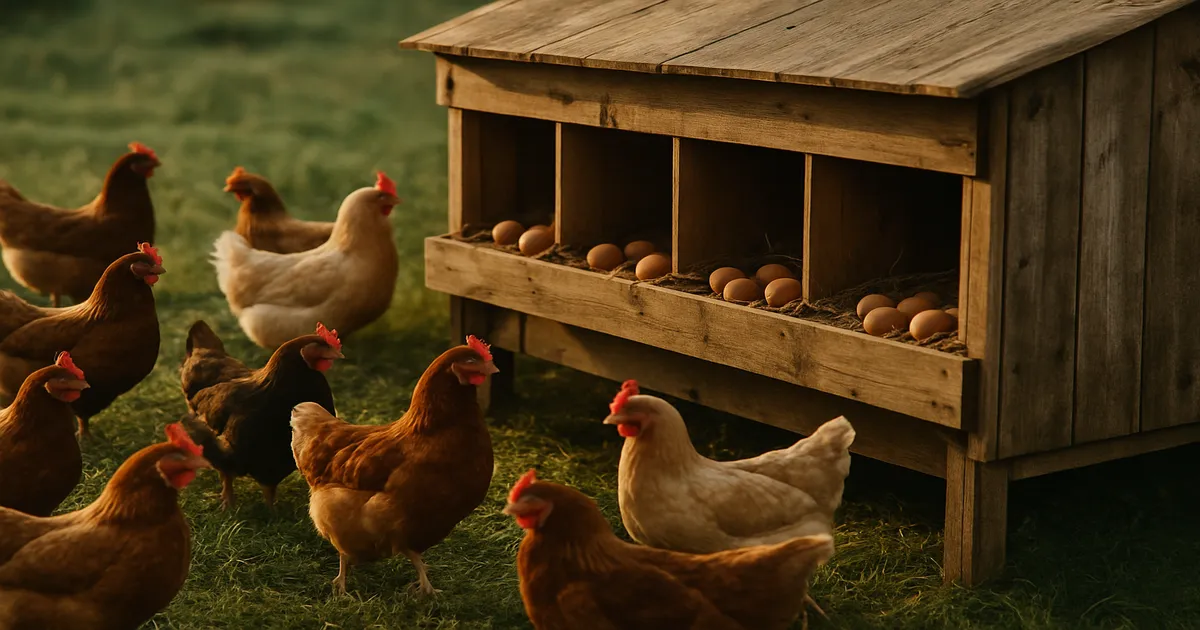
For nesting boxes, the standard ratio is 1 box per 3–4 hens, sized at 12×12 inches for standard breeds. Mount them 12–18 inches off the floor, but always lower than the roost bars — otherwise hens will sleep in the boxes and soil them with droppings overnight.
Ventilation is non-negotiable. Ammonia from droppings is one of the leading causes of respiratory illness in backyard flocks. Provide at least 1 sq ft of ventilation per 10 sq ft of floor space, positioned high on the walls near the roofline so moisture escapes without creating cold drafts at roost level.
Real Life: Flooring and the Deep Litter Method
The deep litter method is the most practical approach for most backyard keepers. Start with 4–6 inches of pine shavings on the coop floor, add fresh material as needed, and turn the bedding periodically to aerate it. The litter composts in place, generates a small amount of warmth, and only needs a full cleanout once or twice a year.
One firm rule: never use cedar shavings. The aromatic oils are toxic to poultry and can cause serious respiratory damage. Stick to pine shavings or straw.
Feeding Your Chickens: In-Game Hay vs. Real Nutrition
In-Game: Hay, Grazing, and Keeping the Silo Stocked
The in-game system is refreshingly simple — each chicken eats 1 hay per day. Keep your silo stocked, leave the coop door open on clear days, and your birds stay fed and happy. Stardew Valley abstracts away protein percentages, supplements, and treat management entirely.
Real Life: Layer Feed, Life Stages, and What to Feed When
Real chickens need different feed at different life stages:
- Chick starter (0–8 weeks): 18–20% protein
- Grower feed (8–18 weeks): 16–18% protein
- Layer feed (18+ weeks): 15–18% protein
- During molt: Temporarily bump to 20–22% protein to support feather regrowth
Don’t rush the switch to layer feed. The extra calcium in layer pellets stresses kidneys in young birds that aren’t ready for it. Stick to starter or grower until your pullets are close to laying age.
Pellets are the most popular format for good reason — minimal waste, easy to manage, and widely available. A sturdy hanging feeder keeps feed off the ground and cuts down on waste significantly.
Fermented feed is worth considering if you want to stretch your feed budget. Soaking pellets or mash for 24–72 hours improves nutrient bioavailability and typically reduces overall feed consumption by 20–30%. It takes a little more daily effort, but the savings add up over a full season.
Real Life: Calcium, Grit, and Water
Offer crushed oyster shell free-choice in a separate dish — never mixed into the main feed. Hens self-regulate their calcium intake based on what they need for shell production. Mixing it into feed forces it on roosters and young birds, which can cause kidney damage over time.
Chickens also need insoluble grit (granite or flint) to grind food in their gizzard. Free-ranging birds pick up natural grit; confined birds need commercial grit offered free-choice. Use chick grit (#1) for birds under 8 weeks, hen grit (#2 or #3) for adults.
Water matters just as much as feed. Each hen drinks 1–2 cups per day under normal conditions — more in summer heat. Provide at least 1 gallon per 4–5 birds daily. Once temperatures drop below 32°F (0°C), switch to a heated waterer to prevent freezing.
Real Life: Safe Treats and Foods to Avoid
Keep treats to 10% or less of total diet. Good options include leafy greens, watermelon, berries, mealworms, and plain cooked oatmeal. Scratch grains are treats — not a feed replacement. Overfeeding scratch causes weight gain and drops egg production.
Never feed:
- Avocado (persin toxin — fatal)
- Chocolate or caffeine
- Raw or dried beans (phytohaemagglutinin poisoning)
- Green potato skins (solanine)
- Onions or garlic in large quantities
- Alcohol
Egg Production: From Pixels to the Nest Box
In-Game: Egg Quality, Friendship, and the Mayonnaise Machine
Once a chicken matures, it lays one egg per day. Egg quality is tied directly to your friendship score with that bird (0–1,000 points):
- Regular Egg: 50g
- Large Egg: 95g
- Gold Egg: 67g base
- Iridium Egg: 100g base (max friendship; Rancher profession recommended)
Processing eggs through a Mayonnaise Machine is where the real money is:
- Regular Mayo: 190g
- Gold Mayo: 285g
- Iridium Mayo: 380g
A single Iridium Egg turned into mayo nearly quadruples its raw sell value. Build Mayonnaise Machines early and process everything you collect. Pet every chicken every day — it’s the single most impactful action for driving friendship scores up.
Void Chickens are unlocked through a random witch event or purchased from Krobus. They produce Void Eggs (65g base) that process into Void Mayonnaise (275g) — also a useful gift item for certain villagers.
Real Life: Egg Production, Colors, and Seasonal Drops
| Breed | Eggs/Week | Eggs/Year |
|---|---|---|
| Leghorn | 5–6 | 280–320 |
| Rhode Island Red | 5–6 | 250–300 |
| Australorp | 5–6 | 250–300 |
| Plymouth Rock | 4–5 | 200–260 |
| Easter Egger | 4–5 | 200–250 |
| Buff Orpington | 3–4 | 150–200 |
| Silkie | 2–3 | 100–120 |
Egg color is determined by genetics and has zero effect on nutrition or flavor. White eggs come from Leghorns; brown eggs from Rhode Island Reds, Plymouth Rocks, and Buff Orpingtons; blue and green eggs from Easter Eggers and Ameraucanas; dark chocolate-brown eggs from Marans and Welsummers.
Light breeds like Leghorns start laying as early as 16–18 weeks. Heavy breeds like Buff Orpingtons typically wait until 20–24 weeks. Expect small “pullet eggs” for the first few weeks — full-size eggs usually arrive by 28–30 weeks.
Hens need 14–16 hours of light per day to maintain peak production. In winter, natural daylight drops well below that threshold and production can fall 50–80% without intervention. The fix is simple: add a 9-watt LED bulb on a timer set to extend the “day” to 16 hours. Add light in the morning rather than the evening so hens still roost naturally at dusk.
Keeping Chickens Happy: Mood, Friendship, and Welfare
In-Game: The Daily Routine That Maximizes Egg Quality
Stardew Valley tracks two separate stats: happiness (daily mood) and friendship (long-term score, 0–1,000). Happiness determines whether a chicken lays that day; friendship determines egg quality. Both decay with neglect, so consistency is everything.
Daily routine for maximum output:
- Open the coop door on clear, non-winter days
- Pet every chicken individually
- Confirm the hay hopper is stocked
- Place a Heater in the coop before winter (2,000g from Marnie) to prevent happiness loss from cold
Real Life: Flock Dynamics, Dust Baths, and Enrichment
Real chickens are deeply social. A lone chicken is a stressed chicken — always keep a minimum of 3 birds, with 4–6 being a better buffer against losses. Every flock establishes a pecking order, and some squabbling during that process is completely normal. Watch for signs that stress has escalated: persistent feather pecking, bare patches on backs or heads, or birds being excluded from feeders and waterers. These usually signal overcrowding, boredom, or nutritional deficiency.
Dust bathing is a biological need, not optional enrichment. Chickens roll in dry, loose substrate to control parasites and condition their feathers. Provide a dedicated dust bath area — a shallow container or shaded patch of bare dirt — filled with fine soil, sand, or a mix that includes food-grade diatomaceous earth.
Other enrichment that actually works:
- Hang a head of cabbage or bunch of kale at pecking height
- Scatter scratch in the run to encourage natural foraging behavior
- Add perches at different heights in the run
- Rotate access to fresh ground when possible
Outdoor access mirrors the in-game grazing mechanic for good reason — it’s one of the simplest ways to keep a flock healthy, engaged, and productive.
Frequently Asked Questions
How long does it take chickens to start laying eggs in Stardew Valley? Chickens mature 3 in-game days after purchase and begin laying immediately after that. Eggs hatched from the Incubator take about 9 in-game days to hatch, then another 3 days to mature.
How many chickens should a beginner start with in real life? Start with 3–4 hens. Chickens are flock animals and become stressed when kept alone. Three birds also gives you a small buffer — if you lose one, the remaining two still have company while you decide whether to add more.
Do egg color and chicken color affect egg quality in Stardew Valley or real life? In Stardew Valley, color is purely cosmetic — White, Brown, and Blue chickens all produce identical eggs. In real life, egg shell color is determined by breed genetics and has no effect on flavor or nutrition.
What is the fastest way to get Iridium Eggs in Stardew Valley? Pet your chickens every single day without missing. Make sure they’re fed and have outdoor access on clear days. Friendship climbs steadily with consistent daily petting, and Iridium-quality eggs follow once you hit max friendship. The Rancher profession (chosen at level 5 Farming) boosts animal product sell prices by 20%, making Iridium Eggs even more valuable.
What do I do when my hens stop laying in winter? In real life, reduced winter daylight triggers a natural production slowdown. Adding a 9-watt LED bulb on a timer to extend the coop’s “day” to 16 hours is the most effective solution. In Stardew Valley, chickens lay year-round as long as they’re fed, petted, and kept warm with a Heater in the coop.