Quick Answer: To keep chickens cool in summer, focus on five things immediately: maximize coop ventilation, provide unlimited cool fresh water, add shade over the run, offer frozen treats, and watch for heat stress signs. Heat stress begins above 85°F (29°C) and becomes life-threatening above 95–100°F (35–37.8°C). This guide covers everything from coop setup to emergency first aid, for beginner and intermediate keepers alike.
Summer is the season that separates prepared chicken keepers from those who learn the hard way. Knowing how to keep chickens cool in summer isn’t just about comfort — it directly affects egg production, health, and in extreme cases, survival. The good news is that most of what your flock needs costs very little and takes minimal time to set up.
Why Chickens Struggle in Summer Heat
How Chickens Regulate Body Temperature
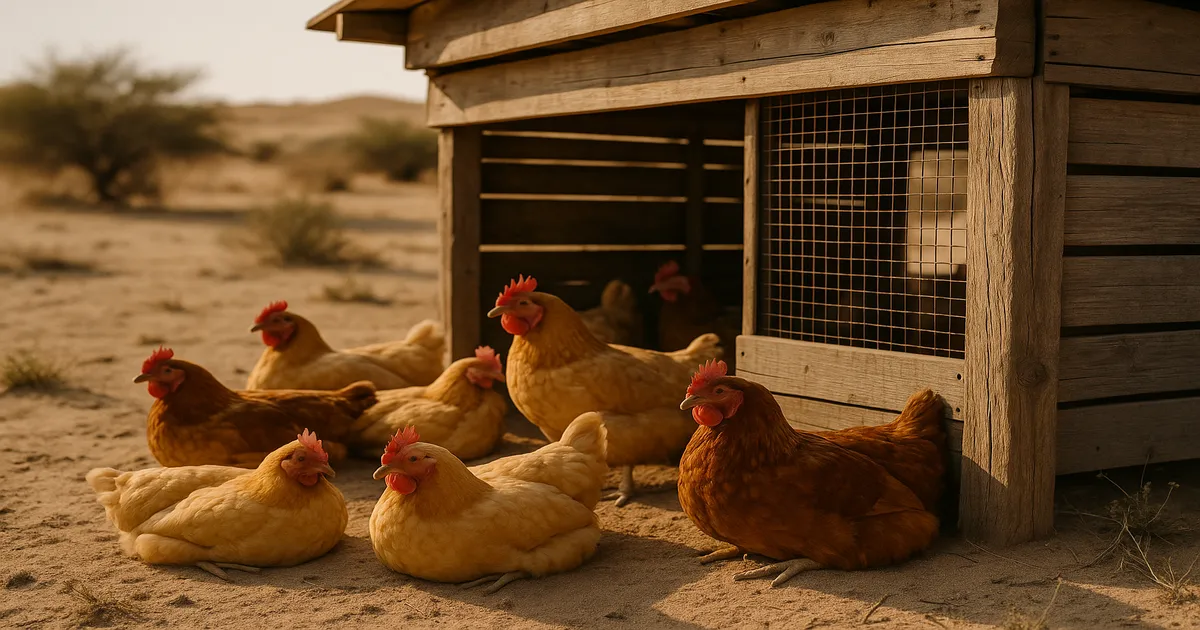
Chickens can’t sweat. Their only tools for cooling down are panting (open-mouth breathing) and holding their wings away from their bodies to release trapped heat. They also circulate blood through their combs and wattles, which act like small radiators. A hen’s normal body temperature runs between 105–107°F (40.5–41.7°C) — already high — which leaves very little buffer before heat becomes dangerous.
When ambient temperatures climb above 85°F (29°C), heat stress begins. Above 95–100°F (35–37.8°C), it becomes a genuine emergency.
When Heat Becomes Life-Threatening
The risk escalates fast on hot, humid days. Humidity matters as much as temperature — a 90°F (32°C) day with high humidity is more dangerous than a dry 95°F (35°C) day, because panting becomes less effective at cooling the bird. Never assume your flock is fine just because they’ve survived previous summers. Conditions change, birds age, and complacency costs lives.
Which Breeds Are Most at Risk
Body mass, feather density, and comb size determine how well a bird handles heat. Large combs radiate heat efficiently; heavy feathering traps it.
| Heat-Sensitive Breeds | Heat-Tolerant Breeds |
|---|---|
| Brahma (9–12 lbs, feathered feet) | Leghorn (4–5 lbs, large comb) |
| Cochin (8–11 lbs, heavy feathering) | Minorca (large comb, lean build) |
| Jersey Giant (11–15 lbs) | Egyptian Fayoumi (3.5–4.5 lbs) |
| Silkie (fluffy, non-waterproof plumage) | Naked Neck (~20% less body feathering) |
| Dominique (dense feathering) | Ancona (Mediterranean, lightweight) |
If you keep heavy breeds like Brahmas or Cochins, plan to work harder on cooling. They need it.
How to Keep Chickens Cool in Summer: Coop and Run Setup
Ventilation: The Single Most Important Factor
Nothing else comes close. A well-ventilated coop stays livable; a poorly ventilated one becomes an oven. Aim for at least 1 sq ft of ventilation opening per bird — more in hot climates — and make sure you’re meeting the baseline space requirement of 4 sq ft of floor space per bird inside the coop so birds aren’t generating excess body heat in a cramped space.
- Install vents on opposite walls at different heights for true cross-ventilation
- Add ridge vents so rising hot air can escape through the roof
- Open hardware cloth-covered windows fully on south and west walls in summer
- Never rely on a single vent — one opening creates a dead zone, not airflow
Metal roofs without insulation can raise interior temperatures by 20–30°F (11–17°C) on their own. If that’s your setup, prioritize shade over the roof and open every ventilation point you have. A battery-powered or solar coop fan mounted near the roofline can make a dramatic difference on still days when there’s no natural breeze.
Coop Orientation, Construction, and Paint Color
Orient the largest ventilated wall toward prevailing summer breezes. A light-colored exterior reflects solar radiation and can shave 5–10°F (3–6°C) off interior temperatures — a simple coat of white or light gray paint is one of the highest-return upgrades you can make. Raising the coop on legs or blocks also helps by allowing airflow underneath.
In summer, scale back the deep litter method. Keep bedding dry and thin — 2–3 inches — to reduce the microbial heat that deep litter generates.
Shade Solutions for the Run
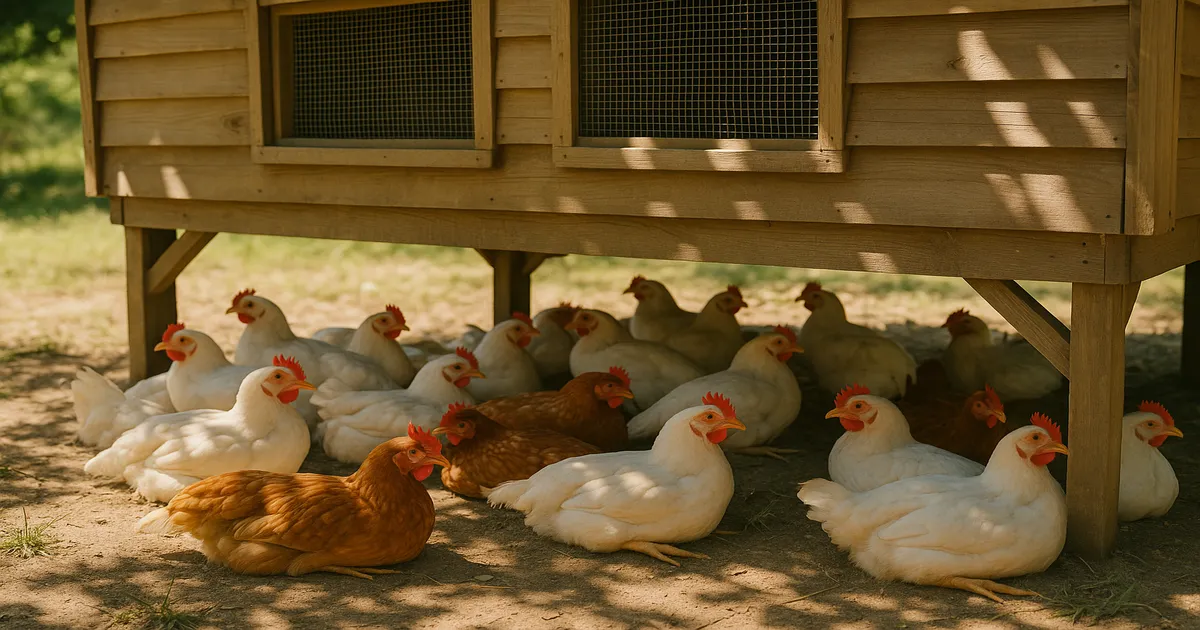
Shade cloth rated at 70–80% density draped over the run dramatically cuts radiant heat load. Trees are ideal if you have them, but shade cloth is affordable and easy to install. Cover at least half the run so birds can choose sun or shade freely.
Space matters too. Each standard hen generates roughly 10 watts of continuous body heat, so crowding amplifies heat stress fast. Aim for 10 sq ft per bird in the run as a minimum, and push toward 15–20 sq ft if summer temperatures regularly exceed 90°F (32°C).
Roost Bar and Nesting Box Placement
Give birds 8–10 inches of roost space per bird in summer so they aren’t pressed against each other. Multiple roost heights let them choose lower, cooler positions — and in extreme heat, some birds will simply sleep on the floor. That’s fine; don’t force them up.
Position nesting boxes in the coolest, most shaded corner of the coop — never on a south-facing wall where afternoon sun heats them directly. One box per 4–5 hens is the standard, with interior dimensions of roughly 12 x 12 x 12 inches for most breeds.
Water: Hydration Is Non-Negotiable
How Much Water Chickens Need in the Heat
Water consumption doubles or triples above 90°F (32°C). A hen that normally drinks about half a pint per day can need up to 1 pint per day in peak heat. As a practical rule, plan on 1 gallon per 4–5 birds per day minimum during heat waves.
Chickens prefer cool water and will voluntarily drink less when water warms above 55°F (12.8°C) — a real problem when a waterer has been sitting in partial sun all afternoon. A large-capacity, insulated poultry waterer keeps water cooler for longer and reduces how often you need to top it up.
Keeping Water Cool and Clean
- Place all waterers in full shade — this alone makes a significant difference
- Add ice during heat waves to keep water cool through the hottest part of the day
- Set up multiple water stations so dominant birds don’t block access for lower-ranking hens
- Clean waterers every 1–2 days in summer — warm water breeds algae and bacteria quickly
Electrolytes and Apple Cider Vinegar
During heat waves, add electrolytes to drinking water to replace what birds lose through panting. Commercial poultry electrolytes work well , or mix your own: 1 tsp salt + 1 tsp baking soda + 1 tbsp sugar per gallon of water. Don’t use this mix as the sole water source — offer plain water alongside it.
Apple cider vinegar (1 tbsp per gallon) supports gut health during heat stress. Use plastic or ceramic waterers only — ACV corrodes metal.
Feeding Chickens in Summer
Why Hens Eat Less — and How to Compensate
Hens typically eat 15–25% less during peak heat. That reduction cuts into their calcium and protein intake, which shows up quickly as thinner shells and reduced production. Feed during the cooler morning and evening hours when birds are more willing to eat. Standard layer feed runs 16–18% protein; if production drops noticeably, consider temporarily moving to a 18% feed to compensate for reduced intake.
Scratch Grains: Limit Them in Summer
Scratch grains — corn, wheat, milo — are thermogenic. Digesting them generates metabolic heat, which is exactly what you don’t want in July. Keep scratch to a maximum of 10% of total diet in summer, and skip it entirely on the hottest days.
Cooling Treats That Actually Help
These aren’t just fun — they provide real hydration and nutrition:
- Frozen watermelon — 92% water, electrolytes, and birds love it
- Chilled cucumber slices — 96% water content, excellent on hot afternoons
- Frozen berries or grapes — antioxidants and hydration in one
- Cold plain yogurt — probiotics support gut health stressed by heat; limit to 2–3 tbsp per bird
- Frozen corn in ice blocks — keeps birds occupied and cool at the same time
Avoid high-fat treats, and never feed avocado, chocolate, or onions — all are toxic to chickens.
Calcium and Oyster Shell in Hot Weather
Panting expels CO₂, which raises blood pH and reduces the availability of calcium carbonate for shell formation. The result: thin, soft, or rough-textured shells. Free-choice oyster shell is essential year-round, but check and top it up more frequently in summer when feed intake drops. Laying hens need around 4 grams of calcium per day, and reduced feed consumption means they’re less likely to hit that target from feed alone.
How Summer Heat Affects Egg Production
Expected Production Drops by Breed
| Breed | Annual Eggs | Weekly Avg | Summer Drop |
|---|---|---|---|
| Leghorn | 280–320 | 5–6 | ~10% |
| Rhode Island Red | 250–300 | 5–6 | ~15% |
| Easter Egger | 200–250 | 4–5 | 15–20% |
| Buff Orpington | 180–200 | 3–4 | ~25% |
| Brahma | 130–150 | 2–3 | 30%+ |
Above 95°F (35°C), heat-sensitive breeds can stop laying entirely. Shell quality also declines — thinner, rougher, occasionally soft — and egg size may decrease slightly due to dehydration. Yolk color can fade if hens reduce foraging in extreme heat.
Broodiness also increases in warm months, particularly in Buff Orpingtons, Silkies, and Cochins. A broody hen stops laying entirely, so factor that in if production suddenly drops.
The practical fix is straightforward: cool water at all times, free-choice oyster shell, feeding during cooler parts of the day, and cutting scratch in peak heat. There’s no magic trick — just consistent management.
Recognising and Treating Heat Stress in Chickens
Mild, Moderate, and Severe Heat Stress: Know the Signs
Mild: Panting, wings held away from the body, seeking shade, pale combs. This is your warning — act now before it progresses.
Moderate: Lethargy, noticeably reduced feed intake, soft-shelled eggs, production drop. The bird is struggling to compensate.
Severe (emergency): Labored breathing, staggering, seizures. A body temperature above 113°F (45°C) is typically fatal, and you don’t have much time.
Emergency First Aid for an Overheated Hen
- Move the bird immediately to a cool, shaded area — indoors with a fan is ideal
- Offer cool (not ice cold) water; encourage drinking but don’t force it
- Wet her feet and comb with cool water to draw heat away
- Add electrolytes to her water
- Do NOT submerge her in cold water — the sudden temperature shock can cause cardiac arrest
Monitor her closely for the next few hours. If she doesn’t improve within 30–60 minutes, contact a vet.
Summer Diseases to Watch For
Red mite and Northern Fowl Mite populations explode in warm weather. Inspect under wings and around the vent regularly, and check roost bars at night — red mites hide in crevices during the day. Treat birds and coop simultaneously with permethrin dust or spray , and encourage regular dust bathing with wood ash and diatomaceous earth.
Coccidiosis thrives in warm, moist conditions. Watch for bloody or watery droppings, lethargy, and hunched posture. Treat with Amprolium (Corid) at the label-directed rate — typically 1.5 tsp of the 9.6% liquid solution per gallon of water for 5–7 days — and keep litter dry.
Fowl pox spreads via mosquitoes and peaks in summer and fall. Dry pox causes wart-like lesions on the comb and wattles; wet pox affects the throat and is more serious. Vaccinate in spring before mosquito season if you’re in a high-risk area.
Heat also suppresses immune function generally, so watch for respiratory symptoms — rattling breathing, nasal discharge, swollen sinuses — that might signal a secondary infection taking hold.
Raising Summer Chicks: Brooder Adjustments
How Ambient Warmth Changes What Chicks Need
Summer brooding has a built-in advantage: ambient warmth means chicks need supplemental heat for a shorter window. If your brooder room stays above 75°F (23.9°C), chicks may need little to no added heat by weeks 3–4. That said, always read their behavior — not just the thermometer.
| Week | Target Temp Under Heat Source |
|---|---|
| Week 1 | 95°F (35°C) |
| Week 2 | 90°F (32°C) |
| Week 3 | 85°F (29°C) |
| Week 4 | 80°F (26.7°C) |
| Week 5 | 75°F (23.9°C) |
| Week 6 | 70°F (21°C) |
| Week 7+ | Ambient (fully feathered) |
Chicks spread out and panting? Too hot — raise the heat source or switch it off. Huddled in a tight pile and peeping loudly? Too cold — lower it.
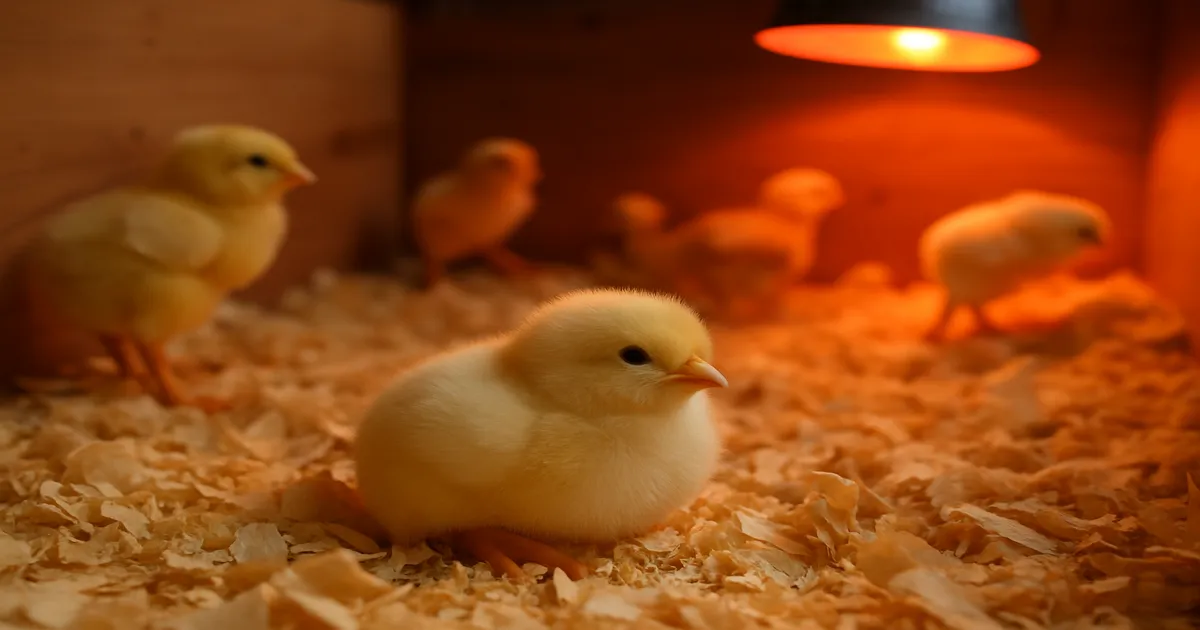
A radiant heat plate is the best option for summer brooding. It lets chicks move in and out of warmth as needed, mimicking a mother hen far better than a heat lamp that warms the whole brooder space. Use pine shavings 2–4 inches deep, start chicks on 18–20% protein chick starter, and allow at least 0.5 sq ft per chick in the first two weeks, expanding to 1 sq ft by week 4.
Frequently Asked Questions
At what temperature do chickens get heat stress?
Heat stress begins at ambient temperatures above 85°F (29°C). Above 95–100°F (35–37.8°C), it becomes life-threatening — especially for heavy or densely feathered breeds. High humidity makes any given temperature more dangerous because panting becomes less effective at cooling the bird.
How do I know if my chicken is too hot?
Early signs include open-mouth panting, wings held away from the body, and actively seeking shade. As heat stress worsens, you’ll see lethargy, pale combs, and reduced interest in food. Severe cases involve labored breathing, staggering, or collapse — these require immediate action.
What can I give my chickens to cool them down?
Cool, fresh water with ice is the single most effective intervention. Follow up with frozen treats — watermelon, cucumber slices, or frozen berries. Add electrolytes to drinking water during heat waves, maximize shade and ventilation, and wet their feet and combs with cool water on extreme days.
Does summer heat affect egg production?
Yes, significantly. Production typically drops 10–25% above 90°F (32°C) and can halt entirely above 95°F (35°C) in heat-sensitive breeds. Shell quality also declines because panting alters blood pH and reduces calcium availability. Cool water, free-choice oyster shell, and feeding during cooler parts of the day all help minimize losses.
Which chicken breeds handle heat the best?
Mediterranean breeds are the clear winners:
- Leghorn — lightweight, large comb, excellent heat dissipation
- Minorca — very large comb, lean build, handles heat exceptionally well
- Egyptian Fayoumi — ancient heat-adapted breed, only 3.5–4.5 lbs
- Naked Neck — reduced feathering lowers body heat by roughly 20%
- Ancona — similar build to the Leghorn, reliable in hot climates