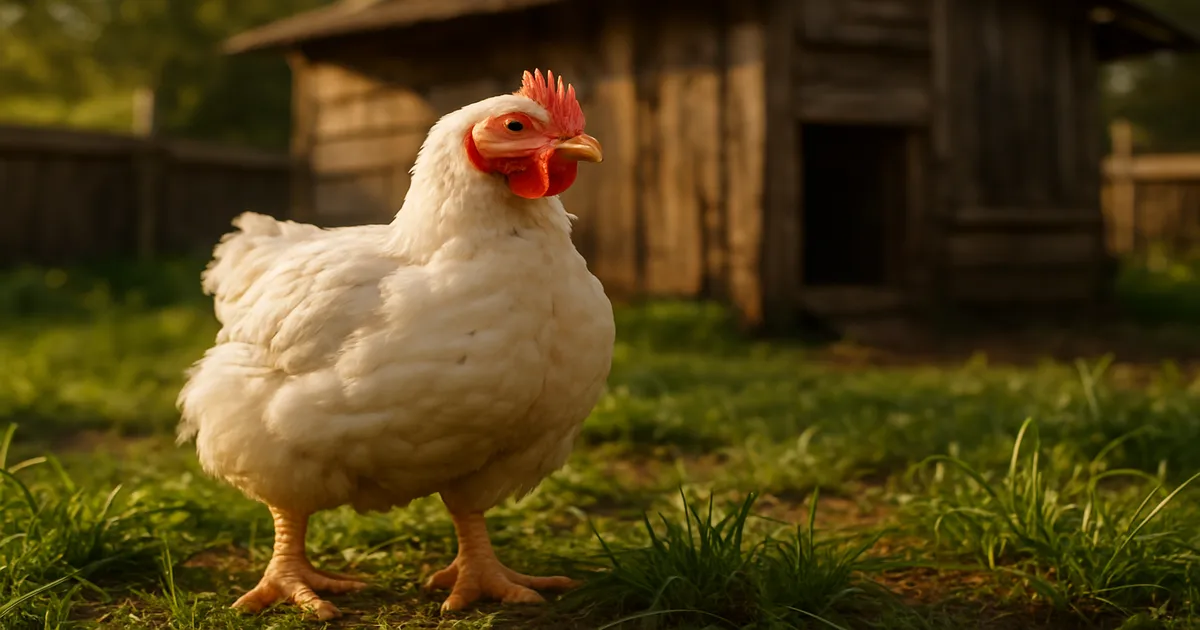
Quick Answer: Cornish Cross chickens are purpose-bred meat birds that reach 6–9 lbs in just 6–8 weeks, making them the fastest-growing chicken you can raise at home. Success comes down to three things: the right nutrition at each growth stage, clean and well-ventilated housing, and proactive management of the metabolic health issues unique to fast-growing breeds.
If you want to put quality chicken in your freezer faster than any other breed allows, learning how to raise Cornish Cross chickens is the most direct path there. These birds account for roughly 99% of all commercially raised broilers in the United States — and for good reason. Their feed conversion ratio of around 1.8–2.0 lbs of feed per pound of live weight gain is unmatched in the backyard poultry world.
That efficiency comes with real trade-offs, though. Cornish Cross have specific health vulnerabilities that heritage breeds simply don’t share, and ignoring them will cost you birds. This guide walks you through every stage of the grow-out so you can raise a healthy, productive flock from day one to processing day.
What Are Cornish Cross Chickens?
Cornish Cross are a proprietary hybrid developed in the mid-20th century by crossing Cornish (Indian Game) birds with White Plymouth Rocks, then applying decades of selective pressure for rapid growth and feed efficiency. The result is a broad-breasted, white-feathered bird with yellow skin and an extraordinary ability to convert feed into muscle.
Because they’re a hybrid, you cannot reproduce them at home. Every grow-out cycle requires purchasing new chicks from a hatchery — Murray McMurray, Hoover’s, Cackle, and Meyer Hatchery all carry them reliably.
Key Facts at a Glance
- Processing weight: 4–5 lbs at 6 weeks, 7–9 lbs at 8 weeks, 10–12 lbs at 10 weeks
- Dressed weight: 75–80% of live weight
- Total feed per bird: 10–12 lbs to processing
- Temperament: Docile, calm, easy to handle
- Primary health risks: Sudden death syndrome, ascites, leg problems
Cornish Cross vs. Slow-Growth Alternatives
If your goal is meat production, nothing beats Cornish Cross for speed and efficiency. If you’re hoping to raise birds that actively forage, Freedom Rangers or Red Rangers are worth a serious look. They take 10–12 weeks to reach processing weight but are genuinely better suited to pasture systems and require less intensive health management.
| Breed | Weeks to Processing | Foraging Ability | Best System |
|---|---|---|---|
| Cornish Cross | 6–8 weeks | Poor | Confinement or tractor |
| Freedom Ranger | 10–12 weeks | Good | Pasture |
| Red Ranger | 10–12 weeks | Good | Pasture |
| Label Rouge | 12+ weeks | Excellent | Pasture |
Setting Up Housing for Cornish Cross Chickens
Space Requirements
Cornish Cross are sedentary enough that they can be managed at moderate densities, but crowding still drives disease and leg problems. Use these as your minimums:
- Indoor coop: 4 sq ft per bird
- Outdoor run: 10 sq ft per bird
- Pasture tractor: 10 sq ft per bird, moved daily
More space is always better, especially as birds approach weeks 5–6 and spend most of their time lying down.
Bedding and Flooring
Start with 4–6 inches of pine shavings and add fresh bedding every 3–5 days. Cornish Cross produce a remarkable amount of manure relative to their size, and wet litter is the leading cause of both breast blisters and respiratory disease in this breed. Do a full cleanout between each grow-out cycle.
Avoid wire flooring — it causes foot injuries and keel damage on heavy birds. Placing rubber mats under feeders and waterers helps absorb the worst wet spots and keeps those high-traffic areas drier longer.
Ventilation
Poor ventilation kills Cornish Cross quietly and consistently. Ammonia from their manure builds up fast, and levels above 25 ppm cause respiratory damage before you can even smell a clear problem.
- Provide at least 1 sq ft of ventilation per 10 sq ft of floor space
- Position vents high on the walls, above bird level, to allow air exchange without creating drafts at bird height
- In summer, increase ventilation aggressively — heat stress is a serious risk at this stage
Roost Bars Are a Hazard
By weeks 4–5, these birds are simply too heavy to roost safely. If you want to offer low perches for younger chicks, keep them no higher than 6–8 inches off the ground. Standard roost heights of 18–24 inches can cause leg fractures, breast injuries, and even sudden death when a heavy bird jumps or falls.
Predator-Proofing
Cornish Cross cannot run, fly, or evade anything. Predator-proofing is non-negotiable.
- Use hardware cloth, not chicken wire, on all openings — chicken wire keeps chickens in but won’t stop a determined predator
- Bury a hardware cloth apron at least 12 inches underground around the perimeter
- Install predator-proof latches on all doors
How to Feed Cornish Cross Chickens
Starter, Grower, and Finisher: What to Feed and When
| Stage | Age | Protein % |
|---|---|---|
| Starter | Days 1–18 | 22–24% |
| Grower | Days 19–35 | 18–20% |
| Finisher | Days 36–processing | 16–18% |
Never substitute layer feed — it’s formulated for laying hens, not meat birds. It’s too low in protein and far too high in calcium, which can damage the kidneys of growing broilers. Use medicated starter (which contains amprolium to prevent coccidiosis) unless your chicks were vaccinated for cocci at the hatchery.
Feed Consumption Per Bird, Week by Week
Feed needs ramp up fast:
- Week 1: ~0.25 lbs
- Week 2: ~0.5 lbs
- Week 3: ~1 lb
- Week 4: ~1.5–2 lbs
- Week 5: ~2–2.5 lbs
- Week 6: ~2.5–3 lbs
- Total to processing: 10–12 lbs per bird
Feed Restriction: Why Limiting Access Saves Lives
Allowing Cornish Cross to eat around the clock maximizes growth rate but drives sudden death syndrome rates to 1–4% and increases leg problems significantly. The fix is straightforward: remove feed for 8–12 hours overnight.
Many experienced growers use a 6 AM to 8 PM feeding window, starting around day 3–5. This slows growth by a day or two but can cut metabolic mortality dramatically. Water must remain available at all times, even when feed is pulled.
Water Setup
Cornish Cross drink roughly twice as much water as they eat by weight. By week 6, that’s 1–1.5 lbs of water per bird per day. Nipple waterers or bell-style drinkers are far better than open troughs — they reduce spillage, keep litter drier, and lower disease pressure.
In summer, keep water temperature between 50–70°F (10–21°C). Cold water actively helps prevent heat stress.
Treats and What to Avoid
Keep treats under 5% of total diet. Scratch grains are the most common mistake backyard growers make with Cornish Cross — the high carbohydrate load promotes fat deposition instead of muscle growth. Safe in small amounts: watermelon (great for hydration in heat), mealworms, plain yogurt. Avoid scratch grains, avocado, chocolate, onions, raw beans, and anything salty.
Health Problems in Cornish Cross: Prevention and Management
Sudden Death Syndrome (Flip-Over Disease)
A bird that appeared healthy the day before is found dead on its back, often after a brief burst of wing-flapping. The cause is cardiac arrhythmia — the heart simply can’t keep up with the demands of rapid muscle growth. Peak risk is weeks 3–5, and there is no treatment. Feed restriction is your only meaningful prevention tool, cutting incidence from 1–4% down to under 1%.
Ascites (Water Belly)
Ascites is right-side heart failure caused by the cardiovascular system struggling to oxygenate rapidly growing tissue. Affected birds develop a fluid-filled, distended abdomen and a penguin-like waddle. There’s no treatment — cull affected birds humanely. Risk is higher at elevations above 5,000 feet and in poorly ventilated coops. Feed restriction and good airflow are your best prevention.
Leg Problems
Valgus-varus deformity and tibial dyschondroplasia both come down to the same root cause: the skeleton can’t keep pace with muscle mass. Wet litter and slippery floors make things significantly worse. Signs include splayed or bowed legs, reluctance to walk, and birds sitting on their hocks.
In well-managed flocks, leg problem incidence stays under 2%. In poorly managed flocks, it can hit 5–10%. Dry litter, non-slip flooring, adequate space, and feed restriction all help. Adding vitamin D3 and a B-complex supplement to the diet provides additional skeletal support.
Breast Blisters
When heavy birds spend hours lying on wet or hard litter, the keel bone develops fluid-filled blisters that can become infected. Prevention is simple: keep litter deep and dry. Refresh bedding frequently, especially in weeks 5–6 when birds are least mobile.
Coccidiosis
Coccidiosis (Eimeria spp.) causes bloody diarrhea, lethargy, and rapid flock decline. Medicated starter is the most practical prevention for backyard flocks. If you see bloody droppings, act immediately — amprolium treatment in the water can stop an outbreak if caught early.
Heat Stress
Cornish Cross are highly susceptible to heat stress due to their metabolic rate and body mass. Above 85°F (29°C), birds become lethargic and feed intake drops. Above 95°F (35°C), mortality risk rises sharply. Provide shade, maximize ventilation, offer cold water, and consider processing slightly early if a heat wave is forecast during weeks 6–8.
Week-by-Week Grow-Out Timeline
Weeks 1–2: Brooding and Early Care
Start brooder temperature at 95°F (35°C) at chick level and reduce by 5°F each week. Chicks need constant access to starter feed and fresh water. Watch for pasty butt (feces blocking the vent) — clean it gently with warm water if you see it. Nipple or bell waterers from day one will keep litter drier from the start.
Weeks 3–4: Transitioning to Grower Feed
Switch to grower feed around day 19. This is also the time to implement feed restriction if you haven’t already — weeks 3–5 are peak risk for sudden death syndrome. Start watching for early leg problems: birds that lag behind, sit more than others, or show any leg abnormalities. Move birds to the coop once nighttime temperatures are consistently above 50°F (10°C).
Weeks 5–6: Final Push to Processing Weight
Switch to finisher feed around day 36. Birds are largely sedentary now, spending most of their time eating and resting. Refresh bedding more frequently — manure output is at its peak. Monitor closely for heat stress if you’re raising birds in summer. Most backyard growers process at this point, with birds at 4–5 lbs (6 weeks) or 7–9 lbs (8 weeks).
Weeks 7–8: Extended Grow-Out
Extending the grow-out produces a larger bird — up to 10–12 lbs by week 10 — but feed costs climb fast and metabolic mortality risk increases meaningfully. Each additional week past week 8 adds risk without proportional reward. If you’re targeting roaster-size birds, plan for it from the start and manage feed restriction carefully.
When to Process
Target live weights: 4–5 lbs for a fryer (6 weeks), 7–9 lbs for a roaster (8 weeks). Dressed weight will be 75–80% of live weight. Don’t push past 10 weeks — health complications increase significantly and the economics stop making sense.
Raising Cornish Cross Chickens on Pasture
Cornish Cross can be raised in movable chicken tractors with good results, but they are not natural foragers. Even with unlimited grass available, they’ll spend most of their time huddled near the feeder. Pasture access improves welfare and can add subtle flavor complexity to the meat, but it won’t transform them into ranging birds.
A well-built chicken tractor needs to be predator-proof, shaded, and large enough for 10 sq ft per bird. Move it daily to fresh ground — this manages manure buildup, gives birds access to new grass, and reduces disease pressure. In wet weather, move it more frequently to prevent muddy, compacted ground under the pen.
If your primary goal is a genuinely pasture-raised product — birds that actively forage, cover ground, and develop flavor through movement and varied diet — Freedom Rangers or Red Rangers are the honest recommendation. They take 10–12 weeks and cost more in feed, but they’re built for the pasture life that Cornish Cross will never truly embrace.
Frequently Asked Questions About Raising Cornish Cross Chickens
How long does it take to raise Cornish Cross chickens to processing weight?
Most backyard growers process Cornish Cross at 6–8 weeks, when birds reach 4–9 lbs live weight depending on your target size. Extending to 10 weeks produces birds up to 12 lbs, but health complications increase significantly past that point. Planning your processing date before you order chicks makes the whole grow-out easier to manage.
Why do Cornish Cross chickens die suddenly?
Sudden death syndrome (also called flip-over disease) is caused by cardiac arrhythmia — the heart can’t keep pace with the bird’s rapid muscle growth. It’s most common during weeks 3–5 and affects 1–4% of flocks fed ad libitum. Removing feed for 8–12 hours overnight starting at day 3–5 is the most effective prevention, reducing incidence to under 1%.
What do you feed Cornish Cross chickens at each stage of growth?
Feed a 22–24% protein chick starter for days 1–18, switch to an 18–20% broiler grower for days 19–35, then move to a 16–18% finisher feed through processing. Never use layer feed — it’s too low in protein and too high in calcium for growing meat birds. Medicated starter is recommended for most backyard flocks to prevent coccidiosis.
What is the difference between Cornish Cross and Freedom Ranger chickens?
Cornish Cross are fast-growing hybrid meat birds that reach processing weight in 6–8 weeks but are poor foragers suited primarily to confinement or tractor systems. Freedom Rangers are a slower-growing alternative (10–12 weeks) with better foraging instincts, greater hardiness, and a flavor profile many people prefer from pasture-raised birds. If efficiency is your priority, choose Cornish Cross. If pasture-raising is the goal, Freedom Rangers are the better fit.
Can you keep Cornish Cross chickens as laying hens?
This is not recommended. Their skeletal and cardiovascular systems aren’t designed to support their body weight long-term, and leg failure, heart problems, and sudden death become common after 8–10 weeks of age. If eggs are your goal, breeds like Rhode Island Reds, Buff Orpingtons, or ISA Browns will serve you far better.