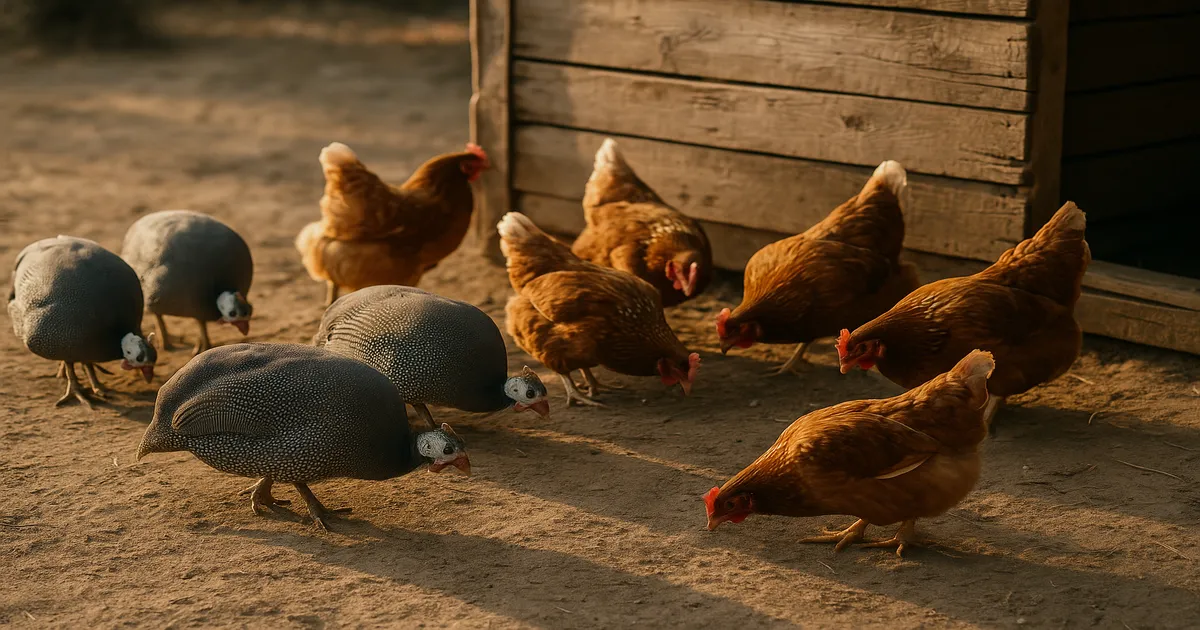
Quick Answer: Yes, you can raise guinea fowl with chickens — and millions of backyard keepers do it successfully. The keys are providing higher-protein feed during the keet stage, managing the risk of blackhead disease, and giving both species enough space to coexist peacefully.
If you want a flock that practically manages its own pest control, learning how to raise guineas with chickens is one of the best investments you can make in your backyard setup. Guinea fowl are loud, opinionated, and nothing like chickens — but that’s exactly what makes them valuable. They’ll patrol your property for ticks and grasshoppers, sound the alarm at every hawk shadow, and generally make life difficult for anything that shouldn’t be in your yard.
They do require a different approach than chickens in a few critical areas. Get those right, and a mixed flock is very manageable.
What Are Guinea Fowl?
The helmeted guinea fowl (Numida meleagris) is the species you’ll find at hatcheries and on backyard farms. Native to sub-Saharan Africa, they’ve been domesticated for thousands of years and arrived in North America with early colonists. Adults weigh 3.5–4 lbs, sport a bony casque on top of their head, bare colorful facial skin, and a round, compact body built for covering ground. Expect a lifespan of 10–15 years in well-managed conditions.
Key Differences Between Guineas and Chickens
Three differences matter most when planning a mixed flock:
- Higher protein needs as keets — guinea chicks need 28% protein starter, not standard chick starter
- Blackhead disease susceptibility — chickens carry the parasite that can kill guineas at rates of 70–100%
- Temperament — guineas are louder, more skittish, and harder to tame than any chicken breed you’ve kept
Plan for all three from day one and you’ll avoid the most common mistakes.
Guinea Fowl Breeds and Varieties
Pearl Guinea Fowl
The Pearl is the most common variety — slate-gray feathers covered in white spots, and the one you’ll see at most hatcheries. They’re hardy, active foragers and the standard by which other varieties are measured.
White, Lavender, and Royal Purple Varieties
- White Guinea — solid white, noticeably calmer temperament than Pearl; a good choice if noise is a concern
- Lavender — pale gray with white spots; increasingly popular and widely available
- Royal Purple — deep purplish-gray with white spots; striking birds
- Coral Blue — blue-gray coloring; rarer and harder to source
All varieties share the same care requirements. Temperament differences between varieties are modest — individual birds vary more than breeds do.
How to Tell Males from Females
Sexing guinea fowl visually before 8–12 weeks is genuinely unreliable. The most practical early method is listening: females develop a distinctive two-syllable “buck-wheat, buck-wheat” call as early as 6–8 weeks old. Males only ever make a one-syllable “chi-chi-chi” sound. Once you’ve heard both, you won’t confuse them. At maturity, males also have larger, more prominent helmets and wattles. If you need certainty early, DNA sexing runs about $20–30 per bird through poultry labs.
Guinea Fowl Temperament and Flock Behavior
Noise Level: What to Expect
Be honest with yourself about this before you get guineas. They alarm-call at everything — a car driving past, a shadow crossing the yard, a leaf blowing the wrong direction — and they’re significantly louder than chickens. If you have close neighbors, have that conversation before your keets arrive. White Guineas are somewhat calmer, but no guinea is quiet.
Guinea Fowl as a Flock Alarm System
That noise is also their superpower. A guinea flock is a living predator detection system. They’ll alert long before a hawk makes a move, and many keepers report that chicken losses dropped significantly after adding guineas to the yard. Free-ranging guineas can consume hundreds of ticks and grasshoppers daily — if you’re in a tick-heavy area, this alone is worth the noise.
How to Raise Guineas with Chickens: Integration Tips
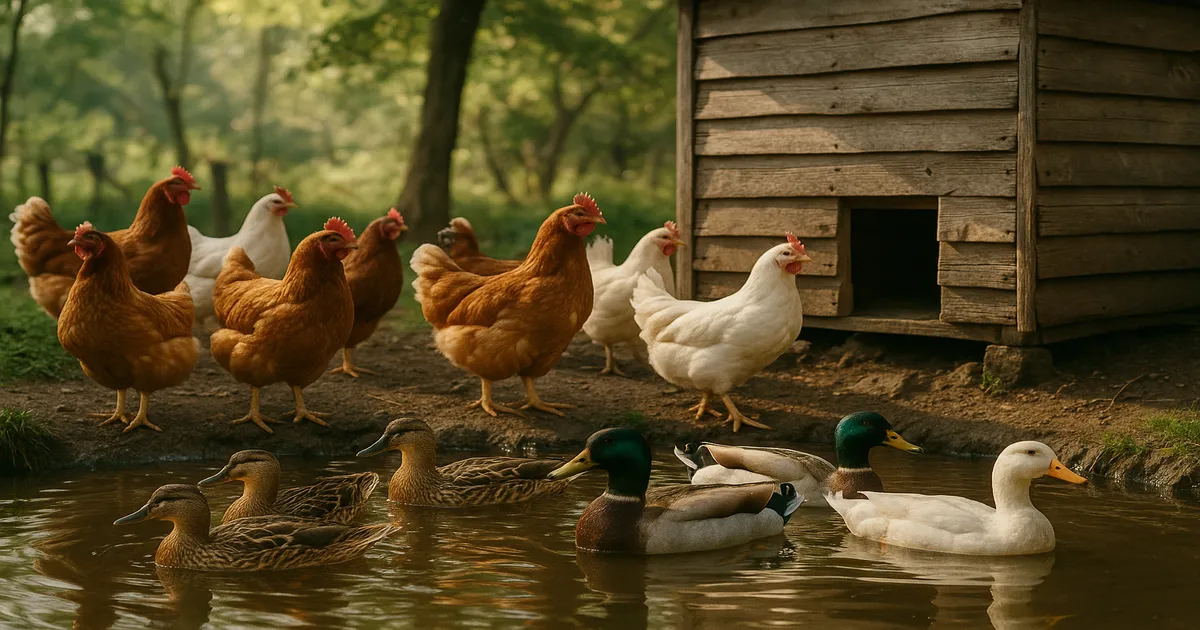
The easiest path is raising keets alongside chicks from the start. Birds that grow up together establish a social structure early and integrate far more smoothly than adults introduced later.
If you’re adding adult guineas to an existing chicken flock:
- Set up a see-through partition (hardware cloth works well) so birds can see each other without contact for at least two weeks
- Allow supervised free-range time together before sharing a coop
- Ensure you have adequate space — crowding accelerates aggression
- Never keep a single guinea; they’re flock animals and a lone guinea is a stressed, miserable bird
Male guineas get significantly more aggressive toward each other from March through August. Multiple roost levels and extra run space help reduce conflict during breeding season.
Coop and Housing Requirements
Space Requirements: Coop and Run
The minimum is 4 sq ft per bird inside the coop and 10 sq ft per bird in the run — the same baseline as chickens — but guineas handle confinement poorly. If your birds will spend significant time enclosed, aim for 6–8 sq ft inside and 15–20 sq ft per bird in the run. Free-ranging is where guineas genuinely thrive; a pair may roam 2–5 acres in a day. Confined guineas show higher stress, more aggression, and lower egg production.
Roost Bar Height and Spacing
Guineas want to roost as high as possible — their wild instinct is to sleep in trees. Provide roost bars at 4–6 feet off the ground and allow 12–15 linear inches per bird. They’ll compete hard for the top position, so build multiple levels rather than one long bar at the same height.
Nesting Boxes for Guinea Hens
Place nesting boxes at or near floor level — guineas resist elevated boxes far more than chickens do. One box per 4–5 hens is sufficient, but guinea hens often prefer to lay in hidden spots on the ground regardless. Use fake eggs or golf balls in your designated boxes to encourage them to lay where you can find the eggs. A communal hidden nest can quietly accumulate 30–60+ eggs before you notice it.
Ventilation and Predator-Proofing
Guineas are more sensitive to ammonia buildup than chickens. Provide at least 1 sq ft of ventilation per 10 sq ft of floor space, with vents on opposite walls positioned high to let heat and moisture escape without creating drafts at bird level.
For predator-proofing:
- Use ½-inch hardware cloth on all openings — never standard chicken wire
- Bury an L-shaped apron 12 inches deep and 12 inches outward around the perimeter
- Install an automatic coop door (ChickenGuard Extreme) set to close at dusk
- Use carabiner clips or padlocks on latches — raccoons open simple hook-and-eye hardware easily
Feeding Guinea Fowl: Protein Needs at Every Stage
Keet Starter Feed: Why 28% Protein Matters
This is the single most important feeding difference between guineas and chickens. Keets require a 28% protein turkey or game bird starter from 0–8 weeks. Standard chick starter at 18–20% protein is not adequate and will result in slow growth and higher mortality.
Grower and Adult Feed Schedules
- Weeks 8–16: transition to a 24–26% protein game bird or turkey grower
- Week 16+: move to an 18–20% layer or all-flock feed
- Free-ranging adults: 3–4 oz of feed per bird per day (insects and forage supplement the rest)
- Confined adults: 4–5 oz per bird per day
Feeding Guineas and Chickens Together
A 20% all-flock feed is a practical compromise for mixed flocks — something like Purina Flock Raiser works well here. Keep oyster shell available free-choice in a separate container for laying hens. Don’t mix it into the feed, since excess calcium stresses the kidneys of non-laying birds and males.
Calcium, Grit, and Safe Treats
Laying guinea hens need 3.5–4 grams of calcium daily, which crushed oyster shell offered free-choice covers. Confined birds also need insoluble granite grit at all times; free-rangers pick it up naturally. Keets need chick-sized grit from week one if they’re eating anything other than commercial crumble.
Limit treats to 10% of the total diet. Safe options include mealworms, leafy greens, berries, and watermelon. Avoid avocado, onions, raw dried beans, and chocolate — all are toxic to poultry.
Guinea Fowl Egg Production
When Do Guinea Hens Start Laying?
Expect your first eggs at around 26–28 weeks of age — slightly later than most chicken breeds. Laying is triggered by day length, so hens typically start in spring and slow down as days shorten in fall.
How Many Eggs Do Guineas Lay Per Year?
Set realistic expectations: guinea hens produce 3–4 eggs per week during the April–October laying season, for a total of roughly 100–150 eggs per year. That’s significantly less than a high-production breed like a Leghorn or Rhode Island Red, which can deliver 250–300 eggs annually. Guineas are pest controllers who happen to lay eggs seasonally — not laying machines.
Guinea Fowl Eggs vs. Chicken Eggs
Guinea eggs are light tan to medium brown, lightly speckled, and smaller than a standard chicken egg — figure two guinea eggs for every one large chicken egg in your recipes. The shells are noticeably thicker and harder to crack. The flavor is richer with a slightly gamier yolk, and they’re genuinely prized by chefs for that reason.
Managing Broody Guinea Hens
Broody guinea hens are dedicated sitters, but they make poor mothers when weather turns cold or wet. Keet mortality under a guinea hen is higher than under a calm broody chicken. Many experienced keepers use broody Silkie chickens as surrogate mothers for guinea keets — Silkies are attentive, steady in variable weather, and take to foster keets readily.
Health Care and Common Diseases
Blackhead Disease: The #1 Risk in Mixed Flocks
Blackhead disease (histomoniasis) is caused by the protozoan Histomonas meleagridis, transmitted through cecal worm eggs carried by chickens. Chickens typically show few symptoms. Guineas and turkeys can die at rates of 70–100% in an untreated outbreak.
Watch for yellow, sulfur-colored droppings, lethargy, drooping head, and rapid weight loss. Treatment requires Metronidazole via veterinary prescription.
Prevention is your best tool:
- Deworm your chickens regularly with Fenbendazole — a product like Durvet Safeguard Goat Dewormer is commonly used off-label for poultry; consult your vet for dosing
- Rotate pasture to reduce worm egg load in the soil
- Keep young keets on clean ground
- Some keepers house guineas completely separately — this eliminates the risk entirely if blackhead is a serious concern in your area
Coccidiosis in Guinea Keets
Keets are highly vulnerable to coccidiosis in their first 6–8 weeks. Symptoms include bloody or watery droppings, lethargy, and failure to thrive. Treat with Amprolium (Corid) in water. Keeping the brooder dry is your primary prevention — wet litter is the main risk factor.
Marek’s Disease and Vaccination
Guineas have some natural resistance to Marek’s disease but can still be affected. Vaccinate at hatch — it’s inexpensive (around $1–2 per dose) and the only effective prevention. There is no treatment once a bird is infected.
Respiratory Infections
Guineas are more sensitive to respiratory pathogens than chickens. Mycoplasma, Infectious Bronchitis, and Newcastle Disease are the main culprits. Good ventilation and strict quarantine of new birds are your best defenses. Tylosin or Oxytetracycline can treat bacterial respiratory infections — consult your vet for diagnosis before treating.
Mites, Lice, and Bumblefoot
Treat external parasites with 0.25% Permethrin dust applied to birds and coop surfaces, repeated in 7–10 days. A dry dust bath area — at minimum 12 × 24 inches per bird with fine dirt, sand, and wood ash — is the birds’ natural first defense and should be available year-round.
Bumblefoot shows up as a hard, black-scabbed lesion on the foot pad. Soak the foot in warm Epsom salt water, remove the scab, flush with Betadine, and wrap with vet wrap daily. Prevent it by keeping roost bars smooth and splinter-free and removing sharp debris from the run.
Biosecurity Best Practices
- Quarantine all new birds for 30 days in a completely separate space before introducing them
- Source birds from NPIP-certified hatcheries when possible
- Change shoes or use boot covers between flocks
- Remove dead birds promptly — never leave carcasses in the coop
Raising Guinea Keets: Brooder Setup and Care
Brooder Size and Bedding
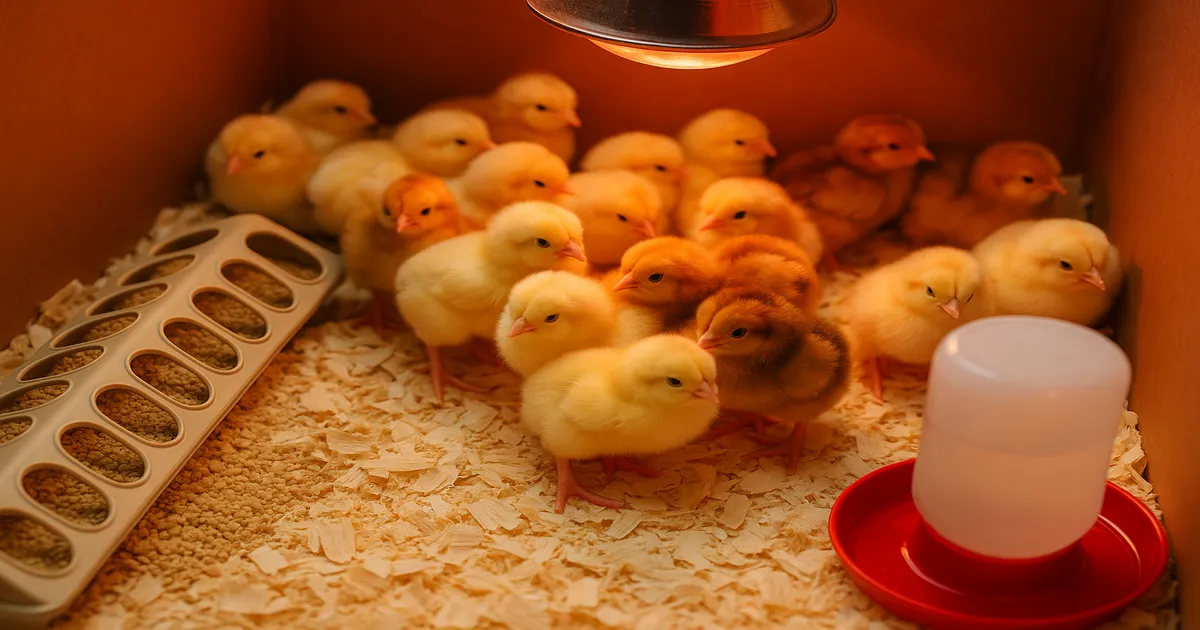
Keets are more fragile than chicks and startle easily, which leads to piling — a real suffocation risk. Use a solid-walled brooder (a large plastic tote or wooden box works well) and make it circular or oval if possible to eliminate corners where piling happens. Start with ½ sq ft per keet for the first two weeks, then expand to 1 sq ft per keet by week three.
For bedding, use paper towels for the first 3–5 days so keets learn to eat feed rather than bedding. Then switch to pine shavings. Never use cedar — the oils are toxic to poultry — or newspaper, which is too slippery and causes spraddle leg.
Temperature Schedule Week by Week
| Week | Temperature at Brooder Floor |
|---|---|
| Week 1 | 95°F (35°C) |
| Week 2 | 90°F (32°C) |
| Week 3 | 85°F (29°C) |
| Week 4 | 80°F (27°C) |
| Week 5 | 75°F (24°C) |
| Week 6 | 70°F (21°C) |
| Week 7+ | Wean off heat if ambient temps exceed 65°F (18°C) |
Choosing a Heat Source: Heat Lamp vs. Heat Plate
A 250-watt red heat lamp works but carries real fire risk if it falls or contacts bedding. A radiant heat plate mimics a mother hen rather than blasting heat from above, producing calmer keets with far less fire risk — the Brinsea EcoGlow Safety 600 is a well-regarded option. If you do use a heat lamp, secure it with a second attachment point, never just the clamp.
Reading Keet Behavior to Adjust Temperature
The keets will tell you everything you need to know. Huddled directly under the heat source means they’re too cold — lower the lamp or raise the plate temperature. Pressed against the brooder walls and panting means too hot — raise the lamp. Evenly spread throughout the brooder, active and peeping contentedly, means you’ve got it right.
Frequently Asked Questions About How to Raise Guineas with Chickens
Can guinea fowl and chickens live together in the same coop?
Yes, with proper planning. The best results come from raising keets and chicks together from a young age. Adults can be integrated using a see-through partition and gradual introductions. Ensure you have at least 4 sq ft per bird inside the coop and 10 sq ft per bird in the run as a minimum — more is always better with guineas.
Do guinea fowl protect chickens from predators?
Guinea fowl are excellent early-warning systems. They alarm-call loudly at the approach of hawks, foxes, dogs, and other threats — often giving the whole flock time to take cover. They won’t physically fight off a predator, but their noise alerts both chickens and their keepers far faster than chickens would on their own.
What is blackhead disease and how do I prevent it?
Blackhead disease is a potentially fatal parasitic infection caused by Histomonas meleagridis, spread through cecal worm eggs that chickens carry without serious illness. Guineas and turkeys are highly vulnerable, with mortality reaching 70–100% in untreated cases. Prevent it by deworming your chickens regularly with Fenbendazole, rotating pasture, and keeping young keets on clean ground — or by housing guineas separately if you’re in a high-risk area.
What do guinea fowl eat, and can they share feed with chickens?
Adult guineas can share a 20% all-flock feed with chickens, with oyster shell offered separately for laying hens. The critical difference is during the keet stage: guinea chicks require a 28% protein turkey or game bird starter for the first eight weeks — standard chick starter is not sufficient. Free-ranging guineas also supplement heavily with insects, consuming hundreds of ticks and grasshoppers daily.
How loud are guinea fowl compared to chickens?
Significantly louder. A guinea’s alarm call carries much farther than a chicken’s cluck or even a rooster’s crow, and they’ll sound off at almost any disturbance — vehicles, shadows, strangers, or wildlife. If you have close neighbors or live in a suburban area, this is a serious consideration before getting guineas. White Guineas tend to be somewhat calmer than Pearl Guineas, but no variety is quiet.