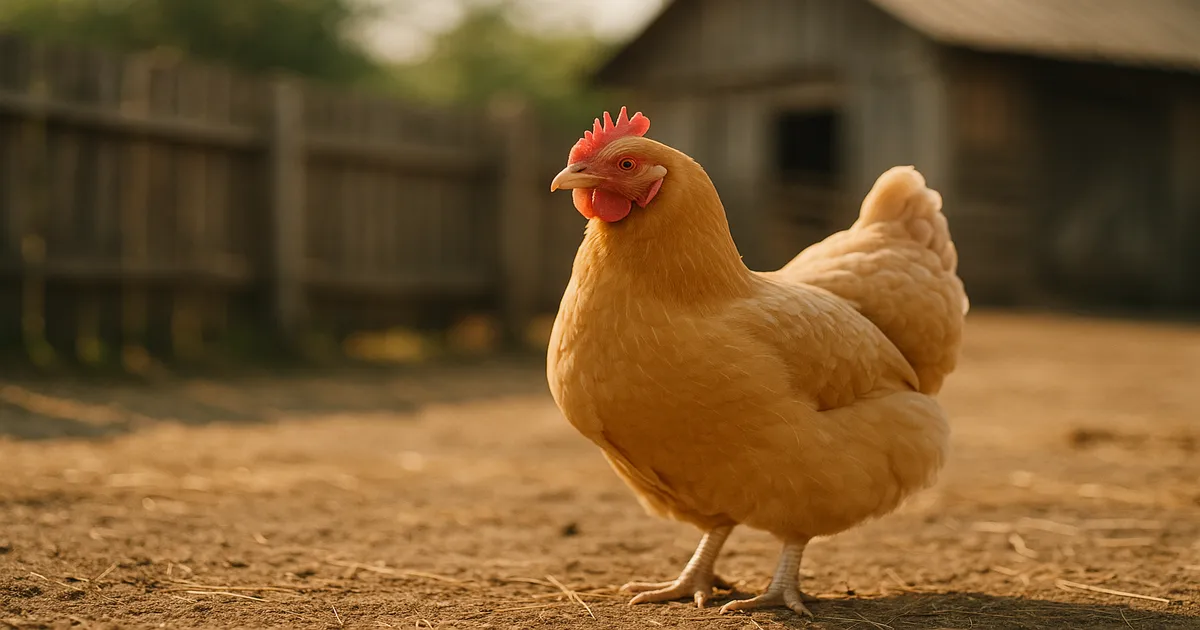
Quick Answer: Yes, you can absolutely eat Buff Orpington chickens — they were originally bred as a dual-purpose table and egg bird in 1880s England. Roosters processed at 16–20 weeks yield roughly 5–7 lbs of richly flavored meat, and spent hens make exceptional slow-cooked dishes. They won’t out-produce a Cornish Cross on yield, but the flavor more than compensates.
Buff Orpingtons are one of the most misunderstood breeds in the backyard flock world. People fall in love with their fluffy golden plumage and gentle personalities and somewhere along the way forget that William Cook bred them specifically to be eaten. If you’re sitting on a flock of surplus roosters or aging hens and wondering whether they’re worth processing, the answer is yes — and this guide will show you exactly what to expect.
| Quick Reference | Details |
|---|---|
| Dressed weight (rooster, 16–20 weeks) | 5–7 lbs (2.3–3.2 kg) |
| Dressed weight (spent hen, 18–24 months) | 4–5 lbs (1.8–2.3 kg) |
| Best processing age (rooster) | 16–20 weeks |
| Best processing age (hen) | After laying declines, 18–24 months |
| Best cooking methods (young rooster) | Roasting, grilling |
| Best cooking methods (older hen) | Braising, stewing, slow cooker |
Can You Eat Buff Orpington Chickens? The Full Answer
Buff Orpingtons aren’t a novelty meat bird or a last-resort option. They were purpose-built for the table, and heritage breed enthusiasts genuinely prize their flavor. If you’ve only ever eaten commercial broiler chicken, you’re in for a pleasant surprise.
Where beginners sometimes get tripped up is comparing Buff Orpingtons directly to Cornish Cross broilers. A Cornish Cross hits 6–8 lbs live weight in just 8 weeks. A Buff Orpington rooster takes 16–20 weeks to reach a 5–7 lb dressed weight. The trade-off is flavor — slower growth and higher fat content produce meat that’s noticeably richer and more complex than anything you’ll find in a grocery store.
For a small homestead that wants one breed pulling double duty on eggs and occasional meat, Buff Orpingtons are a genuinely rewarding choice.
Buff Orpington Breed History: Built for the Table and the Nest
William Cook’s Original Vision
The breed was developed in Orpington, Kent, by a coachman named William Cook who saw a gap in the British market. American meat breeds were flooding England, and Cook wanted a homegrown bird that could compete — one that laid well through winter and put good meat on the table. His solution was a cross of Minorcas, Langshans, and Plymouth Rocks, combining the Minorca’s laying ability with the Langshan’s meat depth and the Plymouth Rock’s hardiness. The result was a broad-breasted, heavy-bodied bird that genuinely excelled at both jobs.
How the Buff Variety Became the Most Popular
Cook introduced the Buff variety in 1894, and it quickly became the most popular color worldwide — a status it still holds today. The rich golden plumage was visually striking, but more importantly, Buff birds consistently demonstrated the calm temperament and solid production that made the breed famous. By the early 1900s, Buff Orpingtons were being exported around the world.
The American Poultry Association recognized the breed in 1902. Today, Buff Orpingtons hold a “Recovering” status on the Livestock Conservancy’s conservation priority list — populations have rebounded significantly but still merit attention from heritage breed keepers. That history matters: this breed was always meant to be a food animal, not just a backyard pet.
Buff Orpington Meat: What to Expect at the Table
Dressed Weight and Why the Plumage Is Misleading
A rooster processed at 16–20 weeks will typically dress out at 5–7 lbs (2.3–3.2 kg) — comparable to a good roasting chicken from the store. Spent hens processed at 18–24 months yield a leaner 4–5 lbs (1.8–2.3 kg), with firmer meat better suited to slow cooking.
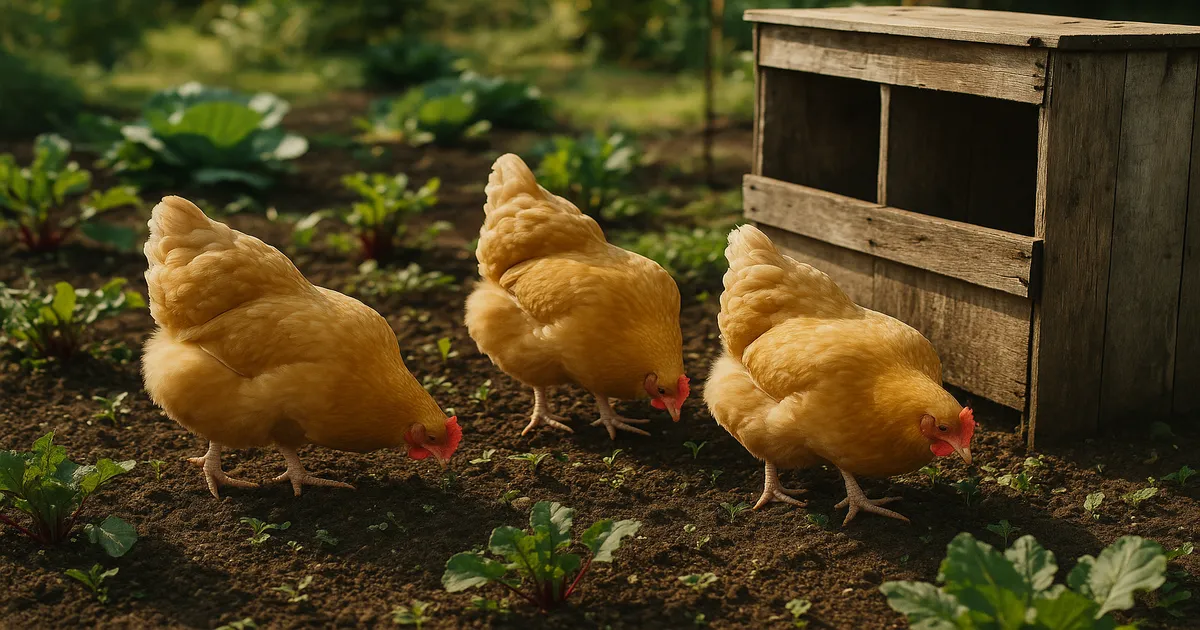
Here’s something that catches first-timers off guard: Buff Orpingtons look enormous in the yard. That dense, fluffy plumage adds serious visual bulk, but the actual body frame underneath is more modest. Don’t expect a 9-lb carcass off a bird that looked like it weighed 12 lbs on the hoof. Use the dressed weight numbers above to set realistic expectations, and you won’t be disappointed.
Flavor and Texture Compared to Commercial Broilers
The flavor difference is real and significant. Slower growth means more developed muscle fiber, and Buff Orpingtons’ naturally higher fat content produces meat that’s richer, more savory, and more satisfying than a commercial broiler. The texture is slightly firmer — not tough, just more substantial. Many people who raise heritage breeds for the first time say they can’t go back to store-bought.
Best Age to Process Buff Orpingtons for Meat
- Roosters: 16–20 weeks is the sweet spot. Before 16 weeks, yield is low. After 20 weeks, the meat firms up noticeably and feed conversion becomes inefficient.
- Spent hens: Process when annual production drops significantly — typically after 18–24 months. The meat is excellent for braising and stock.
How to Cook Buff Orpington Chickens
Young Roosters (16–20 Weeks): Roasting and Grilling
A young rooster processed at peak age can be roasted whole exactly like a commercial chicken. Season it simply — the flavor is good enough that it doesn’t need much help. Roast at 375°F (190°C) until the thickest part of the thigh reaches 165°F (74°C). Spatchcocking and grilling over indirect heat works beautifully too.
Spent Hens (18+ Months): Braising, Stewing, and Slow Cooking
Older hens are a different animal — literally. Their meat is denser, with more developed connective tissue, and high-heat cooking will make them tough. What they need is time and moisture. Long, low heat converts collagen into gelatin, which creates the silky, deeply savory quality you get in a proper coq au vin or slow-cooker stew. A spent Buff Orpington hen simmered for 3–4 hours produces some of the richest chicken stock you’ll ever taste.
Best cooking methods for older hens:
- Coq au vin
- Slow-cooker chicken stew with root vegetables
- Long-simmered stock or bone broth
- Braised in broth with aromatics at 300°F (149°C) for 3–4 hours
Don’t rush it. The same bird that turns dry and chewy on a hot grill becomes fall-off-the-bone tender after 4 hours in a Dutch oven with wine, onions, and herbs. Patience is the key ingredient.
Buff Orpington Egg Production: The Other Half of Dual-Purpose
Laying Rate, Egg Size, and When Pullets Start
Expect roughly 150–200 large brown eggs per year under good conditions — about 3–5 eggs per week per hen. That’s solid production, though it’s not in the same league as a Leghorn (280–320 eggs per year). The trade-off is temperament, meat quality, and a breed that handles both jobs well.
Most pullets begin laying at 20–24 weeks (5–6 months). That’s a bit later than lighter breeds — Leghorns can start at 16–18 weeks — because larger body size requires more development time. The first few weeks will bring small pullet eggs before production settles into a consistent rhythm. Buff Orpingtons lay large to extra-large light brown eggs, typically 24–27 oz per dozen, with good shell quality in younger hens.
Production peaks in years one and two, then declines roughly 15–20% annually. That gradual decline is often the practical trigger for processing hens — once a hen is laying significantly less, the economics of dual-purpose keeping tip toward the table.
Broodiness: Asset for Meat Production, Challenge for Egg Counts
Buff Orpingtons are famously broody. Each broody cycle costs you roughly 7–9 weeks of egg production — three weeks of incubation plus 4–6 weeks of chick-rearing. For maximum egg output, that’s a real problem.
For meat production, though, broodiness is a genuine asset. A Buff Orpington hen will hatch and raise chicks attentively, meaning you can grow out meat birds without an incubator or brooder if you plan around her cycles. To break broodiness, place the hen in a wire-bottomed cage elevated off the ground for 3–7 days — the airflow cools the breast and interrupts the hormonal cycle.
Feeding Buff Orpingtons for Dual-Purpose Production
Feed Types and Protein Levels by Life Stage
| Life Stage | Feed Type | Protein % |
|---|---|---|
| Chicks 0–8 weeks | Chick Starter (medicated or unmedicated) | 18–20% |
| Pullets 8–18 weeks | Grower feed | 16–18% |
| Laying hens 18+ weeks | Layer feed | 15–17% |
| Roosters / meat birds | All-flock or grower | 16–18% |
| Molting birds | Higher-protein feed or supplement | 20–22% |
Important: Don’t feed layer feed to roosters or young cockerels. The high calcium content (around 3.5–4%) can cause kidney damage in non-laying birds. Use an all-flock feed for mixed flocks and offer oyster shell separately so only laying hens consume it.
Avoiding Obesity in Buff Orpingtons Raised for Meat
Adult hens eat approximately ¼ to ⅓ lb (113–150 g) of feed per day; roosters eat around ⅓ lb (150 g). Free-choice feeding — keeping feeders full at all times — is standard for backyard flocks. Hang feeders at the birds’ back height to reduce waste. (Little Giant Galvanized Hanging Poultry Feeder)
Buff Orpingtons have sedentary tendencies, and their fluffy build makes it easy to miss weight gain until it becomes a real problem. Obesity reduces meat quality, strains legs and feet, and increases bumblefoot risk. Check body condition regularly by feeling the keel bone — it should be palpable but not sharp or buried under fat.
Keep treats, scratch grains, and kitchen scraps to no more than 10% of daily intake. Scratch is high in carbs and low in protein, so overfeeding it directly contributes to fat accumulation. Safe treats include leafy greens, mealworms, berries, and squash. Avoid avocado, chocolate, onions, raw dried beans, and salty processed foods.
Any bird eating anything beyond commercial pellets also needs access to insoluble granite grit to grind food in the gizzard. Free-range birds usually pick up enough naturally; confined birds need it provided free-choice.
Health Considerations for Buff Orpingtons Raised for Meat
Bumblefoot: Why Heavy Breeds Are at Higher Risk
Bumblefoot — a bacterial infection of the footpad caused most often by Staphylococcus aureus — is the health issue most directly relevant to raising Buff Orpingtons for meat. Their heavy body weight puts significant pressure on footpads, especially on hard or rough surfaces. Watch for a black scab on the bottom of the foot, swelling, or lameness.
Mild cases respond well to Epsom salt soaks, gentle debridement, Betadine, antibiotic ointment, and vet wrap changed every 2–3 days. Severe or deep infections require veterinary attention — don’t attempt aggressive surgical debridement at home. Prevention is simpler: use flat 2×4 roost bars laid wide-side up and keep roost height at 18–24 inches off the ground to reduce landing impact.
External Parasites: The Hidden Risk of Dense Plumage
That beautiful fluffy plumage is paradise for mites and lice. Buff Orpingtons carry a meaningfully higher parasite risk than tighter-feathered breeds, and infestations can develop quickly in the dense feathering near the vent. Check weekly by parting the feathers around the vent — look for moving specks (mites) or clusters of white eggs at the feather shafts (lice).
Treat affected birds and coop surfaces with permethrin dust or spray and repeat in 10–14 days to break the egg cycle. A permanent dust bath filled with sand, wood ash, and food-grade diatomaceous earth gives birds a natural defense year-round.
Vaccination and Disease Prevention
Vaccinate day-old chicks for Marek’s disease — even if you’re raising them purely for meat. The vaccine costs $0.15–$0.25 per chick and prevents tumor development. Most hatcheries offer it automatically; if you’re hatching your own, source the vaccine and administer it at hatch. There is no treatment for Marek’s, and infected birds must be culled.
Young cockerels between 3–6 weeks old are the most vulnerable to coccidiosis. Medicated chick starter containing amprolium is your first line of defense for the first 8 weeks. If you see bloody or watery droppings, lethargy, or a pale comb, treat immediately with Corid (amprolium) at 1.5 tsp of the 9.6% solution per gallon of water for 5–7 days. Note: if chicks were vaccinated for coccidiosis, skip medicated feed — it will neutralize the vaccine.
Is Eating Buff Orpington Chickens Worth It? Pros and Cons
Advantages
- Docile temperament makes processing less stressful — for the birds and for you
- Rich, flavorful meat that outperforms commercial broilers in taste
- Natural brooding ability means you can hatch and raise meat birds without incubator equipment
- Cold-hardy — they handle harsh winters well without heated coops in most climates
- One breed, two jobs — eggs when young, meat when production declines
Limitations
- Lower dressed weight than Cornish Cross — you won’t match commercial broiler yield
- Slower growth means more weeks of feed cost before processing
- Moderate egg production — not the right choice if maximum eggs are the priority
- Obesity risk requires active management of feed and treats
- Higher parasite risk from dense plumage demands more attentive monitoring
Who Should Raise Buff Orpingtons for Meat
Buff Orpingtons are an excellent fit for small homesteads that want a single breed providing eggs through the laying years and quality meat at the end of a hen’s productive life — or from surplus roosters along the way. They’re ideal for families who want friendly, handleable birds and appreciate heritage breed flavor over maximum yield.
They’re not the right choice for higher-volume meat operations, anyone who needs maximum egg output, or anyone who wants fast turnaround from hatch to freezer. For those goals, Cornish Cross or a dedicated laying breed makes more sense. But for a small, versatile flock? Buff Orpingtons earn their place.
Frequently Asked Questions About Eating Buff Orpington Chickens
What does Buff Orpington chicken taste like compared to store-bought?
Buff Orpington meat is noticeably richer and more flavorful than commercial broiler chicken. The slower growth rate and higher fat content produce a deeper, more savory flavor with a firmer — but not tough — texture. Most people who try it describe it as what chicken used to taste like before industrial farming.
At what age should you butcher a Buff Orpington rooster for the best meat?
The sweet spot is 16–20 weeks. Before 16 weeks, dressed weight is too low to make processing worthwhile. After 20 weeks, the meat firms up noticeably and feed conversion becomes increasingly inefficient. Roosters processed in that window yield 5–7 lbs of well-flavored, roast-ready meat.
How much meat do you get from a Buff Orpington chicken?
A rooster processed at 16–20 weeks yields approximately 5–7 lbs (2.3–3.2 kg) dressed. A spent hen processed at 18–24 months yields roughly 4–5 lbs (1.8–2.3 kg). The fluffy plumage makes these birds look considerably larger than their actual dressed weight — plan accordingly.
Can you eat Buff Orpington hens, or only roosters?
You can eat both. Roosters processed at 16–20 weeks are ideal for roasting and grilling. Hens are typically kept through their productive laying years and processed when egg production declines significantly — usually after 18–24 months. Older hens require slow, moist cooking methods but produce exceptionally flavorful meat and rich stock.
How do Buff Orpingtons compare to Cornish Cross for meat production?
Cornish Cross birds are purpose-bred for maximum yield and reach 6–8 lbs live weight in just 8 weeks. Buff Orpingtons take twice as long and dress out lighter. The difference is flavor: Buff Orpington meat is far richer and more complex. For a homesteader who values taste and dual-purpose utility over speed and volume, Buff Orpingtons are the better choice.