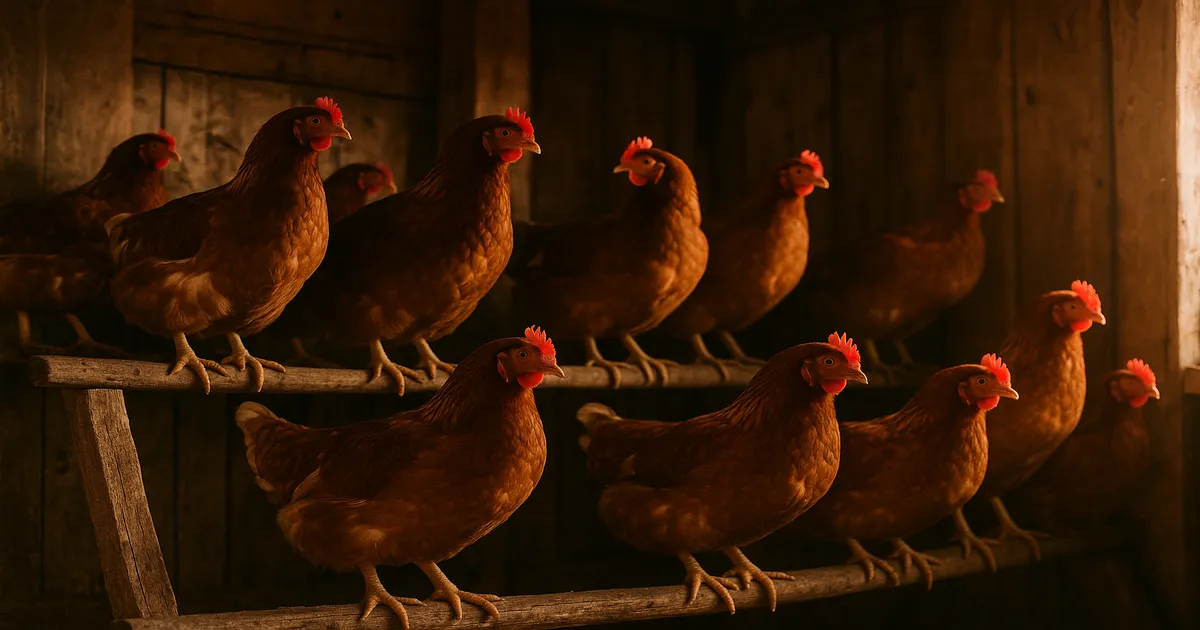
Quick Answer: Yes, you can eat egg laying hens. Once a hen’s egg production declines — typically after year 2 or 3 — processing her for the table is a practical, time-honored choice. These older birds, known as stewing hens or fowl, have tougher but far more flavorful meat than anything you’ll find at the grocery store.
Can You Eat Egg Laying Hens? Yes — Here’s What You Need to Know
Eating spent laying hens isn’t a new idea. It’s how farms have operated for centuries. When a hen stops pulling her weight in the nest box, putting her in a pot makes practical, economic, and ethical sense — nothing goes to waste.
In culinary tradition, older hens are called stewing hens or simply fowl. The meat requires different cooking techniques than a grocery-store broiler, but the payoff in flavor is real. Many experienced cooks consider a properly prepared stewing hen far superior to a young commercial bird.
What Is a Spent Hen and When Is She Ready to Process?
A “spent hen” is a laying hen whose egg production has declined to the point where she’s no longer economically productive. Here’s how the timeline typically plays out:
- Year 1: Peak production — 80–95% lay rate
- Year 2: Production drops roughly 15–20% from peak
- Year 3: Another 15–20% decline; many keepers begin making processing decisions
- Year 4+: Output may be just 40–50% of peak — she’s considered spent
Commercial egg farms process hens at 12–18 months for maximum efficiency. Backyard keepers tend to be more sentimental, often keeping hens 3–7 years before making that call. Either approach is valid — it depends on your goals.
How Does a Spent Laying Hen Taste Compared to Store-Bought Chicken?
A laying hen spends her life walking, foraging, and working hard. That activity builds muscle, and developed muscle means more connective tissue — which translates to tougher meat. The flip side: that same muscle development, combined with age and a varied diet, produces dramatically richer flavor than a 6-week-old commercial broiler that barely moved.
Fat distribution matters too. Older hens deposit fat differently than young meat birds, contributing to a deeper, more complex taste when cooked low and slow.
Spent Hen vs. Commercial Broiler: A Side-by-Side Comparison
| Feature | Spent Laying Hen | Commercial Broiler |
|---|---|---|
| Meat texture | Tough, firm | Tender, soft |
| Flavor | Rich, deep, complex | Mild, bland |
| Best cooking method | Slow cooker, braising, pressure cooker | Roasting, grilling, quick-cooking |
| Fat distribution | Moderate, well-distributed | Heavy breast fat, less elsewhere |
| Carcass weight | 3–5 lbs (dressed) | 4–6 lbs (dressed) |
Most commercial spent-hen meat doesn’t end up as whole birds at the supermarket — it goes into canned soups, processed stocks, and pet food. That’s a shame, because with the right technique, a spent hen makes an exceptional meal.
Best Egg Laying Breeds to Eat After Their Laying Days Are Over
Dual-Purpose Breeds: The Best of Both Worlds
If you want eggs and a decent meal at the end of a hen’s career, dual-purpose breeds are the way to go. These birds were developed to perform well on both fronts — they lay consistently and carry enough body weight to make processing worthwhile. Dual-purpose hens typically weigh 6–8 lbs at maturity and yield a dressed carcass of 3–5 lbs, depending on breed and age.
Rhode Island Red, Plymouth Rock, and Buff Orpington are the most popular dual-purpose choices for good reason.
- Rhode Island Red — Hardy, productive (200–260 eggs/year), and carries a rectangular, meaty body. Excellent cold hardiness. One of the best all-around dual-purpose birds.
- Plymouth Rock (Barred Rock) — Broad-bodied, calm, and consistent. Cold-hardy with good meat yield and a reliable 200–250 brown eggs per year.
- Buff Orpington — Large, fluffy, and famously docile. Slightly lower egg production (150–200/year) but a broad breast and excellent meat quality. Cold-hardy and a great beginner breed. Lays light brown eggs.
Delaware, Sussex, and New Hampshire Red don’t get as much attention, but they’re excellent choices too.
- Delaware — Developed in the 1940s specifically for meat and egg production. Broad-breasted and fast-maturing. Lays brown eggs and is underutilized in backyard flocks.
- Sussex — One of England’s oldest breeds. Calm, curious, and surprisingly meaty for a heritage bird. Lays cream to light brown eggs and handles both cold and heat reasonably well.
- New Hampshire Red — A faster-maturing offshoot of the Rhode Island Red with a slightly stronger focus on meat. Lays brown eggs and is a solid performer either way.
What About Leghorns and Sex-Links?
Technically, yes — you can eat egg laying hens of any breed. Practically, manage your expectations with production breeds. Leghorns and sex-link hybrids (ISA Brown, Golden Comet, Cinnamon Queen) were bred for one thing: egg production. They’re lean, light-framed birds — typically 4–5 lbs at maturity — with bony carcasses and minimal breast meat. They’re edible, but they’re best used for making stock rather than a dinner centerpiece.
Carcass Weight and Meat Yield by Breed
| Breed | Mature Weight | Dressed Carcass | Meat Quality | Eggs/Year |
|---|---|---|---|---|
| Rhode Island Red | 6.5–7 lbs | 3.5–4.5 lbs | Very good | 200–260 |
| Plymouth Rock | 7–8 lbs | 4–5 lbs | Excellent | 200–250 |
| Buff Orpington | 7–8 lbs | 4–5 lbs | Excellent | 150–200 |
| Delaware | 6–7 lbs | 3.5–4.5 lbs | Very good | 200–250 |
| Sussex | 6–7 lbs | 3.5–4 lbs | Very good | 200–250 |
| New Hampshire Red | 6.5–7 lbs | 3.5–4.5 lbs | Good–Very good | 200–240 |
| Australorp | 6–7 lbs | 3–4 lbs | Good | 200–250 |
| Leghorn | 4–5 lbs | 2–2.5 lbs | Poor (best for stock) | 250–300 |
| ISA Brown / Golden Comet | 4–5 lbs | 2–2.5 lbs | Poor (best for stock) | 300–320 |
Knowing When to Move a Hen From Coop to Kitchen
How the Annual Molt Signals Processing Time
Every fall, hens go through a molt — they drop their old feathers and grow new ones. During this 8–16 week process, egg production stops entirely. For many keepers, the molt is a natural trigger for a processing decision. Older hens that were already slowing down often don’t ramp back up to meaningful production after their second or third molt.
Supplemental lighting — 14–16 hours of light per day using a simple LED bulb on a timer — can extend production through winter and delay the molt somewhat, but it won’t reverse age-related decline. A reliable outlet timer makes this easy to manage.
Egg Output by Breed: A Quick Reference
| Breed | Eggs/Week | Eggs/Year | Egg Color | Egg Size |
|---|---|---|---|---|
| Leghorn | 5–6 | 250–300 | White | Large–X-Large |
| ISA Brown / Golden Comet | 6–7 | 300–320 | Brown | Large |
| Rhode Island Red | 4–5 | 200–260 | Brown | Large |
| Plymouth Rock | 4–5 | 200–250 | Brown | Large |
| Australorp | 4–5 | 200–250 | Light brown | Large |
| Delaware | 4–5 | 200–250 | Brown | Large |
| Sussex | 4–5 | 200–250 | Cream–light brown | Large |
| New Hampshire Red | 4–5 | 200–240 | Brown | Large |
| Buff Orpington | 3–4 | 150–200 | Light brown | Large |
How to Process a Spent Laying Hen
Home Processing vs. Mobile Poultry Processors
You have three main options:
- DIY home processing — The most common approach for homesteaders. Requires basic equipment and a willingness to learn. A good killing cone and a dedicated scalding pot make the job significantly cleaner and easier. Plenty of solid video tutorials are available online.
- Mobile poultry processors — A processor comes to your property with a trailer setup. Convenient and clean; costs typically run $5–$10 per bird.
- USDA-inspected facility — Required if you plan to sell the meat. Unnecessary for personal use, but an option in some areas.
Key Differences When Processing an Older Hen
Spent hens process differently than 8-week-old broilers. The skin is tougher, the muscle structure more developed, and the fat distributed differently. Scalding temperature matters more — aim for 140–150°F (60–65°C) for older birds to loosen feathers without tearing the skin.
Expect a dressed carcass that’s noticeably leaner than a commercial broiler. A 7-lb Buff Orpington might dress out at 4–4.5 lbs. The meat will be darker, the skin thicker, and the bones denser — all positives when you’re making stock or slow-cooking.
Food Safety Basics
- Chill the carcass to below 40°F (4°C) within two hours of processing
- Rest the carcass in the refrigerator for 24–48 hours before cooking — this allows rigor mortis to pass and the meat to relax, improving tenderness noticeably
- Use separate cutting boards and wash hands thoroughly
- Cook to an internal temperature of 165°F (74°C)
How to Cook a Spent Hen: Turning Tough Meat Into Great Meals
Low and Slow Is the Golden Rule
The connective tissue that makes a spent hen tough when cooked quickly becomes silky and rich when given time and moisture. Collagen breaks down into gelatin over long, slow cooking — that’s what gives a properly made chicken soup its lip-smacking body. Try to roast a spent hen like a broiler and you’ll end up with something chewy and disappointing. Give her four hours in a Dutch oven and you’ll wonder why you ever bought a grocery-store bird.
Best Cooking Methods
- Slow cooker: 8–10 hours on low. Set it and forget it. The meat falls off the bone and the liquid becomes deeply flavored.
- Pressure cooker / Instant Pot: 60–90 minutes at high pressure. Dramatically faster than traditional braising with similar results.
- Braising (Dutch oven): 3–4 hours at 300–325°F (149–163°C) in a covered pot with aromatics, wine, or broth. The classic technique for coq au vin and similar dishes.
Classic Recipes to Try
- Coq au vin — The original spent-hen dish. Red wine, mushrooms, pearl onions, and time. This recipe was literally invented for older birds.
- Chicken and dumplings — Slow-cooked until the meat shreds easily, then topped with fluffy dumplings.
- Chicken soup — Simple and deeply satisfying. A spent hen produces soup that tastes nothing like what you get from a carton.
- Rich chicken stock — A spent hen makes arguably the best stock of any chicken you can use. Dense bones, developed collagen, and age all contribute to a stock that gels solid in the refrigerator. Simmer the whole bird or carcass with onion, carrot, celery, and peppercorns for 4–6 hours, strain, and you have liquid gold.
Planning a Dual-Purpose Flock
Flock Rotation for Continuous Egg Production
The simplest strategy is to add a new batch of pullets each spring so you always have young birds coming into peak production as older hens decline. When your oldest hens hit year 2 or 3, you process them — and your egg supply never drops because the younger birds are already laying. This rolling rotation keeps production steady year-round without a gap.
Feeding Dual-Purpose Hens
Active laying hens do well on a quality layer feed (16–18% protein) at roughly ¼ lb (4 oz) per bird per day. During molt — especially if you’re planning to process soon after — switch to a higher-protein flock raiser (18–20%) to support feather regrowth and build body condition. Offer oyster shell free-choice throughout their laying career to keep eggshells strong.
A note on protein: Layer feed is commonly listed at 15–18% protein depending on the brand and formulation. Check your bag — anything in that range is appropriate for laying hens.
Housing and Space
Dual-purpose breeds tend to be calmer and larger than production breeds, so give them room to move comfortably. Plan for at least 4 sq ft per bird indoors and 10 sq ft per bird in the run as a minimum — more is always better. These breeds are generally good-natured and easy to handle, which makes flock integration and processing day much less stressful for everyone.
Frequently Asked Questions About Eating Egg Laying Hens
Is it safe to eat an old egg laying hen?
Yes. Age doesn’t make a hen unsafe to eat — it changes the texture and requires different cooking methods. Process and chill the bird properly, cook it to an internal temperature of 165°F (74°C), and it’s perfectly safe.
What do spent laying hens taste like?
Much richer and more complex than a commercial broiler, which most people describe as bland by comparison. The trade-off is texture — older hens are tougher and need low-and-slow cooking to become tender. Done right, the result is far more satisfying than anything from a grocery store.
At what age should you process a laying hen for meat?
Most backyard keepers process hens between 2–4 years of age, when egg production has declined significantly. Year 3 is a common sweet spot — production has dropped enough to justify the decision, but the hen isn’t so old that the meat becomes impractical. Commercial farms process at 12–18 months, but backyard keepers have the luxury of waiting.
Which breeds are best for both eggs and eating?
Rhode Island Reds, Plymouth Rocks, Buff Orpingtons, Delawares, Sussex, and New Hampshire Reds are all excellent dual-purpose choices. They produce 150–260 eggs per year and yield dressed carcasses of 3–5 lbs at the end of their laying career. See the breed comparison table above for a full breakdown.
Can you eat a hen that has stopped laying entirely?
Yes — that’s actually the most common trigger for processing. A hen that has stopped laying due to age, a completed molt, or natural decline is still perfectly edible. She’ll need slow, moist cooking to be at her best, but she can make an outstanding pot of soup, a rich stock, or a classic braised dish.