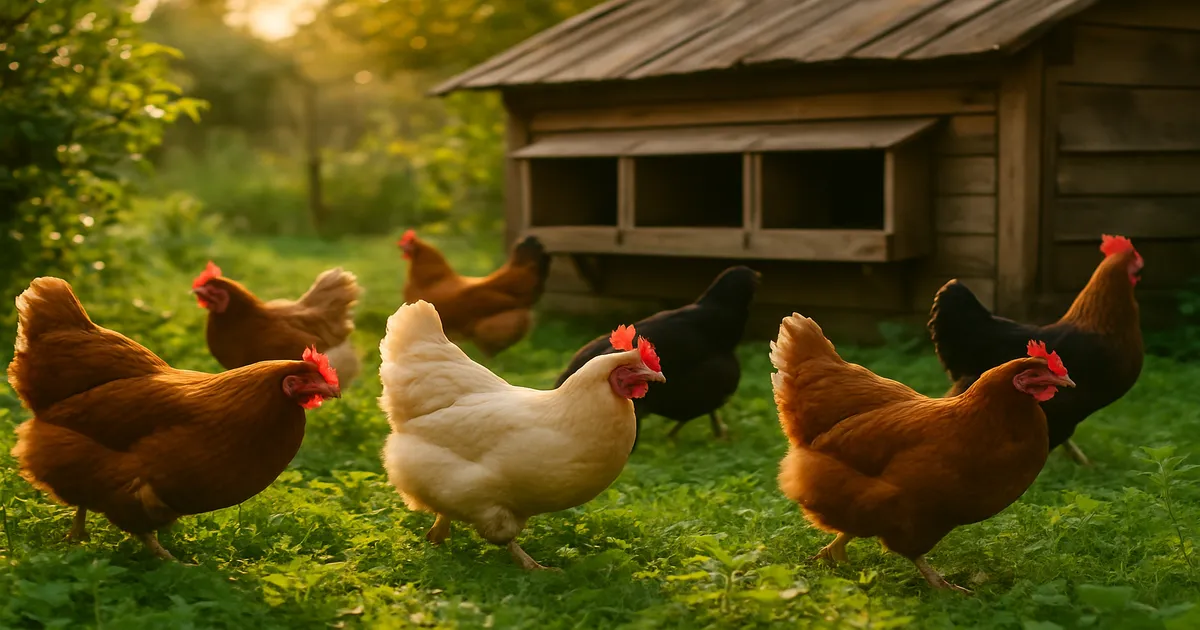
Quick Answer: The best egg layer chicken depends on what you need from your flock. ISA Browns and White Leghorns lead in raw production at 300–350 eggs per year, Golden Comets and Rhode Island Reds are the most beginner-friendly all-rounders, and Black Australorps are the top heritage breed choice. Read on to find the right match for your climate, space, and experience level.
Choosing the best egg layer chicken is one of the most important decisions you’ll make as a backyard keeper. Get it right and you’ll have a steady supply of fresh eggs for years. Get it wrong and you might end up with a flock that’s too flighty, too broody, or simply not suited to your winters. This guide ranks the top 10 laying breeds by eggs per year, temperament, cold-hardiness, laying longevity, and ease of care — then helps you match the right breed to your specific situation.
What Is the Best Egg Layer Chicken? Top Picks at a Glance
The Short Answer for Beginners
If you want maximum eggs with minimum fuss, start with an ISA Brown or Golden Comet. Both are docile, early to lay, and will average 5–7 eggs per week in their first two years. If you want a breed that holds up through cold winters and keeps laying productively into year four or five, the Black Australorp or Plymouth Rock is your bird.
How We Ranked These Breeds
Each breed below was evaluated on five criteria: eggs per year, temperament, cold-hardiness, laying longevity, and ease of care for new keepers. No single breed tops every category — the goal is to help you find your best fit.
Summary Comparison Table
| Breed | Eggs/Year | Egg Color | Temperament |
|---|---|---|---|
| ISA Brown | 300–350 | Brown | Docile, friendly |
| White Leghorn | 280–320 | White | Active, flighty |
| Golden Comet | 250–300 | Brown | Calm, beginner-friendly |
| Rhode Island Red | 250–300 | Brown | Curious, assertive |
| Black Australorp | 250–300 | Brown | Gentle, quiet |
| Plymouth Rock | 200–280 | Brown | Friendly, steady |
| Light Sussex | 200–250 | Cream/Tinted | Docile, curious |
| Ameraucana | 150–200 | Blue | Independent, friendly |
| Black Copper Marans | 150–200 | Dark Brown | Calm, quiet |
| Buff Orpington | 150–200 | Light Brown | Gentle, highly broody |
Top 10 Best Egg Laying Chicken Breeds Ranked
White Leghorn: The Commercial Production Champion
Developed in Tuscany and imported to the US in the 1850s, the White Leghorn is the breed behind almost every white egg in your grocery store. Lightweight at 4–5 lbs, active, and built for one thing: laying eggs.
Expect 5–7 eggs per week and up to 280–320 eggs per year, starting as early as 16–18 weeks old. They handle heat well and eat less than heavier breeds, making them economical producers. The tradeoff is temperament — Leghorns are flighty and independent, not ideal for families with young children or mixed flocks that include calmer breeds.
Notable Trait: Their large single comb is striking but vulnerable to frostbite in harsh winters. Apply a thin layer of petroleum jelly to the comb when temperatures drop below 20°F (-7°C).
ISA Brown: The Backyard Egg Machine
The ISA Brown is a proprietary French hybrid developed in 1978 and arguably the most productive backyard layer available today. These birds are chestnut-brown, compact at 4.5–5.5 lbs, and remarkably people-oriented — they’ll follow you around the yard looking for attention.
Production sits at 6–7 eggs per week, or 300–350 eggs per year in peak condition. They start laying at just 16–18 weeks. The catch: like most hybrids, ISA Browns tend to burn out after 2–3 years of peak production, so plan to refresh your flock accordingly.
Notable Trait: ISA Browns have held world records for egg production in controlled laying trials. They’re the closest thing to a guaranteed egg machine in a backyard setting.
Golden Comet: Best Hybrid for Beginners
The Golden Comet is a sex-link hybrid — typically a Rhode Island Red male crossed with a White Rock female — which means you can tell males from females at hatch by feather color. That’s a huge practical advantage when ordering chicks.
They lay 5–6 eggs per week (250–300 per year) starting at 16–18 weeks, and their calm, friendly disposition makes them ideal for families and first-time keepers. Like the ISA Brown, expect peak production for about 2–3 years before output declines noticeably.
Notable Trait: Autosexing at hatch eliminates the guesswork — and the accidental roosters.
Rhode Island Red: The All-American All-Rounder
Developed in Rhode Island and Massachusetts in the 1880s, the Rhode Island Red has been a backyard staple for over a century. At 6.5 lbs, they’re a solid dual-purpose bird that produces 5–6 eggs per week (250–300 per year) of rich brown eggs.
They’re curious, hardy, and adapt well to most climates. One caveat: Rhode Island Reds can be assertive in mixed flocks and may bully smaller or more docile breeds. Pair them with birds of similar size and temperament for the best results.
Notable Trait: Production Reds (the lighter-colored commercial strain) lay more eggs per year. Heritage Reds are darker-feathered and better suited to dual-purpose use.
Black Australorp: Best Heritage Egg Layer Chicken
Australia’s national chicken breed was developed from Black Orpingtons in the late 1800s. A single hen set a world record that still stands: 364 eggs in 365 days during a 1922–1923 laying trial. That’s an exceptional outlier, but it tells you everything about the breed’s potential.
Australorps are gentle, quiet, and well-suited to suburban flocks where noise is a concern. They lay 5–6 eggs per week (250–300 per year) of large brown eggs, starting a little later at 22–24 weeks. They’re cold-hardy and maintain decent production well into their third and fourth year — a real advantage over hybrids.
Notable Trait: That glossy black plumage has a beetle-green iridescent sheen in sunlight. They’re one of the most beautiful production breeds you can keep.
Plymouth Rock (Barred Rock): Best Dual-Purpose Layer
The Barred Rock’s distinctive black-and-white striped pattern makes it one of the most recognizable breeds in the backyard world. First exhibited in Boston in 1849, it’s been a reliable American staple ever since.
Expect 4–5 eggs per week (200–280 per year) of large brown eggs, with laying beginning around 18–20 weeks. What sets the Plymouth Rock apart from hybrids is longevity — these birds lay productively for 4–6 years, making them a better long-term investment if you’re not planning to refresh your flock every few seasons.
Notable Trait: At 7.5 lbs, the Plymouth Rock is large enough to serve as a meat bird when a hen reaches the end of her laying life — true dual-purpose value.
Light Sussex: Best for Cold and Wet Climates
One of England’s oldest breeds, the Light Sussex has been around since Roman times and spent centuries adapting to cold, wet British winters. They’re exceptionally cold-hardy and lay consistently through the colder months when other breeds slow down.
They produce 4–5 eggs per week (200–250 per year) of cream to tinted eggs. At around 7 lbs, they’re large enough to be a decent meat bird as well. Sussex hens are docile, curious, and tolerate confinement well — a good choice if your run space is limited.
Notable Trait: Light Sussex are strong foragers and will actively work your yard for insects and greens if given free-range access, which can meaningfully reduce your feed costs.
Ameraucana: Best for Colorful Egg Baskets
Developed in the US in the 1970s from South American Araucana stock, the Ameraucana is the breed responsible for those beautiful blue eggs. Medium-sized birds with distinctive muffs, beards, and a pea comb, they’re among the most cold-hardy breeds available.
Production is more modest at 3–4 eggs per week (150–200 per year), and they start laying at 20–24 weeks. If egg count is your top priority, Ameraucanas aren’t your bird. But if you want a blue egg in your basket and a breed that genuinely handles cold winters without frostbite issues, they’re hard to beat.
Notable Trait: Many birds sold as “Ameraucanas” at feed stores are actually Easter Eggers — mixed-breed birds that can lay blue, green, or even pinkish eggs. True Ameraucanas are only available from specialty breeders.
Black Copper Marans: Best for Dark Chocolate Eggs
The Black Copper Marans comes from Marans, France, and produces the darkest eggs of any breed — a deep chocolate brown that can range to nearly mahogany. Egg collectors and specialty market sellers prize these birds specifically for that color.
They lay 3–4 eggs per week (150–200 per year), with laying beginning later than most breeds at 24–28 weeks. Marans hens are calm and quiet, though not as people-friendly as ISA Browns or Australorps. They also tend toward broodiness, which can interrupt production for weeks at a time.
Notable Trait: Egg color intensity varies — the darkest eggs typically come from the first part of the laying cycle and lighten as the season progresses.
Buff Orpington: Best for Families with Children
Created in Orpington, Kent in 1886, the Buff Orpington is the breed everyone falls in love with at first sight. Fluffy, golden, and calm to the point of being lap chickens, they’re often described as the “golden retriever of chickens.” At 8 lbs, they’re the heaviest breed on this list.
Egg production is the lowest here at 3–4 eggs per week (150–200 per year) of light brown eggs. They’re also strongly broody, which can cost you weeks of production per episode. But if you have young children or want a flock that doubles as backyard pets, no breed comes close.
Notable Trait: Their strong broody instinct makes Buff Orpingtons excellent natural mothers. If you want to hatch chicks under a hen rather than in an incubator, this is your breed.
Egg Production: Numbers Every Keeper Should Know
Eggs Per Year by Breed: Full Comparison Table
| Breed | Eggs/Week | Eggs/Year | Egg Color | Laying Onset |
|---|---|---|---|---|
| ISA Brown | 6–7 | 300–350 | Brown | 16–18 weeks |
| White Leghorn | 5–7 | 280–320 | White | 16–18 weeks |
| Rhode Island Red | 5–6 | 250–300 | Brown | 18–20 weeks |
| Golden Comet | 5–6 | 250–300 | Brown | 16–18 weeks |
| Black Australorp | 5–6 | 250–300 | Brown | 22–24 weeks |
| Plymouth Rock | 4–5 | 200–280 | Brown | 18–20 weeks |
| Light Sussex | 4–5 | 200–250 | Cream/Tinted | 20–24 weeks |
| Ameraucana | 3–4 | 150–200 | Blue | 20–24 weeks |
| Black Copper Marans | 3–4 | 150–200 | Dark Brown | 24–28 weeks |
| Buff Orpington | 3–4 | 150–200 | Light Brown | 20–24 weeks |
How Long Will Your Hens Lay at Peak Production?
Most hens lay at their best during the first 12–18 months of laying. After that, production typically drops 15–20% per year — so a hen laying 300 eggs in year one might give you 240–255 in year two and 190–215 in year three. This is normal and expected.
The annual fall molt adds another wrinkle. Between September and November, most hens stop laying entirely for 6–12 weeks while they regrow their feathers. Don’t panic — and don’t cull your hens at first molt. They’ll return to production afterward, just at a slightly lower rate than before. During the molt, switch your flock temporarily to a higher-protein feed (around 18–20% protein) to support feather regrowth, then return to a standard 16% layer feed once laying resumes.
Hybrid vs. Heritage: Which Lasts Longer?
Hybrids like ISA Browns and Golden Comets are bred for peak output, and they deliver — but they burn hard and fast. Most hybrid hens see a steep production decline after year 2 or 3. Heritage breeds like Plymouth Rocks and Light Sussex lay fewer eggs per year but maintain decent production for 4–6 years, which often makes them more economical over the full life of your flock.
The right answer depends on your goals. If you want maximum eggs right now and plan to refresh your flock regularly, go hybrid. If you want a flock that matures slowly and produces reliably for years, heritage breeds reward patience.
How Broodiness Affects Your Annual Egg Count
A broody hen stops laying completely for the entire broody episode and the recovery period after. That’s typically 3–8 weeks of zero eggs per episode, and some hens go broody multiple times a season.
High-broodiness breeds like Buff Orpingtons and Black Copper Marans are the biggest offenders. If egg production is your priority, choose low-broodiness breeds like Leghorns, ISA Browns, or Golden Comets.
Breaking Broodiness: Place the broody hen in a wire-bottom cage elevated off the ground with food and water but no nesting material. The airflow under the cage cools her underside and breaks the hormonal cycle driving broodiness. Most hens snap out of it within 3–7 days.
Using Supplemental Lighting to Maximize Winter Production
Hens need 14–16 hours of total light per day to maintain peak laying. In winter, natural daylight drops well below that threshold, and production can fall 30–50% without intervention.
The fix is simple: add a 40–60 watt equivalent LED bulb on a timer inside the coop. Set it to add light in the morning hours rather than the evening — that way, when the timer shuts off, natural darkness signals bedtime rather than leaving birds disoriented in sudden blackness. This single change can keep your winter egg production close to summer levels.
Choosing the Best Egg Layer Chicken for Your Situation
Best Breeds for Beginners and Families
Start with breeds that forgive beginner mistakes and actually enjoy human interaction:
- Golden Comet — calm, friendly, autosexing, early layers
- ISA Brown — docile, high production, easy to handle
- Black Australorp — quiet enough for suburban settings, consistent layers
- Buff Orpington — gentle with children, though lower production and prone to broodiness
Best Breeds for Cold Climates
Cold-hardiness comes down to body mass, feather density, and comb type. Pea combs and rose combs have far less surface area than large single combs, which dramatically reduces frostbite risk.
- Black Australorp — cold-hardy with a small pea comb
- Plymouth Rock — dense feathering, handles extreme cold with wind protection
- Light Sussex — bred for cold, wet British winters
- Ameraucana — pea comb makes it one of the safest choices in extreme cold
Best Breeds for Hot Climates
Lightweight, active breeds handle heat far better than heavy, fluffy ones.
- White Leghorn — lightweight, active, and the most heat-tolerant production breed available
- Rhode Island Red — handles heat reasonably well for a dual-purpose bird
Avoid heavy breeds like Buff Orpingtons and Sussex in climates that regularly exceed 90°F (32°C). Their dense feathering works against them in summer. Make sure all birds have access to fresh, cool water at all times — a quality automatic waterer makes this much easier in hot weather.
Best Breeds for Small Backyard Flocks
When you only have 3–6 birds, consistent production per hen matters more than ever.
- ISA Brown — 300–350 eggs/year means fewer birds needed to meet your egg goals
- Rhode Island Red — reliable 250–300 eggs/year with good temperament in small flocks
Best Breeds for Colorful Egg Baskets
- Ameraucana — blue eggs
- Black Copper Marans — deep chocolate brown
- Rhode Island Red — rich, dark brown
- Light Sussex — cream to tinted
Mix these breeds and you’ll have a genuinely beautiful egg basket.
Best Dual-Purpose Breeds for Eggs and Meat
- Rhode Island Red — the classic American dual-purpose bird
- Plymouth Rock — large enough to serve as a table bird at end of laying life
- Light Sussex — solid egg production and good meat yield
Coop and Housing Requirements for Laying Hens
How Much Space Do Laying Hens Need?
The minimum is 4 sq ft per bird inside the coop and 10 sq ft per bird in the outdoor run. In practice, 6–8 sq ft inside is better — overcrowding is the single biggest driver of feather pecking, aggression, and disease in backyard flocks. If your birds have true free-range access to your yard, you can work with the minimum coop space, but never eliminate the run entirely.
A well-ventilated, predator-proof coop is non-negotiable. If you’re building your own, prioritize ventilation at the roofline and hardware cloth (not chicken wire) on all openings.
Roost Bar Setup for Maximum Comfort
- 8–12 inches of linear roost space per standard bird
- 18–24 inches off the floor for most breeds; keep heavy breeds like Buff Orpingtons and Sussex under 24 inches to prevent leg and foot injuries on dismount
- Use 2×4 lumber laid flat (wide side up) — this lets hens cover their toes with their breast feathers on cold nights, which is far more important for winter comfort than a round perch
Nesting Boxes: How Many Do You Need?
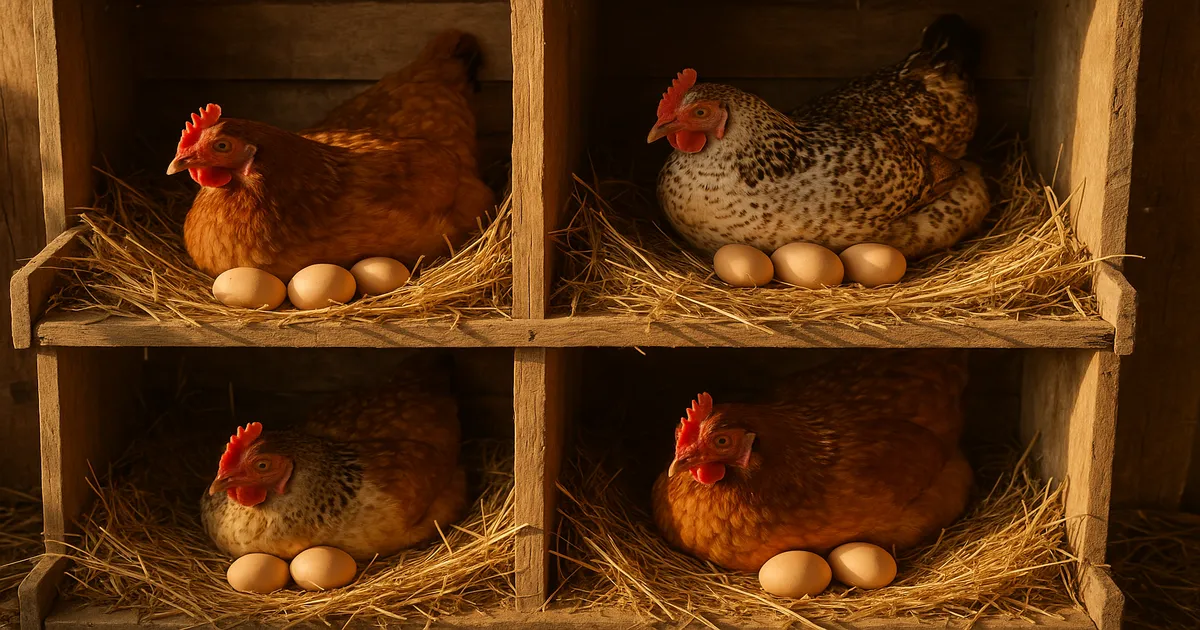
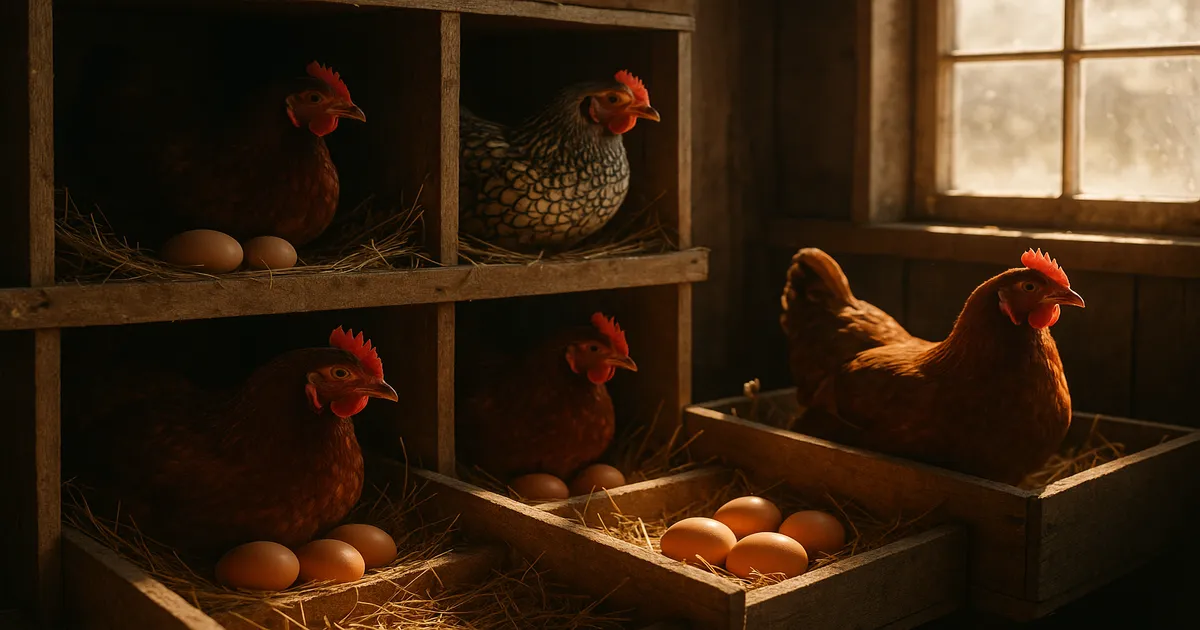
Provide one nesting box for every 3–4 hens. More than that and they’ll go unused; fewer and you’ll have hens queuing up and laying on the floor. Keep boxes filled with clean nesting material — straw or pine shavings work well — and collect eggs at least once daily to discourage broodiness and keep shells clean.
Feeding Your Laying Hens for Maximum Production
Layer Feed Basics
Switch pullets to a 16% protein layer feed once they reach 18 weeks or lay their first egg, whichever comes first. Layer feed contains the calcium hens need for strong shells — typically around 3.5–4% calcium. Don’t feed layer feed to chicks under 18 weeks; the calcium levels are too high for developing kidneys.
Calcium Supplementation
Even with a good layer feed, high-production hens often benefit from free-choice oyster shell offered in a separate dish. Hens will self-regulate their intake based on need. Crushed eggshells are a free alternative — just make sure they’re baked first so hens don’t associate them with their own eggs.
Treats and Scratch
Scratch grains and treats are fine in moderation — no more than 10% of total daily intake. More than that dilutes the nutritional balance of your layer feed and can reduce egg production over time.
Frequently Asked Questions
What is the best egg layer chicken for a beginner? The Golden Comet and ISA Brown are the top choices for new keepers. Both are docile, start laying early (16–18 weeks), and produce 250–350 eggs per year. They’re forgiving of beginner mistakes and genuinely enjoy human company.
How many eggs per day can I expect from a laying hen? A high-production hen at peak lay will produce roughly one egg every 24–26 hours. That works out to 5–7 eggs per week, not 7 — hens need a short rest between eggs. Production drops during molt, in winter without supplemental lighting, and as hens age.
What is the longest-laying chicken breed? Heritage breeds like Plymouth Rocks and Black Australorps maintain productive laying for 4–6 years. Hybrids like ISA Browns and Golden Comets peak earlier and harder but typically decline steeply after year 2 or 3.
Do I need a rooster for my hens to lay eggs? No. Hens lay eggs regardless of whether a rooster is present. You only need a rooster if you want fertilized eggs for hatching. In many suburban and urban areas, roosters aren’t permitted — hens only is the standard backyard setup.
What causes a hen to suddenly stop laying? The most common causes are: annual molt (September–November), short winter days without supplemental lighting, stress from predator pressure or flock changes, illness, and age-related decline. Rule out illness first, then check lighting and environmental stressors before assuming a hen has simply retired.