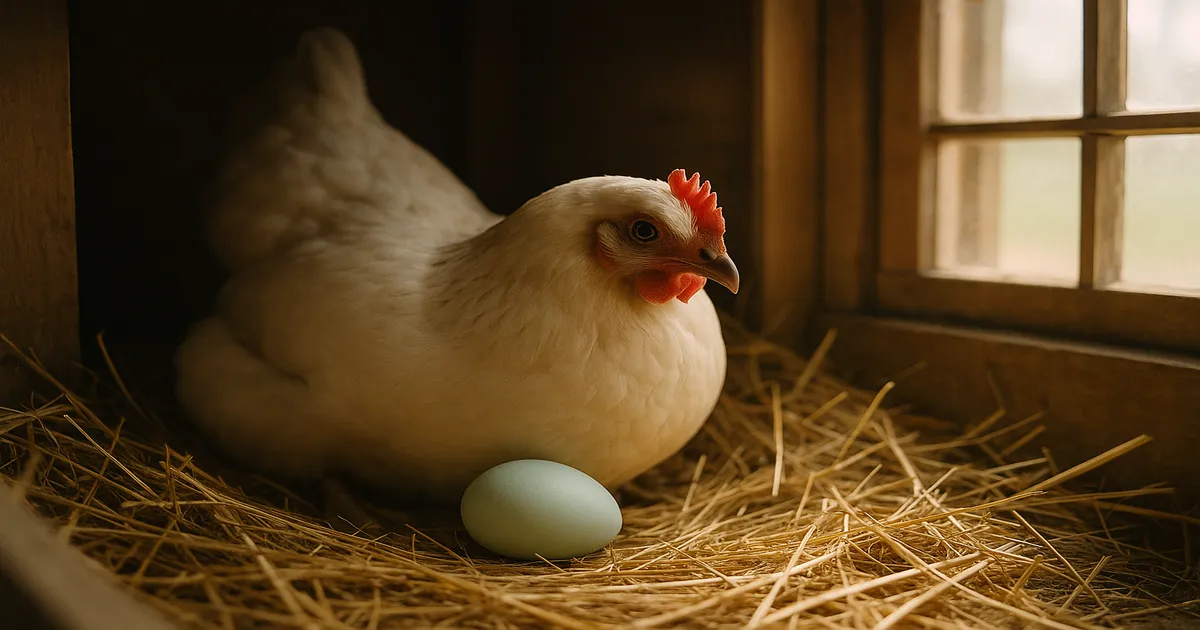
Quick Answer: White Easter Eggers are Easter Eggers whose mixed genetics happened to produce white or near-white plumage — they’re not a separate breed or sub-variety. They carry the same oocyan gene responsible for colored eggs, share all the standard Easter Egger personality traits, and show up unpredictably in hatchery batches. If you’ve been wondering “does anyone else have white Easter Eggers?” — yes, plenty of backyard keepers do, and they’re just as charming as their more colorful flock mates.
White Easter Eggers at a Glance
Easter Eggers aren’t a recognized breed. They’re a mixed-heritage hybrid carrying Araucana or Ameraucana genetics — specifically the oocyan gene that triggers colored egg shells. White Easter Eggers are simply individuals from that gene pool whose feather color expression landed on white or near-white. Everything else — egg color potential, temperament, size, and care needs — is identical to any other Easter Egger.
Here’s a fast summary of what to expect:
- Feather color: White to near-white, sometimes with cream or silver ticking
- Egg color: Blue, green, olive, or occasionally pink/cream
- Egg production: ~4 eggs per week; 200–280 per year
- Weight: Hens 4–5 lbs, roosters 5–6 lbs
- Temperament: Docile, curious, beginner-friendly
- Broodiness: Rarely broody
Why White Easter Eggers Are Less Common
Most Easter Eggers sold by hatcheries like Meyer, Cackle, or My Pet Chicken display the classic multi-colored, muff-faced look people expect. White plumage can result from dominant white (I gene), recessive white, or silver-based genetics surfacing unpredictably in a mixed gene pool — so white birds appear in batches but aren’t the norm. That’s exactly why “does anyone else have white Easter Eggers?” comes up so often in backyard poultry forums. Keepers are genuinely surprised when a fluffy white bird shows up alongside their chipmunk-striped chicks.
Appearance: What Does a White Easter Egger Look Like?
Feather Color and Markings
White Easter Eggers display white to near-white plumage, but look closely and you’ll often find faint cream, silver, or light gray ticking scattered through the feathers. No two birds look exactly alike — that’s the nature of mixed genetics. Some individuals are a crisp, bright white; others lean creamy or carry a subtle silver sheen in certain light.
Comb, Muffs, Beard, and Other Physical Traits
Most white Easter Eggers carry the classic Easter Egger facial features: a low-profile pea comb (three ridges, minimal frostbite risk), plus muffs and a beard that give them that distinctive “chipmunk cheek” look. Some individuals may show a slight crest depending on what’s in their ancestry. Earlobes are red — not white, despite the white feathering.
Leg and Eye Color
Expect slate-blue, willow-green, or dusky-colored shanks — a hallmark Easter Egger trait regardless of feather color. Eye color is typically reddish-bay to orange, giving them a bright, alert expression.
Size and Body Type
These are medium-sized birds. Hens typically weigh 4–5 lbs (1.8–2.3 kg) and roosters 5–6 lbs (2.3–2.7 kg). Body shape is moderate — neither as blocky as a Buff Orpington nor as sleek as a Leghorn.
White Easter Egger vs. White Ameraucana: Key Differences
This distinction matters, especially if you’re buying from a private seller. Here’s how to tell them apart:
| Trait | White Easter Egger | White Ameraucana |
|---|---|---|
| APA recognition | No | Yes (recognized variety) |
| Plumage | White, may have ticking | Pure, consistent white |
| Earlobes | Red | White |
| Egg color | Blue, green, olive, or pink | Blue only |
| Leg color | Slate, willow, or green | Blue-slate |
| Standardized? | No | Yes |
Some sellers mislabel birds in both directions. Always ask about egg color history and whether the bird comes from a documented Ameraucana line before paying Ameraucana prices.
Temperament and Flock Dynamics
White Easter Eggers are just as friendly and curious as any other color variant — feather color has zero bearing on personality. These birds are inquisitive foragers who investigate everything in their environment and warm up quickly to humans who handle them regularly from a young age. They’re not lap chickens by default, but consistent interaction makes a real difference.
In the flock pecking order, Easter Eggers typically land in the middle to lower end. They’re rarely aggressive, which is great for harmony, but it also means they can get pushed around by more assertive breeds like Rhode Island Reds or Plymouth Rocks. Watch for bullying if you’re integrating them into an established flock.
White Easter Eggers adapt well to both free-range and confined setups. They’re active foragers who genuinely thrive with space to roam, but they manage fine in a well-sized run as long as they have enrichment — perches, dust bathing areas, and things to peck at.
Egg Production: What Eggs Do White Easter Eggers Lay?
Egg Color — The Most Common Question
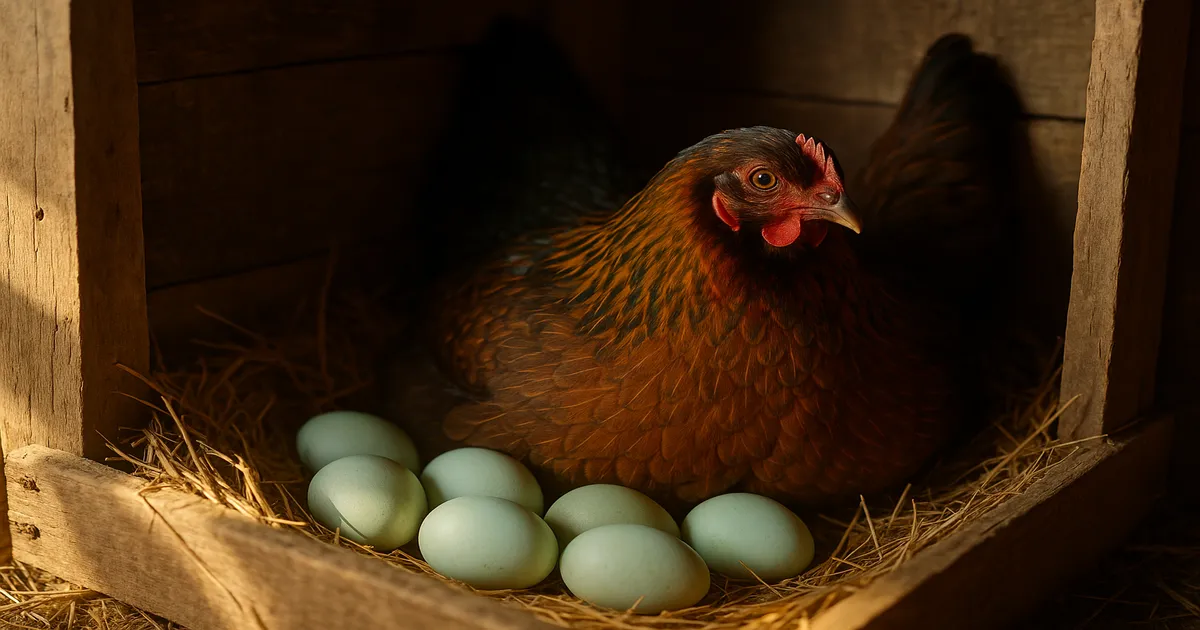
Here’s the most important thing to understand: feather color does not determine egg color. The two traits are genetically independent. A white Easter Egger can lay any egg color in the Easter Egger spectrum.
Most commonly, you’ll see:
- Blue (sky blue to turquoise) — most common in birds with strong Ameraucana lineage
- Green (mint to olive) — blue shell pigment with a brown overlay
- Olive — less common, produced by heavier brown genetics
- Pink or cream — possible when blue gene expression is minimal
The blue pigment (biliverdin) penetrates the entire shell, so a blue egg is blue all the way through — inside and out. Once a hen establishes her color, she lays that same shade for life.
Production, Timing, and Seasonal Patterns
White Easter Eggers are solid, reliable layers. Expect around 4 eggs per week per hen — roughly 200–280 eggs per year under good management. Eggs are medium to large, typically 55–65 grams. Peak production runs through years one and two, then declines about 10–15% per year after that.
Most Easter Eggers begin laying between 18 and 22 weeks. Slower-maturing individuals may hold out until 24 weeks. First eggs are often smaller — give it another 6–8 weeks and they’ll reach full size.
Like all chickens, Easter Eggers slow significantly in fall and winter when daylight drops below 14 hours. Production can drop 50–80% from November through January without supplemental lighting in northern climates. Annual molt hits in fall — typically September through November — and laying stops entirely for 6–12 weeks while feathers regenerate. Plan for it; it’s completely normal.
Coop and Housing Requirements
Space and Roost Setup
Easter Eggers are active birds, and cramped quarters lead to stress, feather pecking, and disease. Aim for at least 4 sq ft per bird inside the coop (6–8 sq ft is better) and 10 sq ft per bird in the run (15–20 sq ft is ideal). True free-range birds need at least 250 sq ft per bird. When in doubt, go bigger — overcrowding is one of the top causes of flock problems.
Roost bars should be 1.5–2 inches in diameter, flat or slightly rounded so toes can wrap comfortably. Allow at least 10–12 linear inches of roost space per bird, positioned 18–36 inches off the floor. Easter Eggers are capable fliers and prefer height. Space multiple bars 12–18 inches apart vertically so lower birds don’t get soiled by those above, and keep roosts well away from nesting boxes.
Nesting Boxes and Ventilation
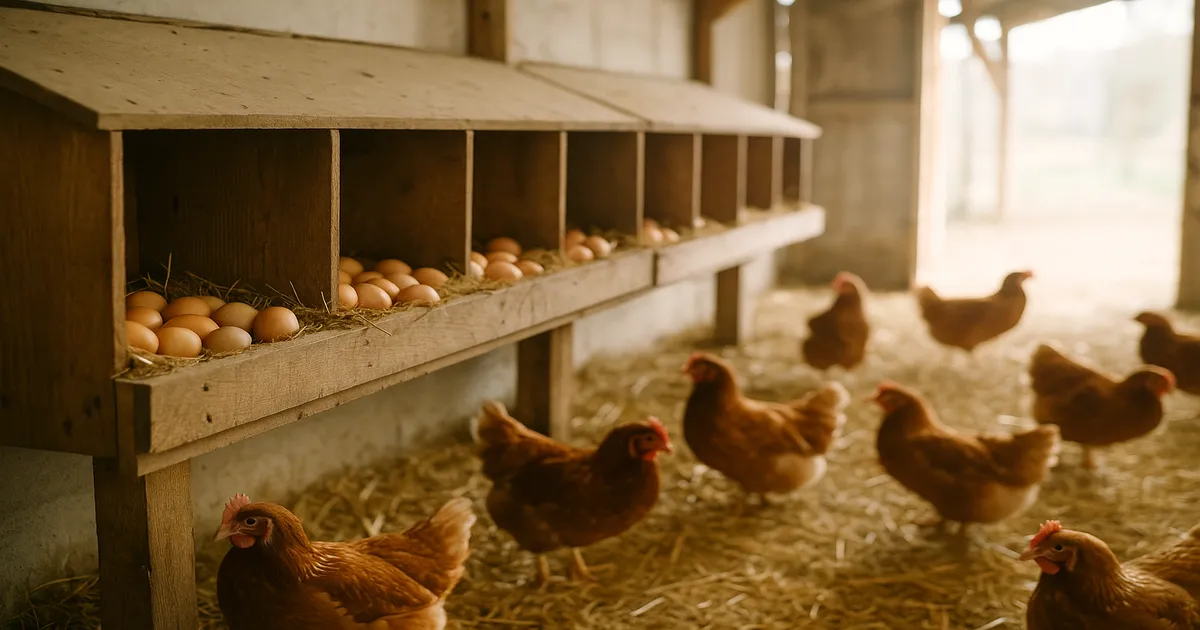
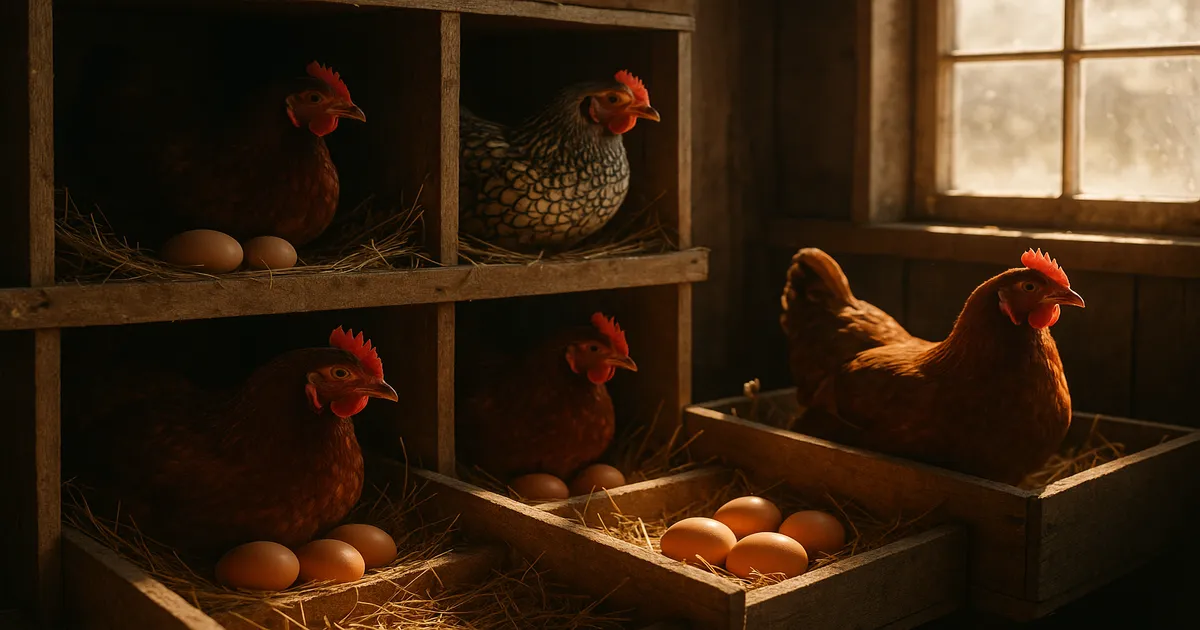
One nesting box per 3–4 hens is the standard rule — though your hens will probably fight over one or two favorites regardless of how many you provide. Standard box dimensions are 12×12×12 inches; 14×14 inches is more comfortable for medium-large birds. Line boxes with 3–4 inches of pine shavings or hemp bedding, position them 12–18 inches off the floor, and add a small curtain or partial cover to make them feel darker and more secure.
Good ventilation is non-negotiable. Moisture and ammonia buildup cause far more harm than cold temperatures alone. Place vents high on the walls or in the eaves so moisture escapes without creating drafts at bird level. Easter Eggers’ pea combs make them more cold-hardy than single-comb breeds, so heat lamps are generally unnecessary — and they carry significant fire risk. The deep litter method (4–6 inches of pine shavings, turned regularly) generates microbial warmth and insulates the floor naturally.
Predator-Proofing
Chicken wire keeps chickens in; it does not keep predators out. Use 1/2-inch hardware cloth on all openings, windows, and vents . Bury it 12 inches underground or extend it 12 inches outward as an apron to stop diggers. Secure latches with carabiner clips or padlocks — raccoons are remarkably good with simple hardware. No gap anywhere in the structure should exceed 1/2 inch; weasels need very little space. An automatic coop door adds another layer of protection by closing reliably at dusk even when you’re not home.
Feeding and Nutrition
Layer Feed, Calcium, and Grit
Switch to a 16–18% protein layer feed at 18 weeks or when the first egg appears, whichever comes first. Pellets are the most practical format — least waste, easy to manage, and less prone to mold than mash. If you keep a mixed-age flock, an all-flock or flock raiser feed (around 20% protein) is a cleaner option — just supplement calcium separately.
Laying hens need 4–5 grams of calcium daily for strong shells. Offer oyster shell free-choice in a separate dish — hens self-regulate their intake. Never mix it into the main feed, as excess calcium harms pullets and non-laying birds. Thin, soft, or shell-less eggs are your signal that calcium is short.
Chickens also need insoluble grit (granite or flint) to grind food in the gizzard. Free-range birds often pick up enough naturally, but confined birds need it provided free-choice in a separate dish. Use fine chick grit for birds under 8 weeks and coarser layer grit for adults .
Treats, Daily Amounts, and Water
The 10% rule: treats should never exceed 10% of daily diet. Safe options include leafy greens, watermelon, berries, cooked eggs, pumpkin, squash, and mealworms. During molt, mealworms are especially valuable for their high protein content — but cap them at about 1 tablespoon per bird per day. Hard no’s: avocado, chocolate, onions, raw dried beans, rhubarb leaves, and anything moldy. Scratch grains are a treat, not a feed — high in carbs, low in protein, and best offered sparingly.
Adult Easter Egger hens eat about 1/4 pound (113 grams) of feed per day. A treadle feeder cuts down on waste and keeps rodents and wild birds out of the feed . Fresh, clean water is just as critical — hens drink 0.5–1 pint (240–480 mL) per day, more in summer heat. In winter, check waterers twice daily; a heated waterer base keeps water liquid when temperatures drop .
Health: Common Issues to Watch For
Monthly health checks — eyes, feathers, feet, vents, and weight — catch problems before they become emergencies. Here are the four issues most relevant to Easter Egger keepers.
Marek’s Disease: A highly contagious herpesvirus spread through feather dander. Symptoms include leg or wing paralysis, weight loss, gray iris, and sudden death. There’s no cure — vaccination at one day old is the only reliable protection. Always request Marek’s-vaccinated chicks when ordering.
Coccidiosis: Hits hardest in chicks between 3 and 8 weeks old. Watch for bloody or watery droppings, lethargy, ruffled feathers, and huddling. Treat immediately with Amprolium (Corid) — 9.6% liquid at 2 teaspoons per gallon of water for 5–7 days. Medicated chick starter contains amprolium as a preventive. Clean, dry bedding is your best long-term defense.
Mites and Lice: White feathering gives you an advantage here — parasites and their eggs are far easier to spot against a pale background. Check around the vent area and under the wings monthly. If you find an infestation, treat birds and coop with permethrin dust or spray (0.25% concentration) and repeat in 10–14 days to break the life cycle. A well-maintained dust bath with wood ash or food-grade diatomaceous earth helps prevent infestations in the first place.
Bumblefoot: A Staphylococcus aureus infection that enters through cuts or abrasions on the foot pad — often caused by rough roosts or hard landings from height. Look for a black scab on the pad, swelling, or a hen reluctant to walk. Soak the foot in warm Epsom salt water (1 tablespoon per quart) for 10–15 minutes, remove the scab and core, pack with Vetericyn or plain Neosporin (without pain relief), and bandage. Repeat every 2–3 days until healed. Smooth roost bars and soft bedding are the best prevention.
Frequently Asked Questions: Does Anyone Else Have White Easter Eggers?
Are white Easter Eggers rare? They’re uncommon but not rare. White plumage can result from dominant white, recessive white, or silver-based genes surfacing in the mix — so they appear unpredictably in hatchery batches. You might get one in a batch of ten, or none at all.
What color eggs do white Easter Eggers lay? White Easter Eggers can lay blue, green, olive, or occasionally pink/cream eggs. Feather color has no connection to egg color whatsoever. Each hen lays one consistent color her entire life, determined by genetics inherited from her Araucana or Ameraucana ancestry.
What’s the difference between a white Easter Egger and a white Ameraucana? White Ameraucanas are a recognized variety of the true Ameraucana breed with strict APA standards: pure white plumage, white earlobes, blue-slate legs, and consistent blue eggs. White Easter Eggers are mixed-heritage birds with no breed standard — they may have red earlobes, varied leg colors, and can lay blue, green, olive, or cream eggs. The price difference between the two can be significant, so always verify before buying.
Are white Easter Eggers good for beginners? Yes, absolutely. Easter Eggers in general — white or otherwise — are one of the most beginner-friendly choices available. They’re docile, adaptable to both free-range and confined setups, and cold-hardy thanks to their pea combs. The bonus of colored eggs makes them a crowd favorite for families and first-time keepers alike.
Do white Easter Eggers have any special care needs compared to other Easter Eggers? No. White Easter Eggers have identical care requirements to any other Easter Egger. The only practical difference is that their pale feathers make it easier to spot mites, lice, and dirt — which is actually a small advantage for health monitoring.