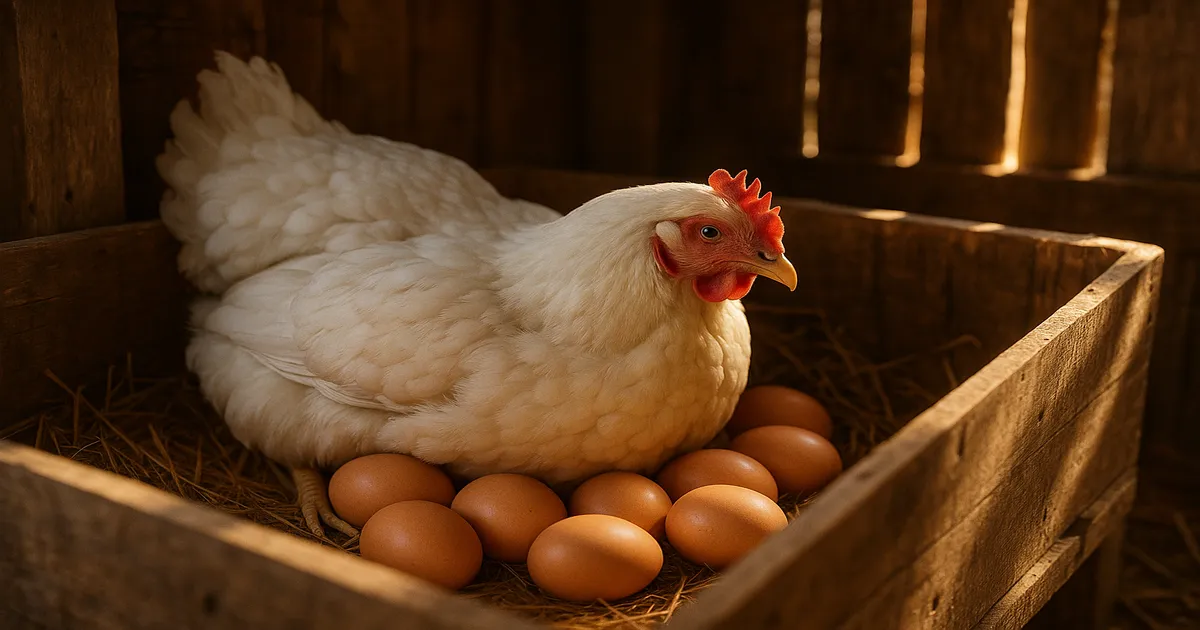
Quick Answer: Yes, you can hatch Cornish Cross eggs — Cornish Cross hens do lay fertile eggs that will develop into viable chicks. The catch is that the offspring won’t reliably grow like their parents. Because Cornish Cross are F1 hybrids, the chicks you hatch will be genetically inconsistent, and keeping hens alive long enough to lay in the first place requires serious management effort.
If you’ve ever watched a Cornish Cross reach butcher weight in six weeks and thought, “I want to hatch my own,” you’re not alone. The question of whether you can hatch Cornish Cross eggs comes up constantly in backyard poultry circles — and the honest answer is more complicated than a simple yes or no. Technically it works. Practically, it rarely delivers what people are hoping for.
Here’s everything you need to know before you try.
What Is a Cornish Cross Chicken?
The Hybrid Origin: White Cornish × White Plymouth Rock
The Cornish Cross isn’t a breed in the traditional sense — it’s a proprietary F1 hybrid developed in the 1950s by crossing White Cornish males (selected for that famously broad breast) with White Plymouth Rock females (selected for fast growth and calm temperament). The result was a bird that converts feed to muscle faster than anything the poultry world had seen before.
Modern commercial strains are owned and maintained by companies like Aviagen (the Ross 308) and Cobb-Vantress (the Cobb 500). These parent lines are the product of decades of closed, highly controlled breeding programs.
Why Cornish Cross Are Not a True Breed
A true breed breeds true — meaning two Barred Plymouth Rocks reliably produce Barred Plymouth Rock chicks. Cornish Cross don’t work that way. They’re a first-generation hybrid, which means their exceptional growth traits come from hybrid vigor: the boost you get when two genetically distinct lines are crossed. That vigor doesn’t pass reliably to the next generation.
Who Controls the Parent Lines — and Why That Matters
The purebred White Cornish and White Plymouth Rock lines used by commercial hatcheries are proprietary and closely guarded. You cannot buy them. This is the fundamental reason why hatching Cornish Cross eggs will never give you a true Cornish Cross chick — the genetics simply aren’t replicable in a backyard setting.
The F2 Genetics Problem: Why Hatched Chicks Won’t Match Their Parents
What Happens When You Breed Two F1 Hybrids
Think about hybrid tomato seeds. You buy a packet of “Celebrity” tomatoes, save the seeds, plant them next year — and you get a mixed bag of plants, some good, some not. That’s exactly what happens when you breed two Cornish Cross together. The F2 offspring inherit a reshuffled combination of grandparent genetics, with no predictable outcome.
Some chicks may grow reasonably well. Many will be smaller, slower-maturing, and far less uniform than the birds you started with. None of them are “Cornish Cross” in any commercially meaningful sense.
What F2 Cornish Cross Chicks Actually Look Like
Expect a wide range. Some birds will be broad and white; others will be leaner and mixed in coloring. Growth rates will vary significantly from bird to bird, and feed conversion — the whole point of raising Cornish Cross — will be inconsistent. You’re essentially raising mixed-breed meat birds, not the fast-finishing broilers you were hoping to replicate.
No experienced gardener saves seeds from F1 hybrid vegetables expecting the same plant next year. The same logic applies here. To truly recreate a Cornish Cross, you’d need the original purebred parent lines — and those aren’t available to backyard breeders.
Can You Hatch Cornish Cross Eggs? Egg Production Realities
Keeping Hens Past the 6–8 Week Processing Window
Standard Cornish Cross are processed at 42–56 days old — well before they’re anywhere near sexual maturity. Keeping them alive past that window is possible, but it requires active intervention. Left to eat freely, these birds will continue gaining weight until their hearts, lungs, and legs give out.
When Do Cornish Cross Hens Start Laying?
Cornish Cross hens kept as breeders typically begin laying around 6–7 months of age (24–28 weeks). That’s noticeably later than most laying breeds, which hit their stride at 18–20 weeks. The delay reflects the metabolic stress these birds are under just maintaining their body weight.
How Many Eggs Can You Expect?
Under good management, a Cornish Cross hen will lay roughly 2–4 eggs per week — around 100–160 eggs per year. That’s a fraction of what a dedicated layer like a Leghorn (280–320 eggs/year) or Rhode Island Red (250–300 eggs/year) produces. Production also drops sharply after the first laying season as health problems accumulate.
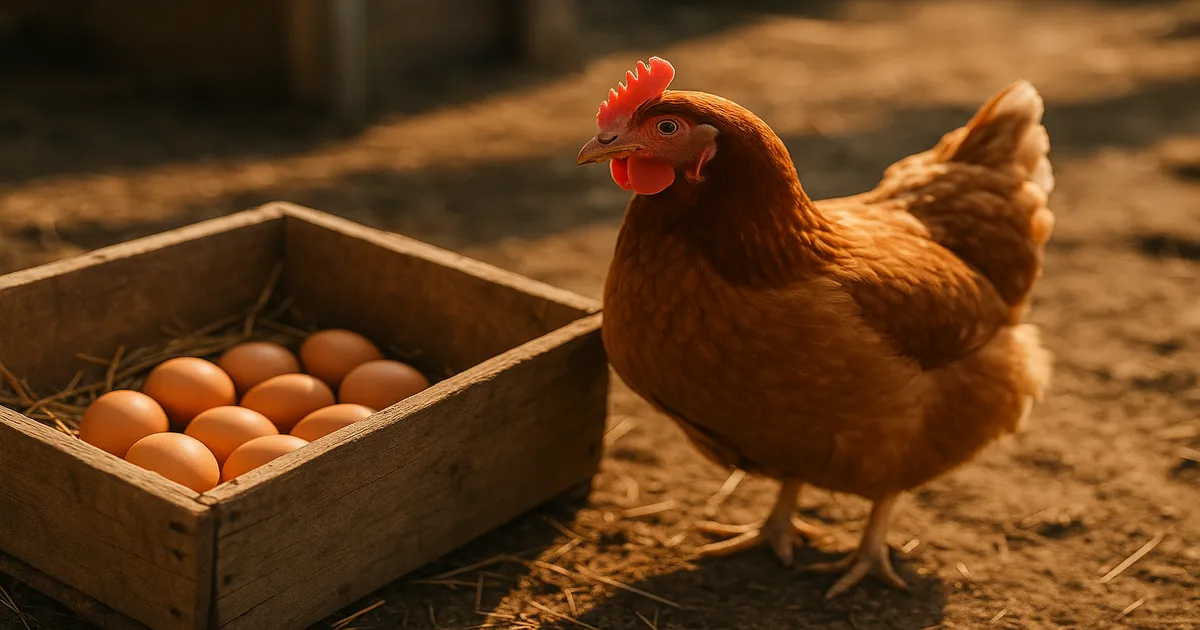
Cornish Cross eggs are light brown to cream-colored and medium to large in size (roughly 55–65 grams). Shell quality can be inconsistent — heavy hens sometimes struggle with calcium metabolism, producing thin or soft-shelled eggs. Offering oyster shell free-choice in a separate dish is essential for shell integrity.
One more thing worth knowing: Cornish Cross hens are not broody. The instinct has been bred out almost entirely. You’ll need an incubator to hatch their eggs. (Brinsea Ovation 28 EX)
Fertility and Hatch Rates: What the Numbers Really Look Like
Why Cornish Cross Roosters Struggle to Mate Naturally
A Cornish Cross rooster at breeding age can weigh 12 lbs or more. That extreme body weight makes natural mating physically difficult and sometimes injurious to hens. Fertility from natural mating typically runs 40–60% — compared to 85–95% in heritage breeds. It’s not a great starting point.
Commercial Cornish Cross breeder flocks use artificial insemination (AI) to get around this problem. That’s an option for dedicated backyard breeders, though it adds significant complexity.
What to Expect When You Set Eggs
Plan conservatively. If you set 20 eggs, you might have 10–14 fertile ones. Of those, 70–80% may hatch under good incubation conditions — so you’re looking at roughly 7–11 chicks from 20 eggs on the optimistic end. That’s a meaningful investment of time and money for inconsistent F2 results.
Standard incubation settings apply: 99.5°F (37.5°C) in a forced-air incubator, humidity at 45–55% during incubation, bumped to 65–70% at lockdown on day 18. Candle at day 7 and again at day 14 to remove non-viable eggs.
Keeping Cornish Cross Hens Alive Long Enough to Breed
Feed Restriction: The Most Important Management Step
Do not feed Cornish Cross breeder hens free-choice. Unrestricted feeding leads to obesity, ascites (fluid accumulation around the heart and lungs), and sudden death syndrome — often within months of reaching market weight.
The target is 60–80% of what they’d eat with unlimited access — roughly 4–5 oz (113–142 grams) per day for an adult hen. Feed at set times once or twice daily rather than leaving a full feeder out. Check body condition weekly by feeling the keel bone: palpable but not sharp is the goal.
Switch from high-protein meat bird starter to a 16–18% protein grower or layer feed once birds move past 6 weeks. Continuing high-protein feed into adulthood stresses the kidneys and accelerates growth-related health problems. A sturdy hanging feeder with adjustable ports makes portion control much easier to manage.
Housing and Space Requirements for Breeder Hens
Cornish Cross breeder hens need more room than lighter breeds. At minimum, plan for:
- Indoor coop space: 4–6 sq ft per bird (these are large, heavy birds — err toward the higher end)
- Outdoor run: 10–15 sq ft per bird
- Roost height: No higher than 24 inches (60 cm) — jumping down from height causes leg injuries and bumblefoot
- Roost bar style: 2–4 inch flat bars rather than round dowels, to reduce foot pressure
- Nest boxes: 14 × 14 inches minimum, placed no higher than 12–18 inches off the floor with a low ramp for access
- Flooring: Solid with deep litter (4–6 inches of pine shavings) — wire floors cause foot problems in heavy birds
Common Health Problems in Long-Lived Cornish Cross
The list is sobering:
- Leg problems — valgus-varus deformity, tibial dyschondroplasia, general weakness
- Ascites (water belly) — abdominal fluid from heart and lung insufficiency; no reliable cure, and affected birds should be culled
- Sudden Death Syndrome — acute heart failure, more common in males; apparently healthy birds found dead with no warning
- Bumblefoot — a black scab on the foot pad caused by pressure and abrasion; mild cases respond to warm Epsom salt soaks and topical antibiotic ointment (Vetericyn Plus Poultry Care Spray)
Feed restriction is the single most effective prevention for all of the cardiovascular issues listed above.
Realistic Lifespan Expectations
Most Cornish Cross won’t thrive past 18–24 months, and mortality rates in a breeder flock will be higher than you’d see with heritage breeds. These birds were engineered for a 6-week life. Every week past that is borrowed time, and it requires consistent, hands-on management to keep them reasonably healthy.
Is Hatching Cornish Cross Eggs Worth It? Alternatives to Consider
When Hatching Your Own Makes Sense
If you’re curious about poultry genetics and want to experiment, or if you’re in a location where sourcing day-old chicks is genuinely difficult, hatching Cornish Cross eggs is an interesting project. Just go in with clear expectations: you’re producing mixed-breed meat birds, not commercial broilers.
Sourcing Cornish Cross Chicks From a Hatchery Instead
For most people, ordering day-old Cornish Cross chicks from a reputable hatchery is the more practical choice. Hatcheries like Hoover’s Hatchery, Murray McMurray, and Freedom Ranger Hatchery sell vaccinated, sexed, or straight-run Cornish Cross chicks at reasonable prices. You get consistent genetics, known health status, and none of the breeder management headaches.
Heritage Breed Meat Birds as a Sustainable Alternative
If your goal is a self-sustaining meat flock — birds you can breed yourself and hatch reliably — heritage breeds are the answer. Consider:
- Freedom Rangers — faster-growing than most heritage breeds, good feed conversion
- Dark Cornish — excellent muscle development, breeds true
- Buckeyes — cold-hardy, active foragers, decent meat yield
- Jersey Giants — slow-growing but large-framed and self-sustaining
These breeds take longer to reach butcher weight (10–16 weeks vs. 6–8 weeks for Cornish Cross), but they breed true, forage well, and don’t require the intensive management that Cornish Cross breeders demand.
Crossing White Cornish × White Plymouth Rock for Better Results
If you want to get closer to the original Cornish Cross without buying commercial hybrids, crossing purebred White Cornish males with White Plymouth Rock females will produce F1 offspring that perform better than breeding two Cornish Cross together. You won’t match commercial genetics, but you’ll get more uniform, faster-growing birds than F2 Cornish Cross — and both parent breeds are available from heritage hatcheries.
Frequently Asked Questions About Hatching Cornish Cross Eggs
Will chicks hatched from Cornish Cross eggs grow as fast as their parents?
No — not reliably. Cornish Cross are F1 hybrids, and their F2 offspring don’t inherit the same combination of traits that drives fast growth. Some birds may perform reasonably well, but most will be smaller, slower-growing, and less uniform than commercial Cornish Cross. If consistent growth is your goal, buy day-old chicks from a hatchery.
Can a Cornish Cross hen go broody and hatch her own eggs?
No. The brooding instinct has been almost entirely eliminated through selective breeding in commercial meat lines. If you want to hatch Cornish Cross eggs, you’ll need a quality incubator — don’t count on a Cornish Cross hen to sit a clutch.
What fertility rate should I expect from a Cornish Cross rooster?
Cornish Cross roosters are poor natural breeders due to their extreme body weight. Fertility from natural mating typically runs 40–60%, compared to 85–95% in heritage breeds. Commercial operations use artificial insemination to maintain acceptable fertility rates — an option for serious backyard breeders, but a significant added complexity.
How long before a Cornish Cross hen starts laying eggs?
Cornish Cross hens kept as breeders typically reach sexual maturity at around 6–7 months of age (24–28 weeks) — significantly later than most laying breeds. Strict feed restriction and careful management are required throughout that time to keep the bird healthy enough to lay at all.
Is it better to hatch Cornish Cross eggs or buy day-old chicks?
For most backyard keepers, buying day-old chicks from a hatchery is the better option. You get consistent genetics, known health status, and skip the intensive management required to keep Cornish Cross hens alive and laying. Hatching your own makes sense if you’re experimenting with genetics or have limited hatchery access — but expect inconsistent F2 results, not commercial-quality broilers.