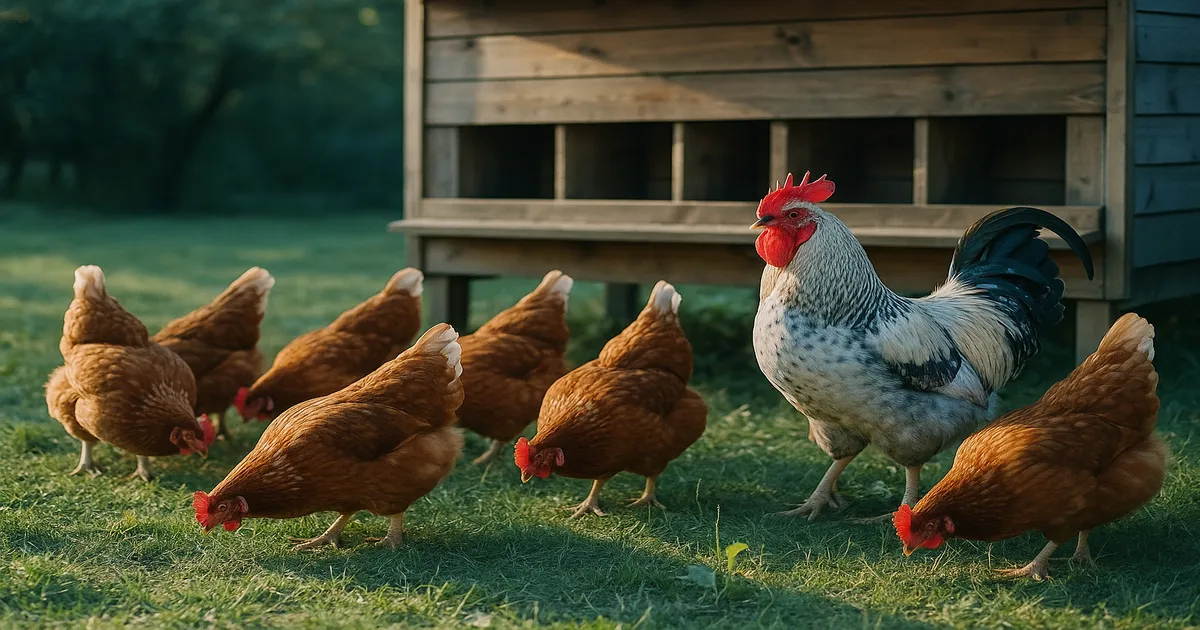
Quick Answer: To raise chickens for eggs and meat, you have three main paths: dual-purpose breeds (like Plymouth Rock or Rhode Island Red) that produce both reasonably well, dedicated layers (like Leghorn or ISA Brown) for maximum eggs, or fast-growing meat birds (like Cornish Cross) processed at 8–10 weeks. All three paths require appropriate housing (at minimum 4 sq ft indoors and 10 sq ft of run per bird), life-stage-appropriate feed, and a clear plan for what you want out of your flock.
Learning how to raise chickens for eggs and meat really comes down to one question: do you want a single flock that handles both jobs adequately, or two specialized groups that each excel at one thing? There’s no wrong answer — but the choice shapes every decision that follows, from breed selection to housing to processing day. This guide walks through each decision point so you can build a setup that actually fits your goals.
What You Need Before Your First Chick Arrives
Get these basics sorted before anything else:
- A brooder with a heat source — start chicks at 95°F (35°C) and drop 5°F per week
- Chick starter feed at 20–22% protein
- A coop meeting minimum space requirements (4 sq ft indoors, 10 sq ft run per bird)
- A breed decision based on your primary goal: eggs, meat, or both
- A processing plan if you’re raising meat birds — Cornish Cross will not wait
A reliable heat lamp with an adjustable mount makes brooder temperature management much easier during those first critical weeks.
Choosing the Right Breeds for Eggs and Meat
Best Dual-Purpose Breeds
Dual-purpose breeds are the practical middle ground for most backyard keepers. They lay well enough to keep your family in eggs and grow large enough that extra cockerels or retired hens are worth processing.
Plymouth Rock (Barred Rock) is one of the best all-around breeds available. Developed in New England in the 1860s, these calm, curious birds weigh 7.5 lbs (hens) and 9.5 lbs (roosters), laying 200–280 brown eggs per year. They’re beginner-friendly and reach a respectable table weight by 16–20 weeks.
Rhode Island Red is a workhorse — hardy, independent, and productive at 250–300 eggs per year. One important distinction: heritage Rhode Island Reds are the true dual-purpose bird. Production Reds are a commercial strain optimized purely for laying and don’t carry the same meat quality or body weight.
Buff Orpington earns its reputation as the golden retriever of chickens. These fluffy, gentle birds from Kent, England weigh up to 8 lbs as hens and are fantastic for families with kids. They’re cold-hardy but struggle in heat, so factor that in if you’re in the South.
Wyandotte brings a rose comb — a genuine cold-climate advantage, since rose combs don’t frostbite the way large single combs do. At 6.5 lbs for hens, they’re a solid dual-purpose choice with beautiful laced feathering and a friendly but independent temperament.
Delaware was specifically developed in the 1940s as a broiler-layer cross and was commercially important before the Cornish Cross took over. Calm, good foragers, and still one of the best dual-purpose breeds for small farms.
Top Dedicated Meat Breeds
Cornish Cross is the undisputed standard for meat production — a cross between White Cornish and White Plymouth Rock that reaches 6–8 lbs live weight in just 6–8 weeks with a feed conversion ratio (FCR) of roughly 2:1. The hard rule: process by 8–10 weeks. After that window, heart failure, leg problems, and ascites increase sharply. These birds were not designed for long-term living.
Freedom Ranger is the pasture-friendly alternative. Developed from French Label Rouge genetics, these active birds forage well, reach 5–6 lbs in 9–11 weeks, and carry a higher welfare profile than Cornish Cross. Their FCR runs 2.5–3:1, so they cost a bit more to raise, but they’re well-suited to rotational pasture systems.
Jersey Giant is for the patient keeper. The largest purebred chicken breed, roosters can reach 13 lbs — but it takes 6+ months to get there. Feed costs are considerably higher than Cornish Cross, making them a niche choice for those who prioritize breed heritage over efficiency.
Best Dedicated Laying Breeds
White Leghorn is the foundation of commercial egg production worldwide. These lean, active birds produce 280–320 white eggs per year and start laying at just 16–18 weeks. They’re flighty and independent — not lap chickens — but nothing beats them on volume if eggs are your primary goal.
ISA Brown and other Sex-Links (Golden Comet, Red Star, Black Star) are the beginner’s best friend. Calm, friendly, and productive at 300–350 brown eggs per year, they’re easy to manage and can be sexed at hatch due to their color-linked genetics. The trade-off: peak production lasts about 2–3 years before dropping off faster than heritage breeds.
Breed Comparison Table
| Breed | Hen Weight | Eggs/Year | Egg Color | Temperament |
|---|---|---|---|---|
| White Leghorn | 4.5 lbs | 280–320 | White | Active, flighty |
| ISA Brown | 5 lbs | 300–350 | Brown | Calm, friendly |
| Rhode Island Red | 6.5 lbs | 250–300 | Brown | Hardy, assertive |
| Plymouth Rock | 7.5 lbs | 200–280 | Brown | Calm, curious |
| Buff Orpington | 8 lbs | 175–220 | Light brown | Gentle, affectionate |
| Wyandotte | 6.5 lbs | 180–220 | Brown | Friendly, independent |
| Delaware | 6.5 lbs | 200–280 | Brown | Calm, good forager |
| Cornish Cross | N/A (meat) | N/A | N/A | Lethargic, food-driven |
| Freedom Ranger | N/A (meat) | N/A | N/A | Active, good forager |
Egg Production: What to Realistically Expect
When Do Pullets Start Laying?
Laying age varies by breed category:
- Hybrids and Leghorns: First egg at 16–18 weeks
- Medium dual-purpose breeds (Rhode Island Red, Plymouth Rock): 18–22 weeks
- Heavy heritage breeds (Buff Orpington, Wyandotte): 24–32 weeks
Pullets hatched in spring typically begin laying in late summer or fall. Pullets hatched in fall may delay their first lay until spring, since decreasing daylight suppresses the hormonal trigger for laying.
Egg Color, Broodiness, and Laying Lifespan
Egg color is purely cosmetic — it comes from pigment deposited during shell formation and has zero effect on nutrition or flavor. Brown eggs get their color from protoporphyrin IX on the shell’s surface. Blue eggs (from Ameraucanas and Easter Eggers) are colored by oocyanin, which penetrates the entire shell. Olive Eggers layer both pigments to produce that distinctive khaki-green shell. What actually affects flavor is diet and freshness, not shell color.
Broodiness is worth planning for. A broody hen stops laying entirely for 3–4 weeks per episode. Buff Orpingtons, Silkies, and Cochins go broody frequently; Leghorns and ISA Browns almost never do, since broodiness has been selectively bred out of commercial strains. To break a broody hen, place her in a wire-bottom cage with food and water but no nesting material for 3–5 days — the airflow lowers her elevated body temperature and interrupts the hormonal cycle.
Hens hit peak production in years one and two, then decline roughly 15–20% per year. Heritage breeds stay productive for 3–5 years; hybrids like ISA Browns peak hard for 2–3 years before dropping off faster. Hens can live 8–12 years, but most produce very few eggs past year four or five.
Coop and Housing Setup for Layers and Meat Birds
Space, Roosts, and Nesting Boxes
The space minimums are non-negotiable: 4 sq ft per bird indoors (6–8 sq ft is better), 10 sq ft per bird in the run (20–30 sq ft preferred), and 250+ sq ft per bird if free-ranging. Crowding is the single fastest way to create a sick, stressed, and aggressive flock.
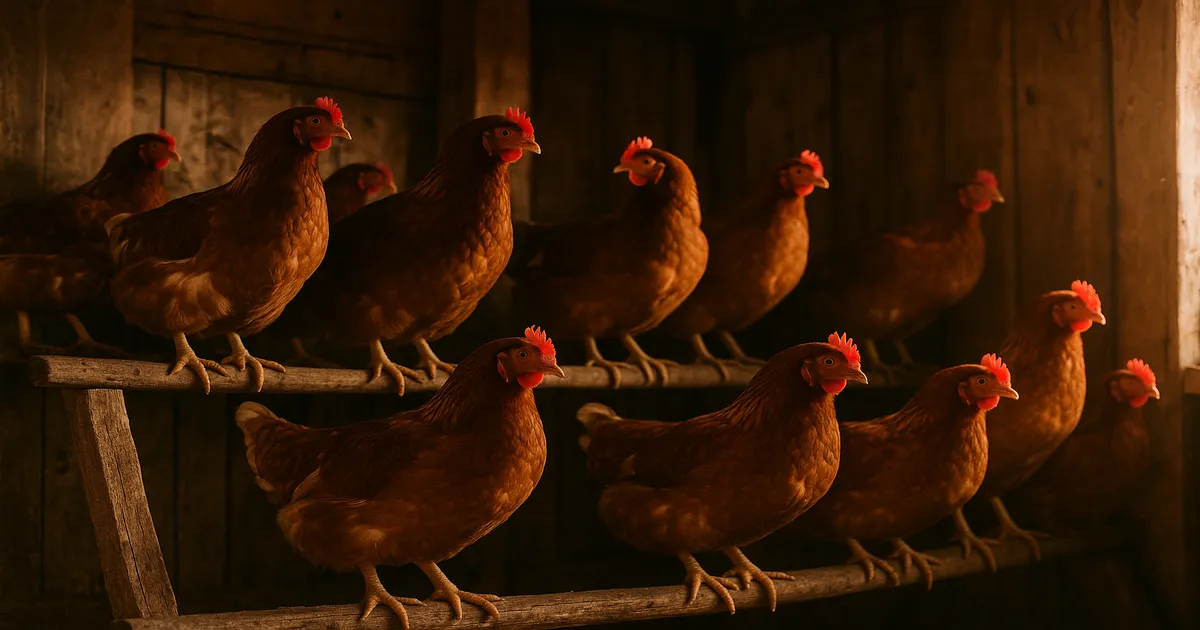
For roost bars, use 1.5–2 inch diameter stock so hens can fully wrap their toes — this matters in winter, when feathers fold over the feet for warmth. Allow 8–10 inches of linear space per bird. Standard birds do fine at 18–36 inches off the floor; heavy breeds like Buff Orpingtons should have lower roosts at 12–18 inches to prevent leg injuries from jumping down.
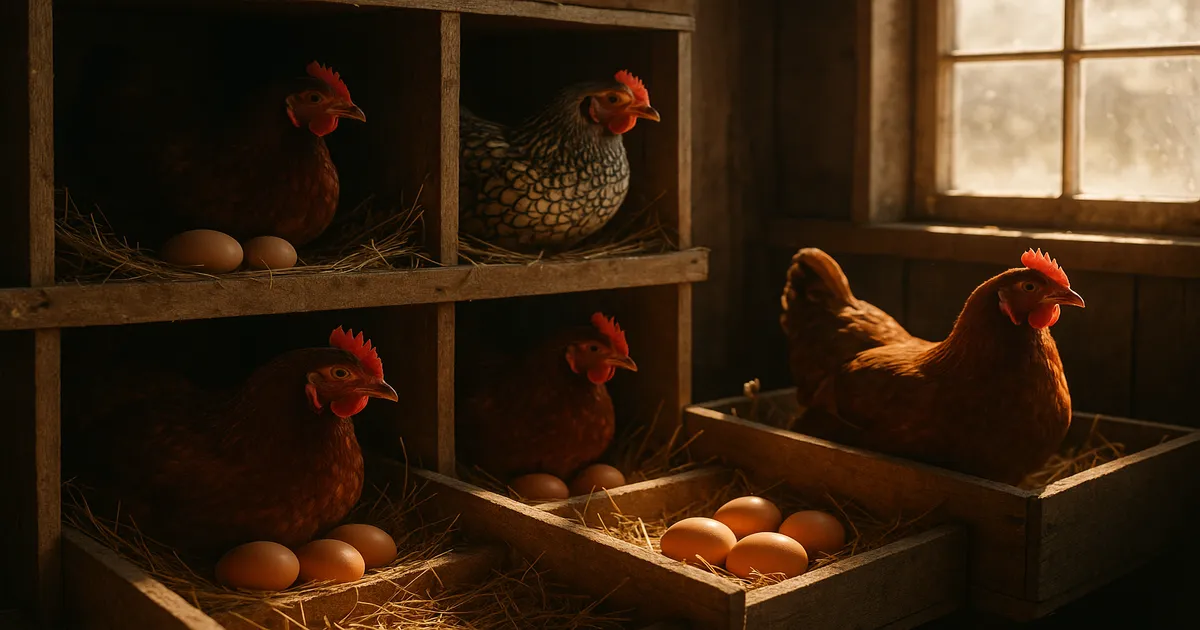
One nesting box per 4–5 hens is the standard ratio, with each box at least 12×12×12 inches, mounted 18–24 inches off the floor. Adding burlap curtains across the openings increases privacy and meaningfully reduces egg-eating behavior — a problem far easier to prevent than to cure. Keep 3–4 inches of pine shavings or straw inside and refresh weekly.
Ventilation, Flooring, and Predator-Proofing
Poor ventilation kills chickens — not dramatically, but slowly, through respiratory disease, ammonia buildup, and frostbite caused by excess moisture. Aim for at least 1 sq ft of ventilation per 10 sq ft of floor space, positioned high on the walls near the roofline. Do not seal your coop in winter. Moisture is far more dangerous than cold, and most standard breeds tolerate 0–10°F (-18 to -12°C) in a dry, draft-free coop without supplemental heat.
For flooring, the deep litter method (4–6 inches of pine shavings, topped up as needed, full clean-out once or twice a year) works well in cold climates and is low-maintenance. Coarse construction sand is another good option — it drains well and desiccates droppings naturally. Avoid bare dirt, which harbors parasites and turns to mud. Never use cedar shavings; the aromatic oils are toxic to poultry respiratory systems.
Predator-proofing basics: bury hardware cloth 12 inches deep and extend it 12 inches outward horizontally to stop diggers; use two-step latches or carabiner clips on all doors (raccoons can work simple hook-and-eye latches); and cover your run completely to stop hawks and climbing predators. An automatic coop door on a light sensor removes the single biggest human error in chicken keeping — forgetting to close up at dusk. (ChickenGuard Extreme)
Feeding Chickens for Eggs and Meat Production
Feed by Life Stage
| Life Stage | Feed Type | Protein % | Age Range |
|---|---|---|---|
| Chicks (all breeds) | Chick Starter (crumble) | 20–22% | 0–8 weeks |
| Pullets | Grower/Developer | 16–18% | 8–18 weeks |
| Laying hens | Layer Feed | 15–18% | At first egg onward |
Meat birds need sustained high protein — many broiler keepers run Cornish Cross on a 20–22% starter straight through to processing. Laying hens need moderate protein but high calcium once they begin producing eggs. Switching to a 15–18% layer feed at first egg matters; excess protein over time stresses the kidneys.
Supplements and Grit
Always offer oyster shell free-choice in a separate dish — never mixed into the main feed. Non-laying birds (pullets, roosters, meat birds) don’t need the extra calcium, and forced high calcium can damage their kidneys. Laying hens will self-regulate and take what they need.
Insoluble grit (granite or flint) is essential for any bird that eats anything beyond commercial pellets or crumble. Chickens have no teeth; grit sits in the gizzard and grinds food mechanically. Offer it free-choice in a separate container.
A sturdy, easy-to-clean hanging feeder keeps feed off the ground and reduces waste — worth the small investment for any flock size.
Managing Cornish Cross Feed Intake
Cornish Cross birds will eat themselves to death if given unlimited access. Their exceptional FCR is a feature, but unchecked appetite leads to heart failure, ascites, and leg breakdown before the 8-week mark. Many experienced broiler keepers restrict feed overnight — removing feeders for 8–12 hours after the first two weeks — to slow growth slightly and reduce health casualties. Fresh water must always remain available.
Raising Meat Chickens: From Chick to Processing
Cornish Cross Timeline
Week one, Cornish Cross chicks look like any other chick. By week three, the difference is unmistakable. Keep your brooder at 95°F for week one, dropping 5°F per week, and move them to the coop once fully feathered around weeks 3–4. The 8–10 week processing window is firm — after week 10, the rate of health failures climbs sharply. Processing on schedule is both the practical and humane choice.
Processing Age and Weight Targets
| Breed | Processing Age | Live Weight |
|---|---|---|
| Cornish Cross | 6–8 weeks (max 10) | 6–8 lbs |
| Freedom Ranger | 9–11 weeks | 5–6 lbs |
| Dual-purpose cockerels | 16–20 weeks | 4–6 lbs |
| Jersey Giant | 6+ months | 10–13 lbs |
For home processing, most small-flock keepers use a killing cone, a sharp boning knife, and a scalder set to 145–150°F (63–66°C) for feather removal. A tabletop plucker cuts processing time dramatically once you’re doing more than a handful of birds. If home processing isn’t for you, USDA-inspected and custom-exempt processors exist in most agricultural areas — call ahead, as many book out weeks in advance, especially in fall.
Seasonal Care: Managing Your Flock Year-Round
Winter Laying and Supplemental Light
Hens need 14–16 hours of light per day to maintain peak laying. In northern climates above 35°N latitude, expect a 30–70% drop in production from October through February. A 25–40 watt equivalent LED on a timer, set to add light in the early morning before dawn, can maintain production through winter. Add light in the morning rather than the evening — an abrupt cutoff at night can leave birds stranded off the roost in sudden darkness.
Molt and Summer Heat
Molt typically hits from September through November and lasts 6–12 weeks. Hens stop laying entirely and redirect energy into regrowing feathers. Boosting protein slightly during molt — switching to a 20% flock raiser or adding black oil sunflower seeds — helps feathers come in faster and fuller.
Heat stress is a serious production killer, and it’s especially dangerous for Cornish Cross broilers, which are already metabolically stressed. Provide shade, ensure constant access to cool fresh water, and consider adding electrolytes during heat waves. Freeze treats like watermelon or ice blocks to help birds cool down. Adequate ventilation in the coop is your first and most important line of defense.
Frequently Asked Questions
How many chickens do I need for a family of four? For a steady egg supply, 4–6 laying hens is a good starting point for a family of four. That gives you roughly 20–30 eggs per week at peak production, with some buffer for molts and seasonal slowdowns.
Can I keep meat birds and laying hens together? It’s not recommended. Cornish Cross broilers have very different feed, space, and management needs than layers. They grow so fast that they can crowd out or injure smaller birds, and their high-protein feed isn’t appropriate for laying hens long-term. Keep them in separate pens.
Do I need a rooster to get eggs? No. Hens lay eggs without a rooster — you just won’t get fertile eggs. You only need a rooster if you want to hatch chicks. Keep in mind that roosters are restricted or prohibited in many urban and suburban areas.
What’s the cheapest way to raise chickens for meat? Cornish Cross on a basic broiler starter feed is the most cost-efficient option, with a 2:1 feed conversion ratio and a short 6–8 week grow-out. Pasture access can reduce feed costs further. Avoid slow-growth breeds like Jersey Giants if cost efficiency is the priority.
How do I know when a hen has stopped laying and is ready to process? Check the vent (moist, wide, and oval = active layer; dry, small, and round = not laying), the pubic bones (two or more fingers apart = laying; less than two = not), and the comb (bright red = active; pale and shrunken = not). Leg color in yellow-shanked breeds like Leghorns also fades from yellow to white as pigment is diverted to egg yolks over the laying season.