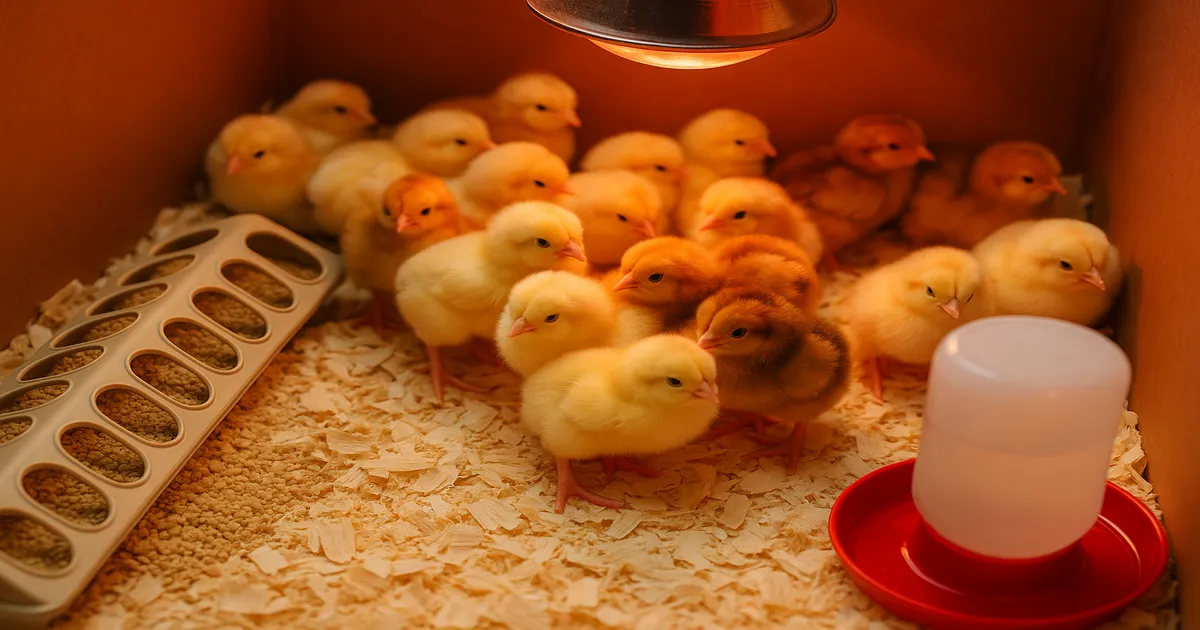
Quick Answer: To raise baby chicks successfully, you need five things from day one: a brooder with a heat source, chick starter feed, fresh water, clean bedding, and a secure enclosure. Keep chicks at 95°F (35°C) the first week, dropping 5°F per week until they’re fully feathered around six weeks old. From there, it’s roughly 18–24 weeks until your first egg.
Learning how to raise baby chicks is one of the most rewarding things a backyard keeper can do — and one of the easiest to get wrong in the first few weeks. The good news is that chicks are resilient when their basic needs are met consistently. Get the brooder right, feed them well, keep things clean, and you’ll have healthy pullets before you know it.
What You Need Before Your Baby Chicks Arrive
The Five Essentials Every New Chick Owner Needs
Set up your brooder before your chicks arrive — whether they’re shipped from a hatchery or picked up at the feed store. A cold brooder on arrival day is a preventable disaster.
- Brooder enclosure — a secure container that holds heat and blocks drafts
- Heat source — a brooder plate or heat lamp set to 95°F (35°C) at chick level
- Chick starter feed — 18–22% protein, medicated or unmedicated depending on vaccination status
- Fresh water — in a chick-sized fount with a shallow base so they can’t drown
- Bedding — 2–4 inches of pine shavings (never cedar)
Week-by-Week Overview: Day One to Fully Feathered
| Week | Temperature | What’s Happening |
|---|---|---|
| 1 | 95°F (35°C) | Chicks arrive; keep warm, watch for pasty butt |
| 2 | 90°F (32°C) | Wing feathers emerging; chicks becoming active |
| 3–4 | 80–85°F (27–29°C) | Body feathers coming in; expand brooder space |
| 5–6 | 70–75°F (21–24°C) | Nearly fully feathered; begin outdoor introductions |
| 6+ | Ambient temp | No supplemental heat needed |
| 18–24 wks | — | First eggs for most standard breeds |
Choosing the Right Breed Before You Buy Baby Chicks
Best Beginner Breeds: Temperament, Purpose, and Cold Hardiness
Breed choice shapes everything — how friendly your flock is, how many eggs you get, and how well they handle your winters. Here’s a quick comparison of popular options.
| Breed | Temperament | Purpose | Cold Hardy |
|---|---|---|---|
| Rhode Island Red | Curious, active | Dual-purpose | Yes |
| Buff Orpington | Docile, calm | Dual-purpose | Yes |
| Barred Rock | Friendly, easygoing | Dual-purpose | Yes |
| Australorp | Gentle, quiet | Egg-focused | Yes |
| Easter Egger | Friendly, curious | Egg-focused (blue/green eggs) | Moderate |
| Leghorn | Active, flighty | Egg-focused | Moderate |
| Wyandotte | Hardy, calm | Dual-purpose | Excellent |
| Silkie | Very calm, broody | Pet/ornamental | Poor |
A quick note on Silkies: their feathered crests trap moisture and their fluffy plumage lacks the water-resistant structure of standard feathers, making them genuinely poor performers in cold, wet climates — not just “moderate.” For most beginners, a Buff Orpington, Barred Rock, or Australorp is hard to beat. They’re calm enough to handle, hardy enough to forgive beginner mistakes, and productive enough to keep you in eggs.
Sexed Pullets vs. Straight-Run Chicks
Sexed pullets (guaranteed female) cost $3–$10 per chick. Straight-run chicks (unsexed) run $2–$6. That price difference matters enormously if you live somewhere roosters aren’t allowed. With straight-run chicks, statistically half your brooder will crow. Buy sexed pullets unless you have a clear plan for the cockerels.
Where to Buy Baby Chicks
- Hatcheries ship day-old chicks and offer the widest breed selection. Most require minimum orders of 3–25 chicks so the box retains enough body heat during transit.
- Feed store Chick Days (typically February through May) are the most convenient option, but breed selection is limited and sexing accuracy can vary.
- Local breeders often have the healthiest stock. You can inspect the parent flock and ask about vaccination history — ideal if you want to start small or find a rare breed.
Brooder Setup: How to Raise Baby Chicks Safely Indoors
Choosing a Brooder Container
You need at least ½ sq ft per chick for weeks one and two, expanding to 1 sq ft per chick by weeks three and four. A large plastic storage tote works well for four to six chicks. For bigger batches, a galvanized stock tank or a simple wooden brooder box gives you more room to work with. Whatever you use, make sure it’s tall enough to prevent escape — chicks start fluttering earlier than most beginners expect — and add a wire mesh lid to keep curious pets out.
Bedding: Why Pine Shavings Beat Cedar Every Time
Pine shavings are the standard for good reason: absorbent, inexpensive, and safe. Cedar shavings smell pleasant to us but contain aromatic oils that irritate a chick’s respiratory system. Avoid them entirely.
For the first three to five days, lay paper towels over the shavings. This helps chicks learn to eat feed rather than peck at bedding, which can cause impacted crop. Once they’ve figured out where the food is, pull the paper towels and let the shavings do their job.
Heat Sources: Brooder Plates vs. Heat Lamps
Start at 95°F (35°C) at chick level and drop the temperature by 5°F each week. By week six, most chicks are fully feathered and no longer need supplemental heat.
Brooder plates are the safer, more energy-efficient choice — they mimic a mother hen and carry no fire risk. Heat lamps work but must be clipped and hung with a secondary safety line; a fallen heat lamp in a brooder full of dry shavings is a genuine fire hazard. Watch your chicks for behavioral cues: huddled directly under the heat means too cold; spread to the edges and panting means too hot. Comfortable chicks move freely throughout the brooder.
Waterers and Feeders
Use a chick-sized fount with a narrow, shallow trough. Open dishes are drowning hazards for day-old chicks — even a half-inch of water can be fatal. In a pinch, drop a handful of clean marbles into a bowl to displace the water depth.
For feeders, a trough-style feeder reduces waste and stops chicks from standing in their food. Keep feeders full at all times during the first eight weeks — chicks need free-choice access to grow properly.
Feeding Baby Chicks: What, When, and How Much
Chick Starter Feed: Medicated vs. Unmedicated
Chick starter (18–22% protein) is the only feed your chicks need from hatch to eight weeks. The medicated vs. unmedicated question comes down to one thing: did your chicks receive a coccidiosis vaccination at the hatchery?
- Medicated starter contains amprolium, which suppresses coccidiosis-causing Eimeria parasites. Use it if your chicks were not vaccinated.
- Unmedicated starter is appropriate for vaccinated chicks or if you’re raising organically.
Feed Transitions by Life Stage
| Stage | Feed | Protein | Age |
|---|---|---|---|
| Baby chick | Chick Starter | 18–22% | 0–8 weeks |
| Growing pullet | Chick Grower | 16–18% | 8–18 weeks |
| Laying hen | Layer Feed | 15–18% | 18+ weeks |
Never feed layer feed to chicks under 18 weeks. Layer feed contains 3–4% calcium — essential for eggshell production in adults, but damaging to young kidneys. This is one of the most common beginner mistakes, and it causes real harm.
Grit: Why Confined Chicks Can’t Go Without It
Chickens have no teeth. They grind food in their gizzard using insoluble grit — granite or flint particles. Free-ranging birds pick this up naturally. Brooder chicks don’t have that option, so you need to provide it.
Use chick grit (fine grade) for birds under eight weeks, offered free-choice in a small separate dish. Don’t mix it into feed — birds self-regulate and will take what they need. Switch to regular grit once they move outside.
Safe Treats and Foods to Avoid
Keep treats to no more than 10% of total diet. Good options include leafy greens, mealworms, berries, and cooked eggs. Limit mealworms to about 1 tablespoon per bird per day — they’re high in protein but low in calcium, so too many throws off the diet balance.
Never feed: avocado (the compound persin causes cardiac failure), onions, raw dried beans, chocolate, rhubarb, or heavily salted foods. When in doubt, leave it out.
Planning Your Coop Before Chicks Outgrow the Brooder
How Much Space Do Chickens Actually Need?
Plan your adult coop before you buy chicks. Six fluffy day-olds become six full-sized hens faster than most beginners expect, and scrambling to build a coop at week five is stressful for everyone.
Minimum requirements for standard breeds:
- Indoor coop: 4 sq ft per bird
- Outdoor run: 10 sq ft per bird
- Free-range: 250+ sq ft per bird is ideal
Overcrowding is the single biggest driver of pecking, disease, and stress in backyard flocks. When in doubt, build bigger.
Roosts, Nesting Boxes, and Ventilation
Roost bars should be 1.5–2 inches in diameter so hens can fully wrap their feet while sleeping — this helps prevent bumblefoot. Allow 8–12 inches of linear space per bird, positioned 18–36 inches off the floor.
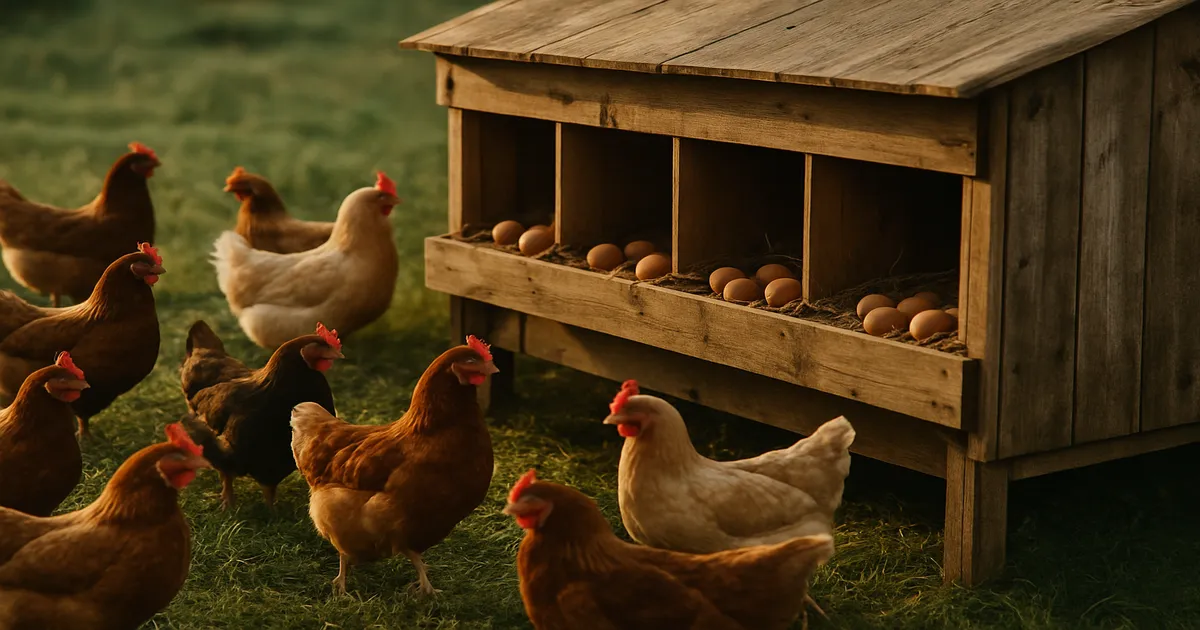
For nesting boxes, the standard ratio is one box per three to four hens, each 12×12 inches. Mount them 18–24 inches off the floor but below the roost bars — hens always try to sleep at the highest point, and you don’t want that to be a nest box.
Ventilation is non-negotiable year-round. Aim for 1 sq ft of ventilation per 10 sq ft of floor space, positioned high on the walls near the roofline so moisture escapes without creating drafts at roost level. If you can smell ammonia at nose height, your birds are suffering at beak height.
Predator-Proofing: Hardware Cloth, Buried Aprons, and Secure Latches
Chicken wire keeps chickens in. It does not keep predators out. Use ½-inch galvanized hardware cloth on all openings, windows, and the run. Bury an apron 12 inches underground around the run perimeter, or extend it 12 inches outward along the ground and stake it down — this stops diggers like foxes and raccoons.
For latches, use carabiner clips or padlocks. Raccoons can open a simple hook latch in seconds. An automatic coop door adds reliable nightly lockup without requiring you to be home at dusk every evening.
One thing beginners often worry about unnecessarily: heating the coop in winter. Most standard breeds handle temperatures down to 0°F (-18°C) in dry, draft-free housing. A heat lamp in a coop full of dry bedding and feathers is a serious fire risk. Skip it.
Common Health Problems When Raising Baby Chicks
Coccidiosis: The Number One Killer of Young Chicks
Coccidiosis, caused by Eimeria parasites in soil and feces, is most dangerous in chicks between three and six weeks old. Symptoms include bloody or watery diarrhea, lethargy, hunched posture, and pale coloring. Without treatment, it kills quickly.
Treatment: Corid (amprolium) liquid at 2 teaspoons per gallon of drinking water for five to seven days, given as the only water source. Prevention: medicated starter feed, a clean dry brooder, and avoiding overcrowding — wet, crowded conditions are where coccidiosis explodes.
Marek’s Disease: Why Vaccination at Hatch Matters
Marek’s disease is a herpesvirus that spreads through feather dander and causes paralysis, tumors, and death. There is no treatment. The vaccine is administered at hatch, prevents disease expression, and costs just $0.15–$0.25 per chick — always request it when ordering from a hatchery.
Vaccinated birds can still carry and shed the virus, which is why a 30-day quarantine for any new birds added to your flock is essential biosecurity practice.
Pasty Butt and Other Early Warning Signs
Pasty butt — feces drying and sealing the vent — is common in the first week, especially in shipped chicks. Check vents daily and gently clean any blockage with a warm, damp cloth. Left untreated, it’s fatal.
Watch for respiratory symptoms too: rattling breath, nasal discharge, or swollen sinuses usually point to a ventilation or wet bedding problem. A healthy chick is active, vocal, eating, and drinking. A chick that sits hunched, stays separate from the group, or keeps its eyes closed during the day needs attention right away.
Biosecurity Basics
- New birds: 30-day quarantine in a completely separate space before any contact with your existing flock
- Waterers: Clean and disinfect weekly with a 10% bleach solution (1 part bleach to 9 parts water), then rinse thoroughly
- Dead birds: Remove and dispose of promptly — never leave a carcass in the coop
- Rodents: Mice and rats carry Salmonella and mites; store feed in metal containers and seal coop gaps
What to Expect as Your Chicks Grow
The Feathering Timeline and Moving Outside
Wing feathers emerge at one to two weeks, and the process works its way across the body from there. By around six weeks, most chicks are fully feathered and can regulate their own body temperature. That’s your cue to start transitioning them to the outdoor coop — ideally during mild weather and after a few short supervised outdoor sessions to help them acclimate.
When Do Chickens Start Laying Eggs?
| Breed | First Egg | Eggs/Week | Eggs/Year | Color |
|---|---|---|---|---|
| Leghorn | 16–17 weeks | 6–7 | 280–320 | White |
| Rhode Island Red | 18–20 weeks | 5–6 | 250–300 | Brown |
| Australorp | 18–22 weeks | 5–6 | 250–300 | Brown |
| Barred Rock | 18–22 weeks | 4–5 | 200–280 | Brown |
| Easter Egger | 20–24 weeks | 4–5 | 200–250 | Blue/Green |
| Wyandotte | 20–24 weeks | 4–5 | 200–240 | Brown |
| Buff Orpington | 24–28 weeks | 3–4 | 175–200 | Brown |
| Silkie | 24–28 weeks | 2–3 | 100–120 | Cream |
Egg Production Over Time: Molts, Seasonal Drops, and Peak Years
Production drops 20–50% in winter when daylight falls below 14 hours per day. Supplemental lighting — aiming for 14–16 total hours of light — can keep hens laying through the short days, though many keepers prefer to let their hens rest naturally over winter.
Around 12–18 months of age, hens go through their first annual molt: six to twelve weeks of ragged feathers and zero eggs. It looks alarming but it’s completely normal. After year two, expect production to decline roughly 10–15% per year. A hen’s peak years are one and two — worth knowing when you’re planning flock replacements.
Frequently Asked Questions About How to Raise Baby Chicks
How long do baby chicks need a heat source?
Baby chicks need supplemental heat for approximately six weeks. Start at 95°F (35°C) and reduce by 5°F each week. Once chicks are fully feathered and outdoor temperatures are consistently above 65°F (18°C), they no longer need artificial heat. A brooder plate is safer than a heat lamp and works just as well.
What do you feed baby chicks in the first week?
Feed chick starter with 18–22% protein free-choice from day one — keep the feeder full at all times. Chicks eat approximately 1–2 oz of feed per day in the first weeks. Fresh, clean water must be available constantly; dehydration kills chicks quickly. Don’t introduce treats, grit, or supplements until after the first week.
How many baby chicks should a beginner start with?
Three to six chicks is the sweet spot for most beginners. Chickens are social animals and shouldn’t be kept alone, but a large flock can overwhelm a first-time keeper before they’ve found their footing. Start small, learn the routine, and expand once you’re confident.
Can baby chicks go outside before they’re fully feathered?
Yes, but only for short supervised sessions in warm, dry weather — and only after week three when they have some feather coverage. Avoid cold, wet, or windy conditions. Full outdoor transition should wait until six weeks, when chicks are fully feathered and can regulate their own body temperature.
How do you know if a baby chick is healthy?
A healthy chick is active, alert, and vocal. It eats and drinks regularly, moves freely around the brooder, and sleeps in relaxed, spread-out clusters rather than piled tightly together. Any chick that is hunched, lethargic, separated from the group, or keeps its eyes closed during the day should be assessed immediately — early intervention makes a significant difference.