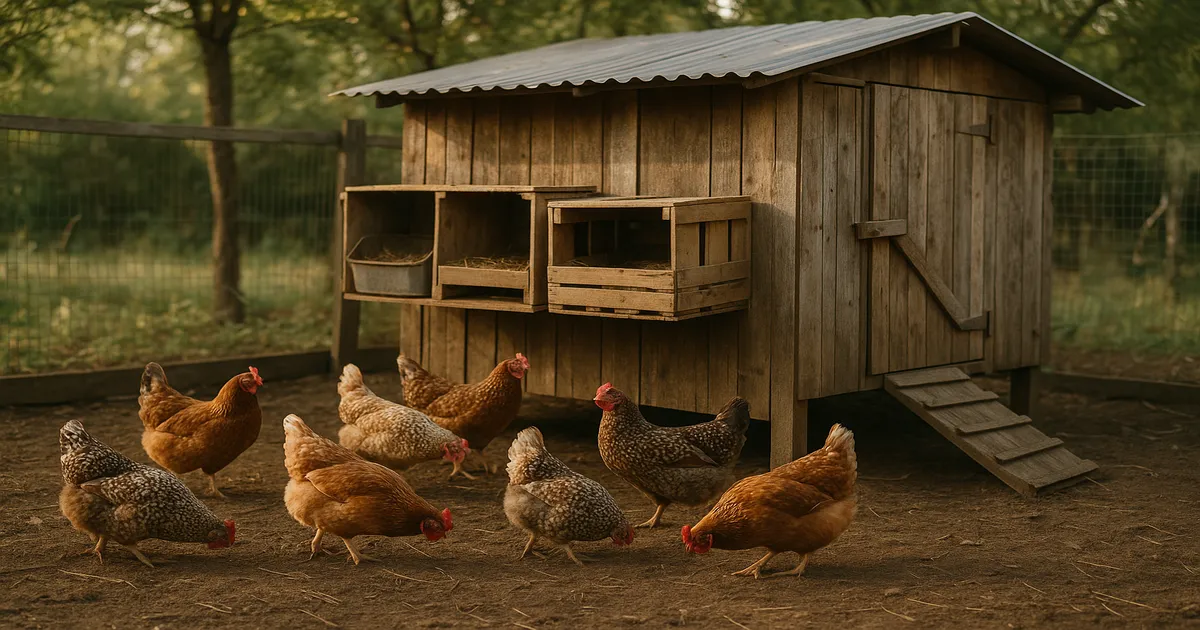
Quick Answer: The most effective way to raise chickens cheaply is to choose feed-efficient breeds, build or repurpose your own coop, reduce your feed bill through free-ranging and fermented feed, and stay ahead of health problems before they become expensive. A well-managed flock of 6 hens can cost as little as $30–50 per month to maintain once your setup is paid off.
Learning how to raise chickens cheaply isn’t about cutting corners — it’s about making smart decisions from day one. The right breed, a well-built coop, and a few feed-saving habits can slash your ongoing costs dramatically without sacrificing flock health or egg production. This guide walks you through every major cost lever, from breed selection to seasonal strategies, so you can keep a healthy, productive flock on a real budget.
The Five Biggest Levers for Cutting Chicken-Keeping Costs
- Breed selection — choose feed-efficient, productive birds from the start
- DIY or repurposed housing — avoid overpriced kit coops
- Free-ranging and feed supplements — cut your feed bill by 20–30%
- Fermented feed — get 10–20% more nutrition from every bag
- Proactive health management — a $0.25 vaccination beats a $150 vet visit
Realistic Monthly Cost Breakdown for a Small Flock
For 6 standard laying hens, expect roughly:
- Feed: ~40–45 lbs/month at $0.50–0.80/lb = $20–36
- Bedding: pine shavings or straw = $3–8
- Supplements (oyster shell, grit): $2–5
- Miscellaneous (occasional supplies): $2–5
Total: roughly $27–54/month, and that’s before any savings from free-ranging, fermented feed, or kitchen scraps. Six hens producing 5 eggs each per week return 30 eggs — about $10–18 worth at grocery store prices, or significantly more if you sell at market.
Choose the Right Breed to Save Money Every Day
Breed selection is the single most powerful cost-saving decision you’ll make. A productive, feed-efficient hen pays for herself quickly. An inefficient one eats the same amount and gives you far less in return.
Best Budget Egg-Laying Breeds
- Leghorn — The undisputed egg-laying efficiency champion. Lays 5–6 eggs per week (280–320 per year) on less feed than almost any other breed. Leghorns are not cold-hardy — their large single combs are prone to frostbite — so factor in comb care or coop heating in harsh winters. They’re also flighty, which may require 6-ft fencing.
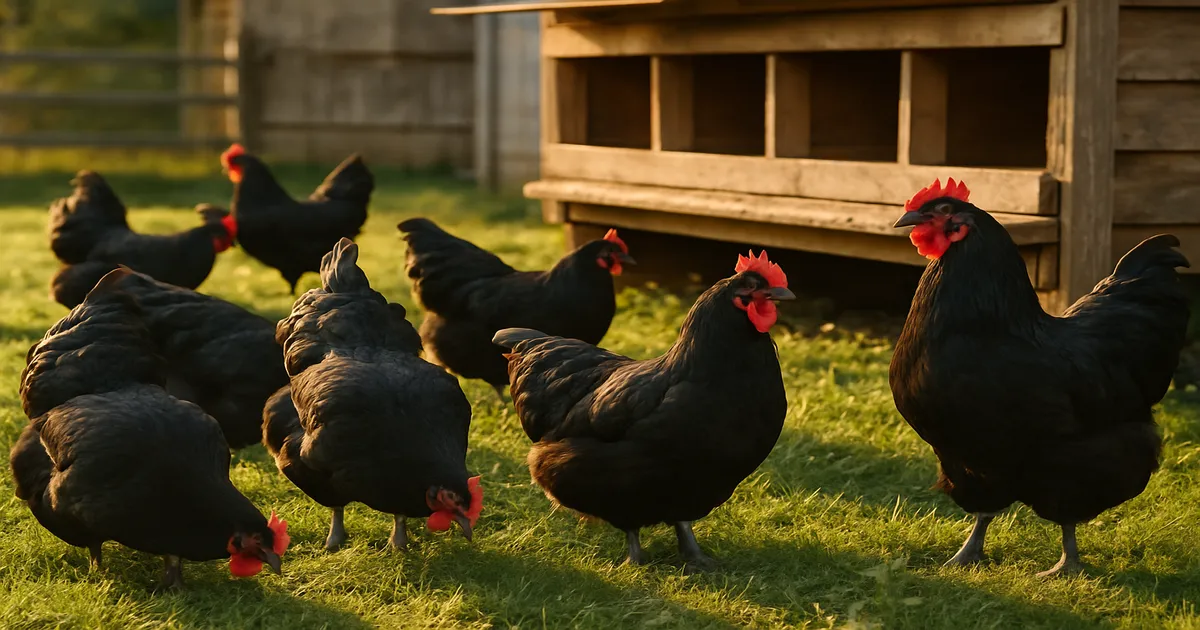
- Australorp — Holds the world record: one hen laid 364 eggs in 365 days. Calm, cold-hardy, and an excellent forager. Produces 250–300 brown eggs per year and handles both heat and cold better than most breeds.
- Black and Red Sex-Links — These hybrids are color-sexed at hatch, meaning you pay only for pullets and never waste money raising unwanted cockerels. They start laying as early as 16–18 weeks and produce 260–300 brown eggs per year.
Best Dual-Purpose Breeds for Maximum Value
- Rhode Island Red — 250–300 eggs per year, disease-resistant, and an aggressive forager that trims your feed bill naturally. Spent hens and excess cockerels are table-worthy, so nothing goes to waste. Cold-hardy with a rose or single comb depending on the strain.
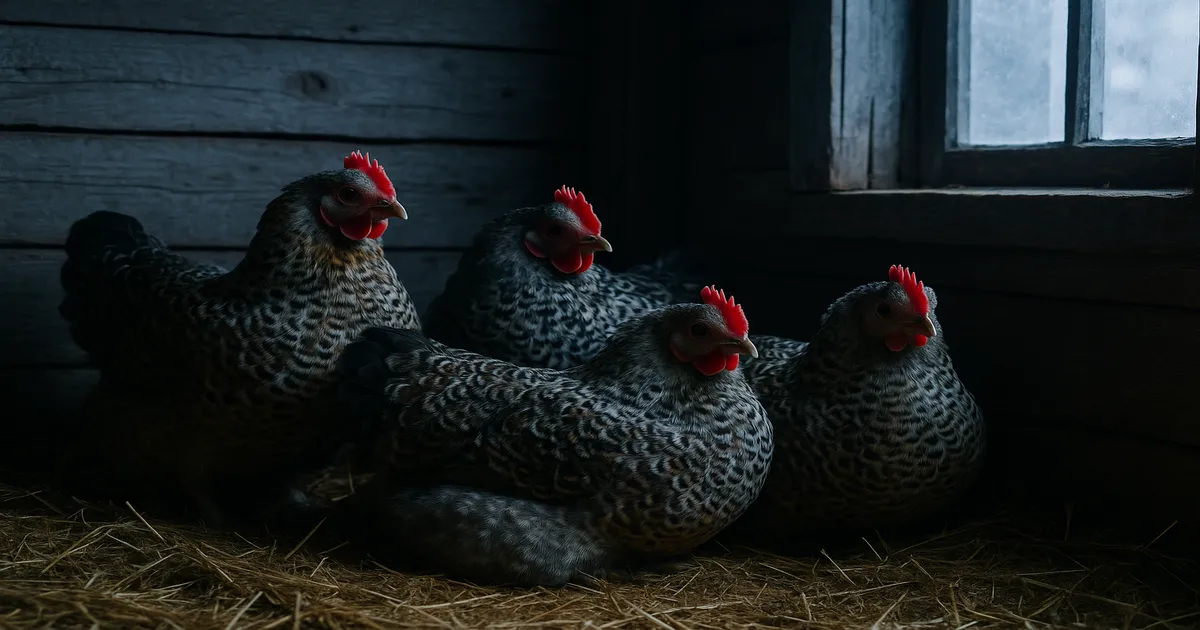
- Barred Plymouth Rock — One of America’s oldest dual-purpose breeds. Calm, cold-hardy, and a reliable 200–280 brown eggs per year. An efficient feed converter with good meat yield.
- Buff Orpington — A gentler producer at 175–200 brown eggs per year, but their strong broody instinct is a legitimate cost-saving superpower when you want free flock replacements (more on that below). Cold-hardy and docile.
Why Hybrid Sex-Links Are a Smart Budget Choice
Sex-Links remove one of the sneakiest hidden costs in chicken keeping: accidentally raising cockerels. With purebred chicks, you’re often gambling on sex ratios. With Sex-Links, females and males are visually distinct at hatch, so you pay only for productive hens. Combined with their early lay date and high output, they offer one of the best feed-to-egg ratios available.
Breed Temperament and Hidden Costs
Docile breeds like Buff Orpingtons and Barred Plymouth Rocks reduce stress-related laying drops and injuries from pecking — both of which quietly cost you eggs and occasionally vet bills. Flighty breeds like Leghorns may require taller fencing upfront. Factor that into your total cost calculation before you fall for their impressive egg numbers alone.
How to Build or Set Up a Cheap Chicken Coop
How Much Space Do Chickens Actually Need?
Standard breeds need a minimum of 4 sq ft per bird inside the coop and 10 sq ft per bird in the run. If your birds free-range during the day, you can work with slightly less indoor space since they spend minimal time inside — but don’t go below 3 sq ft per bird even then.
Big-box store coop kits are almost universally undersized. A coop marketed for 6 birds typically holds 2–3 comfortably by real standards — and cramped birds stress, peck, and get sick. Buying one often means paying again for an upgrade within a year.
Repurposing Sheds, Playhouses, and Pallets
The cheapest coop is one you already have or can source for free. Old garden sheds, children’s playhouses, and small outbuildings convert into solid coops for $50–150 in materials. Pallets from local businesses are often free and can frame an entire structure — just seal gaps with hardware cloth. Check Craigslist and Facebook Marketplace for used lumber, metal roofing, and even complete coops at 50–70% below retail.
Roost Bars and Nesting Boxes on a Budget
For roosts, use 2×4 lumber laid flat (wide side up). It’s cheap, and the flat surface lets hens cover their feet in cold weather, preventing frostbite. Allow 8–10 inches of roost space per standard bird, and position roosts higher than nesting boxes so hens don’t sleep — and defecate — in the nest.
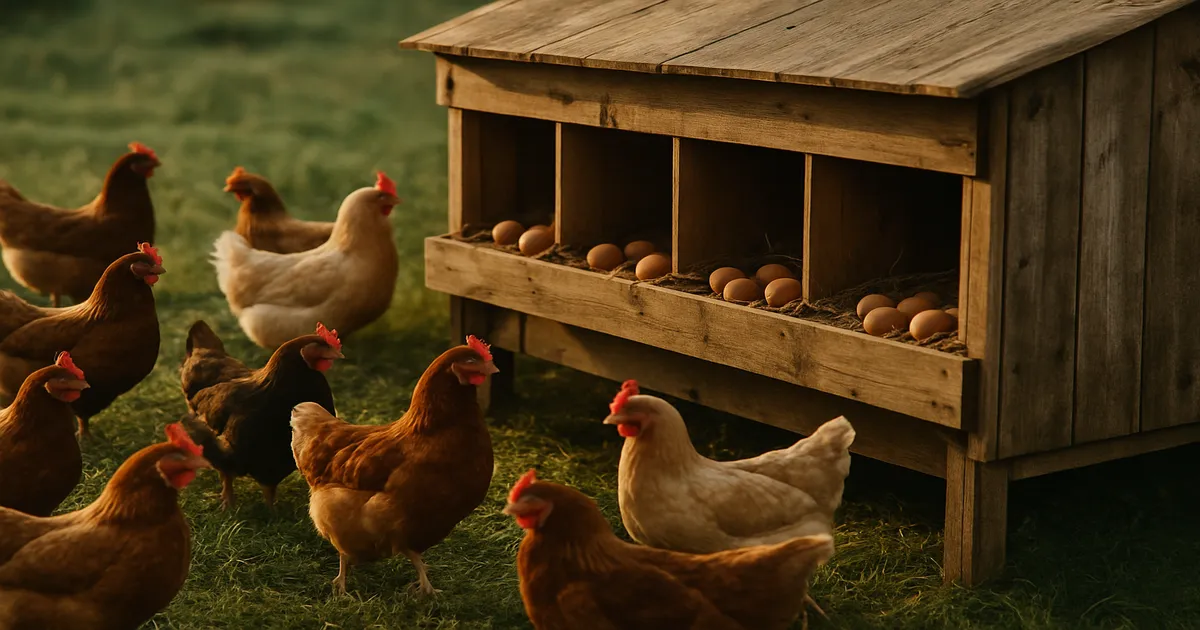
For nesting boxes, you need just one box per 4–5 hens. Hens share willingly. Five-gallon buckets mounted on their sides, wooden crates, or repurposed milk crates work perfectly and cost next to nothing. Line them with pine shavings, straw, or dried leaves.
Ventilation: The Free Health Investment You Cannot Skip
Chickens produce a surprising amount of moisture and ammonia. Without adequate airflow, respiratory disease follows — and that’s an expensive problem. Aim for 1 sq ft of ventilation per 10 sq ft of coop floor, positioned high on the walls near the roofline. High vents let moisture and ammonia escape without creating cold drafts at bird level. A well-ventilated coop is worth more than an insulated one in most U.S. climates.
Predator-Proofing Without Breaking the Bank
Chicken wire keeps chickens in — it does not keep predators out. Use 1/2-inch hardware cloth over all openings. For the ground, skip the trenching and lay an L-footer apron: bend hardware cloth outward 12 inches at ground level and lay it flat on the soil. Grass grows through it and anchors it naturally, stopping digging predators for free. On doors, use carabiner clips or two-step latches — raccoons can open standard hook-and-eye hardware without much trouble. An automatic coop door adds another layer of protection and eliminates the cost of a forgotten evening lockup.
Cut Your Feed Bill: The Biggest Ongoing Expense
Feed is 60–80% of your ongoing costs. This is where the real savings live.
How Much Feed Does a Chicken Actually Eat?
A standard laying hen eats about 1/4 lb (roughly 1/2 cup) of feed per day. For 6 hens, that’s roughly 10–11 lbs per week or 40–45 lbs per month. Heavy breeds like Brahmas eat closer to 1/3 lb per day; bantams need only about 1/8 lb. Layer feed should contain 15–18% protein and at least 3.5–4% calcium to support consistent egg production.
Free-Ranging and Foraging
Even a modest backyard can cut your feed bill by 20–30% during spring and summer. Hens on good pasture supplement their diet with insects, seeds, and greens — exactly the high-protein, nutritious food they thrive on. The more space they have to roam, the less you spend on feed.
Fermented Feed: Get More from Every Bag
Fermented feed is one of the easiest money-saving tricks available. Soak your regular layer feed in water for 2–3 days at room temperature. The natural lacto-fermentation process increases nutrient bioavailability, meaning your hens extract 10–20% more nutrition from the same amount of feed. All you need is a food-safe bucket and water — zero added cost. (Ohio Stoneware 1-Gallon Crock)
Safe Kitchen and Garden Scraps
Chickens are enthusiastic recyclers. Vegetable peels, cooked grains, bread, fruit scraps, and cooked meat trimmings are all fair game. Garden surplus — overgrown zucchini, bolted lettuce, surplus tomatoes — disappears fast. Keep scraps to under 10% of total diet to avoid nutritional imbalances, and never feed raw or spoiled meat, as it carries a real salmonella risk.
Avoid: avocado (toxic), onion, garlic, chocolate, and anything moldy.
Black Soldier Fly Larvae: A Free Protein Source
A backyard BSFL bin converts kitchen and garden waste into larvae that are 40–45% protein — higher than most commercial feed. A mature bin can cover 20–30% of a small flock’s protein needs for free. It takes a few weeks to establish but costs almost nothing to run. (BioPod Plus Grub Composter)
Free Calcium: Baking and Reusing Eggshells
Laying hens need about 4 grams of calcium per day. Instead of buying oyster shell, bake your used eggshells at 250°F (121°C) for 10 minutes, crush them coarsely, and offer them free-choice in a separate dish. The baking destroys pathogens and removes the egg smell so hens won’t associate shells with their own eggs. It’s completely free.
One important distinction: grit (insoluble granite or flint) is what hens need to grind feed in their gizzard — it is not the same as calcium. Free-ranging birds usually find enough grit on their own. Confined birds benefit from coarse builder’s sand offered free-choice, which works as a near-free alternative to purchased grit.
Maximize Egg Production to Get the Best Return
Realistic Egg Numbers by Breed
| Breed | Eggs/Week | Eggs/Year | Egg Color |
|---|---|---|---|
| Leghorn | 5–6 | 280–320 | White |
| Rhode Island Red | 5–6 | 250–300 | Brown |
| Australorp | 5–6 | 250–300 | Brown |
| Black/Red Sex-Link | 5–6 | 260–300 | Brown |
| Barred Plymouth Rock | 4–5 | 200–280 | Brown |
| Easter Egger | 4–5 | 200–280 | Blue/Green |
| Buff Orpington | 3–4 | 175–200 | Brown |
When Do Chickens Start Laying?
Most breeds begin laying at 18–22 weeks. Heavy dual-purpose breeds like Buff Orpingtons and Barred Plymouth Rocks may not start until 24–26 weeks — that’s an extra month or two of feed costs before you see your first egg. Hybrid Sex-Links often start at 16–18 weeks, giving you a faster return on your investment.
The $10 Light Trick for Winter Egg Production
Hens need 14–16 hours of light per day to lay consistently. In winter, natural daylight drops to 8–10 hours across most of the U.S., and production can fall 50–80% without intervention. A simple $10–15 LED bulb on a timer, set to supplement light in the early morning hours before dawn, can maintain near-peak production year-round. Add light in the morning rather than evening — abrupt darkness at night can disorient birds on their roosts.
Broodiness: Free Chicks vs. Lost Egg Income
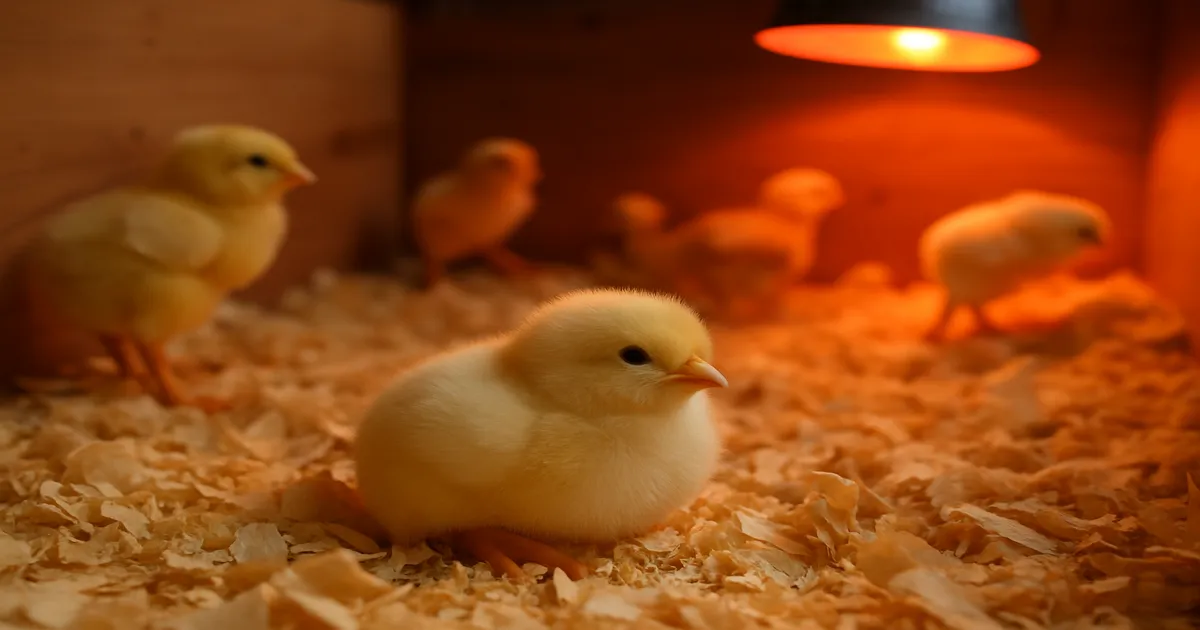
A broody hen stops laying for 3 weeks of incubation plus 6–8 weeks of chick rearing — roughly 60–80 lost eggs per broody cycle. That’s real money. But flip the calculation: a broody Buff Orpington can hatch and raise 8–12 chicks with zero electricity cost, compared to $15–30 per month running a heat lamp brooder. If you want free flock replacements, broodiness is a genuine asset. If maximum egg output is your goal, stick with Leghorns or Sex-Links.
Prevent Expensive Vet Bills with Proactive Health Care
Prevention is always cheaper than treatment. Most chicken health costs are avoidable.
Marek’s Disease: The $0.25 Vaccination That Saves Flocks
Marek’s disease is a highly contagious herpesvirus that causes paralysis, tumors, and death. There is no treatment — only prevention. When ordering chicks, always request Marek’s vaccination at hatch. It costs $0.15–0.25 per chick and is one of the highest-value investments in chicken keeping. The virus persists in the environment for years, so vaccination is especially critical if you’re adding birds to an established property.
Coccidiosis: Protecting Chicks Without Expensive Treatments
Coccidiosis hits hardest in chicks aged 3–6 weeks and causes bloody droppings, lethargy, and failure to thrive. Medicated chick starter containing Amprolium is the simplest prevention strategy. If an outbreak occurs despite precautions, Corid (Amprolium) in drinking water costs about $15–20 for a bottle that treats multiple rounds — far cheaper than a vet visit.
Mites and Lice: Cheap Prevention Before Costly Infestations
A heavy mite infestation can cause a 20% production loss and, in severe cases, death. Prevention is simple:
- Maintain a dust bath with wood ash or food-grade diatomaceous earth — free if you have a fire pit
- Apply permethrin dust or spray (~$10–15) to both birds and coop at the first sign of parasites
- Always treat the coop and the birds simultaneously — mites hide in coop cracks during the day
Bumblefoot: Prevention and Low-Cost Home Treatment
Bumblefoot is a bacterial foot infection caused by rough landing surfaces, wire flooring, or wet bedding. Prevent it by using smooth, wide 2×4 roost bars and keeping bedding dry. Mild cases — a small, soft swelling with no black scab — respond well to daily Epsom salt soaks (1 cup per gallon of warm water, 10–15 minutes) and a veterinary wound spray. More advanced cases with a hard black plug should be evaluated by a vet, as improper home debridement can introduce deeper infection.
Seasonal Cost-Saving Strategies
Winter: Skip the Coop Heater
Cold-hardy breeds like Rhode Island Reds, Australorps, and Barred Plymouth Rocks tolerate temperatures down to 0–10°F (-18 to -12°C) without supplemental heat — as long as the coop is dry and draft-free. Heating is expensive, creates a serious fire risk, and prevents birds from acclimating naturally. If the power fails on a heated coop during a cold snap, the temperature shock can be more dangerous than the cold itself. Insulation is only worth the investment if you’re dealing with sustained temperatures below 20°F (-7°C) or keeping cold-sensitive breeds like Leghorns.
Summer: Managing Heat Stress for Free
Heat stress suppresses laying and can kill birds quickly. The most effective interventions cost almost nothing: shade, good ventilation, and cold treats. Freeze kitchen scraps — watermelon rinds, cucumber slices, leftover fruit — into ice blocks and toss them into the run on hot days. Keep waterers in the shade and refresh them frequently. That’s really all it takes for most cold-hardy flocks.
Spring: Leveraging Broody Hens for Free Flock Replacement
Spring is prime broody season. If you have a Buff Orpington or another broody breed, set fertile eggs under her and she’ll handle incubation and brooding with no electricity, no incubator, and no heat lamp. It’s the most cost-effective way to expand or refresh your flock, and seasonal planning like this prevents the reactive spending that catches new keepers off guard.
Frequently Asked Questions About How to Raise Chickens Cheaply
What is the cheapest way to feed backyard chickens?
Combine free-ranging with fermented feed and kitchen scraps. Free-ranging reduces feed consumption by 20–30%, while fermented feed stretches every bag 10–20% further through improved nutrient absorption. Baked, crushed eggshells replace purchased oyster shell for free, and a Black Soldier Fly Larvae bin can supply significant protein at zero ongoing cost. Together, these strategies can cut your feed bill nearly in half.
How much does it cost per month to keep 6 chickens?
A flock of 6 standard hens typically costs $27–54 per month in ongoing expenses — primarily feed (40–45 lbs at $0.50–0.80/lb), plus bedding and supplements. Free-ranging, fermented feed, and kitchen scraps can push that figure toward the lower end. Six productive hens laying 5 eggs each per week produce 30 eggs, offsetting a meaningful portion of that cost.
What is the best chicken breed for beginners on a budget?
The Black or Red Sex-Link is the top pick for most budget-conscious beginners. They’re color-sexed at hatch so you only pay for pullets, start laying at 16–18 weeks, and produce 260–300 eggs per year with excellent feed efficiency. If you also want dual-purpose value or a broody hen for free chick-rearing, a Rhode Island Red or Buff Orpington is worth the slight trade-off in early production.
Do I really need a heat lamp for chicks?
Not necessarily. A heat lamp works, but a brooder plate — sometimes called a heating plate or chick brooder pad — is safer, more energy-efficient, and mimics a mother hen more closely. Chicks regulate their own temperature by moving toward or away from the heat source. If you have a broody hen available, she’ll do the job for free with no fire risk at all.
How do I raise chickens cheaply in a small backyard?
Focus on a small, productive flock — 4 to 6 hens is the sweet spot for most urban and suburban yards. Choose compact, efficient layers like Sex-Links or Australorps. Build or repurpose your coop rather than buying a kit. Ferment your feed, offer kitchen scraps daily, and let the birds scratch in the yard whenever possible. Keeping the flock small and the setup simple is the single best way to keep costs manageable in a limited space.