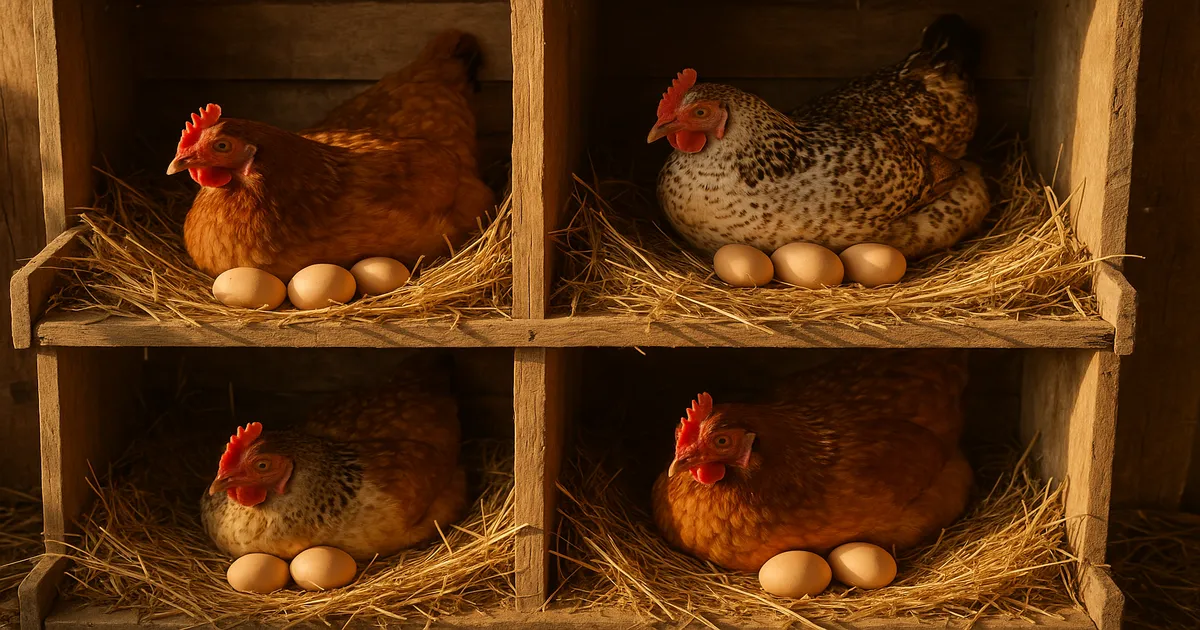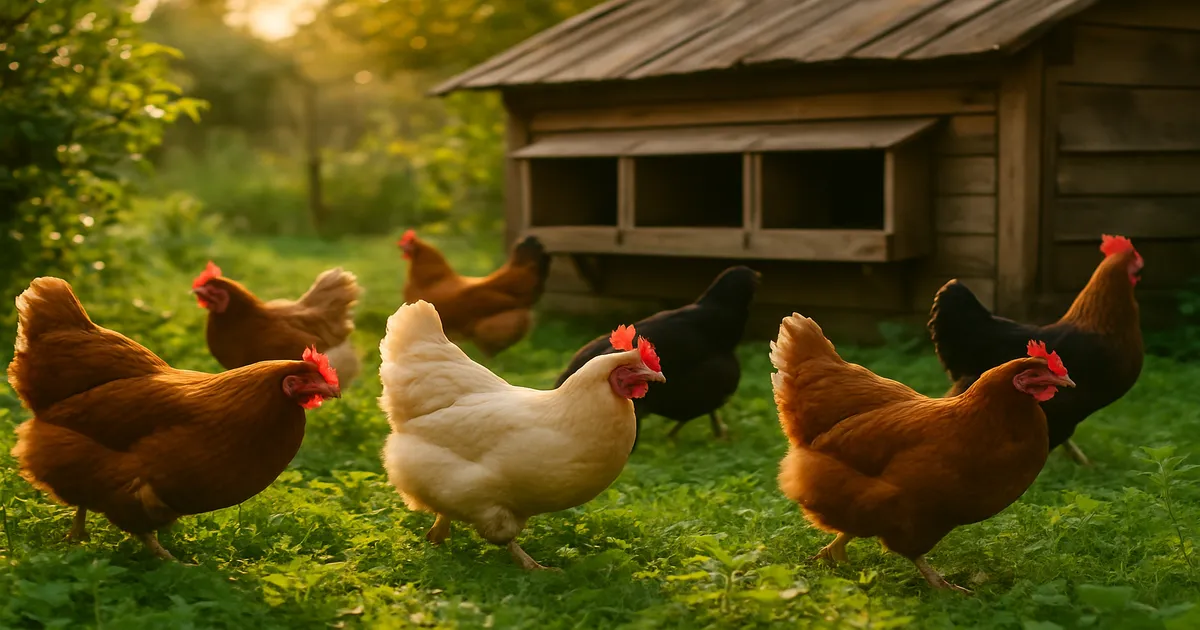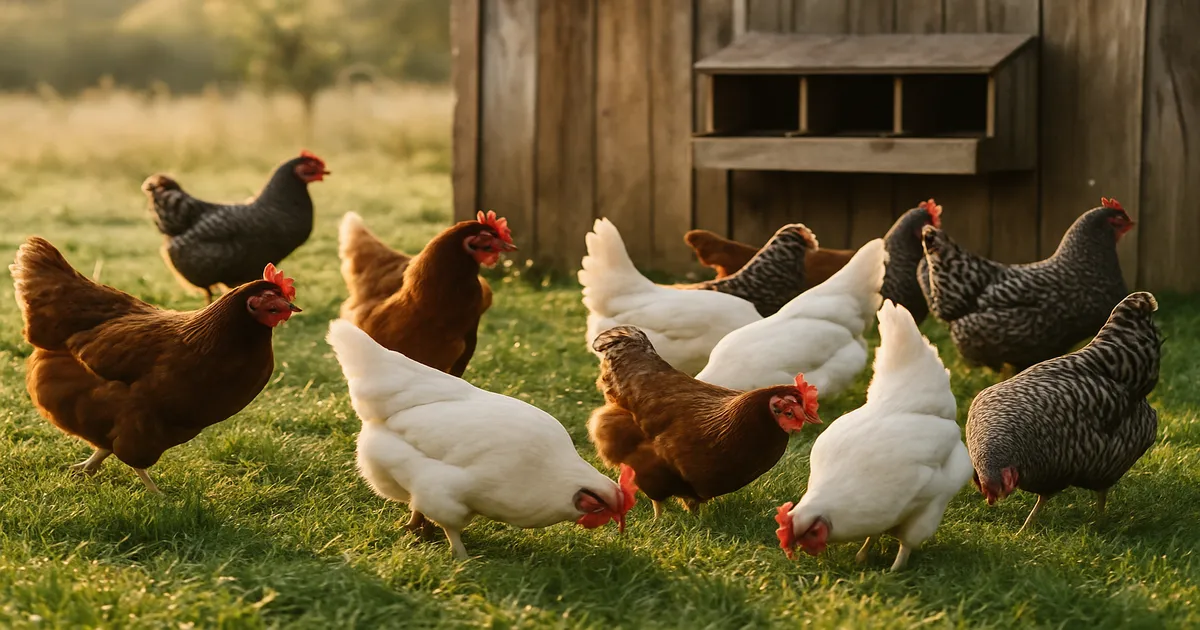
Quick Answer: Red sex-links lay 250–320 eggs per year in their first laying season — roughly 5–7 eggs per week — making them one of the most productive laying hens available to backyard flock keepers. ISA Browns top the range at 300–320 eggs annually, while Golden Comets and Cinnamon Queens typically average 250–280. Production declines steadily after year one, so set your expectations before you buy.
If you’re researching how many eggs red sex-links lay, you’ve already found one of the best choices for a backyard flock. These hybrid hens are purpose-built for production, and the numbers back it up. But there’s more to the story than year-one output. Production drops faster than most people expect, and knowing what’s coming helps you plan a flock that keeps delivering.
How Many Eggs Do Red Sex-Links Lay? Production by Year
Annual Egg Totals by Strain
| Year | ISA Brown | Golden Comet / Cinnamon Queen |
|---|---|---|
| Year 1 | 300–320 eggs | 250–280 eggs |
| Year 2 | 210–240 eggs | 195–220 eggs |
| Year 3 | 155–180 eggs | 150–175 eggs |
| Years 4–5 | 80–120 eggs | 80–120 eggs |
These numbers assume good nutrition, consistent lighting, and a low-stress environment. Poor management will push production toward the lower end at every stage.
Weekly Laying Rate
At peak production, expect 5–7 eggs per week per hen — close to one egg per day. Even in year two, a well-managed red sex-link will typically produce 4–5 eggs per week. Few heritage breeds can match that rate, even in their prime.
What Are Red Sex-Links?
How Red Sex-Links Are Created
Red sex-links are F1 hybrid chickens produced by crossing specific purebred parent stock. The defining trait is that male and female chicks display different feather colors at hatch, letting hatcheries sort them by sex on day one without vent sexing. Common parent crosses include Rhode Island Red males over Rhode Island White or Delaware females, and New Hampshire Red males over Silver Laced Wyandotte females.
Because they’re hybrids, red sex-links are not recognized by the American Poultry Association as a standard breed. You also can’t hatch true red sex-links from red sex-link eggs — the hybrid traits don’t carry forward reliably.
ISA Brown, Golden Comet, Cinnamon Queen, Red Star
The names vary by hatchery, but they all describe the same general type of bird. ISA Browns were developed in France by Institut de Sélection Animale and represent the commercial extreme of egg production. Golden Comets and Cinnamon Queens are popular backyard strains with slightly less intensive genetics — still outstanding layers, but with a marginally gentler production curve. Red Stars are another common trade name you’ll see at feed stores and hatcheries.
Hatching eggs from your red sex-link hens won’t give you more red sex-links. The F1 hybrid advantage disappears in the next generation, leaving you with mixed offspring that lack both the sex-linkage trait and the optimized laying genetics. If you want more, order from a hatchery.
Egg Production by Year: Realistic Expectations
Year One: Peak Performance
This is where red sex-links shine. Most pullets hit their stride around 18–20 weeks and maintain high output through their first full laying year. ISA Browns can push 300–320 eggs under ideal conditions. Even the more moderate backyard strains deliver 250–280 eggs — nearly five per hen per week at the low end.
Year Two and Beyond: The Decline Curve
Year two brings a meaningful drop — typically to 200–240 eggs, or roughly 70–80% of peak. That’s still a productive hen. But the decline accelerates from there. By year three, expect 150–180 eggs. Years four and five often bring just 80–120, and shell quality starts to suffer as well.
This is the “burn bright, burn fast” reality of highly optimized laying genetics. Red sex-links decline faster than heritage breeds because their reproductive systems are pushed harder from the start. A Buff Orpington may lay fewer eggs in year one, but she’ll hold her production more steadily through years three and four — and her shells will stay stronger longer.
Red Sex-Links vs. Heritage Breeds
A Buff Orpington might give you 180–200 eggs in year one versus a red sex-link’s 280+. But that same Buff Orpington at year three may still be laying 140–160 eggs, while your red sex-link has dropped to 150–180 and is heading lower. For maximum eggs over a short window, red sex-links win easily. For a long-term flock with consistent production over five-plus years, heritage breeds offer a gentler decline curve and generally better longevity.
Egg Size, Shell Color, and Quality
Shell Color
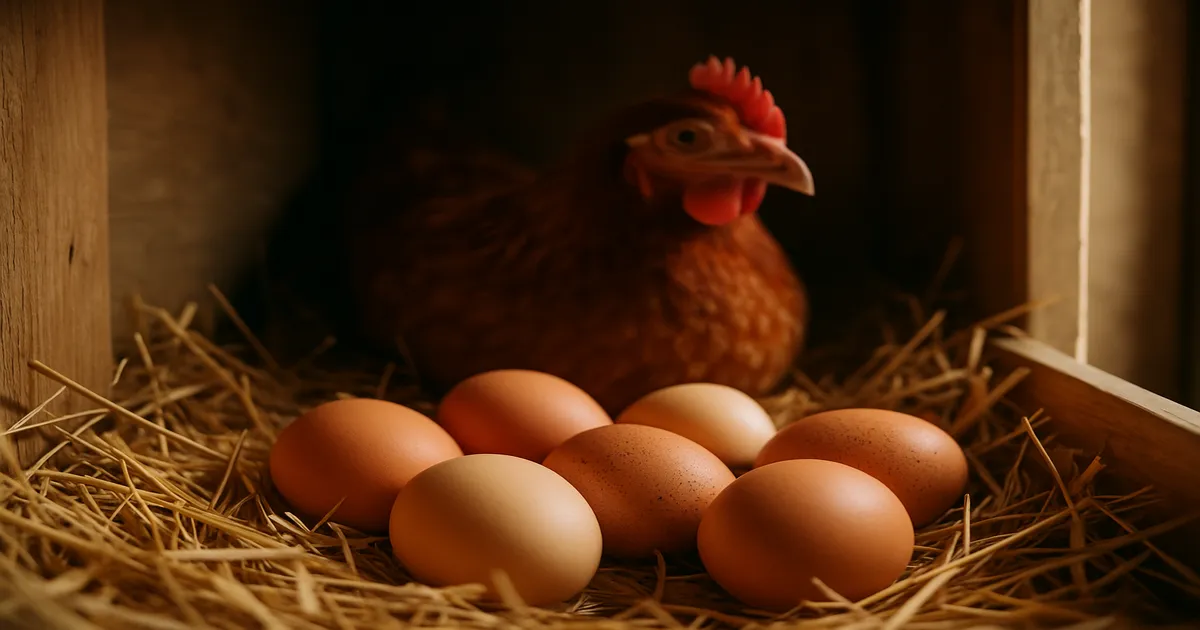
Red sex-links lay brown eggs ranging from light tan to medium brown. Some hens produce eggs with a slightly rosy or pinkish tint, especially early in the season. Color tends to fade as the laying year progresses — this is normal and purely cosmetic.
Egg Size
Most red sex-link eggs fall in the large to extra-large range, typically weighing 24–27 oz per dozen. Pullet eggs (the first few weeks of laying) will be smaller and sometimes oddly shaped. Full-sized eggs usually arrive by weeks 20–22.
Yolk color is a rich golden-yellow in free-range hens with access to grass and insects. Confined hens on a standard layer diet will produce a paler yolk — still nutritious, just less visually striking.
Shell Quality Over Time
Shell quality is excellent in year one. By year three and beyond, shells can become thinner and more prone to cracking even with good nutrition. Offering oyster shell free-choice throughout your hens’ lives helps delay this decline — keep a separate container available at all times so hens can self-regulate their intake.
When Do Red Sex-Links Start Laying?
Red sex-links are early maturing. Most pullets begin laying at 16–18 weeks, and some ISA Brown strains start as early as 15 weeks. Compare that to Buff Orpingtons (20–24 weeks) or Dominiques (22–26 weeks), and it’s easy to see why red sex-links are popular with keepers who want eggs quickly.
The first eggs are typically small — sometimes barely larger than a golf ball — and may have irregular shapes or thin spots. The reproductive system is still calibrating. Give it a few weeks and the eggs will normalize.
Signs Your Pullet Is About to Lay
- Comb and wattles redden and enlarge — usually 1–2 weeks before the first egg
- Squatting behavior — she crouches and holds still when you reach toward her back
- Increased interest in nesting boxes — she’ll start exploring and sitting in them
- Wider stance and fuller abdomen — her pelvis widens to accommodate egg laying
Seasonal Laying and Winter Production
How Day Length Affects Laying
Hens need approximately 14–16 hours of light per day to maintain peak laying. As days shorten in fall, production naturally drops. This is a hormonal response to light, not temperature — shorter days trigger the slowdown regardless of how warm the coop is.
Red sex-links handle winter slowdowns better than many heritage breeds, but they’re not immune. Without supplemental light, expect production to fall to 2–4 eggs per week or stop entirely during the shortest days of winter.
A simple timer and a low-wattage LED bulb in the coop can maintain winter production effectively. Add light in the morning rather than the evening — this mimics a natural sunrise and lets hens roost at dusk naturally rather than being plunged into sudden darkness. Aim for a total of 14–16 hours of daily light.
Broodiness
Red sex-links rarely go broody. Fewer than 5% of hens will ever show broody behavior — the instinct has been selectively suppressed because a broody hen stops laying for 3–8 weeks. If you want to hatch chicks, plan to use an incubator or a reliably broody breed like a Silkie or Buff Orpington as a surrogate. (Brinsea Ovation 28 EX)
Feeding Red Sex-Links for Maximum Egg Production
Layer Feed
Switch pullets from grower feed to layer feed at 16–18 weeks, or when the first egg appears — whichever comes first. Layer feed should contain 15–18% protein; high-production hens like red sex-links do best toward the higher end of that range (17–18%).
Format is largely a matter of preference:
- Pellets — least waste, easiest to measure, most popular
- Crumbles — good for younger hens transitioning from starter
- Fermented feed — soaking layer feed for 2–3 days improves nutrient absorption and can reduce feed consumption by 20–25%
Calcium and Oyster Shell
Layer feed contains calcium, but high-producing hens often need more. Always offer oyster shell free-choice in a separate container — never mixed into the feed — so each hen can take what she needs. Signs of calcium deficiency include thin shells, soft-shelled eggs, and in severe cases, egg binding. Don’t feed layer feed to chicks under 16 weeks; the excess calcium can stress their developing kidneys.
Treats and the 10% Rule
Keep treats — including scratch grains — to no more than 10% of total daily diet. Too many treats dilute the protein and calcium your hens need for consistent laying. Safe treats include mealworms, leafy greens, berries, and cooked oatmeal. Avoid avocado, chocolate, onions, raw dried beans, and anything moldy. Scratch is a treat, not a supplement — limit it to 1–2 tablespoons per bird per day.
Water
A hen without water for just 24 hours may stop laying for several days. Each hen drinks 1–2 cups of water daily — more in hot weather. Keep waterers clean, full, and positioned away from feeders to reduce contamination. (Harris Farms 5-Gallon Plastic Poultry Fount) In winter, a heated base prevents freezing and keeps production steady.
Adult red sex-links eat approximately ¼ to ⅓ lb (113–150g) of feed per day — roughly 4–5 lbs per hen per month.
Housing Red Sex-Links
Space Requirements
Cramped conditions cause stress, and stressed hens lay fewer eggs. Aim for:
- Inside the coop: 4 sq ft per bird minimum (6 sq ft is better in cold climates where hens spend more time indoors)
- In the run: 10 sq ft per bird minimum
- Free-ranging: 50–100+ sq ft per bird for sustainable pasture access
Overcrowding leads to feather pecking, faster disease spread, and reduced laying. When in doubt, give them more room.
Nesting Boxes
One nesting box per 4–5 hens is the standard ratio — red sex-links share willingly. Boxes should be at least 12×12×12 inches with 3–4 inches of nesting material. Mount them 12–18 inches off the floor to discourage sleeping (and pooping) in them, and add a 3–4 inch kickboard at the entrance to keep bedding inside.
Ventilation, Roosts, and Predator-Proofing
Ventilation is non-negotiable. Aim for at least 1 sq ft of ventilation per 10 sq ft of coop floor space, placed high on the walls above roost height. Moisture and ammonia buildup cause far more respiratory illness than cold temperatures do.
Roost bars should provide 10–12 inches of linear space per bird, positioned 24–36 inches off the floor. A 1.5–2 inch diameter bar lets hens wrap their feet comfortably and tuck their toes under their breast feathers in cold weather.
Predator-proofing essentials:
- ½-inch hardware cloth on all openings (not chicken wire — raccoons reach right through it)
- A buried hardware cloth apron extending 12 inches outward from the run base to stop diggers
- Two-step latches or carabiner clips on all doors — raccoons figure out simple hook-and-eye latches quickly
- A covered run to protect against hawks and climbing predators
- An automatic coop door that closes at dusk
Even failed predator attacks disrupt laying. A secure coop isn’t just about keeping hens alive — it’s about keeping them calm enough to produce.
Frequently Asked Questions About Red Sex-Link Egg Production
How many eggs per day does a red sex-link hen lay?
At peak production, a red sex-link averages about 0.8–1 egg per day, or 5–7 eggs per week. No hen lays every single day indefinitely — even the best layers take occasional days off. Over a full year, that averages out to 250–320 eggs depending on the strain and how well the flock is managed.
How long do red sex-links lay before production drops off?
Red sex-links lay well for about 2–3 years before production declines significantly. Year one is peak (250–320 eggs), year two drops to around 200–240, and by year three you’re looking at 150–180. By years four and five, many hens are laying fewer than 120 eggs annually, and shell quality declines as well.
Are red sex-links better egg layers than Rhode Island Reds?
Yes, in terms of raw numbers. A production Rhode Island Red typically lays 200–280 eggs per year, while red sex-links consistently hit 250–320. Red sex-links were specifically bred to maximize egg output, whereas Rhode Island Reds are a dual-purpose breed with a heavier body and slightly less intensive laying genetics.
What color eggs do red sex-links lay?
Red sex-links lay brown eggs ranging from light tan to medium brown. Some hens produce eggs with a slightly rosy or pinkish tint, particularly early in the season. Shell color can fade as the laying year progresses — this is normal and has no effect on egg quality or nutrition.
At what age do red sex-link pullets start laying?
Most red sex-link pullets begin laying at 16–18 weeks, with some ISA Brown strains starting as early as 15 weeks. This is noticeably earlier than heritage breeds, which typically start at 20–26 weeks. The first eggs will be small and possibly irregular in shape; expect full-sized eggs by weeks 20–22.