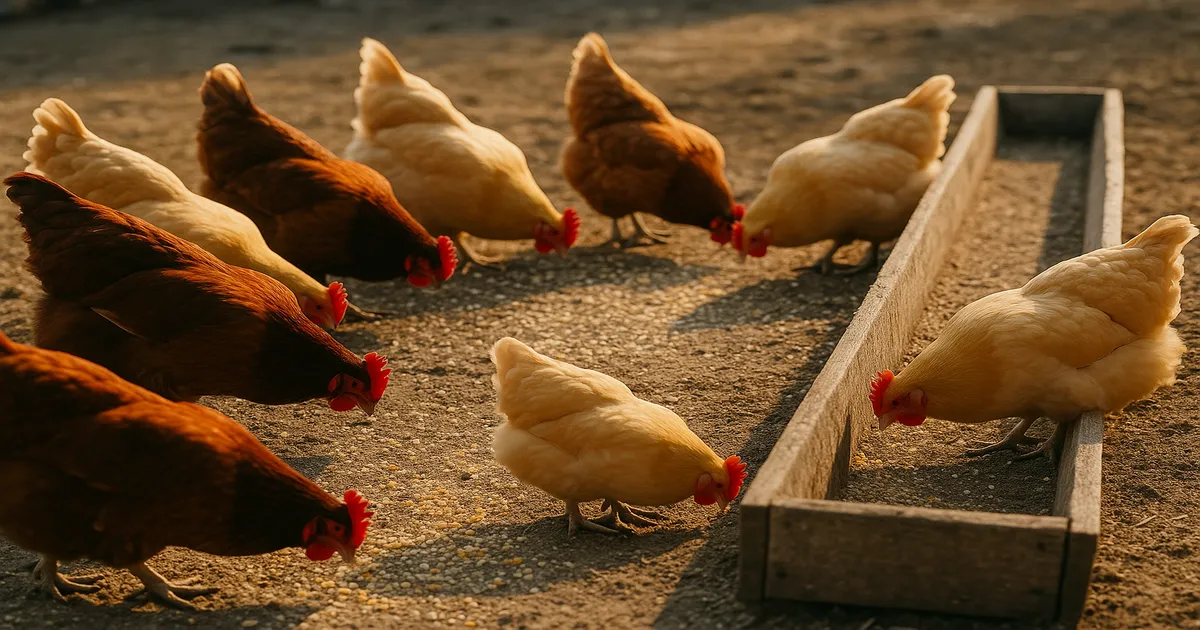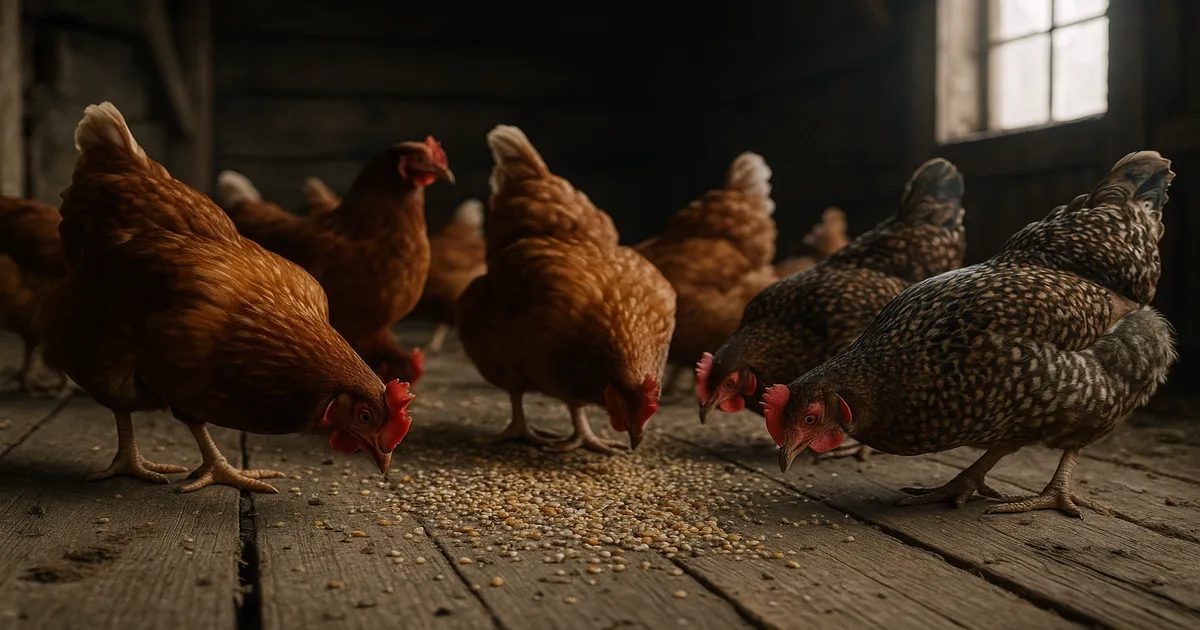
Quick Answer: Is it still worth producing your own poultry feed instead of buying from suppliers? For most backyard keepers, the honest answer depends on scale. Making your own feed can save 10–35% compared to commercial options — but only if you have 25 or more birds, the storage space for bulk ingredients, and the time to mix batches regularly. For small flocks of fewer than 10 hens, commercial feed almost always wins on cost and convenience.
Whether homemade feed is worth producing yourself comes down to three variables: flock size, breed type, and your storage setup. Get all three right and you can meaningfully cut your feed bill. Get one wrong and you’ll spend more than you save — or end up with nutritionally deficient birds and a vet bill that wipes out any gains.
This guide covers the honest economics, the nutritional realities, and the practical steps so you can make the right call for your situation.
Is Producing Your Own Poultry Feed Worth It? A Quick Breakdown by Flock Size
- Under 10 birds: Rarely worth it. Bulk ingredient minimums mean you’ll buy more than you can use before it spoils, and savings per bag are minimal.
- 25–50 birds: Starting to make sense. Expect 10–20% savings over conventional commercial feed when buying ingredients in bulk.
- 100+ birds: Clear winner for homemade, with 20–35% savings — provided you have a mixer, proper storage, and consistent sourcing.
When Homemade Feed Wins — and When It Doesn’t
Homemade feed wins when you have heritage breeds on pasture, reliable access to local grain suppliers, and the infrastructure to store 200+ lbs of ingredients safely. It loses when you’re keeping high-production hybrids that need precision nutrition, buying small quantities at retail prices, or when your time is genuinely limited. The math is unforgiving at small scale.
How Your Breed Choice Changes the Feed Equation
High-Production Hybrids: Tight Nutritional Margins
ISA Browns, Golden Comets, and Leghorns are finely tuned egg machines. They need 16–18% protein and 3.5–4.5 g of calcium per day, and they don’t tolerate nutritional gaps well. A slight methionine deficiency that a heritage breed shrugs off can tank egg production or trigger feather pecking in a Leghorn. If you’re keeping production hybrids, commercial feed’s consistency is genuinely hard to beat.
Dual-Purpose Heritage Breeds: The Best Candidates for Homemade Feed
Rhode Island Reds, Plymouth Rocks, Australorps, and Wyandottes are the sweet spot for homemade rations. They’re more forgiving of minor nutritional variation, they’re excellent foragers, and they’ll self-supplement on pasture — deriving 15–30% of their daily nutritional needs from bugs, seeds, and greens when given adequate outdoor space. That built-in flexibility reduces the precision your homemade ration needs to hit every batch.
A standard heritage hen eats roughly 0.30–0.35 lbs (136–159 g) of complete feed per day. A Leghorn eats about 0.25 lbs (113 g) but converts it with ruthless efficiency, leaving less room for nutritional error.
Meat Birds: The Hardest Ration to Replicate at Home
Cornish Cross broilers need 20–22% protein in the starter phase (weeks 0–3), which requires soybean meal and ideally fishmeal to hit without synthetic amino acid supplementation. This is genuinely difficult to achieve consistently with home-mixed rations. Freedom Rangers and Jersey Giants are more forgiving thanks to slower growth rates, but if you’re running Cornish Cross, stick with a quality commercial broiler starter.
Bantams and Ornamentals: Where Homemade Feed Is Almost Always Viable
Silkies, Sebrights, and Belgian d’Uccles eat so little — around 1.5–2 oz (42–57 g) per bird per day — that even small ingredient batches last longer, reducing spoilage risk. They’re also less metabolically demanding, making nutritional precision less critical. If you’re keeping bantams for eggs, companionship, or show, a well-formulated homemade ration is a perfectly reasonable choice even at small flock sizes.
The Real Cost Comparison: Homemade vs. Commercial Poultry Feed
What You’re Actually Paying for With Commercial Feed
In 2024, conventional commercial layer feed runs $18–$30 per 50 lbs (22.7 kg). Organic layer feed costs $35–$55 per 50 lbs. That premium buys you consistency, certified nutritional analysis, pelleting (which reduces selective feeding and waste), and a shelf life of 6–8 weeks in proper storage. For most small flock keepers, that’s genuine value.
Homemade Feed Ingredient Costs and Sourcing
When buying in bulk (100+ lbs per ingredient), a blended homemade layer ration costs approximately $15–$22 per 50 lbs — a real saving over conventional commercial feed. Buy in small quantities from farm supply stores and that number climbs to $22–$32 per 50 lbs, which overlaps with or exceeds commercial pricing.
Key ingredient benchmarks (2024):
- Cracked corn: $12–$18 / 50 lbs
- Roasted soybean meal: $20–$28 / 50 lbs
- Fishmeal: $40–$60 / 50 lbs (used at 3–5%, so the per-batch cost is small)
- Vitamin/mineral premix: $15–$25 / lb (used at under 1% of ration — roughly $0.15–$0.25 per 50 lbs of finished feed)
Break-Even Analysis by Flock Size
| Flock Size | Homemade Viable? | Estimated Savings |
|---|---|---|
| Under 10 birds | Rarely | Minimal or negative |
| 25–50 birds | Yes | 10–20% vs. conventional |
| 100+ birds | Strong yes | 20–35% vs. conventional |
Hidden Costs: Equipment, Storage, and Your Time
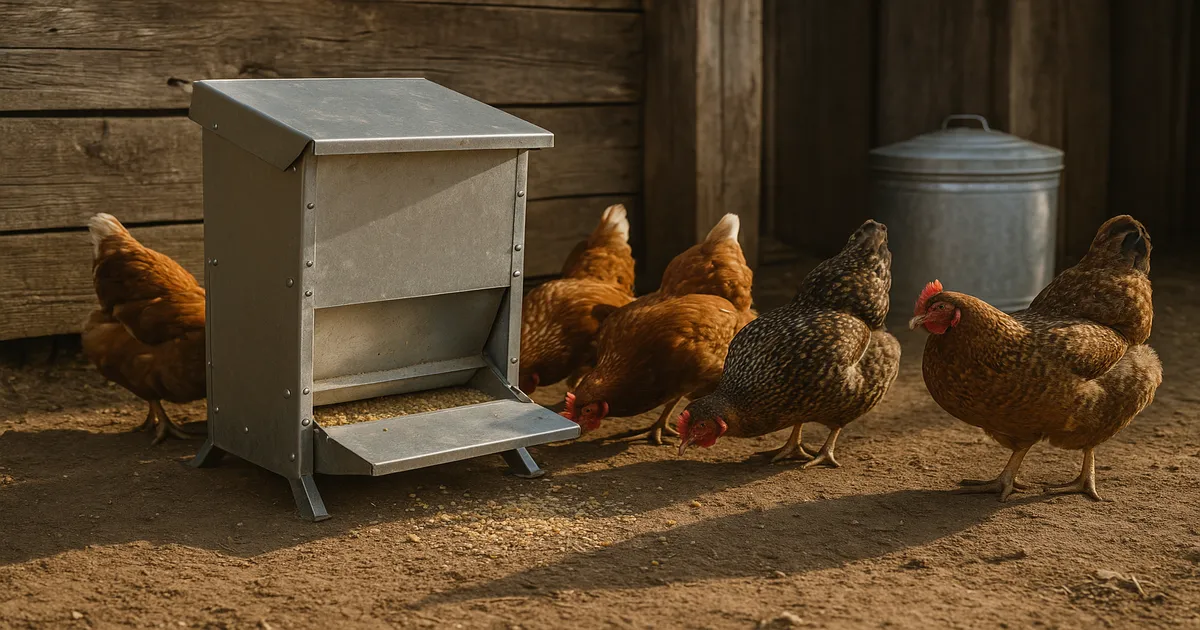
A decent feed mixer runs $200–$600. Airtight metal storage bins — essential for keeping grain dry and rodent-free — cost $50–$150 each, and you’ll need several. A good starting point is a locking steel can like the Behrens 20-Gallon Locking Steel Storage Can, which keeps moisture and pests out without breaking the bank.
Factor in your time too. Mixing a 100 lb batch takes 30–60 minutes once you’re set up. At even a modest hourly rate, labour erodes savings fast at small scale. At 100+ birds, the per-bird time cost drops to the point where it genuinely makes economic sense.
Formulating a Nutritionally Complete Homemade Ration
Core Ingredients and Their Roles
A functional homemade layer ration looks like this:
| Ingredient | % of Ration | Role |
|---|---|---|
| Corn (cracked or whole) | 40–50% | Primary energy source |
| Soybean meal (roasted) | 20–25% | Main protein source |
| Wheat or oats | 10–15% | Secondary energy + fibre |
| Fishmeal or dried insects | 3–5% | High-quality protein + amino acids |
| Limestone or oyster shell | 5–8% | Calcium for eggshells |
| Dicalcium phosphate | 1–2% | Phosphorus for bone health |
| Vitamin/mineral premix | 0.5–1% | Micronutrient insurance |
| Salt | 0.25–0.5% | Electrolyte balance |
| Sunflower seeds or flaxseed | 3–5% | Omega-3s and palatability |
Critical Nutritional Targets You Must Hit
- Protein: 15–18% for layers; 20–22% during molt or for meat birds
- Calcium: 3.5–4.5 g per hen per day (approximately 3.5–4.5% of diet)
- Phosphorus: 0.4–0.5% available phosphorus — don’t overload calcium without it, or you risk kidney damage
- Energy: 2,700–2,900 kcal ME/kg
Calcium and the Eggshell Problem
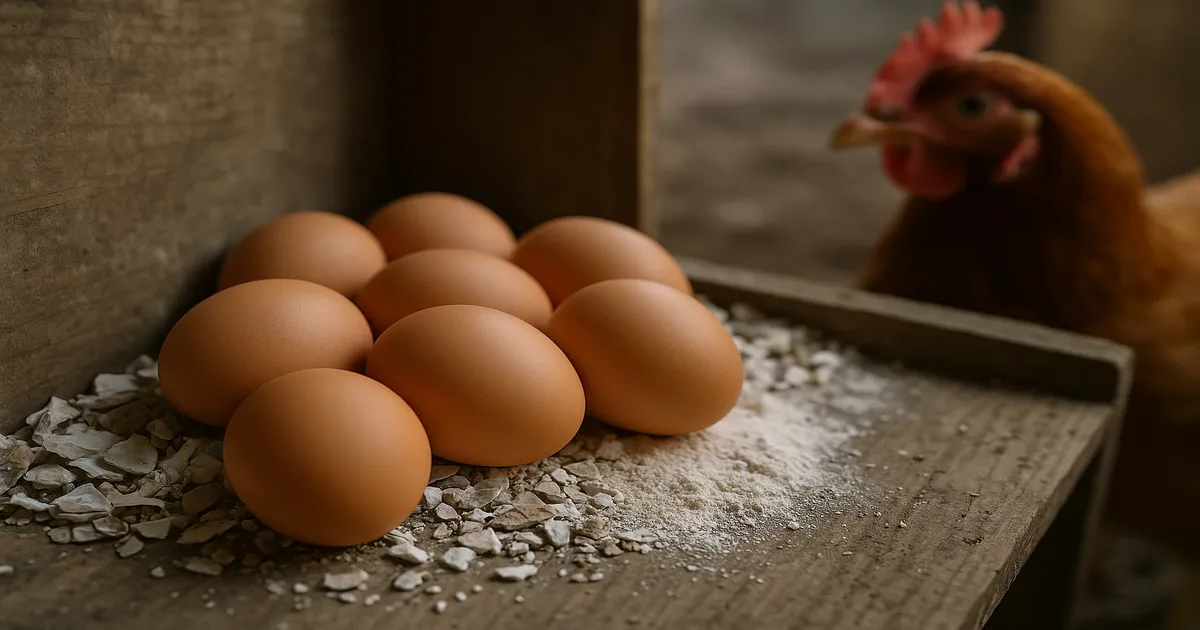
Calcium is the nutrient most commonly under-supplied in homemade rations. Thin-shelled eggs, soft eggs, or egg-eating behaviour are your early warning signs. Incorporate limestone at 5–8% of your ration by weight, and always offer oyster shell free-choice on the side — hens will self-regulate their intake as needed. Manna Pro Crushed Oyster Shell is a reliable and widely available option for this.
Amino Acids: Why Lysine and Methionine Are Your Biggest Risk
Lysine (minimum 0.73% of diet) and methionine (minimum 0.32%) are the two amino acids most likely to fall short in homemade rations. All-vegetarian rations are particularly at risk for methionine deficiency. The practical fix is fishmeal or dried mealworms at 3–5% of the ration. Deficiency shows up as feather pecking, poor feather regrowth during molt, and sluggish birds.
Vitamin and Mineral Premixes: Don’t Skip This Step
Don’t try to source vitamins A, D3, E, B12, and trace minerals individually. A poultry vitamin/mineral premix used at 0.5–1% of ration weight costs almost nothing per batch and fills every micronutrient gap your base ingredients leave behind. Durvet Vitamins and Electrolytes Poultry Supplement is a practical choice that’s easy to source. This is the one ingredient you should never skip or substitute.
Egg Production ROI: Calculating Your Cost Per Egg
Production Benchmarks by Breed
| Breed | Eggs/Week | Eggs/Year |
|---|---|---|
| ISA Brown | 6–7 | 300–350 |
| Leghorn | 5–6 | 280–320 |
| Australorp | 5–6 | 250–300 |
| Rhode Island Red | 4–5 | 200–280 |
| Plymouth Rock | 4–5 | 200–250 |
| Buff Orpington | 3–4 | 150–200 |
| Silkie Bantam | 2–3 | 100–120 |
Worked Example: Cost Per Egg With Homemade vs. Commercial Feed
10-hen Rhode Island Red flock, 240 eggs/year average per hen:
- Total annual eggs: 2,400
- Feed consumed: 10 hens × 0.30 lbs/day × 365 days = 1,095 lbs/year
Commercial feed at $24/50 lbs:
- Feed cost: $525/year → $0.22 per egg
Homemade feed at $18/50 lbs (bulk sourcing):
- Feed cost: $394/year → $0.16 per egg
- Savings: ~$131/year — before accounting for equipment, storage, and time
At 10 birds, that $131 saving is quickly absorbed by a single storage bin purchase or a few hours of mixing time. The math only really tips in favour of homemade at 25+ birds.
Seasonal Drops, Molting, and Broodiness as Hidden Cost Multipliers
Winter production drops 40–60% in unsupplemented flocks as daylight shortens. A simple LED on a timer can keep production within 10–15% of peak year-round. During molt — typically September through November — laying stops for 6–12 weeks and protein demand spikes to 20–22%. Budget for that when planning homemade batch sizes.
Broody breeds like Silkies, Buff Orpingtons, and Cochins can go broody 2–4 times per year, with each episode lasting 3–8 weeks of zero egg output while feed costs continue. These are real numbers that change your cost-per-egg calculation significantly.
How Coop Quality Affects Feed Efficiency
Cold Birds Eat More Feed
Below 20°F (-6.7°C), chickens burn extra calories just staying warm — feed consumption rises 10–15%. A well-insulated coop with proper roost bars (2×4 lumber laid flat so hens can cover their feet with breast feathers) keeps that thermal burn-off to a minimum. Every calorie spent on warmth is a calorie not going toward egg production.
Space, Foraging, and Ventilation
Indoor space: minimum 4 sq ft per standard bird, with 8–10 sq ft preferred for heritage breeds. Outdoor run: minimum 10 sq ft per bird for welfare, but 30–50 sq ft per bird if you want meaningful foraging that actually supplements your homemade ration. Crowded birds don’t forage — they stand around and pick fights, wasting feed and suppressing laying.
Ammonia above 25 ppm damages respiratory tissue and suppresses immune function, resulting in birds that eat feed but convert it poorly. Aim for 1 sq ft of ventilation per 10 sq ft of floor space, positioned at roost height to avoid drafts at bird level.
Predator Losses as a Feed Cost Write-Off
Every bird killed by a predator represents weeks of feed investment with zero return. A hen killed at 30 weeks has consumed roughly 70 lbs of feed — around $25–$35 at commercial prices — with only a fraction of her productive life completed. Hardware cloth (½-inch galvanized, not chicken wire) and a buried apron skirt around the run perimeter are essential. An automatic coop door adds another layer of protection and is one of the most cost-effective upgrades you can make — the ChickenGuard Extreme Auto Door is a well-regarded option.
Health Risks of Getting Homemade Feed Wrong
Nutritional Deficiencies and Their Symptoms
The warning signs of a poorly formulated homemade ration are usually visible before they become serious:
- Thin-shelled or soft eggs → calcium deficiency
- Feather pecking → lysine or methionine deficiency
- Poor feather regrowth during molt → overall protein deficiency
- Lethargy, pale combs → vitamin or mineral gaps
Catch these early and you can correct the ration. Ignore them and you’re looking at reduced production, injury from pecking, and immune suppression that opens the door to disease.
Feed Storage Mistakes That Cause Spoilage and Mycotoxins
Homemade feed with high fat content — flaxseed and sunflower seeds in particular — goes rancid in 3–4 weeks, compared to 6–8 weeks for commercial pellets. Mix only what your flock will consume within that window. Improperly stored grain can develop mycotoxins — fungal toxins that suppress immunity, reduce egg production, and in severe cases are fatal. Store all grain in airtight metal containers in a cool, dry location, and never feed anything that smells musty or shows visible mould.
When to Switch Back to Commercial Feed
If you’re seeing consistent soft shells, feather pecking, or a production drop that doesn’t align with season or molt — and your ration hasn’t changed — go back to commercial feed for 4–6 weeks and see if things improve. That’s your diagnostic tool. If production and feather condition recover, your homemade ration has a gap that needs fixing before you try again.
Practical Tips for Getting Started With Homemade Poultry Feed
Minimum Setup to Make It Viable
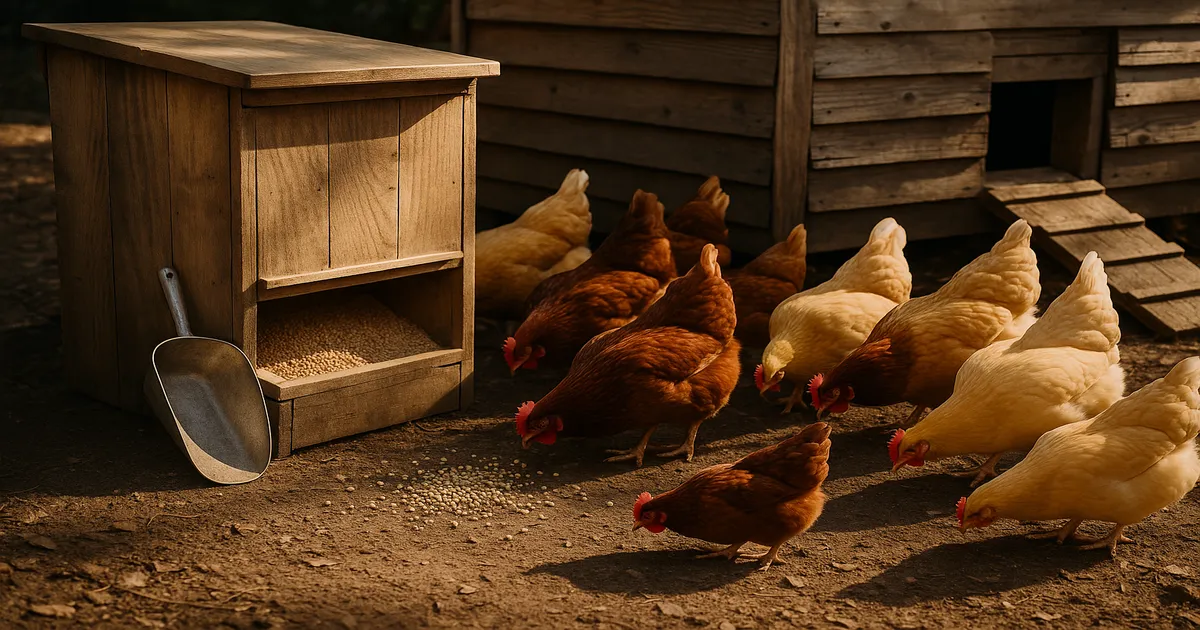
Don’t commit to homemade feed until you have at least 25 birds and a proper storage setup. At minimum, you need two or three airtight metal bins (50–100 lb capacity each) to store corn, soybean meal, and your mineral mix separately. Mixing on the floor of a damp shed is how you end up with mycotoxin problems. Start with infrastructure.
Sourcing Bulk Ingredients Locally and Online
Local is almost always cheaper and fresher:
- Feed co-ops and grain elevators — best prices on corn, wheat, and oats; often willing to sell in 100 lb+ quantities
- Farm supply stores (Tractor Supply, Rural King) — convenient but pricier for bulk ingredients
- Online bulk suppliers — useful for specialty ingredients like fishmeal, vitamin premixes, and dicalcium phosphate that aren’t stocked locally
Build relationships with local grain farmers. Buying directly at harvest can cut your corn and wheat costs by 20–30%.
Mixing Methods: By Hand, Bucket, or Feed Mixer
- By hand (under 25 birds): A large bucket and a sturdy scoop work for small batches. Mix dry ingredients thoroughly — poor mixing means some birds get too much calcium and others get none.
- Bucket tumbler (25–50 birds): A clean plastic drum on a simple frame gives consistent mixing without a large investment.
- Electric feed mixer (50+ birds): Worth the $200–$600 investment at this scale. The Hightop Poultry Feed Mixer is a popular choice for small-scale producers. Consistent mixing is non-negotiable for nutritional uniformity.
Frequently Asked Questions
Is it still worth producing your own poultry feed instead of buying from suppliers if I only have a few hens? For flocks under 10 birds, almost certainly not. You’ll struggle to buy ingredients in quantities small enough to avoid spoilage, and the savings per bag rarely cover your time and equipment costs. Stick with commercial feed and revisit the question if your flock grows.
What is the biggest nutritional risk with homemade chicken feed? Calcium and methionine deficiencies are the most common problems. Calcium shortfalls show up as thin or soft-shelled eggs. Methionine deficiency causes feather pecking and poor molt recovery. Both are preventable — use limestone or oyster shell for calcium, and include fishmeal or dried mealworms for methionine.
How long does homemade poultry feed stay fresh? Mash-style homemade feed typically stays fresh for 2–4 weeks, depending on fat content. High-fat ingredients like flaxseed and sunflower seeds shorten that window. Mix only what your flock will eat within that period, and store everything in airtight metal containers away from heat and moisture.
Can I mix homemade feed with commercial feed? Yes, and for many keepers this is the most practical approach. Using commercial feed as a base and supplementing with whole grains, mealworms, or fresh greens gives you some cost savings and variety without the full complexity of formulating a complete ration from scratch.
Do I need special equipment to make my own poultry feed? For small batches (under 25 birds), a large bucket and scoop are sufficient. For 25–50 birds, a bucket tumbler improves consistency. At 50+ birds, an electric feed mixer pays for itself quickly in time saved and more uniform mixing.