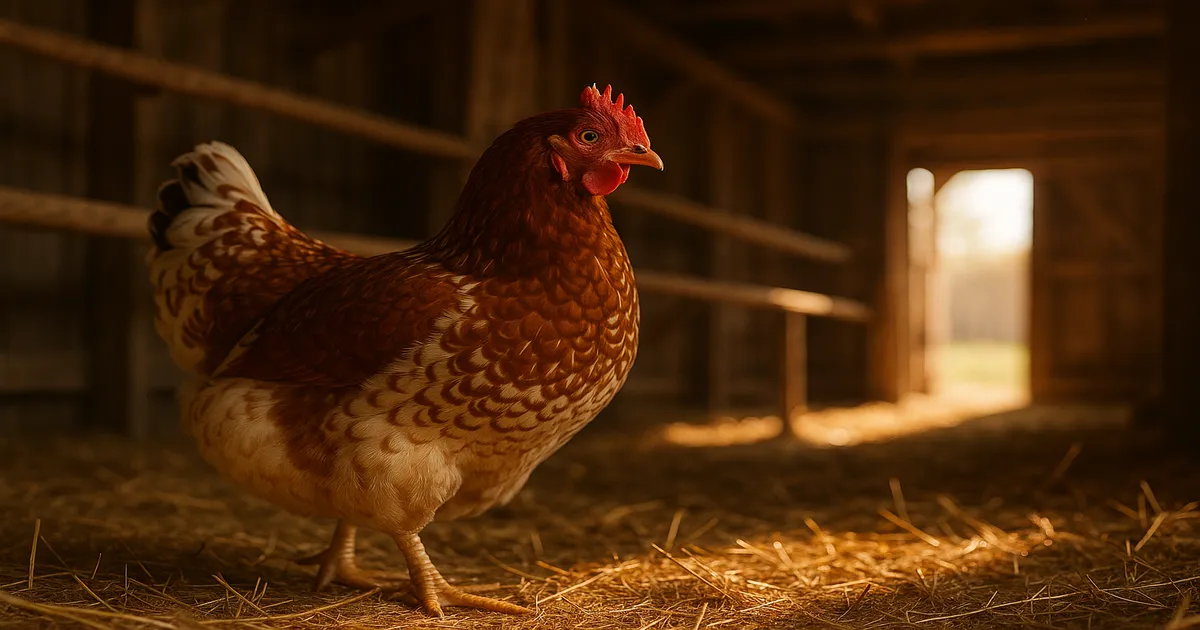
Quick Answer: Delaware cockerels reach processing weight in 16–20 weeks — faster than most heritage breeds — and yield 3.5–5 lbs of richly flavored, fine-grained meat with attractive yellow skin. They’re a genuine dual-purpose breed that also lays 200–280 large brown eggs per year, making them one of the best heritage options for homesteaders raising Delaware chickens for meat who want real value from every bird.
Raising Delaware chickens for meat puts a nearly forgotten American breed back to work doing exactly what it was designed to do. Developed in the 1940s as a commercial broiler before Cornish Cross hybrids swept the industry, the Delaware never lost its broad-breasted, quick-maturing body. Today it’s listed as “Recovering” on The Livestock Conservancy’s conservation priority list — meaning your flock genuinely helps preserve a piece of American agricultural history.
Are Delaware Chickens Good for Meat?
Delaware Chicken at a Glance
| Trait | Detail |
|---|---|
| Processing age | 16–20 weeks |
| Live weight at processing | 5–7 lbs |
| Dressed weight | 3.5–5 lbs |
| Skin color | Yellow |
| Flavor | Rich, fine-grained, complex |
| Eggs per year | 200–280 large brown eggs |
| Conservation status | Recovering (The Livestock Conservancy) |
How Delaware Compares to Cornish Cross for Meat
| Trait | Delaware | Cornish Cross |
|---|---|---|
| Time to processing | 16–20 weeks | 8–10 weeks |
| Dressed weight | 3.5–5 lbs | 5–8 lbs |
| Flavor | Rich, complex | Mild |
| Hardiness | Excellent | Poor |
| Foraging ability | Strong | Minimal |
| Self-sustaining flock | Yes | No |
Cornish Cross wins on speed and size. Delaware wins on flavor, resilience, and the ability to maintain a closed, self-sustaining flock — which matters a great deal if you want to stop buying chicks every season.
Delaware Chicken Breed Background and Meat Conformation
Origin and History: America’s Forgotten Broiler
George Ellis of Delaware developed the breed in the 1940s by crossing Barred Plymouth Rock roosters with New Hampshire Red hens, then selectively breeding the sport offspring that showed a distinctive white-with-black-barring pattern. The resulting bird was fast-growing, broad-breasted, and well-suited to commercial broiler production. The APA recognized the breed in 1952 — just as Cornish Cross hybrids were beginning their industry takeover. Within a decade, Delaware had nearly disappeared from commercial farms entirely.
Physical Traits That Make Delaware Ideal for Meat
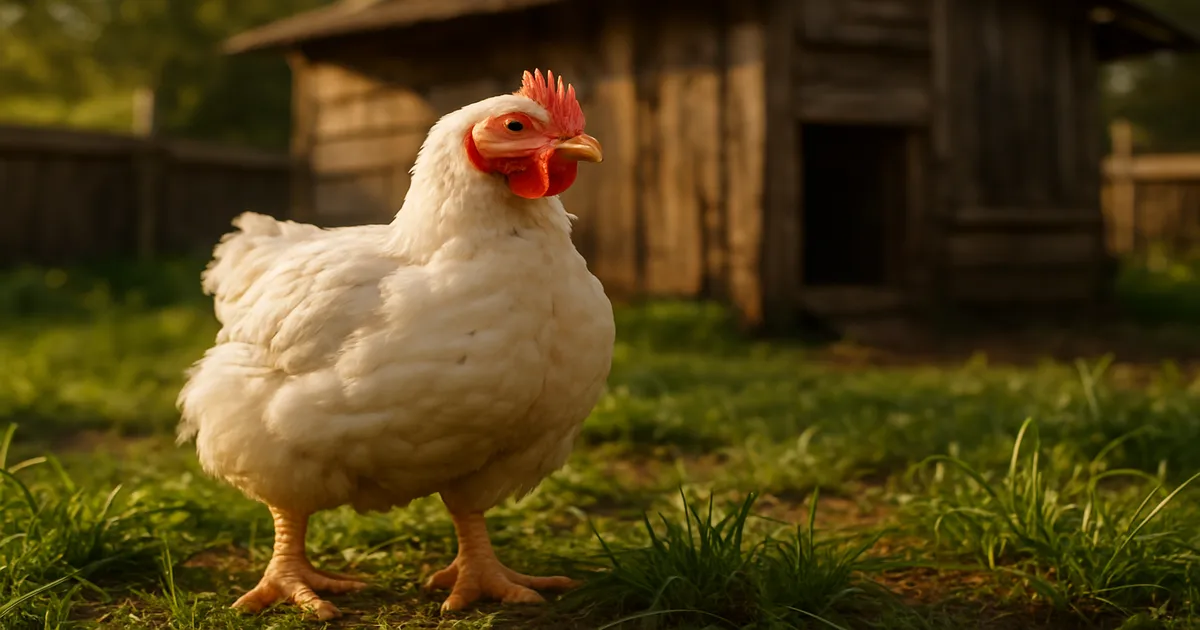
The Delaware’s body is built for the table. It carries a broad breast, deep keel, and substantial muscle mass for a heritage bird — traits inherited directly from its broiler-focused breeding program.
- Live weight: Roosters reach 8–8.5 lbs; hens 6–6.5 lbs at maturity
- Cockerels at processing (16–20 weeks): 5–7 lbs live weight
- Plumage: White with black stippling on hackles, tail, and wing tips — minimal dark pin feathers for a clean dress-out
- Skin: Yellow, which is the standard American market preference
- Shanks: Clean yellow legs, no feathering
Temperament and Manageability on the Homestead
Delaware roosters are notably calm compared to many heritage breeds — an underrated quality when you’re handling birds regularly. The whole flock tends to be curious and active without being flighty or hard to contain. They adapt equally well to confinement or free-range setups, integrate smoothly into mixed flocks, and handle both cold and heat reasonably well, though they do best in temperate climates with access to shade in summer.
Raising Delaware Chickens for Meat: Processing Timeline and Yield
When to Process Delaware Cockerels
Process cockerels between 16 and 20 weeks. That’s significantly faster than most heritage breeds, which typically need 24–28 weeks to reach comparable size. Waiting past 20 weeks is fine, but the meat becomes firmer and feed conversion efficiency drops — so unless you want a stewing bird, stick to that window.
Expected Dressed Weight and Yield
A cockerel carrying 5–7 lbs live weight will dress out to roughly 3.5–5 lbs — a respectable roasting bird. The muscle-to-bone ratio is better than many heritage breeds, meaning more usable meat per carcass. Light plumage also means you won’t spend extra time pulling dark pin feathers, which is a genuine time-saver at processing.
Flavor Profile: What Makes Delaware Meat Different
Delaware meat has a fine-grained texture and a depth of flavor that Cornish Cross simply doesn’t deliver. Fat is distributed more evenly throughout the muscle, which translates to moister, more flavorful roasting without constant basting. If you’ve only ever eaten commercially raised chicken, a pasture-raised Delaware will taste like a different species entirely.
Coop and Housing Setup for Delaware Meat Birds
Space Requirements
Delaware is a large breed and needs room to move. Crowding increases stress, suppresses growth, and raises disease risk — especially in a batch of cockerels being raised to processing weight.
- Indoor coop: 4 sq ft per bird minimum; 6–8 sq ft is better for full-grown birds
- Outdoor run: 10 sq ft per bird minimum
- Free-range: At least 250 sq ft per bird of rotated pasture
Roost Bars, Nesting Boxes, and Ventilation
Use rough-cut 2×4 lumber laid flat (wide side up) for roost bars — this lets large birds cover their feet with breast feathers in cold weather. Set roosts at 18–36 inches high; don’t go above 4 feet or heavy birds risk leg injuries on landing. Allow 10–12 inches of linear roost space per bird.
For laying hens, use 14×14-inch nesting boxes — the standard 12×12 box is a tight fit for Delaware’s frame. Mount them 18–24 inches off the floor, below roost level, and add a curtain or partial cover to encourage laying and reduce egg eating.
Ventilation matters more than insulation in most climates. Provide at least 1 sq ft of ventilation per 10 sq ft of floor space, positioned high on the walls near the roofline so moisture and ammonia escape without creating drafts at bird level. If you can smell ammonia when you walk in, it’s already too high.
Delaware handles cold well, but in climates that regularly drop below 0°F (-18°C), a low-wattage flat panel radiant heater is far safer than a heat lamp.
Predator-Proofing Your Delaware Flock
- Hardware cloth: ½-inch mesh on all openings — chicken wire keeps chickens in but won’t stop a determined predator
- Apron skirt: Extend hardware cloth 12–18 inches horizontally outward from the run base to stop diggers
- Latches: Use carabiner clips or two-step latches — raccoons open simple hook-and-eye hardware with ease
- Doors: Solid wood or metal, not wire panels. An automatic coop door adds a reliable nightly close without a trip outside
Feeding Delaware Chickens for Maximum Meat Production
Feed Program by Life Stage
| Life Stage | Feed Type | Protein % | Age |
|---|---|---|---|
| Chicks | Starter (medicated or unmedicated) | 20–22% | 0–8 weeks |
| Growers | Grower/Broiler | 18–20% | 8–16 weeks |
| Finisher | Finisher | 16–18% | 16–20 weeks |
Switching to a lower-protein finisher in the last four weeks isn’t just cost-saving — it actively improves fat marbling and flavor in the final meat. Don’t skip this step.
Protein, Grit, and Fermented Feed
Keep cockerels on 20–22% protein through 12 weeks to maximize muscle development. The key amino acids are methionine and lysine — quality commercial feeds include both, but free-range birds on sparse pasture may benefit from a protein supplement. Never use layer feed for meat birds. The elevated calcium (3–4% in layer feed versus 1% in grower) is formulated for laying hens and can cause kidney damage in birds that aren’t actively producing eggs.
Fermented feed is worth the small extra effort. It improves nutrient bioavailability and birds typically consume 20–25% less feed by weight — savings that add up quickly across a batch of cockerels. (Ohio Stoneware 1-Gallon Crock)
For treats, stick to the 10% rule — no more than 10% of total diet. Best options for meat birds include dried mealworms, black soldier fly larvae, and leafy greens. Provide insoluble grit free-choice any time birds eat anything beyond commercial pellets. Confined birds need it offered separately; free-range birds on natural soil usually self-source enough.
What Never to Feed Delaware Meat Chickens
Avocado (persin toxicity), chocolate, raw beans (phytohaemagglutinin), onions in large amounts, and moldy or heavily salted foods are all off the list. Citrus in large quantities can also cause digestive upset, though the occasional small amount is generally fine.
Health Management for Delaware Meat Birds
Marek’s Disease Vaccination
Marek’s is a herpesvirus with no cure that can survive in feather dander in your environment for years. Get chicks vaccinated at the hatchery on day one, or vaccinate subcutaneously yourself (0.2 ml per chick) if you’re hatching your own. Delaware has moderate natural resistance compared to some production breeds, but that’s not a reason to skip vaccination.
Coccidiosis
Coccidiosis hits hardest in chicks aged 3–6 weeks. Watch for bloody or watery droppings, lethargy, hunched posture, and pale combs. Treat with amprolium (Corid) at 2 teaspoons of 9.6% liquid solution per gallon of drinking water for 5–7 days. If you used medicated starter, discontinue it at least 2 weeks before processing as a precaution, even though amprolium has no established US withdrawal period.
Mites, Lice, and Bumblefoot
Check birds monthly — part the feathers around the vent, under the wings, and at the base of the neck. Red mites hide in coop cracks during the day, so inspect roost bars and wall seams at night with a flashlight. Treat with 0.25% permethrin dust or spray applied to birds and coop; repeat in 7–10 days to break the life cycle. A dedicated dust bath stocked with food-grade diatomaceous earth helps with ongoing prevention.
Bumblefoot — a Staphylococcus aureus infection entering through footpad cuts — is more common in heavier breeds kept on wire floors or rough surfaces. Catch it at Grade 1–2 and treatment is straightforward: Epsom salt soaks (1 cup per gallon of warm water) for 10–15 minutes daily, followed by Vetericyn or plain Neosporin and a vet wrap bandage. Grade 3–5 cases require surgical debridement. Prevention is easier — keep roost surfaces smooth and avoid wire flooring.
Delaware as a Dual-Purpose Breed: Eggs Plus Meat
Delaware hens lay 200–280 large brown eggs per year, putting them in the same tier as Rhode Island Reds and Sussex. Pullets start laying at 18–22 weeks — earlier than most heritage breeds. Supplemental lighting (14–16 hours per day) will maintain 70–80% of peak production through winter.
Delaware hens also go broody 1–2 times per year, usually in spring. For a meat producer, that’s a genuine asset. A broody Delaware is a reliable, low-cost hatcher and mother — she’ll handle incubation and brooding without electricity or a heat lamp, raising the next batch of cockerels for you. Keep one good rooster for fertilized eggs and let the math work in your favor.
A closed Delaware flock — one rooster, several hens, and a broody cycle each spring — can produce a steady supply of cockerels for the table and replacement pullets for laying without buying chicks every year. The economics improve significantly once you eliminate the annual hatchery order, and you’re simultaneously helping recover a breed that nearly disappeared from American farms entirely.
Frequently Asked Questions About Raising Delaware Chickens for Meat
How long does it take to raise a Delaware chicken for meat?
Delaware cockerels reach processing weight in 16–20 weeks. That’s faster than most heritage breeds (24–28 weeks), though slower than Cornish Cross hybrids (8–10 weeks). Processing at 16–18 weeks gives a more tender bird; waiting to 20 weeks adds a bit more size and body fat.
How much does a Delaware chicken weigh at processing?
A Delaware cockerel processed at 16–20 weeks typically weighs 5–7 lbs live and yields 3.5–5 lbs dressed. Mature roosters reach 8–8.5 lbs, but most homesteaders process cockerels well before full maturity for better feed efficiency and tenderness.
Are Delaware chickens better for meat or eggs?
Delaware genuinely excels at both. Hens produce 200–280 large brown eggs per year, while cockerels provide 3.5–5 lbs of richly flavored meat at 16–20 weeks. If you can only keep one breed and want solid performance from both the table and the nest box, Delaware is one of the best options available.
How do Delaware chickens compare to Cornish Cross for meat?
Cornish Cross grows faster (8–10 weeks) and produces a larger carcass. Delaware takes longer but delivers significantly better flavor, handles free-range conditions well, and can reproduce naturally — meaning you can maintain a self-sustaining flock. Delaware is the better choice for homesteaders who prioritize flavor, hardiness, and long-term sustainability over raw production speed.
What do you feed Delaware chickens raised for meat?
Start with a 20–22% protein chick starter for the first 8 weeks, transition to an 18–20% grower through week 16, then finish on 16–18% finisher feed until processing. Never use layer feed for meat birds — the elevated calcium can damage kidneys. Offer insoluble grit free-choice, keep treats under 10% of the diet, and consider fermented feed for improved nutrient absorption and lower feed costs.