Quick Answer: Yes, Sussex chickens are an excellent choice for beginners. They’re calm, friendly, and reliable layers of 200–250 large brown eggs per year — and their forgiving, adaptable nature makes them one of the most beginner-friendly dual-purpose breeds you can raise.
If you’ve been wondering whether Sussex chickens are good for beginners, the short answer is a confident yes. They consistently rank among the top starter breeds for good reason: gentle temperament, steady egg production, and a robust constitution that tolerates the inevitable rookie mistakes without drama.
Are Sussex Chickens Good for Beginners? Here’s What You Need to Know
Sussex check nearly every box a first-time chicken keeper needs. They’re docile enough for kids to handle, productive enough to keep the egg basket full, and hardy enough to thrive in a range of climates. Their dual-purpose nature is a genuine bonus — if you hatch eggs and end up with cockerels, they can be raised for the table rather than becoming a problem you don’t know how to solve.
A few more reasons they work so well for new keepers:
- Reliable production: 4–5 eggs per week, 200–250 per year at peak
- Wide availability: Most hatcheries stock Speckled and Light Sussex year-round
- Calm and curious: They adapt to confinement or free-ranging without stress
- Dual-purpose value: Hens lay well; excess males can go in the freezer
Potential Drawbacks to Consider Before You Buy
No breed is perfect. Sussex have a single comb, which makes them mildly susceptible to frostbite in extreme cold — something you’ll need to manage in northern climates. Their gentle nature also means they can end up at the bottom of the pecking order if you mix them with assertive breeds like Rhode Island Reds or Dominiques. If you’re building a mixed flock, pair them with other calm breeds like Buff Orpingtons or Plymouth Rocks.
Sussex Chicken Breed Overview
History and Origin
The Sussex breed has roots stretching back centuries in southeastern England, and it was formally standardized in 1902. The American Poultry Association (APA) recognizes it as a standard breed. Originally prized as a table bird in London markets, Sussex hens eventually earned equal respect as backyard layers — a reputation they’ve held ever since.
Note on the “Roman conquest” claim: Some sources repeat the story that Sussex chickens date to AD 43, but there is no reliable archaeological evidence linking modern Sussex to Roman-era poultry. The breed’s documented history begins in 19th-century England, so that origin claim has been removed here.
Recognized Varieties: Speckled, Light, and Beyond
The APA recognizes eight Sussex varieties: Speckled, Light, Red, Buff, Brown, Silver, White, and the rare Coronation. For beginners, Speckled and Light Sussex are the most practical choices — easiest to find, most thoroughly documented, and widely available from reputable hatcheries.
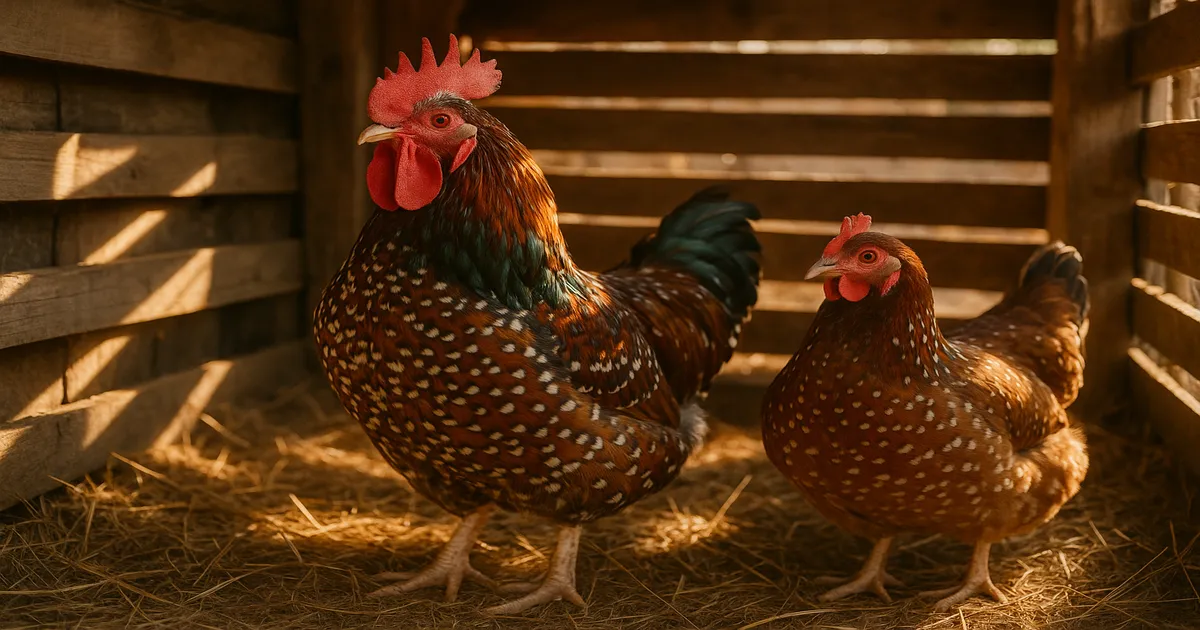
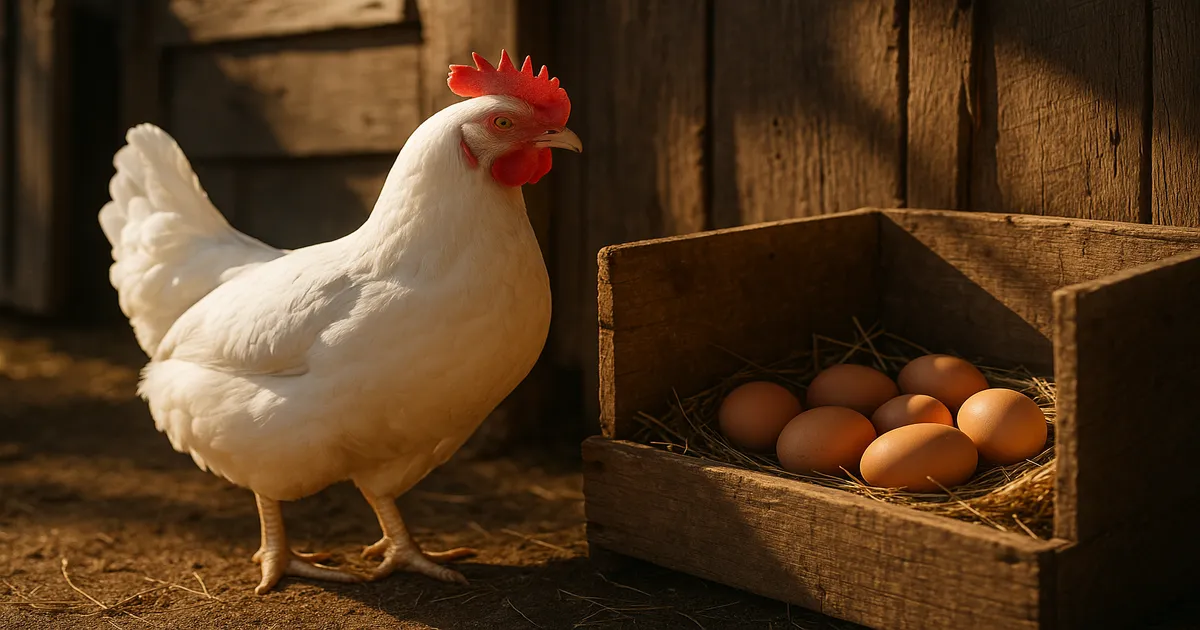
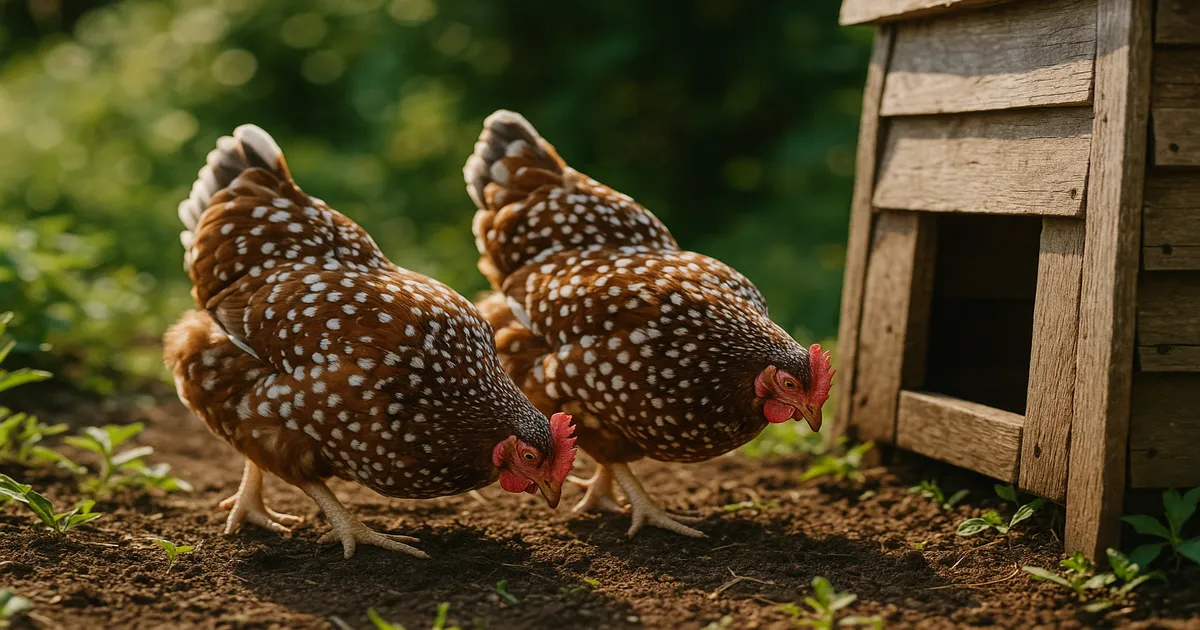
The Speckled Sussex is a showstopper: mahogany feathers tipped in white with black bars, and the speckles actually intensify after each molt. The Light Sussex is crisp and striking — white body with black-laced neck hackles and a black tail.
Size, Weight, and Physical Characteristics
Sussex are large, rectangular birds with a broad, flat back and heavy bone structure. Hens typically weigh 7–8 lbs; roosters around 9 lbs. Bantam versions exist at roughly one-quarter the standard size. They’re clean-legged with red single combs and medium wattles, and they carry themselves with an upright, alert posture. Expect a lifespan of 5–8 years, with peak laying concentrated in the first 2–4 years.
Sussex Chicken Temperament: What Beginners Can Expect
Docility, Handling, and Lap-Chicken Potential
Sussex are genuinely friendly birds. Handle them regularly from chick-hood and many will become lap chickens — the kind that follow you around the yard expecting treats and attention. They’re low-aggression, curious, and slow to spook, which makes routine flock management far less stressful for a new keeper.
How Sussex Behave in a Mixed Flock
They get along well with other calm breeds, but their gentle disposition is a double-edged sword in mixed flocks. More assertive breeds will push them off the feeder and claim the best roost spots. If you want to mix breeds, choose similarly laid-back companions — Buff Orpingtons, Australorps, and Faverolles all make good flock mates.
Noise Levels and Suitability for Suburban Flocks
Sussex are moderate in the noise department. You’ll hear the classic egg song and the occasional alarm call, but they’re nowhere near as vocal as Leghorns. Hens are a reasonable choice for suburban backyards where noise is a concern, and Sussex roosters tend to be calmer than average — though individual temperament always varies.
Egg Production: How Many Eggs Do Sussex Chickens Lay?
Annual Output, Egg Size, and Shell Color
A healthy Sussex hen lays 4–5 eggs per week, adding up to 200–250 eggs per year during her first two seasons. Eggs are large to extra-large — typically 60–70 grams each — which is generous for a dual-purpose breed. Expect light brown to tinted (sometimes pinkish-cream) shells. Calm, low-stress hens consistently produce thicker shells, and Sussex temperament works in their favor here.
When Do Sussex Pullets Start Laying?
Most Sussex pullets reach point of lay at 18–20 weeks — earlier than heavy breeds like Brahmas or Cochins, which often don’t lay until 28–32 weeks. Spring-hatched pullets may start as early as 16–17 weeks, while fall or winter-hatched pullets may hold off until daylight increases in spring.
Winter Laying and Seasonal Variations
Sussex don’t shut down completely in winter, but expect a 20–30% production drop when daylight falls below 14 hours. Adding 14–16 hours of artificial light in the coop — a simple LED bulb at hen’s-eye level on a timer — keeps production near summer levels. Also plan for a 6–10 week laying halt during the annual molt, which typically runs September through November in the Northern Hemisphere.
Broodiness: What to Expect and How to Manage It
Sussex have a moderate broody tendency. Speckled Sussex go broody more readily than Light Sussex, and when they do, they’re calm, attentive mothers — useful if you want to hatch eggs naturally. To break a broody hen, place her in a wire-bottom crate with food and water for 3–5 days. The airflow cools the brood patch and resets her hormonal cycle.
Coop and Housing Requirements for Sussex Chickens
How Much Space Do Sussex Need?
The general minimum is 4 sq ft per bird indoors, but for large-bodied Sussex, 5–6 sq ft per bird is a better target. A flock of six hens needs at least 30 sq ft of floor space. Overcrowding is the fastest route to feather pecking, disease spread, and stressed hens that stop laying.
For the outdoor run, plan for 10 sq ft per bird at minimum — though 15–20 sq ft per bird is ideal for active foragers like Sussex. Free-range access improves feather condition, egg yolk quality, and overall flock health.
Roost Bars, Nesting Boxes, and Ventilation
Roost bars should sit 18–24 inches off the floor — low enough to prevent leg injuries on landing, high enough to feel secure. Use bars 2–4 inches wide so hens can flatten their feet and cover them with breast feathers in cold weather. Allow 10–12 inches of linear space per bird, with bars spaced 12–18 inches apart horizontally. Avoid narrow round dowels — they cause foot fatigue and contribute to bumblefoot over time.
Nesting boxes for large Sussex hens should be at least 12 × 12 inches, though 14 × 14 inches is more comfortable. Aim for one box per 3–4 hens. Position boxes lower than roost bars to discourage hens from sleeping (and pooping) in them, and keep 3–4 inches of clean straw or pine shavings in each box, refreshed weekly.
Ventilation is non-negotiable. Provide at least 1 sq ft of ventilation per 10 sq ft of coop floor space, positioned high on the walls near the roofline so ammonia and moisture escape without creating drafts at bird level. A dry, well-ventilated coop at 20°F is genuinely healthier than a warm, humid, sealed one at 40°F. If you add supplemental heat, use a flat-panel radiant heater rather than a heat lamp to reduce fire risk.
Predator-Proofing Your Sussex Flock
- Use ½-inch hardware cloth on all openings — chicken wire keeps chickens in but won’t stop a determined raccoon
- Extend hardware cloth 12 inches outward along the ground (or bury it 12 inches deep) to deter diggers
- Install carabiner clips or padlocks on all doors — raccoons open simple latches easily
- Cover the run roof for hawk protection
- An automatic coop door closes at dusk and opens at dawn, protecting your flock on the nights you forget
Feeding Sussex Chickens: A Beginner’s Nutrition Guide
What to Feed at Each Stage
- Starter (0–8 weeks): 18–20% protein crumble; medicated starter is recommended for unvaccinated chicks to prevent coccidiosis
- Grower (8–18 weeks): 15–16% protein; transition off starter to avoid excess protein before laying begins
- Layer (18+ weeks): 16–18% protein pellet or crumble with added calcium; switch when your first pullet lays her first egg
Calcium, Grit, and Treats
Offer crushed oyster shell free-choice in a separate container once hens are laying. They’ll self-regulate intake based on need. Don’t mix it into feed for the whole flock — excess calcium can stress the kidneys of pullets and roosters who don’t need it.
Any chicken eating something other than commercial feed also needs insoluble grit to help the gizzard grind food. Offer granite or flint grit free-choice in a separate container — chick-sized for birds under 8 weeks, standard poultry grit for adults.
Stick to the 10% rule for treats: no more than 10% of the daily diet. Good options include leafy greens, berries, watermelon, cooked eggs, plain oats, and squash. Scratch grains are a treat, not a feed replacement — high in carbs, low in protein.
Foods to avoid entirely:
- Avocado (persin is toxic to chickens)
- Onion and garlic in large amounts (can cause hemolytic anemia)
- Raw or green potato (solanine)
- Chocolate, heavily salted foods, and moldy feed
Daily Feed Amounts and Feeder Setup
Adult Sussex hens eat approximately 4–5 oz (113–142 grams) of layer feed per day. A flock of six consumes roughly 1.5–2 lbs daily. Use a hanging feeder or treadle feeder positioned at the birds’ back height to minimize waste and discourage rodents. Keep fresh water available at all times — hens drink 0.5–1 pint per day, more in summer. In winter, a heated waterer prevents freezing and keeps your flock hydrated when it matters most.
Health Care and Common Sussex Chicken Issues
Marek’s Disease
Marek’s disease is a highly contagious herpesvirus that causes paralysis, tumors, and death — primarily in birds 4–30 weeks old. Vaccination at hatch is your best defense. Most hatcheries offer it for roughly $0.15–0.25 per chick; always request it. The virus persists in feather dander and coop dust for years, so even birds on a “clean” property are at risk when new birds are introduced.
Coccidiosis
Coccidiosis is caused by intestinal parasites (Eimeria spp.) and hits hardest in chicks 3–6 weeks old. Watch for bloody or watery droppings, lethargy, hunched posture, and pale combs. Medicated starter feed containing amprolium is your front-line prevention. For active infections, treat with Corid (amprolium) dissolved in drinking water — follow label dosing instructions carefully, as concentration varies by product formulation. Dry bedding is your single most effective prevention tool.
Mites and Lice
Check your flock monthly, especially around the vent area. Signs of infestation include feather damage, pale combs from anemia, restlessness, and reduced laying. Treat with permethrin dust or spray (0.25% concentration) applied to birds and the coop, then repeat in 7–10 days to catch newly hatched eggs. Providing a dry dust bath area — filled with loose dirt, sand, or wood ash — gives hens a natural way to keep external parasites in check.
Bumblefoot
Bumblefoot is a Staphylococcus infection that enters through a cut or abrasion on the foot pad, forming a hard black scab and abscess underneath. It’s common in heavy breeds that jump from excessive heights or stand on thin, hard roost bars. Prevent it by keeping roost bars 18–24 inches high and 2–4 inches wide. Mild cases respond well to daily Epsom salt soaks (1 cup per gallon of warm water) and clean bandaging. Severe swelling or deep abscesses warrant a vet visit.
Frostbite on Single Combs
Sussex single combs are vulnerable in hard freezes. Apply a thin layer of petroleum jelly to the comb and wattles before temperatures drop below 20°F (-7°C). More importantly, keep the coop dry and well-ventilated — moisture is the real culprit, not cold air alone. Wide roost bars help hens cover their feet with their breast feathers overnight, protecting toes as well.
Frequently Asked Questions: Sussex Chickens for Beginners
Are Sussex chickens good for beginners with no experience?
Yes — Sussex are one of the most forgiving breeds for first-time keepers. They’re calm, easy to handle, and adaptable to both confinement and free-ranging. Their steady egg production and hardy constitution mean small management mistakes are unlikely to cause serious problems.
How many eggs do Sussex chickens lay per year?
Sussex hens lay approximately 200–250 eggs per year at peak production — around 4–5 large, light-brown eggs per week. Production naturally declines by about 15–20% each year after the first two seasons, and hens halt laying for 6–10 weeks during the annual molt.
Do Sussex chickens do well in cold climates?
Sussex handle cold weather well overall, but their single combs are susceptible to frostbite in extreme temperatures. Keep the coop dry and well-ventilated, apply petroleum jelly to combs before hard freezes, and use wide roost bars so hens can cover their feet while sleeping. With these precautions, Sussex thrive in most cold-climate regions.
What is the difference between Speckled Sussex and Light Sussex?
Both are beginner-friendly, but they differ in appearance and broody tendency. Speckled Sussex have mahogany feathers tipped in white with black bars — a pattern that intensifies after each molt. Light Sussex are white-bodied with black-laced neck hackles and a black tail. Speckled Sussex go broody more readily; Light Sussex tend to be more consistent layers year-round.
Can Sussex chickens be kept in a small backyard?
Yes, with proper planning. Sussex adapt reasonably well to confinement, provided you give them 5–6 sq ft per bird indoors and at least 10 sq ft per bird in the run. A small flock of 3–4 hens works well in a compact suburban backyard, and their moderate noise level makes them a more neighbor-friendly choice than louder breeds like Leghorns.