Quick Answer: Leghorn chickens are the gold standard for white egg production, laying 250–320 eggs per year with remarkable feed efficiency. They’re fast-maturing, excellent foragers, and the backbone of the commercial egg industry worldwide. They’re not meat birds, and they won’t sit in your lap — but if maximum egg output is your goal, nothing beats a Leghorn.
If you’ve ever wondered what are Leghorn chickens good for, the short answer is eggs — and a lot of them. Few breeds match the Leghorn’s output, efficiency, or early maturity. That’s exactly why the White Leghorn dominates commercial egg production and remains a top pick for backyard keepers who want a full egg basket year-round.
Leghorn Chicken Breed Overview: Origins and Appearance
Where Do Leghorn Chickens Come From?
Leghorns trace their roots to Livorno, Italy — “Livorno” anglicized to “Leghorn” — and were first imported to the United States around 1828. The American Poultry Association recognized the breed in 1874. Decades of selective breeding in the U.S. and Britain then refined them into the egg-laying machines we know today. They belong to the Mediterranean class, alongside the Ancona, Minorca, and Blue Andalusian — a group known for productivity over temperament.
The breed also has a surprisingly prominent place in pop culture: Foghorn Leghorn, the boisterous cartoon rooster, made the name a household word long before most people knew what a real Leghorn looked like.
What Do Leghorn Chickens Look Like?
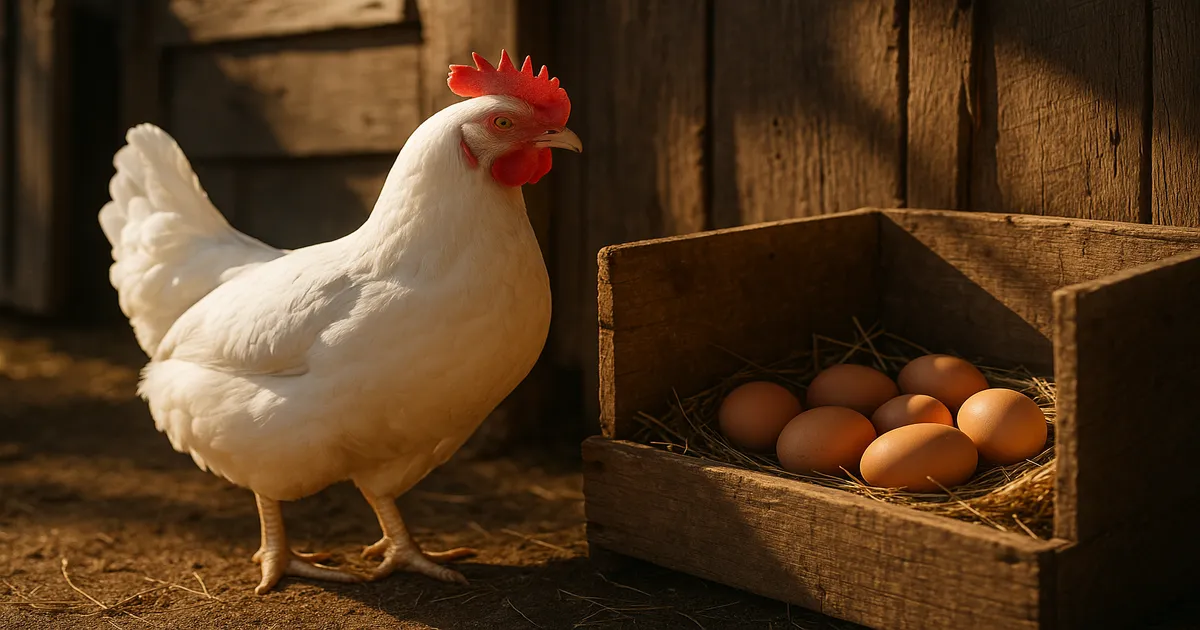
Leghorns are lean, angular birds with a wedge-shaped body built for efficiency, not bulk. Hens average 4–4.5 lbs and roosters 5.5–6 lbs — noticeably lighter than dual-purpose breeds. Their plumage is tight and close-fitting, their shanks are yellow, and their skin is light.
The most distinctive feature is the large, bright red single comb. On hens, it flops to one side — a hallmark of the breed. White earlobes are another key identifier and a reliable genetic signal of white egg production in Mediterranean breeds.
Leghorn Color Varieties and Comb Types
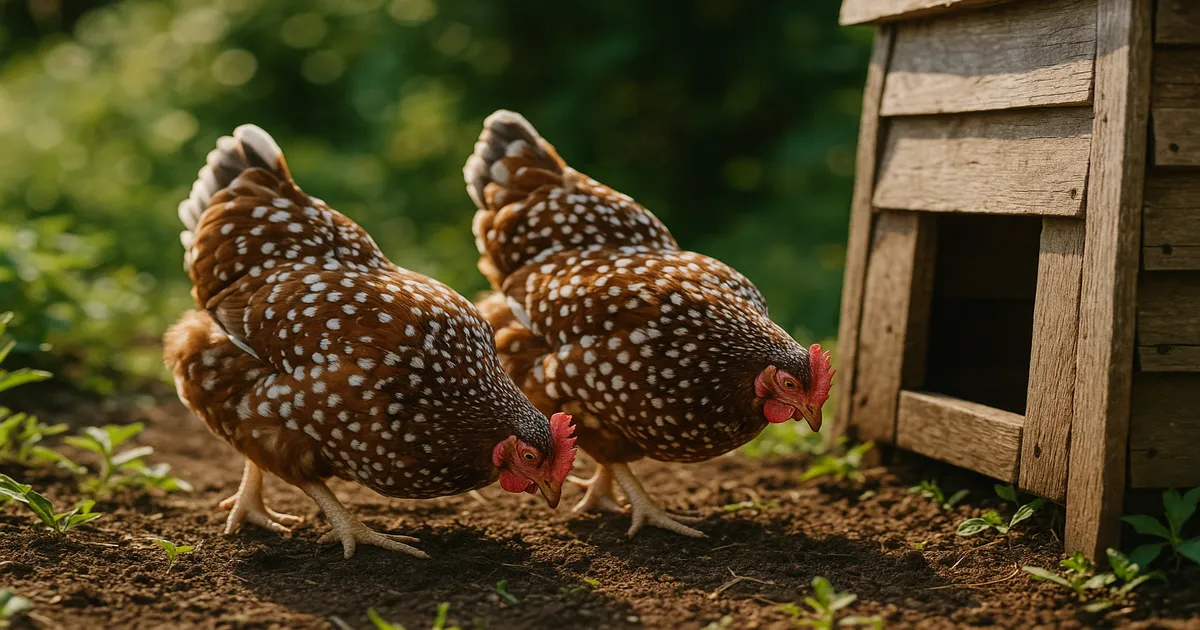
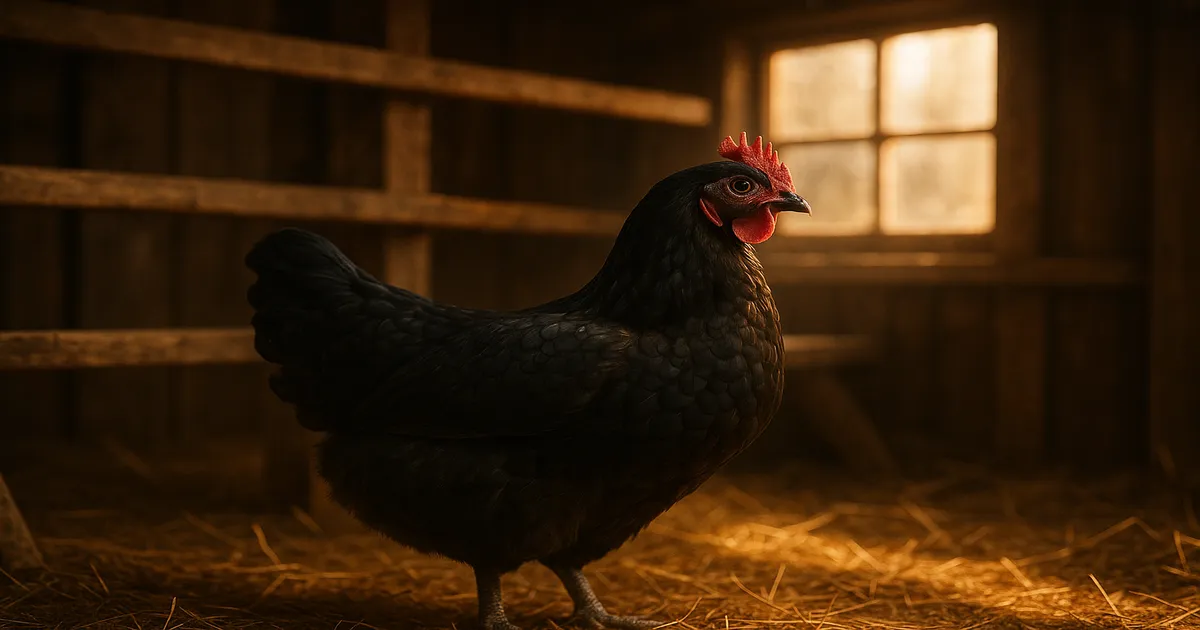
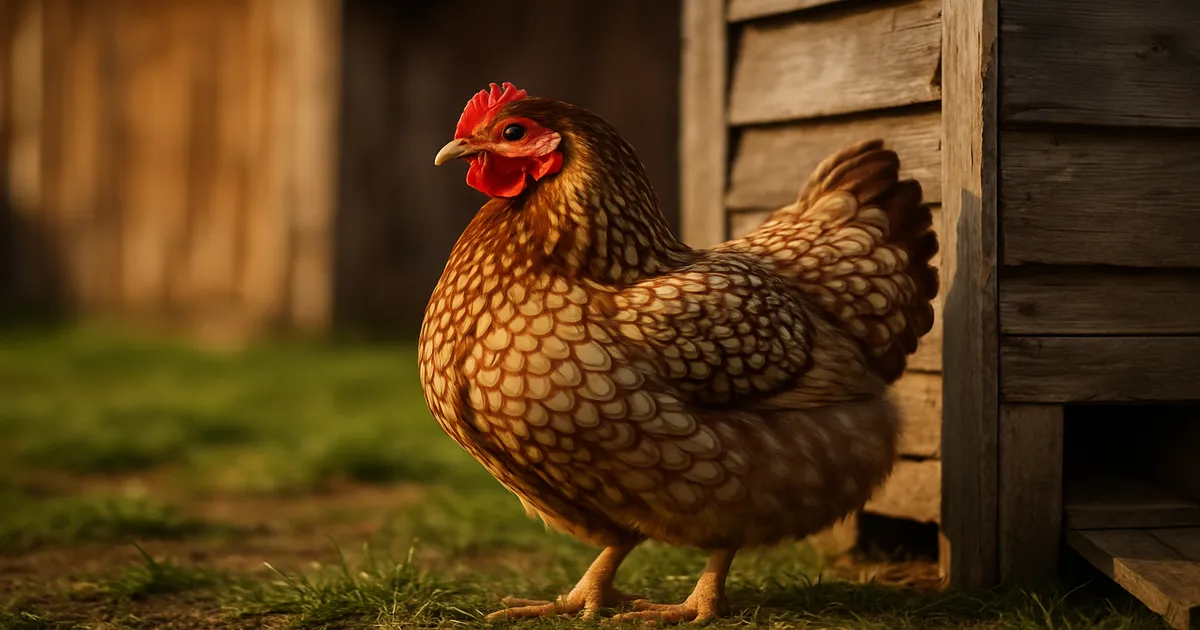
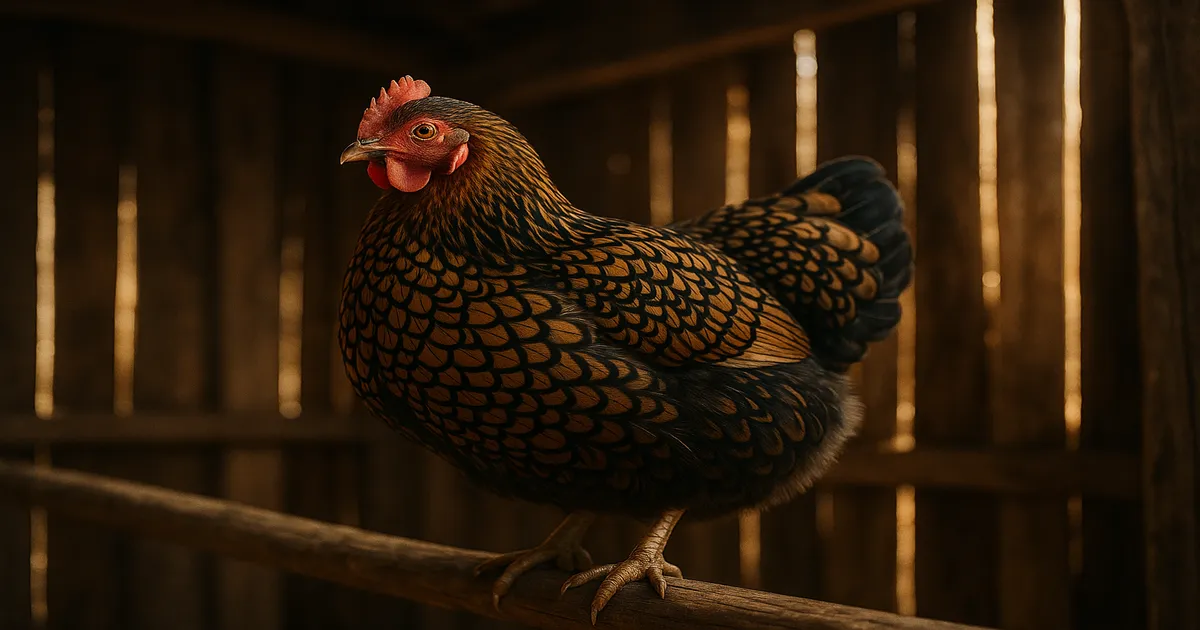
The APA recognizes 12 color varieties, including White, Brown, Black, Buff, Silver, Red, Barred, and Exchequer, among others. The White Leghorn is by far the most common and the variety used in commercial production. Rose Comb Leghorn varieties also exist and are the smarter choice for cold climates, since the reduced comb profile dramatically lowers frostbite risk. Bantam Leghorns are recognized as well and popular in show circles, with hens producing around 3–4 small white eggs per week.
Leghorn Chicken Temperament: What to Expect
Are Leghorn Chickens Friendly?
“Friendly” isn’t quite the right word for a Leghorn. Alert, active, and independent are more accurate. They’re not aggressive toward people, but they’re not interested in being handled either. Most Leghorns will tolerate humans without issue — they just won’t seek you out for attention the way a Buff Orpington or Australorp might. They’re assertive in the pecking order and hold their own confidently in a mixed flock. Roosters can be territorial but are generally manageable.
Are Leghorns Good for Families with Children?
Leghorns aren’t the best choice if your priority is a bird kids can pick up and carry around. Their skittish, flighty nature makes them frustrating for children who want an interactive pet. For families who want both eggs and a handleable bird, a Rhode Island Red or Plymouth Rock is a better fit.
How Well Do Leghorns Handle Confinement?
They can adapt to a confined run if you give them adequate space, but they’re happiest with room to roam. Free-range access brings out the best in them — they’re tireless foragers and will cover a surprising amount of ground. Crowd them, and you’ll see feather-pecking and stress behaviors faster than you would with calmer breeds. Plan for at least 10 sq ft per bird in the run, and more if you can manage it.
What Are Leghorn Chickens Good For? Egg Production
Annual and Weekly Egg Output
Leghorns reliably produce 250–320 eggs per year — roughly 5–6 eggs per week per hen. Commercial strains exceed 300 eggs per year consistently, and even hatchery-quality White Leghorns outperform most heritage breeds. Heritage or show-line Leghorns tend to run 15–20% lower than production lines, so your source matters if maximum output is the goal.
Egg Size, Color, and Shell Quality
Eggs are bright white, large to extra-large (24–27 oz per dozen), and known for thick, strong shells. Yolk color depends on diet — free-ranging hens on pasture produce noticeably richer, deeper orange yolks than confined birds on straight commercial feed.
When Do Leghorn Pullets Start Laying?
Leghorns are early maturers. Most pullets begin laying at 16–18 weeks, with some high-production strains starting as early as 15 weeks. Compare that to Buff Orpingtons or Plymouth Rocks, which typically don’t start until 20–24 weeks — a meaningful head start on your egg supply.
Do Leghorn Chickens Go Broody?
Rarely. Leghorns are one of the least broody breeds available, a trait specifically selected for by the commercial egg industry because broody hens stop laying. If you want to hatch eggs, you’ll need a reliable incubator (Brinsea Ovation 28 EX) or a broody hen from another breed. Silkies, Buff Orpingtons, and Cochins are all dependable choices for hatching eggs under.
How Long Do Leghorns Keep Laying?
Peak production runs through years one and two, then declines roughly 10–15% per year. A three-year-old Leghorn might still lay 180–220 eggs annually — respectable by any standard. Commercial operations replace flocks at 72–80 weeks, but backyard keepers routinely keep hens 5–7 years. Adding 14–16 hours of light daily with a timer and a 40–60 watt equivalent LED bulb will maintain near-peak production through winter, when natural day length drops below the threshold hens need to lay consistently.
Coop and Housing Requirements for Leghorn Chickens
How Much Space Do Leghorns Need?
Plan for a minimum of 4 sq ft per bird inside the coop and at least 10 sq ft per bird in the run — though Leghorns’ active temperament means they’ll benefit from more run space than the minimum whenever possible. More room equals fewer behavior problems.
Roost Bar Setup for Active Fliers
Leghorns are capable fliers and enjoy roosting high. Set bars at 3–5 feet off the ground, with a lower intermediate perch for young birds still finding their footing. Aim for 10–12 linear inches of roost space per bird. Use 1.5–2 inch diameter rounded wood or a 2×4 laid flat — the flat surface lets birds fully cover their toes with their breast feathers on cold nights, which matters when temperatures drop.
Nesting Box Ratios and Placement
One nesting box per 3–4 hens is the right ratio for a prolific laying breed. Standard 12×12×12-inch boxes work well for Leghorn-sized hens. Place boxes lower than the roost bars — if boxes are the highest spot in the coop, birds will sleep in them, fouling the nest and producing dirty eggs.
Ventilation, Temperature, and Cold Hardiness
Good ventilation is non-negotiable. Install vents near the roofline at roughly 1 sq ft of ventilation per 10 sq ft of floor space, positioned above roost height to avoid drafts at bird level. Leghorns are moderately cold-hardy, but their large single combs are vulnerable to frostbite below 20°F (-7°C). If you’re in a cold climate, Rose Comb varieties are the practical choice. Leghorns actually struggle more in heat above 85–90°F (29–32°C) than in moderate cold, so shade and airflow matter in summer too.
Predator-Proofing Your Leghorn Coop
- Use ½-inch galvanized hardware cloth on all openings — standard chicken wire has gaps large enough for weasels and young predators
- Bury an apron 12 inches deep, or lay a 12-inch horizontal skirt on the ground to stop diggers
- Replace simple hook-and-eye latches with carabiner clips or two-step latches — raccoons routinely defeat basic hardware
- An automatic coop door (ChickenGuard Extreme) on a timer or light sensor closes the coop at dusk without relying on you to remember
Feeding Leghorn Chickens for Maximum Egg Production
What Feed Do Leghorn Chickens Need?
Feed a layer pellet or crumble with 15–18% crude protein. Pellets produce less waste than crumbles — worth considering if feed costs are a concern. During molt or peak production, bumping up to an 18% protein feed supports feather regrowth and sustained laying. A quality bagged layer feed (Purina Layena Plus Omega-3) takes the guesswork out of hitting those targets.
Calcium Supplementation for Strong Eggshells
Laying hens need 4–5 grams of calcium per day. Most layer feeds supply enough, but offering oyster shell free-choice in a separate container lets hens self-regulate and fill any gaps. Crushed eggshells baked at 250°F (121°C) for 10 minutes work as a free alternative. Signs of calcium deficiency include thin or soft-shelled eggs and a drop in production.
Safe Treats and Foods to Avoid
Treats should stay under 10% of daily intake — more than that dilutes the protein and calcium hens need for consistent laying.
Safe treats:
- Dried or live mealworms (limit to 1 tablespoon per bird per day)
- Leafy greens — kale, spinach, lettuce
- Watermelon, cucumber, berries
- Scrambled eggs during molt (excellent protein boost)
- Pumpkin seeds
Foods to avoid:
- Avocado (persin is toxic to poultry)
- Raw or dry beans (contain hemagglutinin, which is toxic)
- Onions and garlic in large amounts
- Chocolate, caffeine, alcohol
- Moldy or spoiled food of any kind
Daily Feed Amounts and Water Requirements
Each Leghorn hen consumes roughly 3.5–4 oz (100–115 grams) of feed per day — less than heavier breeds, which is a big part of what makes them so efficient. Their feed conversion ratio runs around 2 lbs of feed per dozen eggs, with commercial strains approaching 1.7–1.8 lbs per dozen.
Fresh water matters just as much as feed: plan on at least 0.5 liters per bird per day, scaling up to 1+ liter per bird in summer heat above 85°F (29°C). A clean nipple waterer or bell drinker keeps water fresh and reduces waste — rinse it daily. Always offer insoluble grit free-choice to any bird eating anything beyond commercial feed, since it’s essential for proper digestion.
Common Health Issues in Leghorn Chickens
Marek’s Disease: Prevention and Vaccination
Marek’s disease is a highly contagious herpesvirus that causes tumors, paralysis, and immune suppression. Vaccinate chicks at hatch — most hatcheries do this automatically, but confirm it when you order. There’s no cure, so prevention is everything. Quarantine any new birds for 30 days before introducing them to your flock; the virus spreads through feather dander and can persist in the environment for months.
Coccidiosis in Chicks and Young Pullets
Coccidiosis is the most common killer of young chicks, typically striking between 3–8 weeks of age. Watch for bloody or watery droppings, lethargy, and hunched posture. Start chicks on medicated feed containing amprolium, and treat active outbreaks with Corid (amprolium) dissolved in drinking water for 5–7 days. Do not use medicated feed if your chicks received a coccidiosis vaccine — the two work against each other.
Mites, Lice, and External Parasites
Check your birds monthly, focusing on the vent area, under the wings, and around the neck. Red mites hide in coop cracks during the day and feed on birds at night, so inspecting the coop itself matters as much as examining the birds. Treat infestations with permethrin dust or spray applied to both the birds and the coop, repeated in 7–10 days. A proper dust bathing area with loose dry soil or sand helps birds manage parasites naturally.
Bumblefoot: Causes, Treatment, and Prevention
Bumblefoot is a bacterial foot infection — typically Staphylococcus aureus — that starts with a small cut or abrasion on the foot pad. Look for a black scab on the bottom of the foot and lameness. Mild cases respond well to Epsom salt soaks (1 tablespoon per quart of warm water), followed by Vetericyn or dilute iodine and a vet wrap bandage. Smooth roost bars and clean, dry bedding are the best prevention. Leghorns’ lean build makes obesity-related bumblefoot uncommon, but rough landing surfaces are still a risk.
Respiratory Infections to Watch For
Mycoplasma gallisepticum (MG) and Infectious Bronchitis are the most common respiratory concerns in backyard flocks. Signs include sneezing, nasal discharge, rattling breath, and drops in egg production. Aspergillosis — a fungal infection from moldy bedding — causes gasping and weight loss and is entirely preventable with dry, clean litter. Keep new birds quarantined, don’t share equipment between flocks, and change clothes after visiting other people’s chickens. Good ventilation and dry bedding prevent most respiratory problems before they start.
Are Leghorn Chickens Right for You?
Strengths at a Glance
- Unmatched egg production — 250–320 eggs per year, with commercial strains reliably over 300
- Early maturity — laying at 16–18 weeks vs. 20–24 weeks for heavy breeds
- Feed efficiency — roughly 2 lbs of feed per dozen eggs; they eat less than dual-purpose breeds
- Excellent foragers — free-range access can meaningfully reduce your feed bill
- Wide color variety — 12 APA-recognized varieties beyond the standard White
Drawbacks to Consider Before You Buy
- Flighty and hard to handle — not suitable for keepers who want a tame, handleable bird
- Noisy — the egg song is enthusiastic, and roosters crow frequently
- Non-broody — you’ll need an incubator or a surrogate hen to hatch eggs
- Large comb frostbite risk — a real concern in climates with hard winters
- Poor meat yield — their lean frame makes them impractical as a dual-purpose bird
How Leghorns Compare to Other Laying Breeds
The Rhode Island Red lays 200–280 eggs per year, handles cold better, and is significantly friendlier — a solid choice if you want strong production without the flightiness. The Buff Orpington lays fewer eggs (150–200 per year) but is docile, goes broody reliably, and makes an excellent pet — the opposite end of the spectrum from a Leghorn. The ISA Brown matches Leghorn production numbers with a calmer temperament, though their intensive production pace tends to shorten their laying lifespan compared to heritage-type birds.
If egg output is your primary goal and you’re not concerned with having a cuddly flock, the Leghorn wins. If you want a balance of production, temperament, and versatility, Rhode Island Reds or Plymouth Rocks are worth a look first.
Frequently Asked Questions About Leghorn Chickens
What are Leghorn chickens good for?
Leghorns are bred almost exclusively for egg production. They lay 250–320 white eggs per year with exceptional feed efficiency, making them the top choice for backyard keepers and commercial operations alike. They’re poor meat birds and not particularly friendly, but for sheer egg output, no common breed beats them.
How many eggs do Leghorn chickens lay per year?
Leghorn chickens lay 250–320 eggs per year, or roughly 5–6 eggs per week. Commercial White Leghorn strains are bred to exceed 300 eggs per year reliably. Production peaks in years one and two, then declines approximately 10–15% annually.
Are Leghorn chickens good for beginners?
Leghorns can work for beginners focused on egg production, but they’re not the most forgiving breed. Their flighty temperament and noise level can catch new keepers off guard. Beginners who also want a friendly, handleable bird might find a Rhode Island Red or Plymouth Rock easier to start with.
Are Leghorn chickens good in cold climates?
Standard single-comb Leghorns are moderately cold-hardy but vulnerable to comb frostbite below 20°F (-7°C). For cold climates, Rose Comb Leghorn varieties are the smarter choice — the smaller comb profile dramatically reduces frostbite risk. Proper coop ventilation, dry bedding, and draft-free housing matter more than supplemental heat for any Leghorn in winter.
What is the difference between White Leghorn and Brown Leghorn chickens?
White Leghorns are the dominant commercial variety, bred intensively for maximum egg production — typically 280–320 eggs per year. Brown Leghorns are a heritage variety with similar laying ability but slightly lower commercial output. Both lay white eggs. Brown Leghorns are often considered hardier and less highly strung than the most intensively selected White strains.