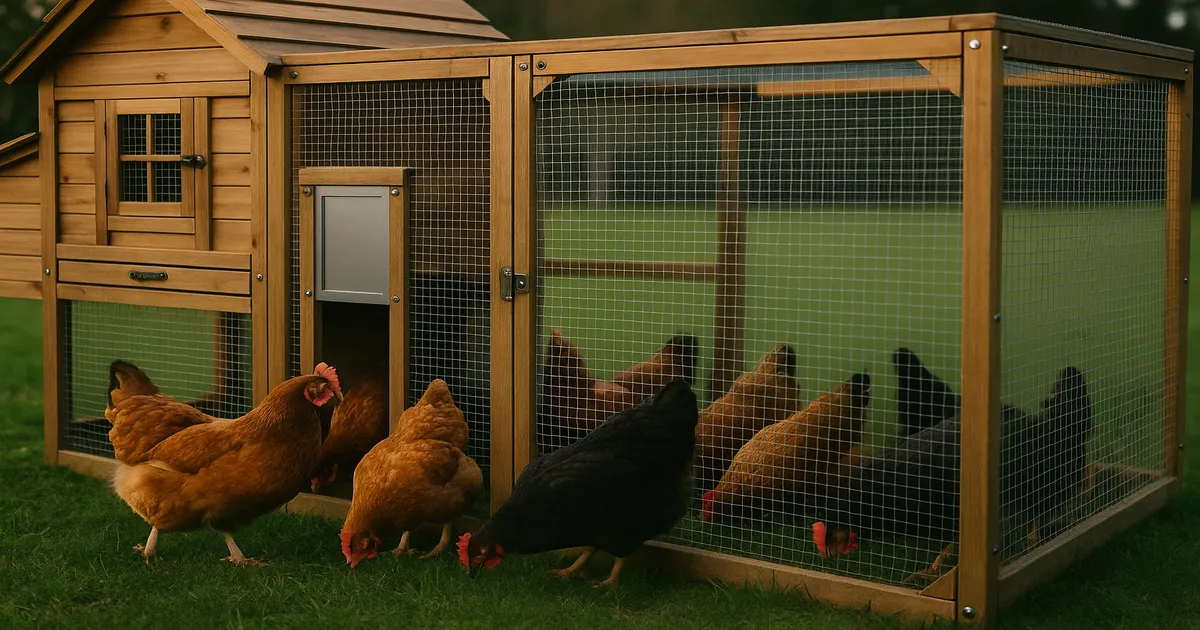
Quick Answer: The best predator protection for a chicken coop combines half-inch hardware cloth on all openings, an L-shaped wire apron to stop diggers, raccoon-proof double-action latches, and an automatic pop-hole door. Layer these together and you cover the vast majority of predator threats — aerial, ground, and nocturnal.
Losing birds to a predator is devastating. Beyond the heartbreak, a single attack can suppress egg production for weeks while your flock recovers from the stress. Predator-proofing your coop isn’t just about welfare — it’s a productivity issue too. This guide covers every layer of the best predator protection for a chicken coop, from wire mesh and latches to guardian animals and seasonal maintenance.
Know Your Enemy: Common Chicken Predators and How They Attack
Understanding how a predator gets in is the first step to keeping them out.
Ground Predators: Foxes, Coyotes, Dogs, and Raccoons
Foxes and coyotes are most active at dawn and dusk. They’re strong, persistent diggers that will work the same spot night after night. Dogs — including neighborhood pets — attack opportunistically and can do enormous damage in minutes. Raccoons are the sneakiest of this group: primarily nocturnal, remarkably dexterous, and capable of manipulating a simple slide bolt in seconds.
Digging Predators: Skunks, Mink, and Weasels
Weasels and mink are small enough to slip through a 1-inch gap and relentless once they scent your flock. Skunks are slower but persistent diggers, usually after eggs and chicks rather than adult birds. Any gap larger than half an inch is a potential entry point — which is the entire case for hardware cloth and meticulous gap-sealing.
Aerial Predators: Hawks, Owls, and Eagles
Red-tailed hawks hunt during daylight; great horned owls take birds at night and in the early morning hours. Both will target birds in open runs. A roofed or netted run is your primary defense against aerial strikes.
Small Infiltrators: Rats and Snakes
Rats squeeze through half-inch gaps and are drawn to feed as much as to birds. They’ll kill chicks and steal eggs, and their presence attracts larger predators. Snakes enter through small openings and go after eggs and young birds — another reason every vent and gap needs proper coverage.
Hardware Cloth vs. Chicken Wire: Choosing the Right Mesh
This is the single most important material decision you’ll make for your coop.
Why Chicken Wire Fails Against Predators
Chicken wire is designed to keep chickens in, not predators out. The hexagonal openings are too large to stop weasels, rats, or snakes. It rusts quickly, and a determined raccoon or fox can tear through it with their hands and teeth. Don’t use it anywhere a predator can reach.
Half-Inch Hardware Cloth: The Gold Standard
Half-inch, 19-gauge (or heavier) galvanized hardware cloth belongs on every opening — windows, vents, pop holes, and run walls. The rigid welded squares hold their shape under pressure and resist rust far better than chicken wire. It costs more, but it’s the only mesh worth using.
Gauge Guide: Which Wire Strength Do You Need?
| Gauge | Wire Diameter | Best Use |
|---|---|---|
| 16-gauge | Thicker, very rigid | Run walls, high-predator-pressure areas |
| 19-gauge | Standard rigid | Coop vents, windows, apron |
| 23-gauge | Lighter, flexible | Not recommended for predator-proofing |
Use 16-gauge for your run perimeter if you have significant fox or coyote pressure. Nineteen-gauge handles most backyard situations.
Where to Use Each Type Around the Coop and Run
- Coop vents and windows: ½-inch, 19-gauge minimum
- Run walls: ½-inch, 16- or 19-gauge
- Run roof: ½-inch hardware cloth or 14-gauge welded wire
- Apron/digger barrier: ½-inch, 19-gauge
- Pop-hole cover (when door is open): ½-inch, 19-gauge frame
Structural Predator-Proofing: Walls, Roof, Floor, and Foundation
Solid Walls: Wood, Plywood, and OSB
Walls should be solid — plywood or OSB sheathing, not just wire. Wire-only walls flex, rust, and eventually fail. Solid walls also provide insulation and wind protection, which keeps your flock calmer and healthier through the winter.
Roof Security: Solid Beats Wire Mesh
A solid roof — metal roofing, shingles, or heavy corrugated panels — is far more secure than wire mesh alone. Hawks have been known to work at mesh roofs over time, and mesh provides no barrier against raccoons that climb and reach down through it. A solid roof also protects your flock from rain and summer heat.
Sealing Gaps: The Half-Inch Rule
Walk the entire coop and seal every gap larger than half an inch. Pay special attention to roofline corners where walls meet the roof — these are common entry points. Use hardware cloth, wood filler, or expanding foam covered with a hard surface to close anything suspicious.
Hardware Cloth Apron vs. Buried Wire: Stopping Diggers
The L-shaped hardware cloth apron is the most practical anti-dig solution for most backyard keepers. Extend the wire 12 inches straight down from the base of the coop wall, then bend it 90 degrees and run it 12 inches outward along the ground. Predators dig at the base of a barrier and hit the horizontal section before they can get underneath.
If you prefer to bury wire vertically, go at least 12 inches deep — foxes can dig 10–12 inches, so 18 inches is safer in high-pressure areas.
Concrete Foundations and Raised Floors
A poured concrete foundation eliminates digging threats entirely. It’s the most secure option available, though also the most expensive and labor-intensive. If you’re building a permanent coop in a high-predator area, it’s worth serious consideration.
If your coop sits on a raised platform, line the floor cavity with ½-inch hardware cloth before adding bedding. This prevents predators from pushing up through the floor from below — a surprisingly common attack vector for weasels and mink.
Doors, Latches, and Automatic Coop Openers
Raccoon-Proof Latches: Barrel Bolts, Carabiners, and Padlocks
Raccoons can open a simple slide bolt. The minimum standard is a barrel bolt plus a carabiner through the latch — two separate actions that raccoons can’t reliably solve together. In high-pressure areas, add a padlock. It costs you five extra seconds; it stops a raccoon cold.
Pop-Hole Door Sizing for Different Breeds
- Bantams: 10×10 inches
- Standard breeds (Rhode Island Red, Barred Rock, Australorp): 12×14 inches
- Large breeds (Brahma, Cochin, Jersey Giant): 14×16 inches
Automatic Chicken Coop Doors: Light-Sensor vs. Timer Models
An automatic pop-hole door is one of the best investments you can make for predator protection. It closes at dusk without relying on you to remember — eliminating the single most common cause of predator loss: a door left open overnight.
Light-sensor models respond to actual ambient light and adjust automatically as the seasons change. Timer models are simpler and cheaper but need manual adjustment several times a year. Both come in solar, battery, and mains-powered versions. Solar is convenient but may underperform in consistently cloudy climates, so battery backup is worth having regardless of which type you choose.
Egg Collection and Human-Access Doors
Egg collection doors are one of the most commonly overlooked entry points. Any exterior door needs the same double-latch treatment as your main access door — a carabiner minimum, a padlock in high-pressure areas. For the main human-access door, use solid wood or metal with a proper frame, barrel bolts at both the top and bottom, and a carabiner on the primary latch. Check the frame regularly for warping that could open up gaps.
Run and Free-Range Area Protection
Fully Enclosed Runs: Roofing Options
A roofed run is non-negotiable if you have hawk pressure or climbing predators like raccoons. Hardware cloth or 14-gauge welded wire works well overhead. Plan for a minimum of 10 sq ft per bird inside the run — though 25–50 sq ft per bird significantly reduces stress and gives birds more room to scatter if something does breach the perimeter.
Electric Fencing for Free-Ranging Flocks
Electric poultry netting is one of the most effective perimeter deterrents available. A single shock teaches foxes and coyotes to avoid the area entirely. Run at least two strands — one at nose height for foxes (about 6 inches) and one at 12 inches. Keep grass trimmed under the wire to prevent grounding. (Premier 1 PoultryNet Plus)
Overhead Netting for Open Free-Range Areas
If your birds range over a large area, overhead hawk netting provides meaningful daytime protection without fully enclosing the space. It won’t stop a great horned owl hunting at night — that’s why birds must be locked in at dusk — but it significantly reduces daytime aerial strikes.
Guardian Animals: Dogs, Geese, and Guinea Fowl
A well-trained livestock guardian dog is the most comprehensive live deterrent available — patrolling, deterring, and confronting predators around the clock. Geese and guinea fowl serve as alert systems, raising the alarm when anything unusual approaches. Guinea fowl are remarkably effective early-warning birds, though their noise can test the patience of close neighbors.
Motion-Activated Deterrents
Motion-activated lights startle nocturnal predators and alert you to activity. Sprinkler deterrents work well for persistent daytime visitors like foxes. These are supplementary tools — they support your structural defenses but don’t replace them.
Breed Vulnerability and Flock Composition
Breeds That Evade Predators More Successfully
Some breeds are simply better at keeping themselves alive. The Leghorn, Egyptian Fayoumi, Ancona, and Buckeye are fast, alert, and highly aware of their surroundings. They spot aerial threats quickly and are difficult to catch. If you free-range in a high-predator area, these breeds give you a meaningful survival edge.
Docile and Heavy Breeds That Need Extra Structural Protection
Buff Orpingtons, Cochins, Silkies, and Brahmas are calm, slow, and largely indifferent to threats. A Silkie weighs just 2–3 lbs, has limited flight ability, and is entirely dependent on the coop and run you build for it. These breeds demand your best structural work — they won’t save themselves.
Crested Breeds: Special Considerations
Polish chickens and other heavily crested breeds have significantly restricted vision due to their head feathering. They are high-risk in any free-range or open-run situation. If you keep Polish, a fully enclosed, roofed run is not optional — it’s essential.
The Role of a Rooster in Flock Defense
A good rooster watches the sky, sounds the alarm, and will physically confront small predators. A large-breed rooster — a Rhode Island Red or Buckeye at 8–9 lbs — can deter weasels, small hawks, and rats. He won’t stop a fox, but he buys the hens time to scatter and reach cover. In many backyard flocks, a rooster is a genuinely useful part of the defense system.
Nighttime Routines and Ongoing Maintenance
Establishing a Secure Lockdown Routine
Every bird should be inside and the pop hole closed by full dark, every single night. An automatic door handles this without fail. Human routines slip — especially on weekends and during travel. If you’re closing up manually, build it into a non-negotiable evening habit.
Monthly Coop Inspection Checklist
- Check for new gaps or cracks in walls and roofline corners
- Test every latch — do they still require two separate actions to open?
- Inspect hardware cloth for rust spots, tears, or loose staples
- Look for signs of digging around the perimeter (disturbed soil, scratch marks)
- Confirm the apron or buried wire hasn’t shifted or corroded
Reducing Attractants: Feed Storage and Rodent Control
Unsecured feed is a rodent magnet, and rodents attract larger predators. Store all feed in metal bins with locking lids and elevate feeders 6–8 inches off the ground to reduce spillage. If a bird dies, bag it immediately and dispose of it — don’t compost birds that died from unknown causes. A carcass is a beacon for every predator in the area.
Seasonal Threats: When Predator Pressure Peaks
Spring and autumn are your highest-risk periods. In spring, predators are feeding young and need more food. In autumn, they’re building fat reserves for winter. Increase your inspection frequency during these seasons and be especially consistent about lockdown routines.
Frequently Asked Questions About Predator Protection for Chicken Coops
What is the best wire mesh for a predator-proof chicken coop?
Half-inch, 19-gauge galvanized hardware cloth is the gold standard. It blocks weasels, rats, and snakes that squeeze through larger openings and holds up to pressure from raccoons and foxes. Never rely on chicken wire for predator protection — it’s designed to contain chickens, not stop predators, and can be torn or bent open by a determined animal.
How do I stop foxes and coyotes from digging under my coop?
The most practical solution is an L-shaped hardware cloth apron: run ½-inch hardware cloth 12 inches straight down from the base of the coop wall, then bend it 90 degrees outward along the ground for another 12 inches. When a fox digs at the base of the wall, it hits the horizontal section before reaching the coop. If you prefer buried wire, go at least 18 inches deep in high-pressure areas.
Are automatic chicken coop doors worth it?
Yes. The most common cause of predator loss is a pop-hole door left open overnight — automatic doors eliminate that risk entirely. Light-sensor models are the most reliable because they adjust to seasonal daylight changes automatically. The upfront cost pays for itself the first time it prevents a nighttime attack.
What predators attack chicken coops at night?
Raccoons, foxes, coyotes, mink, weasels, and great horned owls are the primary nighttime threats. Raccoons are especially dangerous because they’re intelligent enough to manipulate simple latches. Weasels and mink can enter through a 1-inch gap, making hardware cloth and thorough gap-sealing critical. Great horned owls will take birds from open runs in low-light conditions around dawn and dusk as well as during full darkness.
How do I make my chicken coop latch raccoon-proof?
Use a barrel bolt combined with a carabiner clipped through the latch. Raccoons can open a single slide bolt but struggle with two independent actions. For egg collection doors and any access point in a high-predator area, add a padlock as a third layer. Check all latches monthly — hardware loosens and corrodes over time, making it progressively easier to manipulate.