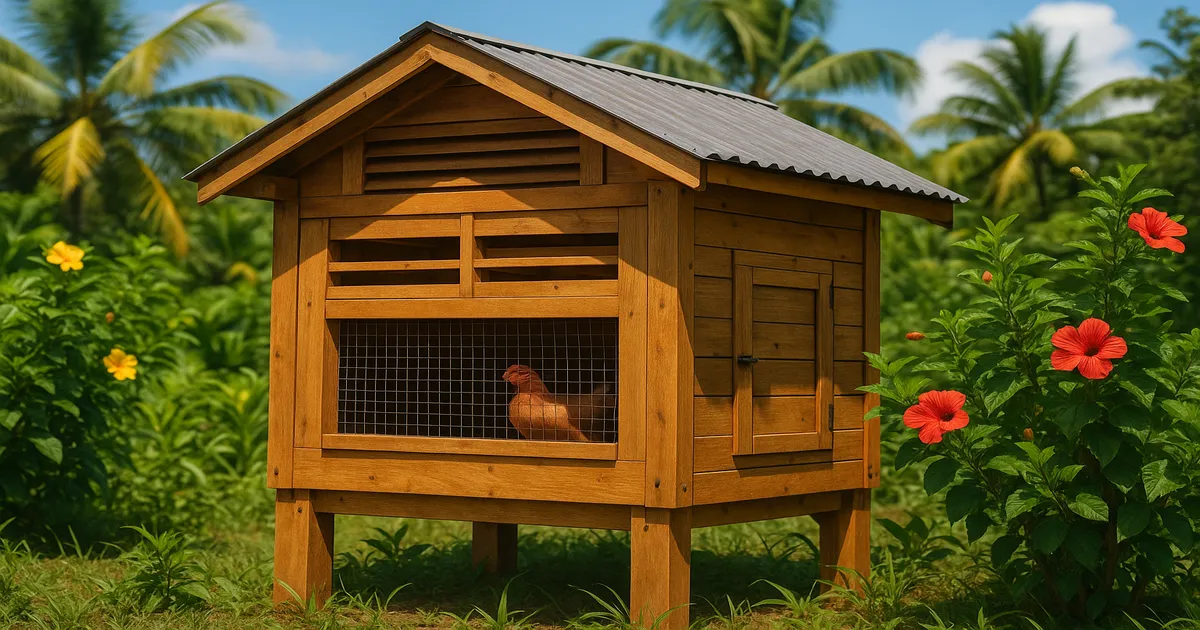
Quick Answer: Chicken coop design in Jamaica flips temperate-climate logic on its head. Instead of insulation and draft-proofing, you need maximum airflow, open-air mesh walls, deep roof overhangs, and hurricane-resistant anchoring. Get those three pillars right — ventilation, heat management, and storm resilience — and your flock will thrive year-round.
Building a chicken coop in Jamaica means working with a climate that is genuinely trying to cook your birds. Temperatures regularly hit 90–95°F (32–35°C), humidity sits at 60–90%, and hurricane season runs June through November. Chicken coop design in Jamaica therefore demands a completely different set of priorities than anything you’d find in a North American or European guide. This article walks you through every decision — from breed selection and coop orientation to roofing materials and storm shutters — with Jamaica’s specific conditions front and center.
Chicken Coop Design in Jamaica: Core Priorities
In temperate climates, coop design centers on keeping heat in. In Jamaica, your job is the exact opposite — getting heat out as fast as possible. Solid timber walls trap body heat and moisture, turning your coop into an oven. Open-air mesh walls, ridge venting, and an elevated floor work together to keep air moving continuously, which is the single most effective thing you can do for flock health.
Key design priorities:
- Ventilation first — replace solid walls with hardware cloth on 2–3 sides
- Hurricane anchoring — concrete footings, hurricane straps, and storm shutters are non-negotiable
- Heat management — roof overhangs, shade cloth, and smart coop orientation reduce internal temperatures dramatically
- Predator-proof mesh — use welded wire secured with screws and washers, not staples
Best Chicken Breeds for Jamaica’s Climate
Jamaican Creole (Village Chicken): The Gold Standard
The local creole or village chicken is the most heat-adapted, disease-resistant bird you can keep in Jamaica. These birds evolved in the Caribbean and have strong foraging instincts, moderate broodiness, and genuine hardiness against Newcastle Disease — a serious concern across the region. Egg production runs roughly 100–180 eggs per year, which is lower than commercial breeds, but their survivability and low input costs more than compensate for small-scale keepers.
Leghorn: Best Heat Tolerance Among Commercial Breeds
White Leghorns are the heat-tolerance champions among widely available breeds. Their large, upright single comb acts as a natural radiator, and their lightweight 4–5 lb frame generates less metabolic heat than heavier birds. Expect 250–300 white eggs per year. They’re active, flighty, and excellent free-rangers — a good fit for Jamaica’s year-round growing season.
Rhode Island Red: Reliable Layer for Jamaican Backyards
Rhode Island Reds handle Jamaica’s heat reasonably well and produce around 200–260 brown eggs per year. Brown eggs often command a slight price premium in Jamaican markets, making them a smart choice for anyone selling surplus. They’re calm, easy to manage, and one of the most widely kept breeds on the island for good reason.
Plymouth Rock and Sussex: Solid Dual-Purpose Options
Both breeds adapt reasonably well to warm climates and offer a balance of egg and meat production. Plymouth Rocks produce around 180–220 brown eggs per year, while Light Sussex lay 200–250 cream-tinted eggs. Neither is as heat-tolerant as the Leghorn, so shade and ventilation matter more for these birds.
Buff Orpington: Beginner-Friendly but Needs Extra Shade
Buff Orpingtons are docile and easy to handle, which makes them popular with first-time keepers. The problem in Jamaica is their heavy, fluffy body — at 7–8 lbs, they generate more metabolic heat and struggle more in peak summer temperatures. They’ll lay around 150–200 light brown eggs per year but need significantly more shade and airflow than lighter breeds.
Breeds to Avoid
Cornish Cross broilers are used in Jamaican commercial operations, but they’re a poor choice for backyard laying flocks. Bred for rapid weight gain rather than heat tolerance, they suffer serious health problems in tropical conditions.
Breed Comparison
| Breed | Eggs/Year | Heat Tolerance | Foraging Ability |
|---|---|---|---|
| Jamaican Creole | 100–180 | Excellent | Excellent |
| Leghorn | 250–300 | Excellent | Very Good |
| Rhode Island Red | 200–260 | Good | Good |
| Sussex | 200–250 | Good | Good |
| Plymouth Rock | 180–220 | Good | Moderate |
| Buff Orpington | 150–200 | Moderate | Moderate |
Coop Size and Space Requirements
How Much Space Do Jamaican Chickens Need?
The standard 4 sq ft per bird inside the coop is the absolute minimum — and in Jamaica’s heat, crowding makes things worse fast. Aim for 5–6 sq ft per bird indoors to reduce body-heat accumulation and slow the spread of respiratory disease in humid conditions.
For the outdoor run, the standard 10 sq ft per bird is a floor, not a target. Since Jamaican birds spend the vast majority of their day outside, 15–20 sq ft per bird is a much better goal. More space means less heat stress and slower disease transmission.
Free-Range Systems: Ideal for Jamaican Conditions
Free-ranging is arguably the best system for Jamaican backyard flocks. Birds can forage insects, grass, seeds, and fallen fruit year-round, typically reducing feed costs by 20–30%. The main trade-off is predator exposure, so a secure overnight coop remains essential — consider an automatic coop door to ensure the flock is locked in at dusk without fail.
Ventilation: The Most Critical Element of Jamaican Coop Design
Open-Air Walls and Ridge Venting
Replace solid timber walls on 2–3 sides with ½-inch or ¼-inch hardware cloth or welded wire mesh. This is the single biggest improvement you can make. Use 16-gauge welded wire for strength, and fasten it with screws and large washers — never staples, which pull free in high winds.
Extend roof eaves 2–3 feet beyond the walls. This generous overhang keeps driving rain out while the walls stay fully open. At the roof peak, install a continuous ridge vent so hot air rises and escapes naturally, drawing cooler air in from below. This stack-effect ventilation works around the clock without electricity.
Coop Orientation and Trade Winds
Position the coop so its long axis runs east–west, minimizing direct sun on the largest wall faces. Orient the open mesh sides to face north and south to catch Jamaica’s prevailing northeast trade winds. Fast-growing tropical plants — banana, breadfruit, and moringa — planted on the east and west sides provide shade and act as living windbreaks without blocking airflow through the coop.
Elevated Floor and Shade
Raise the coop 2–3 feet off the ground on posts or concrete piers. This allows air to circulate under the floor, reduces ground moisture, and makes life harder for predators and rodents. The shaded space underneath also gives birds a cool retreat during the hottest part of the day.
Over the run, install 70–80% shade cloth, which can drop ambient temperature by 10–15°F (5–8°C) — a meaningful difference when you’re already at 90°F+.
Ventilation Ratios
Temperate guides recommend 1 sq ft of ventilation per 10 sq ft of floor space. In Jamaica, that’s nowhere near enough. Target a 1:3 to 1:5 ratio — for every 3–5 sq ft of floor space, you want at least 1 sq ft of open ventilation area. With mesh walls on two or three sides, hitting this ratio is straightforward.
Hurricane-Resistant Construction for Jamaican Chicken Coops
Frame, Footings, and Fasteners
Use pressure-treated lumber (2×4 minimum) or steel angle iron for the frame — both resist Jamaica’s humidity-driven rot far better than untreated wood. Set every corner post into concrete footings at least 12 inches deep, using post anchors or J-bolts embedded before the concrete sets. A coop that isn’t anchored is a projectile in a Category 2 storm.
Install hurricane straps or clips at every rafter-to-wall-plate connection to resist roof uplift — the primary way roofs fail in high winds. Use structural screws throughout rather than nails, which work loose under repeated wind loading. Fasten all hardware cloth panels with screws and large fender washers spaced every 6–8 inches.
Storm Shutters
Design the coop from the start with removable wooden or corrugated metal shutters that bolt over the mesh panels before a storm. Store them flat nearby during fair weather. When a hurricane warning is issued, fitting the shutters takes minutes. Done right, the same coop gives you maximum ventilation for ten months of the year and maximum protection when it counts.
Roofing, Flooring, and Interior Fittings
Roofing Materials Compared
- Zinc/galvanized metal: Most common in Jamaica, affordable, and durable — but absorbs heat aggressively. Paint it white or silver to reflect solar radiation, and install a false ceiling of wood planks or shade cloth 12–18 inches below the metal to create an insulating air gap.
- Clay tile: Heavier and more expensive, but significantly cooler due to thermal mass — an excellent long-term choice.
- Thatch (palm or bamboo): Traditional, breathable, and surprisingly effective. Plan to replace every 3–5 years.
- Polycarbonate: Avoid clear panels entirely. If you use polycarbonate, choose opaque white or corrugated versions only.
Flooring Options
- Elevated wire floor: Best hygiene option — droppings fall through, reducing coccidiosis risk and ammonia buildup.
- Concrete: Easy to clean and disinfect; pair with a thin layer of bedding to protect feet.
- Deep litter: Can work in Jamaica, but only with exceptional ventilation — use 4–6 inches of sugarcane bagasse or dried leaves and manage it carefully to stay dry.
- Dirt floor: Avoid entirely — retains moisture, harbors parasites, and gives predators easy digging access.
Roost Bars and Nesting Boxes
Use smooth, rounded wood at 1.5–2 inches in diameter — never metal, which heats up dangerously in tropical sun. Allow 8–10 inches of linear roost space per hen and space bars 12–18 inches apart horizontally so birds don’t roost directly over each other.
Provide one nesting box per 3–4 hens, sized at minimum 12×12×12 inches (14×14×14 for larger breeds). Fill them with dry sugarcane bagasse or dried grass and change bedding weekly — mite infestations are a serious risk in Jamaica’s humidity, and clean, dry nesting material is your first line of defense.
Install a droppings board directly under the roost bars and scrape it at least twice weekly. Chickens produce roughly 65% of their daily droppings while roosting, so this one habit dramatically reduces ammonia levels. Apply agricultural lime (calcium hydroxide) to the floor periodically to neutralize moisture and kill pathogens — keep birds out during application and until the lime is fully dry.
Feeding and Water in Jamaica’s Heat
Feed Amounts and Local Ingredients
A standard laying hen eats 4–6 oz (110–170 g) of feed per day. In peak Jamaican heat, expect birds to eat 10–20% less. Shift feeding to cooler morning and evening hours when birds are more willing to eat.
Jamaica offers excellent locally sourced feed ingredients that reduce reliance on imported commercial feed:
- Corn (maize): The energy backbone — can make up 50–60% of a homemade ration
- Moringa leaves: 25–27% protein by dry weight; can replace 10–15% of protein supplement
- Fish meal: 60–65% protein; available from local fishing industry byproducts; use at 5–10% of ration
- Coconut/copra meal: A good energy source available island-wide; use at 10–15% of ration
- Soybean meal: Available through agricultural suppliers as the primary protein base
Layer feeds should contain 15–18% crude protein to support consistent egg production. If you’re mixing your own ration, aim for that range.
Water: The Most Important Input
Water matters more than feed in Jamaica’s heat. Provide a minimum of 500 ml per hen per day — and expect that to rise significantly during peak heat. (The commonly cited “1 litre per hen” figure is a useful upper-end target, but actual consumption varies by breed and temperature.) Change water twice daily to prevent algae and bacterial growth. A good-quality poultry waterer with a large reservoir keeps water cleaner for longer and reduces refill frequency. Place waterers in the shade and add ice blocks during extreme heat events.
Calcium and Treats
Laying hens need 4–5 grams of calcium daily for strong shells. Offer crushed oyster shell free-choice in a separate container — hens self-regulate their intake. Limestone grit is widely available in Jamaica and works as an affordable alternative. Thoroughly dried and crushed eggshells also work, but crush them finely so birds don’t associate them with whole eggs.
For heat relief, watermelon is hard to beat — 92% water content, genuinely helps prevent dehydration, and birds love it. Papaya is another excellent choice; the flesh provides vitamins and the seeds have natural anthelmintic properties, a real bonus in Jamaica’s parasite-friendly environment. Keep treats to no more than 10% of the daily diet.
Foods to Never Feed Your Flock
- Avocado (skin, pit, and flesh) — persin causes cardiac failure in birds
- Raw dry beans — contain toxic lectins; always cook beans before feeding
- Chocolate — theobromine is toxic to poultry
- Moldy food — mycotoxins are dangerous; when in doubt, throw it out
- Onions in large quantities — can cause hemolytic anemia
Heat-Stress Management for Jamaican Flocks
Recognising Heat Stress
Act quickly if you see any of these signs:
- Panting with open beak — the primary early warning
- Wings held away from the body — birds trying to dissipate heat
- Lethargy and reduced movement
- Pale combs and wattles
- Sudden drop in egg production
Emergency Cooling Steps
- Move birds to the shadiest, most ventilated area available
- Offer frozen watermelon or ice blocks in the waterer
- Add electrolyte supplements to drinking water to replace minerals lost through panting (Durvet Vitamins & Electrolytes)
- Set up a fine mist sprayer over the run — evaporative cooling can drop perceived temperature by several degrees
- Reduce flock density temporarily if birds are crowded
Frequently Asked Questions
Q: What is the best roofing material for a chicken coop in Jamaica? Clay tile is the coolest long-term option due to its thermal mass, but galvanized zinc is the most practical and widely available. If you use zinc, paint it white and add a false ceiling below it to cut radiant heat significantly.
Q: How do I protect my chicken coop from hurricanes in Jamaica? Set corner posts in concrete footings at least 12 inches deep, use hurricane straps at every rafter connection, fasten all mesh with screws and washers, and build removable storm shutters that bolt over the open wall panels before a storm.
Q: Can I keep chickens in Jamaica without a fully enclosed coop? You need a secure overnight enclosure to protect birds from predators — mongoose, rats, and dogs are serious threats. During the day, free-ranging or a large open run is ideal. The coop itself can have mesh walls on 2–3 sides rather than solid timber.
Q: How much water do chickens need in Jamaica’s heat? Plan for at least 500 ml per hen per day as a baseline, and more during heat waves. Change water twice daily to keep it fresh and algae-free. Shade the waterer and add ice during extreme heat.
Q: Which chicken breed is best for a small backyard flock in Jamaica? The Jamaican Creole (village chicken) is the top choice for resilience and low input costs. If you want higher egg production, White Leghorns are the best heat-tolerant commercial breed available on the island.