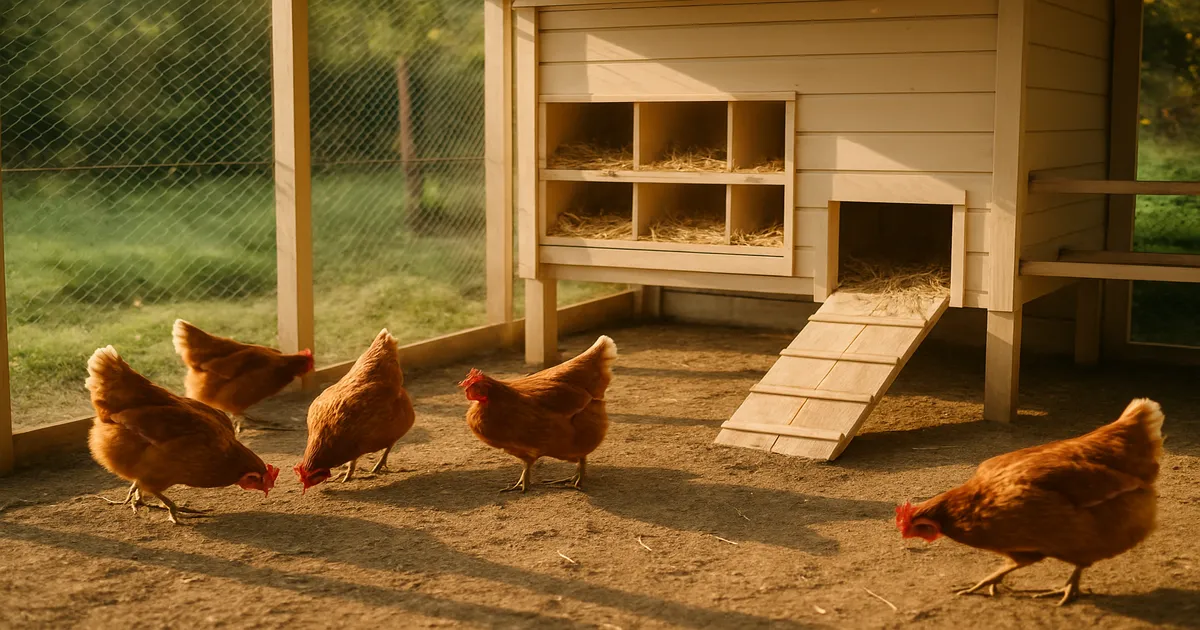
Quick Answer: Flies breed in wet manure, spilled feed, and damp bedding — the three things every chicken coop produces in abundance. Controlling them takes a three-pronged approach: eliminate breeding sites through sanitation, design your coop to stay dry and well-ventilated, and deploy active deterrents to knock down the adults that get through. Nail all three layers and fly pressure drops dramatically, even in the peak of summer.
Figuring out how to keep flies out of your chicken coop is one of those problems that starts small and escalates fast. A few flies on a Monday can become thousands by the following weekend. That’s not an exaggeration — a single female House Fly (Musca domestica) lays 75–150 eggs per batch, and larvae can hatch in as little as 8–12 hours when manure temperatures hit 80°F (27°C). The 65–90°F (18–32°C) range that makes summer pleasant for backyard flocks is also peak fly-breeding season. This guide walks through every control layer — from coop design to breed-specific risks — so you can stay ahead of the problem all year.
Coop Design That Helps Keep Flies Out
The best fly control starts before a single fly arrives. Getting the structural details right means you’re not constantly fighting a battle you’ve already lost by design.
Elevation, Flooring, and Drainage
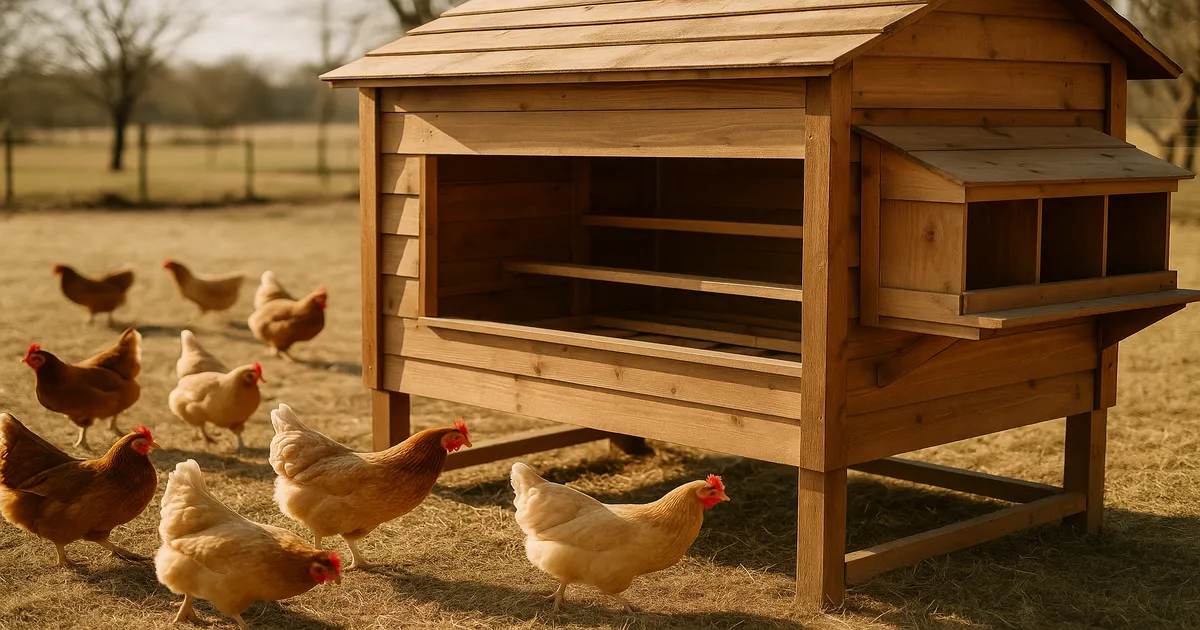
Raise your coop 12–18 inches off the ground. That gap allows air to circulate beneath the floor, pulling moisture away from the structure and keeping the soil below from becoming a damp, shaded fly nursery. Concrete floors or a hardware cloth sub-floor prevent fly larvae from pupating in the soil directly underneath — a commonly overlooked source of reinfestation.
South-facing windows let sunlight penetrate the interior, drying manure faster and killing larvae. An overhang of 18–24 inches on the rain-facing side keeps splash-back from soaking your bedding, which is one of the fastest routes to a fly problem.
Ventilation: The Most Underrated Fly-Control Tool
Humidity is the hidden driver of fly pressure. Keep interior relative humidity below 60% — above 70%, manure stays wet and fly breeding accelerates sharply. Aim for 1 sq ft of ventilation per 4–5 sq ft of floor space, with vents positioned high on the walls within 12 inches of the roofline to exhaust ammonia and moisture without creating drafts on the birds.
When temperatures climb above 80°F (27°C), add a box fan running at 1,600–2,000 CFM. It keeps litter drier, reduces fly pressure, and makes the whole coop more comfortable for your flock. A 20-inch box fan works well for most backyard setups.
Droppings Boards: Your Single Biggest Fly-Reduction Upgrade
Chickens produce roughly 70–80% of their daily waste while roosting overnight. A droppings board positioned 12–18 inches below your roost bars catches almost all of it in one place. Scrape it daily into a bucket and you’ve removed the primary fly breeding site before the day even starts. This single habit does more for fly control than almost any other intervention.
Use 2×4 lumber laid flat — 4-inch side up — for roost bars. The flat surface is easier on feet and makes scraping the boards beneath much simpler.
Screens and Doors
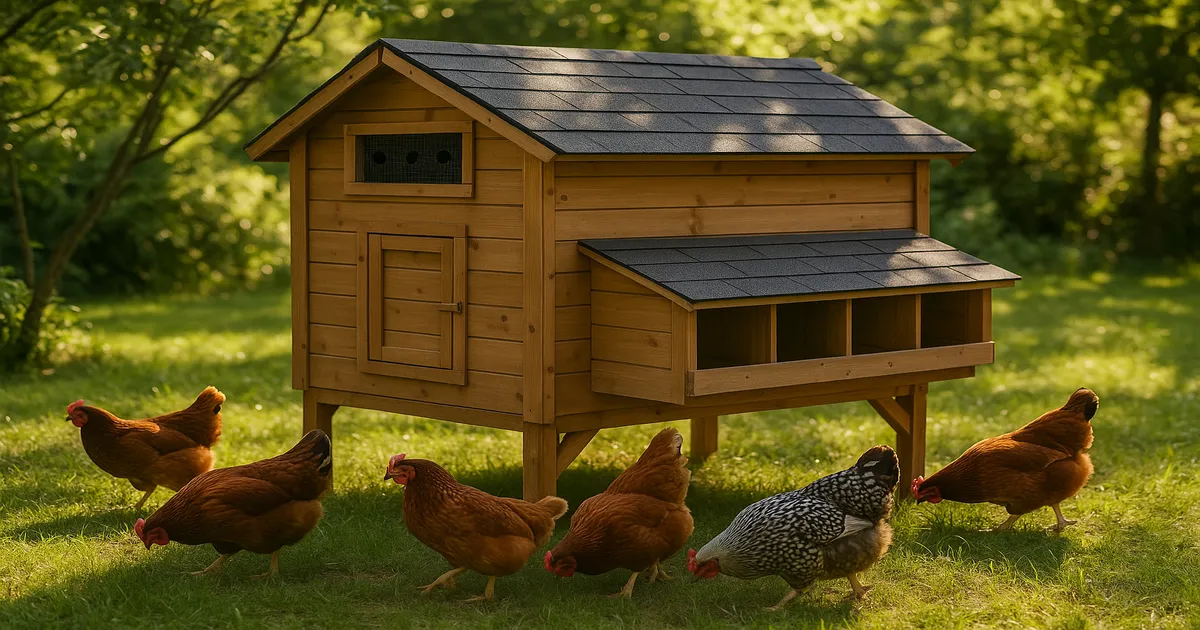
Install 1/8-inch mesh hardware cloth on all windows and vents. Standard window screen tears easily and has openings large enough for smaller fly species. Tight-fitting doors with spring closures prevent flies from drifting in every time you enter. These physical barriers won’t eliminate flies, but they meaningfully reduce the indoor population you’re managing.
The Best Bedding for Fly Control in a Chicken Coop
Your bedding choice has an outsized effect on fly pressure. Here’s how the main options compare:
| System | Fly Control Rating | Change Frequency | Notes |
|---|---|---|---|
| Sand Flooring | ★★★★★ | Spot-clean daily, full change annually | Fly larvae cannot survive in dry sand |
| Deep Litter Method | ★★★★☆ | Every 6–12 months | Beneficial microbes outcompete larvae when managed correctly |
| Hemp Bedding | ★★★★☆ | Every 2–4 weeks | Absorbs moisture faster than pine shavings |
| Pine Shavings (thin layer) | ★★☆☆☆ | Weekly in summer | Requires frequent changes to stay effective |
| Straw | ★★☆☆☆ | Weekly minimum | Holds moisture; worst option for fly control |
Deep litter works by building up 6–12 inches of material — pine shavings are ideal — and allowing beneficial microbial communities to establish. Those microbes generate heat and competition that actively suppresses fly larvae. The key is keeping the litter dry and turning it regularly to maintain aerobic conditions. Wet, compacted deep litter doesn’t work; it just becomes a giant fly breeding site.
Dry coarse sand is the most fly-hostile flooring available. Fly larvae need moisture to survive, and properly maintained sand provides none. Spot-clean daily with a kitty litter scoop, do a full refresh once a year, and you’re largely done. It’s particularly well-suited to drier climates.
Hemp bedding absorbs moisture faster than pine shavings and composts more quickly, which shortens the window during which it can support fly larvae. It’s the best loose-bedding option if you’re not running a full deep litter system. Straw is the worst choice: its hollow stems trap moisture and create ideal conditions for both fly larvae and mold.
In summer above 75°F (24°C), increase change frequency significantly — thin-layer bedding may need replacing every 5–7 days, and nest box bedding should be refreshed at least weekly. In winter, flies are largely dormant below 50°F (10°C), so you can extend intervals, but don’t let wet spots accumulate regardless of season.
Feed and Water Management to Stop Attracting Flies
Spilled feed and waterer overflow are primary fly attractants. Flies can detect the odors from fermented organic matter from up to a quarter mile away — your coop doesn’t need to be a disaster to act as a beacon.
Hang your feeder at bird back-height, roughly 12–15 inches off the ground. This single adjustment dramatically reduces feed kicked onto the floor. Treadle feeders are the gold standard — they stay closed when birds aren’t actively eating, reducing fly access by an estimated 60–70% compared to open feeders. Feed only what your birds will consume in 15–20 minutes and remove uneaten feed immediately. Nothing should sit overnight.
Pellets over mash: Pellets produce 30–40% less feed waste because birds can’t scatter them as easily. If you’re feeding mash and struggling with flies, switching to pellets is one of the easiest changes you can make.
Fermented feed — layer feed soaked in water for 48–72 hours at room temperature — develops an acidic pH around 3.5–4.0 that deters flies. Birds consume it almost completely, leaving very little waste. It takes a few days to prepare but reduces both feed waste and fly attraction at the same time.
For water, nipple waterers eliminate the open water surface entirely, removing both a fly breeding site and the main source of bedding-soaking spills. If you’re using open waterers, place them on a raised hardware cloth platform so spilled water drains away from bedding. Clean and refill daily in summer — stagnant water above 65°F (18°C) can support fly larvae within 24–48 hours. Adding 1 tablespoon of apple cider vinegar per gallon provides a mild deterrent and probiotic benefit; use plastic or ceramic waterers rather than galvanized metal to avoid a reaction with the vinegar.
Finally, never leave fruit, meat, or dairy scraps in the coop overnight. Remove anything uneaten within 30 minutes — these are extreme fly attractants. Keep your compost bin at least 50 feet from the coop and covered.
Breeds Most Vulnerable to Fly Problems
Not all breeds carry equal fly risk. Knowing which birds need extra attention in summer can prevent a manageable situation from becoming a medical emergency.
Feather-footed breeds — Cochins, Brahmas, Silkies, and Marans — are at the highest risk. Wet, manure-caked leg feathering is the leading cause of flystrike in backyard flocks. Check the feet and legs of these breeds daily from June through September, and trim feathers around the feet and vent area before summer begins.
Fluffy-bottomed breeds like Buff Orpingtons can accumulate soiling around the vent that draws blowflies directly to the bird. Check the vent area daily in warm months and clean any buildup gently with warm water and a soft cloth.
High-production breeds — Rhode Island Reds, Leghorns, and ISA Browns — produce roughly 0.3–0.4 lbs of manure per bird per day, meaningfully more than lighter breeds. A flock of ten of these hens generates 3–4 lbs of waste daily, which means more aggressive cleaning schedules are necessary to keep fly pressure in check.
| Breed | Fly Risk | Primary Concern |
|---|---|---|
| Silkie | 🔴 High | Feathered feet, small body mass |
| Cochin | 🔴 High | Feathered feet, fluffy vent area |
| Brahma | 🔴 High | Feathered feet, large manure output |
| Buff Orpington | 🟡 Medium-High | Fluffy vent, moderate manure |
| Rhode Island Red | 🟡 Medium | High manure volume |
| Leghorn | 🟡 Medium | High manure volume, stress-sensitive |
| Plymouth Rock | 🟢 Lower | Standard management sufficient |
| Bantams (general) | 🟡 Medium | Small body mass, faster health decline |
For high-risk breeds, a 60-second daily check — feet, legs, vent area, and overall behavior — is the difference between catching a problem early and dealing with a flystrike emergency.
How to Keep Flies Out of Your Coop: Active Control Methods
Sanitation handles the breeding sites. Active controls knock down the adults and interrupt the cycle.
Fly traps and bait stations should be placed outside the coop perimeter, not inside. Placing attractant-based traps indoors draws more flies in than you catch. Position them 10–15 feet from the coop entrance to intercept incoming flies without creating a new concentration point indoors.
Diatomaceous earth (DE) kills flies and mites on contact by abrading their exoskeletons. Dust it in nest boxes and dust-bathing areas. The critical limitation: it must stay completely dry to work. Wet DE is inert. Use it as one layer of a broader program, not a standalone solution.
Fly parasitic wasps (Spalangia and Muscidifurax spp.) are tiny, non-stinging wasps that parasitize fly pupae in manure before they hatch into adults. They’re invisible to you and your birds, completely harmless, and highly effective as part of an integrated program. Release them every 2–4 weeks throughout summer, starting in late spring before fly populations peak. (Arbico Organics Fly Predators)
Black Soldier Fly larvae (BSFL) are one of the best tools most backyard keepers haven’t tried yet. The larvae actively consume manure and organic waste, competing directly with House Fly larvae for resources — and chickens love them. BSFL are approximately 42% protein and make an excellent treat at around 1 tablespoon per bird, three to four times per week. A BSFL composting bin positioned adjacent to the coop creates a near-perfect closed loop: waste goes in, protein treats come out, and House Fly pressure drops. (Grubbly Farms Live Grubs)
Permethrin, when fly pressure is severe and sanitation alone isn’t keeping up, can provide a meaningful knockdown. Apply a 1% permethrin spray to coop surfaces — walls, roost bars, and the underside of droppings boards. Do not apply it directly to birds, and keep it away from waterers and feeders. Follow label withdrawal periods carefully. Chemical controls work best as a short-term reset while you address the underlying sanitation issues driving the infestation.
Flystrike: Recognize It, Treat It, Prevent It
Flystrike (myiasis) occurs when blowflies (Calliphora or Lucilia spp.) lay eggs on a chicken’s skin — typically near wounds, the vent, or soiled feathering. The larvae hatch in 8–12 hours and begin consuming living tissue. Severe cases kill birds within 24–48 hours. It moves fast.
Early signs: bird sitting apart from the flock, lethargy, reduced appetite, unusual preening or picking at one area.
Advanced signs: visible maggots on skin or in feathering, foul odor, visible skin damage, collapse or unresponsiveness.
If you see maggots, act immediately. Every hour matters.
Treatment steps:
- Isolate the bird from the flock immediately.
- Remove all maggots manually with tweezers or flush thoroughly with saline solution.
- Clean the affected area with 0.05% chlorhexidine solution.
- Apply a veterinary wound spray around (not directly in) the wound area.
- Keep the bird warm, dry, and separated.
- Contact a veterinarian — antibiotics are often necessary if tissue damage is significant.
- In severe cases with extensive tissue destruction, humane euthanasia may be the kindest option.
Prevention checklist for high-risk breeds:
- ✅ Daily vent and foot checks from June through September
- ✅ Trim feathering around feet and vent before summer
- ✅ Address any diarrhea, vent gleet, or wounds promptly
- ✅ Collect eggs at least twice daily when temperatures exceed 75°F
- ✅ Keep bedding dry and change nest box material weekly in warm months
Frequently Asked Questions
How do I keep flies out of my chicken coop naturally? Start with sanitation — daily droppings board scraping and dry bedding eliminate the breeding sites flies depend on. Add fly parasitic wasps, food-grade diatomaceous earth in nest boxes, and bait traps placed outside the coop perimeter. Together, these natural methods can dramatically reduce fly pressure without any chemical intervention.
What is the best bedding to keep flies away? Dry coarse sand is the top-rated option because fly larvae cannot survive without moisture. For keepers who prefer loose bedding, hemp is the next best choice — it absorbs moisture faster than pine shavings and composts more quickly. Straw is the worst option; avoid it if flies are a concern.
How often should I clean my coop in summer to control flies? Scrape droppings boards daily, spot-clean the floor every 2–3 days, and replace nest box bedding at least once a week. In hot weather above 75°F (24°C), thin-layer bedding may need a full change every 5–7 days. The faster you remove manure, the fewer flies you’ll have.
Can flies actually reduce egg production? Yes. Heavy fly pressure causes measurable stress in laying hens, which can suppress egg production by 10–20%. Flies also mechanically transmit pathogens like Salmonella and E. coli from manure to feed and water, and illness from these can reduce laying by 25–40% during an active infection.
When should I use permethrin in my coop? Use permethrin as a short-term reset when fly pressure is severe and sanitation alone isn’t keeping up. Apply a 1% solution to coop surfaces — walls, roost bars, and the underside of droppings boards — but never directly on birds or near feeders and waterers. Always follow label directions and withdrawal periods, and address the underlying sanitation issues at the same time.