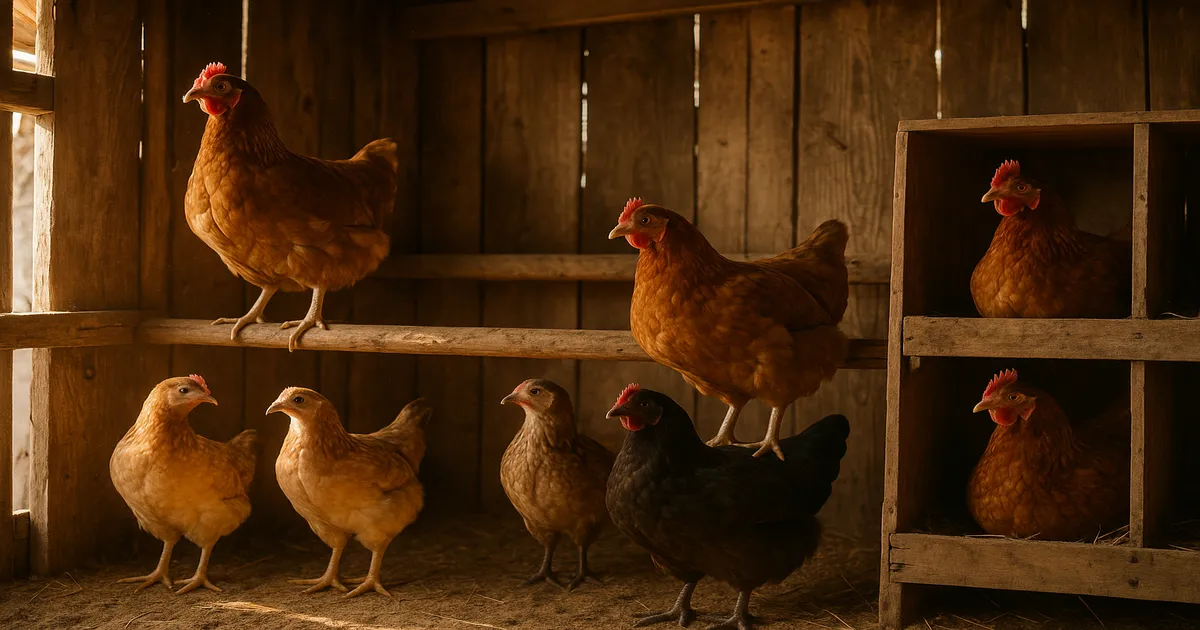
Quick Answer: The safest window to integrate young and old chickens is 8–16 weeks, with 16 weeks (near point-of-lay) being the gold standard for size and social parity. The See-But-Don’t-Touch Divider Method is the best overall approach for most backyard flocks, while the Broody Hen Adoption Method is unbeatable when you have a willing broody. Always complete a 30-day quarantine before any method — no exceptions.
Knowing when to best integrate young and old birds is one of the most common — and most stressful — challenges in backyard chicken keeping. Get it right, and your flock barely skips a beat. Get it wrong, and you’re dealing with injuries, hiding pullets, and stressed-out hens that stop laying for weeks. The good news? With the right timing and the right method, integration is very manageable — even for first-time keepers.
When Is the Right Time to Integrate Young and Old Birds?
The Golden Rule: Wait Until Pullets Are at Least 8 Weeks Old
Eight weeks is the absolute minimum. At that age, pullets are fully feathered, no longer need supplemental heat, and are large enough to run from aggression effectively. But 16 weeks — close to point-of-lay — is the gold standard. By then, pullets are near adult size, their immune systems are more robust, and the size gap between them and your established hens is far less dangerous.
Introducing a 6-week-old chick to a flock of 2-year-old hens is asking for trouble. The size, speed, and beak-strength mismatch is simply too great.
Top Integration Approaches at a Glance
- See-But-Don’t-Touch Divider Method — A wire partition lets birds acclimate to each other over 1–4 weeks without physical contact. Works for any flock size, any breed.
- Broody Hen Adoption Method — When a broody hen is available, chicks as young as 1–3 days old can be slipped under her at night. Fastest timeline, least stress — but only works with broody-prone breeds.
Before you attempt either method, three things are non-negotiable: a completed 30-day quarantine, adequate space (calculate as if your flock is 1.5× its actual size during transition), and a plan to resolve the calcium/feed conflict so young birds aren’t eating layer feed.
What to Look For Before You Integrate Young and Old Birds
Age and Size Parity: The #1 Risk Factor
The age gap between new and established birds is the single biggest predictor of integration success or failure. A 6-week-old pullet introduced to 2-year-old hens is outmatched in every measurable way — size, speed, beak strength, and social experience. Aim for pullets at least 8 weeks old before beginning any integration process, and ideally 12–16 weeks for the smoothest transition.
Breed Temperament Compatibility
Not all breeds play nicely together. Knowing your flock’s temperament before you add new birds will help you choose the right method and set realistic expectations.
| Breed | Temperament | Integration Difficulty |
|---|---|---|
| Buff Orpington | Calm, docile | Easy |
| Australorp | Gentle, curious | Easy |
| Plymouth Rock | Calm, steady | Easy–Moderate |
| Easter Egger | Friendly, curious | Easy–Moderate |
| Wyandotte | Assertive, independent | Moderate |
| Leghorn | Flighty, nervous | Moderate |
| Rhode Island Red | Bold, assertive | Moderate–Hard |
| Silkie | Very gentle | Difficult (often bullied) |
| Polish | Docile, easily startled | Difficult (often bullied) |
If you’re adding gentle breeds like Silkies or Polish to an assertive flock, plan for a longer visual acclimation period and extra hiding spots in the run.
Flock Health Status and Quarantine Clearance
Thirty days minimum — no shortcuts. Even birds from a reputable, healthy-looking source can be asymptomatic carriers of Marek’s disease, Mycoplasma gallisepticum, or coccidiosis strains your flock has no immunity to. During quarantine, watch for respiratory sounds, watery or bloody droppings, feather loss, raised leg scales, and eye discharge. Only birds that pass 30 days of clean observation are ready to begin the integration process.
Coop Space and Resource Availability
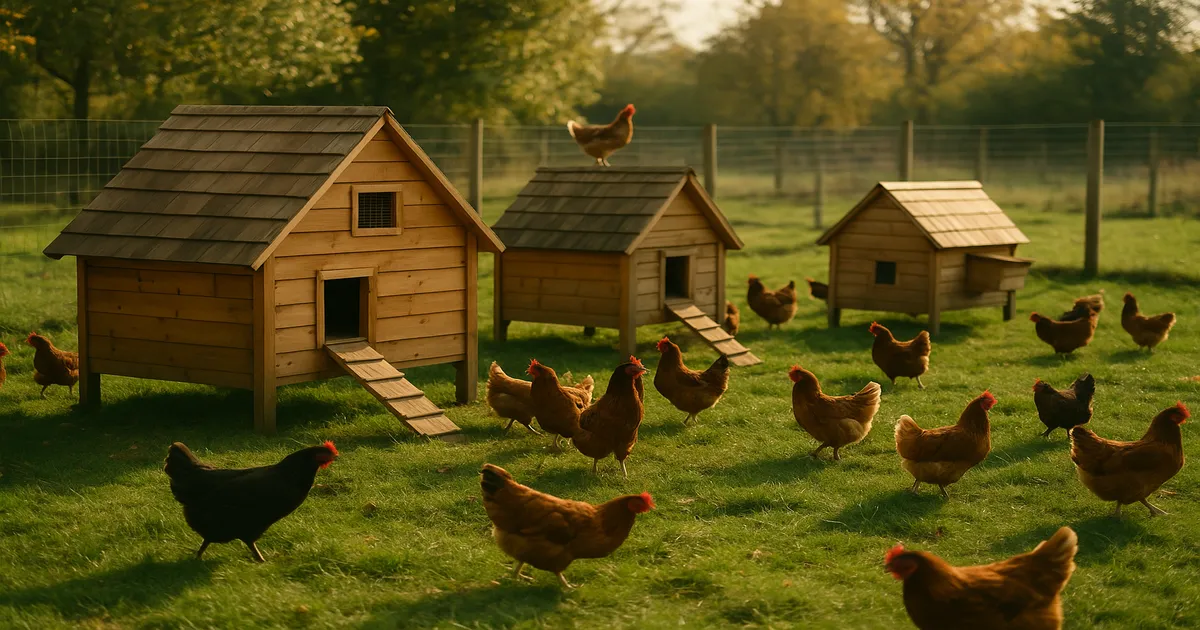
Crowding is the most common reason integration fails. During the 2–4 week transition period, calculate your space as if your flock is 1.5× its actual size. A flock of 6 hens integrating 4 pullets needs space for at least 15 birds.
- Indoor coop: 4 sq ft per bird minimum; 6+ sq ft ideal during integration
- Outdoor run: 10 sq ft per bird minimum per standard poultry guidance; 15–20 sq ft preferred during integration
- Multiple feed and water stations are essential — dominant hens will guard single stations and new birds will go hungry
Seasonal Timing: When NOT to Integrate
Avoid integrating during molt — typically fall, lasting 8–12 weeks — when hens are already stressed and nutritionally depleted. Winter integration in cold climates is harder too, because birds spend more time confined indoors, which amplifies aggression. Spring is the ideal season: birds are outside more, foraging naturally, and production is peaking.
Feed Type Alignment and the Calcium Conflict
This one catches a lot of keepers off guard. Layer feed contains 3–4% calcium, which is essential for eggshell formation in laying hens but can stress the kidneys of birds under 18 weeks when consumed in large quantities over time. You cannot simply put young and old birds together and feed them the same layer pellets.
The simplest fix: switch everyone to an All-Flock or Flock Raiser feed (16–18% protein, ~1% calcium) and offer oyster shell free-choice in a separate container. Try Purina Flock Raiser Crumbles as a reliable, widely available option. Laying hens will self-regulate their calcium intake from the oyster shell; young birds will largely ignore it. This approach works for any mixed-age flock and eliminates the guesswork entirely.
Integration Methods Compared
| Method | Min. Pullet Age | Difficulty | Equipment Needed | Timeline | Best Flock Size | Risk Level |
|---|---|---|---|---|---|---|
| See-But-Don’t-Touch Divider | 8 weeks | Low | Hardware cloth divider | 2–4 weeks | Any | Low |
| Broody Hen Adoption | 1–3 days | Low | Broody hen | 0–2 weeks | Any | Very Low |
| Neutral Territory Introduction | 12 weeks | Moderate | New/unfamiliar space | 1–3 weeks | Small–Medium | Moderate |
| Nighttime Coop Addition | 16 weeks | Low | Second roost bar | 1 night + monitoring | Any | Moderate (standalone) |
| Free-Range Gradual Mixing | 12–16 weeks | Low–Moderate | Large outdoor space | 2–4 weeks | Large | Low–Moderate |
The See-But-Don’t-Touch Divider Method
This is the most widely recommended integration method for backyard flocks — and for good reason. A hardware cloth partition installed inside the run or coop lets both groups see, hear, and smell each other for 1–4 weeks without any physical contact. By the time you remove the divider, the birds have already processed each other’s presence. Merge day is dramatically calmer because there’s nothing new to react to.
A ½-inch mesh hardware cloth divider works best — it’s sturdy enough that hens can’t push through and fine enough that beaks can’t reach far enough to cause injury.
Key specs:
- ½-inch mesh hardware cloth divider
- 2–4 week visual acclimation period
- Works for pullets 8 weeks and older
- Requires adequate divided space on both sides
- Separate feeders and waterers on each side
Pros
- Highly effective at reducing aggression on merge day
- Works with any breed combination
- Allows separate feeding — critical for solving the calcium conflict
- Low injury risk throughout the entire process
Cons
- Requires enough coop/run space to divide meaningfully — small setups struggle
- Longer timeline than some methods
- Young birds still need a separate heat source if under 6 weeks
Best for: Most backyard keepers. This is the gold standard for a reason.
The Broody Hen Adoption Method
When you have a broody hen — a Silkie, Buff Orpington, or Cochin are classic candidates — this method is almost magical. Slip day-old chicks under her at night, and she’ll often wake up convinced they’re hers. She provides warmth, protection, and social modeling that no brooder lamp can replicate. The chicks integrate into the flock under her protection, bypassing weeks of the usual process.
If you’re planning to use this method, timing your chick order to coincide with a broody hen is well worth it. Hatcheries like Meyer Hatchery offer Silkie bantams and Buff Orpington chicks that are well-suited to this role.
Key specs:
- Requires a naturally broody hen
- Chicks ideally 1–3 days old for best acceptance rates
- No brooder equipment needed
- Hen handles temperature regulation entirely
Pros
- Fastest integration timeline of any method
- Eliminates the need for a brooder setup
- Chicks gain immediate flock protection from day one
- Natural social learning — chicks learn flock behaviors from a real hen
Cons
- Only works with broody-prone breeds; Leghorns and most production hybrids rarely go broody
- Hen may reject chicks — monitor closely for the first 48 hours
- Timing depends entirely on when you have a broody hen available
Best for: Any keeper with a willing broody hen. This nearly eliminates integration stress for chicks entirely.
The Neutral Territory Introduction Method
The logic here is straightforward: if neither group has claimed the space, neither group has turf to defend. Moving your entire flock — established hens and new pullets together — into an area neither group has used before removes the territorial advantage your older birds normally hold. It levels the social playing field in a way that simply rearranging your existing coop cannot.
A portable chicken run makes this method much easier to execute, especially in smaller yards. Scatter treats liberally when you first introduce the groups to keep birds distracted and moving.
Key specs:
- Requires a genuinely unfamiliar space — a new run section or different yard area
- Best for pullets 12 weeks and older
- Works particularly well when you’re already expanding or moving coops
- Scatter treats at introduction to disperse the flock and reduce confrontation
Pros
- Significantly reduces territorial aggression from established hens
- Especially effective for assertive breeds like Rhode Island Reds and Wyandottes
- Scattered treats keep the whole flock occupied and dispersed
Cons
- Requires a truly new space — rearranging furniture in your existing run doesn’t achieve the same effect
- Logistically complex for keepers with small or fixed yards
- Still requires close monitoring for the first several days
Best for: Keepers with assertive flocks, or anyone already planning a coop expansion or upgrade.
The Nighttime Coop Addition Method
Chickens are genuinely calm after dark — their vision is poor in low light, and they’re in a semi-sleep state on the roost. Placing new birds directly onto the roost bar after dark means the flock essentially wakes up together the next morning, with far less of the explosive first-contact aggression you’d see with a daytime introduction. There will still be some pecking order establishment during the day, but the dramatic initial confrontation is largely avoided.
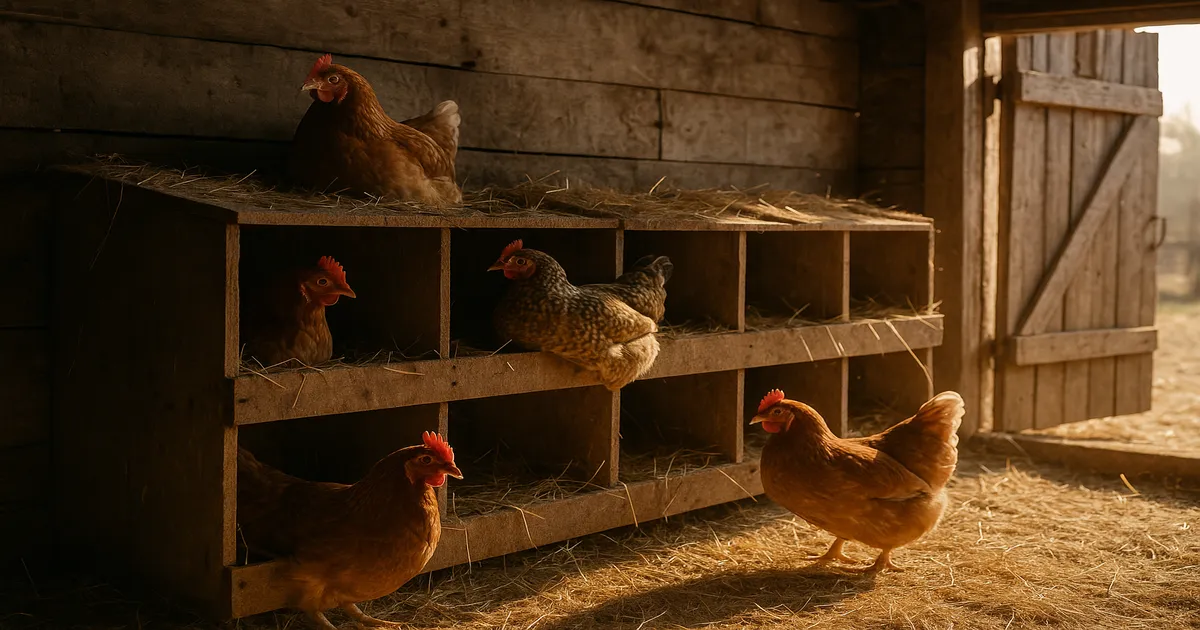
Adding a second, lower roost bar gives subordinate birds somewhere to go if they get pushed off the main perch. Aim for 8–10 inches of linear roost space per standard-size bird.
Key specs:
- Best for pullets 16+ weeks — birds should be close to adult size
- Most effective when used after 1–2 weeks of visual acclimation
- Add a second, lower roost bar so subordinate birds have options
- 8–10 inches of linear roost space per standard bird
Pros
- Simple — no special equipment beyond an extra roost bar
- Reduces the intensity of first-contact aggression
- Works well as a final step after the divider method
Cons
- Does not eliminate daytime pecking order establishment — expect some chasing
- Risky as a standalone method without prior visual acclimation
- Smaller pullets may be pushed off roosts by dominant hens overnight
Best for: Use this as the final step of a divider-method integration, not as your only approach.
The Free-Range Gradual Mixing Method
Open space is a powerful de-escalator. When both groups free-range together in a large area, subordinate birds have room to flee, and the whole flock stays occupied with foraging rather than social conflict. The sheer size of the space dilutes territorial behavior in a way that a confined run simply can’t.
Scatter a flock block or high-value treats when you first open the gate to keep birds distracted during those critical first minutes. Monitor predator risk carefully during this period — distracted keepers and distracted chickens make easy targets.
Key specs:
- Requires free-range access or a very large run (15–20+ sq ft per bird)
- Best for pullets 12–16 weeks old
- Scatter treats at introduction to disperse flock and reduce confrontation
- Increase predator vigilance during the transition period
Pros
- Most natural integration process available
- Lowest stress for all birds when space is genuinely adequate
- Excellent for docile breeds like Buff Orpingtons and Australorps
- Foraging keeps the whole flock naturally occupied
Cons
- Requires significant land access — not viable for small urban setups
- Less effective for confined flocks that must return to a small coop at night
- Predator vigilance needs to increase during the monitoring period
Best for: Keepers with large properties and docile breed flocks — the lowest-stress option when space allows.
Our Verdict: Choosing the Right Integration Method for Your Flock
Best Overall: See-But-Don’t-Touch Divider Method (YARDGARD Hardware Cloth)
Works for any flock size, any breed combination, and any keeper experience level. The 2–4 week visual acclimation period does the heavy lifting so merge day is anticlimactic — which is exactly what you want. A ½-inch hardware cloth divider is all the equipment you need.
Best for Chicks Under 4 Weeks: Broody Hen Adoption (Meyer Hatchery Broody-Prone Breeds)
Nothing beats a broody hen for young chicks. If you have a Silkie, Buff Orpington, or Cochin going broody, time your chick order to match. The integration timeline essentially disappears, and the chicks get a far better start than any brooder can provide.
Best for Assertive or Aggressive Breeds: Neutral Territory Introduction (TRIXIE Portable Run)
If your Rhode Island Reds or Wyandottes have a reputation for being tough on newcomers, removing their home-field advantage is the most effective tool you have. A portable run makes this method practical even in smaller yards.
Best for Large Flocks with Outdoor Space: Free-Range Gradual Mixing (with Purina Flock Block)
Space is the great equalizer. If you have the land and a docile flock, scatter a flock block and let the chickens sort it out naturally.
Best Final Step for Any Method: Nighttime Coop Addition (RentACoop Roost Bar)
Regardless of which method you use, slipping new birds onto the roost after dark is almost always the smoothest way to complete the physical merge. Add a second roost bar first so subordinate birds have somewhere to land.
Integration Timeline Cheat Sheet by Pullet Age
| Pullet Age | What’s Safe |
|---|---|
| 0–6 weeks | Broody hen adoption only — or brooder with zero flock contact |
| 6–12 weeks | Divider method safe to begin; no direct contact yet |
| 12–16 weeks | Neutral territory or free-range mixing viable; divider method ideal |
| 16+ weeks (near POL) | All methods viable; nighttime coop addition as final step |
A few reminders before you merge:
- Complete the 30-day quarantine before starting any method — non-negotiable regardless of source
- Switch to All-Flock feed plus free-choice oyster shell to eliminate the calcium conflict
- Set up multiple feed and water stations so dominant hens can’t guard them all
- Add a second, lower roost bar for subordinate birds to self-select at night
Frequently Asked Questions About Integrating Young and Old Chickens
How old do pullets need to be before joining an adult flock?
The absolute minimum is 8 weeks — at that point pullets are fully feathered and no longer need supplemental heat. However, 16 weeks (near point-of-lay) is the gold standard because pullets are close to adult size, making physical confrontations far less dangerous. The closer in size to your existing hens, the better the outcome.
How long does chicken flock integration take?
Expect 2–6 weeks from start to finish, not counting quarantine. The 30-day quarantine period comes first and is entirely separate from the integration process. Once quarantine is complete, the visual acclimation phase typically runs 1–4 weeks, followed by supervised direct contact. Most flocks settle into a stable new pecking order within 2–3 weeks of the physical merge.
Can I feed young and old chickens the same food during integration?
Not layer feed. The 3–4% calcium it contains can stress the kidneys of birds under 18 weeks when eaten in large amounts over time. The simplest solution is to feed everyone an All-Flock or Flock Raiser feed and offer oyster shell free-choice in a separate container. Laying hens will self-regulate their calcium intake; young birds will largely ignore the oyster shell.
How do I stop older hens from bullying new pullets?
Some pecking order establishment is normal — don’t intervene in every chase. Reduce serious bullying by ensuring adequate space (calculate for 1.5× your actual flock size during transition), providing multiple feed and water stations, and adding visual barriers like a piece of plywood or a shrub that new birds can duck behind. Scatter treats to keep the whole flock distracted. If one hen is drawing blood repeatedly, temporarily remove her from the flock.
Is it safe to skip quarantine if birds come from a healthy source?
No. Even birds from reputable, healthy-looking flocks can be asymptomatic carriers of Marek’s disease, Mycoplasma gallisepticum, and coccidiosis strains your flock has no immunity to. A vaccinated bird can still shed Marek’s virus. There is no way to visually confirm a bird is pathogen-free — 30 days of quarantine with active health monitoring is the only reliable safeguard, regardless of source.