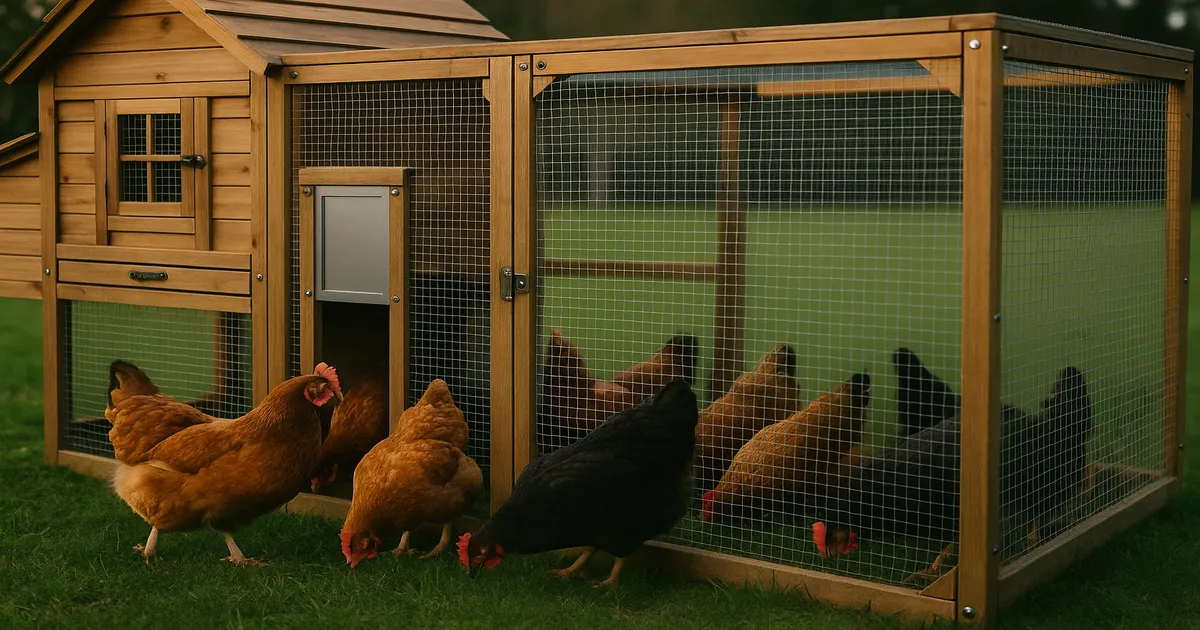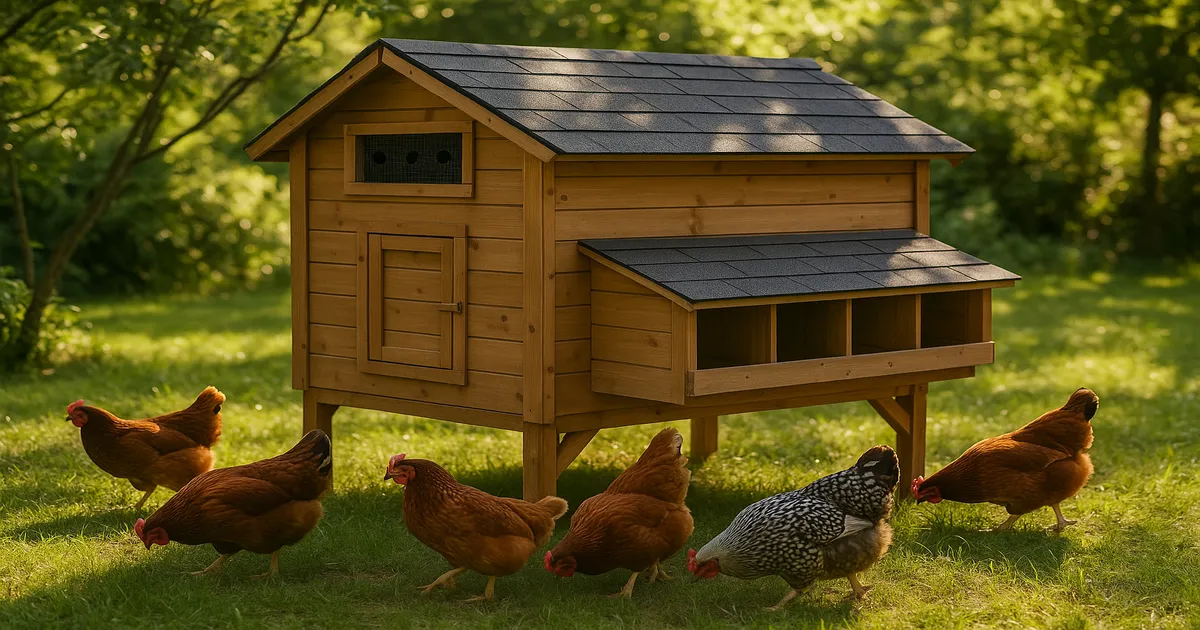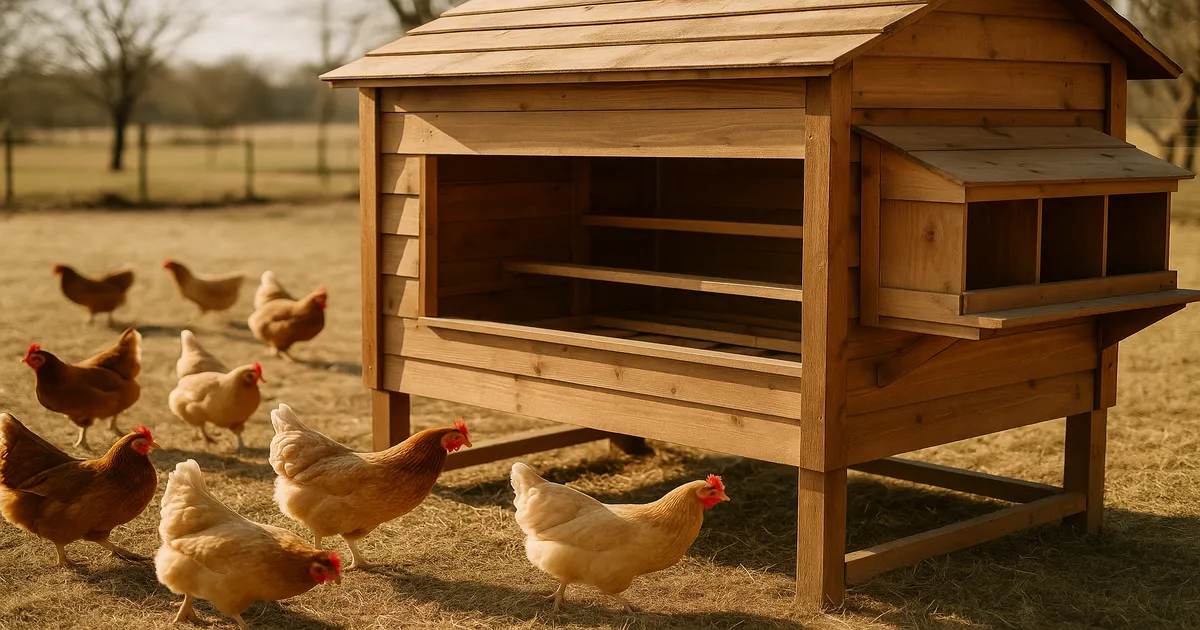
Quick Answer: Chicken coop plans and cost range from $200–$500 DIY for a small backyard flock up to $10,000+ for a custom-built setup. The universal starting point is 4 sq ft of indoor space per bird and 10 sq ft per bird in the run — get that math right before you spend a dollar. Breed choice matters too: a flock of Leghorns needs very different housing than a flock of Buff Orpingtons.
Planning a chicken coop involves a lot more than picking a cute design off Pinterest. Chicken coop plans and cost depend on your flock size, breed selection, local climate, and how much of the work you’re willing to do yourself. This guide walks you through every decision — from square footage to nesting boxes to annual feed bills — so you can build or buy with confidence.
Chicken Coop Plans and Cost at a Glance
How Much Does a Chicken Coop Cost?
The cost spectrum is wide. A simple DIY coop for 2–4 hens can be built for $200–$500 with basic materials. Prefab kits start around $150, but quality options for a real 6-hen flock typically run $400–$900. Custom professional builds start at $2,000 and can easily reach $10,000+ for large, feature-rich setups.
Key Numbers Every Builder Needs
- Indoor space: 4 sq ft per bird minimum; 6–8 sq ft recommended for confined flocks
- Outdoor run: 10 sq ft per bird minimum; 15–20 sq ft recommended
- Nesting boxes: 1 per 3–4 hens
- Roost space: 8–10 linear inches per bird
| Flock Size | Min. Coop (sq ft) | Recommended Coop (sq ft) | Min. Run (sq ft) | Est. DIY Cost |
|---|---|---|---|---|
| 3 hens | 12 | 18–24 | 30 | $200–$400 |
| 6 hens | 24 | 36–48 | 60 | $400–$800 |
| 10 hens | 40 | 60–80 | 100 | $700–$1,500 |
| 15 hens | 60 | 90–120 | 150 | $1,200–$2,500 |
| 25 hens | 100 | 150–200 | 250 | $2,000–$5,000 |
Coop Size Requirements: How Much Space Do Chickens Really Need?
Indoor Space Per Bird
The hard minimum is 4 sq ft per standard bird. If your hens are confined to the coop and run most of the day, aim for 6–8 sq ft. Bantam breeds like Silkies and Sebrights can manage with 2 sq ft indoors, while large breeds like Brahmas and Jersey Giants need 6–8 sq ft just to move comfortably.
Outdoor Run Space Per Bird
Ten square feet per bird is the floor, not the goal. Fifteen to twenty square feet gives hens room to forage, dust bathe, and establish a pecking order without constant friction. Active and flighty breeds — Leghorns, Hamburgs, Anconas — need 25+ sq ft per bird or they’ll spend their energy trying to escape.
The Biggest Mistake New Keepers Make
Overcrowding doesn’t just make hens unhappy — it makes them dangerous to each other and expensive to you. Stressed, cramped birds peck feathers, draw blood, and spread respiratory disease fast. Treating a sick flock costs far more than building a slightly bigger coop from the start. When in doubt, size up.
Choosing the Right Coop Plan for Your Breed
Heavy and Large Breeds: Low Roosts and Extra Floor Space
Brahmas, Jersey Giants, and Buff Orpingtons are heavy birds that can injure themselves jumping down from standard roost heights. Keep roost bars at 12–18 inches off the ground for these breeds. They also need the higher end of the floor space range — 6–8 sq ft per bird — so factor that into your plans before you start cutting lumber.
Active and Flighty Breeds: Tall Fencing and Covered Runs
Leghorns and Anconas are escape artists. A 4-foot fence is a suggestion to them, not a barrier. Plan for a minimum 6-foot perimeter fence and strongly consider a fully covered run. These breeds also do poorly in tight confinement, so generous run space isn’t optional — it’s the difference between a productive flock and a neurotic one.
Cold-Hardy vs. Heat-Tolerant Breeds
Rhode Island Reds, Barred Plymouth Rocks, and Wyandottes handle temperatures down to 0°F (-18°C) with proper shelter and minimal supplemental heat. Their rose or pea combs resist frostbite better than the large single combs on Leghorns and Minorcas. Heat-tolerant breeds need the opposite priority: maximize ventilation, orient the coop to catch prevailing breezes, and don’t over-insulate in warm climates.
Bantam Breeds: Compact Coop Options
A flock of Silkies or Belgian d’Uccles can live comfortably in a coop that would be undersized for standard birds — roughly 2 sq ft per bird indoors and 8–10 sq ft per bird in the run. One important note for Silkies: their feathered feet are prone to problems in wet, muddy conditions, so prioritize dry flooring and good drainage in your design.
Best Dual-Purpose Breeds for Standard Coop Plans
Rhode Island Reds, Barred Plymouth Rocks, and Australorps are the workhorses of the backyard flock. They’re tolerant of confinement, productive year-round (250–300 eggs per year), and calm enough to handle normal backyard activity. Most generic coop plans are sized with exactly these breeds in mind.
Essential Coop Design Specs
Roost Bars: Height, Diameter, and Spacing
Give each bird 8–10 linear inches of roost space — 12 inches for large breeds. The bar itself should be 1.5–2 inches in diameter so hens can fully wrap their feet around it, which helps keep their toes warm in winter. Set standard roosts 18–36 inches off the floor, always higher than the nesting boxes, or hens will sleep — and poop — in the boxes instead.
Use untreated pine, cedar, or natural branches. Avoid metal roosts, which conduct cold, and plastic, which is too slippery for a secure grip.
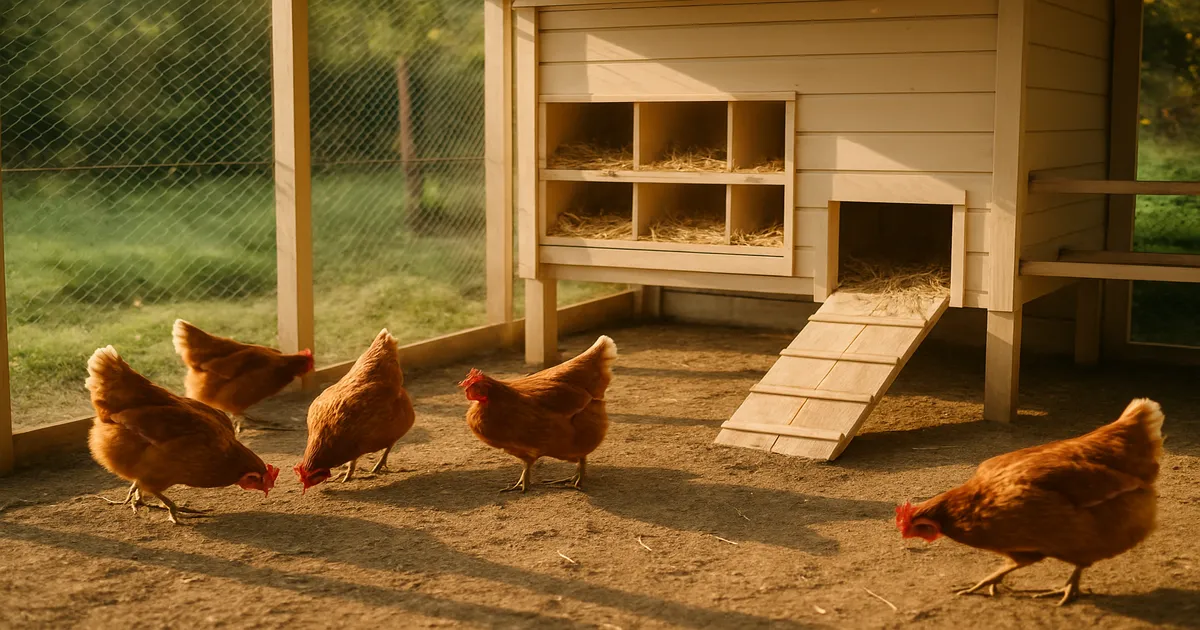
Nesting Box Dimensions and Ratios
The standard box is 12×12×12 inches for most breeds; bump that to 14×14 for Brahmas and Jersey Giants. Mount boxes 18–24 inches off the floor and add a 3–4 inch entry lip to keep nesting material in place. One box per 3–4 hens is the rule — a 6-hen flock needs 2 boxes at minimum, 3 to avoid morning traffic jams.
Rollaway nesting boxes are worth the extra $15–$40 per box. Eggs roll away from hens immediately after laying, which stops breakage and prevents the egg-eating habit before it starts. (Brinsea Roll-Away Nest Box Insert)
Ventilation: Preventing Ammonia Buildup
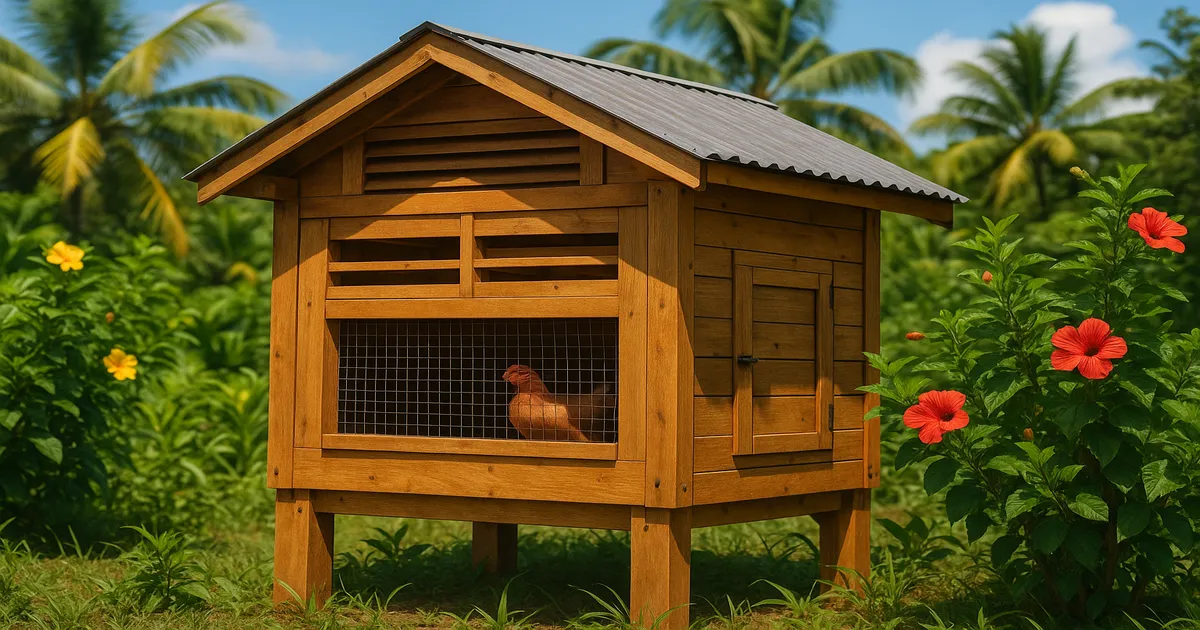
Provide at least 1 sq ft of vent opening per 10 sq ft of floor space — more in warm climates. Place vents high on the walls or at the roof peak so moisture and ammonia escape without creating drafts at bird level. If you walk into your coop and smell ammonia, ventilation is inadequate. That smell means respiratory damage is already happening.
Cover every vent opening with 1/2-inch galvanized hardware cloth. No exceptions.
Flooring Options
- Dirt: Free and naturally draining, but leaves hens vulnerable to digging predators and rodents
- Wood: The most common choice; elevate the coop 12–18 inches off the ground to prevent rot and discourage rodents; seal with linseed oil or exterior paint
- Concrete: The most durable and predator-proof option at $3–$6/sq ft; cold in winter, so cover with thick rubber mats and deep bedding
- Hardware cloth (raised coops): Droppings fall through for easy cleaning, but add a generous bedding layer on top to protect feet
Insulation by Climate Zone
In climates that regularly drop below 20°F (-7°C), insulate walls to R-13–R-19 and the ceiling to R-30. Always cover insulation with plywood or OSB on the interior — hens will peck exposed foam or fiberglass, and ingesting either can be fatal.
In milder climates, a well-ventilated, draft-free coop with 4–6 inches of bedding using the deep litter method generates enough composting heat to keep a flock of 6+ birds comfortable without added insulation.
DIY vs. Prefab vs. Custom: Chicken Coop Cost Breakdown
DIY Coop Costs by Flock Size
Building your own coop is the most cost-effective route if you have basic carpentry skills and a free weekend or two. Expect to spend $400–$800 for a solid 6-hen coop, and $2,000–$5,000 for 15–25 birds with a proper run and good materials. Those ranges assume retail lumber prices — reclaimed materials can cut costs significantly.
Prefab and Kit Coop Costs
Here’s the honest truth about prefab coops: manufacturer capacity claims are almost always inflated. A coop marketed for 6 hens typically fits 3–4 comfortably by real space standards.
- $150–$400: Suitable for 2–3 hens max; thin materials, limited lifespan
- $400–$900: Better construction; realistic for 4–6 hens; a reasonable starter setup
- $900–$2,500: Solid option for 6–10 hens; some include hardware cloth runs and automatic doors
Custom-Built Coops: When to Invest More
If you’re planning a flock of 15+ birds, have unusual site requirements, or want a coop that matches your property aesthetically, a custom build at $2,000–$10,000+ makes sense. You get proper sizing, quality materials, and a structure built to last decades. For serious keepers, it’s often cheaper long-term than replacing a failing prefab every few years.
Key Material Costs
- Pressure-treated lumber: Adds 15–25% to material costs but is essential for any ground-contact framing
- 1/2-inch galvanized hardware cloth: Budget $50–$200 for a standard 6-hen run
- Roofing: Metal panels run $1.50–$3.50/sq ft and outlast asphalt shingles ($0.80–$1.50/sq ft) in a coop environment
- Automatic coop door: $50–$200 installed; solar models run $80–$150
Optional Upgrades Worth the Money
- Nipple waterers: $20–$40; dramatically cleaner than open waterers and reduce disease transmission
- Heated waterer base: $30–$60; far safer than heat lamps in winter
Annual Operating Costs: What It Really Costs to Keep Chickens
Feed Costs for a 6-Hen Flock
Each hen eats roughly 1/4 lb of feed per day. For 6 hens, that’s about 1.5 lbs daily — around 45 lbs per month. Expect to spend $25–$40/month on feed, or $300–$480 per year, depending on feed quality and whether your birds have access to free-range forage.
Bedding, Healthcare, and Utilities
- Bedding (pine shavings): $5–$15/month
- Healthcare and supplies: $50–$150/year
- Winter electricity (lighting + heated waterer): $5–$15/month
Feed Types by Life Stage
Start chicks on a 20–24% protein crumble starter for the first 8 weeks, then transition to a 16–18% protein grower feed until 18 weeks. Switch to layer feed (15–18% protein, 3.5–4.5% calcium) when hens begin laying. Always offer crushed oyster shell free-choice in a separate container — laying hens need 4–5 grams of calcium daily for proper shell formation, and they’ll self-regulate their intake.
Total Annual Cost and Cost-Per-Egg
Total annual operating cost for a 6-hen flock runs roughly $450–$750/year. A healthy flock of productive breeds like Rhode Island Reds or Australorps produces approximately 250–300 eggs per hen per year — call it 1,200–1,500 eggs annually. That works out to roughly $0.30–$0.60 per egg, not counting the initial build. Amortize the coop cost over 10 years and you’re still competitive with good quality store-bought eggs — and far ahead on freshness and welfare.
Egg Production and Nesting Box Planning by Breed
Egg Production Rates by Popular Breed
| Breed | Eggs/Week | Eggs/Year | Egg Color | Notes |
|---|---|---|---|---|
| Rhode Island Red | 5–6 | 250–300 | Brown | Early, reliable layer |
| Leghorn | 6–7 | 280–320 | White | Best production, needs space |
| Australorp | 5–6 | 250–300 | Brown | Calm, handles confinement well |
| Barred Plymouth Rock | 4–5 | 200–280 | Brown | Great dual-purpose choice |
| Easter Egger | 4–5 | 200–280 | Blue/green | Curious, friendly breed |
| Buff Orpington | 3–4 | 175–200 | Brown | Docile, excellent for beginners |
| Ameraucana | 3–4 | 150–200 | Blue | Moderate production |
| Silkie | 2–3 | 100–120 | Cream/tinted | Broody, ornamental, small eggs |
Most standard breeds begin laying at 18–24 weeks. Sex-Links and Leghorns are early starters at 16–18 weeks, while heavy breeds like Jersey Giants may not lay until 24–28 weeks.
How Many Nesting Boxes Do You Need?
The 1-per-3–4-hens rule works well for most flocks. For 6 hens: 2 boxes minimum, 3 if you want to avoid traffic jams at peak morning laying time. Hens are creatures of habit and will often queue for a favorite box even when others are empty — a third box gives you a useful buffer.
Broodiness and Box Availability
A broody hen occupying a box for 21+ days effectively removes it from your flock’s rotation. Highly broody breeds — Silkies, Cochins, Brahmas — can tie up boxes repeatedly through the season. If you keep these breeds, increase your ratio to 1 box per 2–3 hens to maintain adequate availability.
Predator-Proofing: Non-Negotiable Coop Features
Hardware Cloth vs. Chicken Wire
Chicken wire keeps chickens in. It does not keep predators out. Raccoons can tear through standard chicken wire with their hands — and they will. Use 1/2-inch galvanized hardware cloth on every opening, window, and vent. It costs more. It’s not optional.
Automatic Coop Doors
An automatic coop door is one of the best investments in backyard chicken keeping. Set it to close at dusk and open at dawn, and you eliminate the single most common cause of flock loss: forgetting to close the coop at night. Solar-powered models require no wiring and work reliably year-round.
Stopping Digging Predators
Foxes, coyotes, and dogs will dig under a run given enough motivation. Counter this with one of three approaches:
- Hardware cloth apron: Lay hardware cloth flat on the ground extending 12 inches outward from the run perimeter, or bury it 12 inches deep
- Concrete perimeter: Pour a 4–6 inch concrete border around the run base
- Hardware cloth floor on raised coops: Eliminates the digging vulnerability entirely
Vent and Window Security
Every opening in your coop — regardless of how high or small — needs hardware cloth. Weasels can squeeze through a 1-inch gap. Snakes will enter any opening they can fit through. Staple hardware cloth securely and check it regularly for gaps or rust.
Frequently Asked Questions About Chicken Coop Plans and Cost
How much does it cost to build a chicken coop for 6 hens? A DIY coop for 6 hens typically costs $400–$800 in materials, depending on lumber prices and whether you use any reclaimed materials. A quality prefab kit for the same flock size runs $400–$900. Custom builds start around $2,000.
What is the minimum coop size for 6 chickens? The absolute minimum is 24 sq ft of indoor space (4 sq ft per bird) and 60 sq ft of outdoor run (10 sq ft per bird). In practice, 36–48 sq ft indoors and 90–120 sq ft of run space will produce a healthier, calmer flock.
Are cheap prefab coops worth buying? Only if you adjust your expectations. A $200 prefab marketed for 6 hens realistically houses 2–3. They can work as a starter setup or brooder, but most keepers outgrow them quickly. Budget for an upgrade or build bigger from the start.
Do I need to insulate my chicken coop? In climates that regularly drop below 20°F (-7°C), yes — insulate walls to R-13–R-19 and the ceiling to R-30. In milder climates, good ventilation and the deep litter method generate enough heat for a flock of 6+ birds without added insulation.
What’s the single most important predator-proofing step? Replace any chicken wire with 1/2-inch galvanized hardware cloth on all openings, and add a hardware cloth apron or buried skirt around the run perimeter. An automatic coop door closer is a close second — most flock losses happen when someone forgets to shut the coop at night.