Quick Answer: Current live broiler selling prices in the U.S. range from $0.45–$0.90 per lb at commercial wholesale to $3–$6 per lb for farm-direct Cornish Cross birds, and up to $8–$15 per lb for certified organic or specialty breeds. Prices shift based on your scale, region, breed, and sales channel — so knowing which market tier you’re selling into is the first step to pricing profitably. For the most current weekly data, bookmark ams.usda.gov.
If you’ve been searching for what the current live selling prices for broilers are, the honest answer is: it depends on who’s buying. A large integrator paying contract growers and a small farmer selling birds at a Saturday farmers market are operating in completely different pricing universes. This guide breaks down every tier — from USDA wholesale benchmarks to heritage breed premiums — so you know exactly where your birds fit and what they’re worth.
Current Live Broiler Selling Prices by Market Channel
Understanding live broiler prices starts with knowing which market you’re selling into. The same bird can fetch $0.60 per lb at commercial wholesale or $5 per lb at a farmers market. Here’s how each channel breaks down.
Commercial Wholesale and Contract Grower Prices
Large-scale contract growers selling to integrators typically receive $0.45–$0.75 per lb live weight. On the spot market — where non-contract producers sell — prices run slightly higher at $0.55–$0.90 per lb. A standard 6 lb live bird at those rates brings in roughly $2.70–$5.40 per bird. These numbers are published weekly by USDA AMS and reflect national averages; your regional rate may differ.
Contract growers also receive performance bonuses tied to feed conversion and mortality, so the base rate isn’t the whole picture. Spot market prices are more volatile and especially sensitive to regional supply gluts in the Southeast U.S., where broiler production is heavily concentrated.
Small Farm and Farm-Direct Live Bird Prices
This is where small-scale producers have real leverage. Selling directly to consumers, restaurants, or at farmers markets, Cornish Cross birds routinely fetch $3–$6 per lb or $15–$35 per bird. Buyers at this level are paying for transparency, local sourcing, and relationships — not just protein.
Premium, Certified Organic, and Specialty Breed Prices
Organic certification, Certified Humane labeling, and Non-GMO Project verification all push live prices higher. Expect $8–$15 per lb for certified organic birds. Heritage and slow-growing breeds like Freedom Ranger, Delaware, and Buckeye command $5–$10 per lb at live sale. Bresse and similar artisan breeds can reach $20+ per lb in specialty restaurant and direct-to-consumer markets. These premiums are real, but so are the production requirements that come with them.
What Factors Drive Live Broiler Prices Up or Down?
Feed Grain Costs
Feed is the single biggest cost driver in broiler production, representing 65–70% of total production cost. When corn and soybean meal prices spike — as they did sharply in 2021–2022 — live broiler prices follow, often with a lag of several weeks. Watching CBOT corn and soybean futures gives you advance warning of where your production costs are heading.
Seasonal Demand and Holiday Premiums
Demand climbs noticeably ahead of summer grilling season (May–July) and around major holidays. Prices can rise 10–20% during these windows. For small-farm producers, timing your processing dates to hit these peaks is one of the easiest margin improvements available — no other changes required.
Regional Supply and Demand
Geography matters. Producers in underserved markets — parts of the Northeast, Mountain West, or Pacific Northwest — often find stronger local demand and less competition, which supports higher farm-direct prices. The Southeast, by contrast, is saturated with commercial production, which keeps local prices soft.
Certification Premiums
Labels add real dollars. USDA Organic, Certified Humane, and Non-GMO Project certifications can add $2–$8+ per lb at the retail level, with proportional effects on what you can charge at live sale. The trade-off is the cost of certification, organic feed, and compliance recordkeeping — so run the numbers carefully before committing.
Bird Weight and Consistency
Processors pay for birds that hit their target weight window — typically 4.5–6.5 lbs live weight for standard commercial broilers. Birds that come in underweight or overweight can be discounted $0.05–$0.15 per lb. For direct-market producers, weight consistency still matters: buyers expect to know roughly what they’re getting.
Broiler Breeds and How Breed Choice Affects Live Selling Price
Cornish Cross: The Commercial Standard
The Cornish Cross — specifically strains like the Ross 308 (Aviagen) and Cobb 500 (Cobb-Vantress) — dominates both commercial and small-farm broiler production. These birds reach 5–6 lbs live weight in 6–8 weeks with a feed conversion ratio of 1.8–2.0:1. The trade-off is that they need careful management: they’re prone to leg problems, ascites, and heat stress if pushed too hard. At live sale, they command the lower end of the direct-market range — but their fast turnaround means more batches per year.
Freedom Ranger and Slow-Growing Breeds
Freedom Rangers are typically processed at 9–11 weeks and finish at 5–6 lbs live weight. They’re more active, better suited to pasture systems, and produce a noticeably different eating experience — more flavor, firmer texture. That difference justifies higher farm-direct prices, typically $5–$8 per lb live weight. The longer grow-out means higher feed costs, so price accordingly.
Day-old Freedom Ranger chicks from hatcheries like Murray McMurray or Hoover’s run $4–$7 each, slightly more than Cornish Cross chicks at $3.50–$6.00 per chick. Most hatcheries require minimum orders of 15–25 chicks for shipped orders.
Heritage Breeds Commanding Premium Live Broiler Prices
Delaware, Buckeye, Naked Neck, and Bresse all occupy the premium end of the live-bird market. These breeds grow slowly — sometimes 16–20+ weeks to processing weight — but they command $5–$20+ per lb in the right markets. Bresse, in particular, has a cult following among chefs and serious food enthusiasts. If you have access to a market willing to pay for provenance and flavor, heritage breeds can be highly profitable despite their longer grow-out.
Broiler Production Costs: Know Your Break-Even Price
Before you can price profitably, you need to know what each bird actually costs you to raise.
Feed Cost Per Bird
A Cornish Cross bird consumes approximately 12–15 lbs of feed from hatch to processing weight. At current feed costs of $0.30–$0.40 per lb, that’s $3.60–$6.00 in feed per bird. Feed quality directly affects your FCR; cheap feed that underperforms on protein or amino acid balance will cost you more in the long run.
The standard three-phase feeding program is non-negotiable for hitting target weights efficiently:
- Starter (weeks 0–3): 22–24% protein, crumble form
- Grower (weeks 3–6): 19–21% protein, pellet or crumble
- Finisher (week 6 to processing): 17–18% protein, pellet form
Skipping straight to finisher feed to save money will cost you growth rate and FCR. Each phase is formulated for where the bird is in its development. Target an FCR of 1.8–2.2 lbs of feed per lb of live weight gain; if yours is climbing above 2.5, check your lysine and methionine levels first — deficiencies in either amino acid will tank your conversion numbers.
Chick, Bedding, and Labor Costs
Add $3.50–$6.00 per chick from the hatchery, plus a proportional share of bedding — pine shavings run about $0.50–$1.00 per bird per batch — utilities, and your own labor. A realistic all-in cost for a small-farm Cornish Cross bird runs $10–$15 per bird depending on your local input prices and how you value your time.
Minimum Viable Selling Price
Here’s a simple framework:
| Cost Item | Estimated Range |
|---|---|
| Feed | $3.60–$6.00 per bird |
| Chick cost | $3.50–$6.00 per bird |
| Bedding, utilities, misc. | $1.00–$2.00 per bird |
| Labor | $2.00–$4.00 per bird |
| Total estimated cost | $10.10–$18.00 per bird |
| Break-even at 5 lbs live weight | $2.02–$3.60 per lb |
If you’re selling at wholesale rates of $0.55–$0.90 per lb, you’re losing money as a small producer. Direct-market pricing of $3–$6 per lb is where the numbers actually work.
Housing and Management Essentials That Protect Your Price
Space Requirements
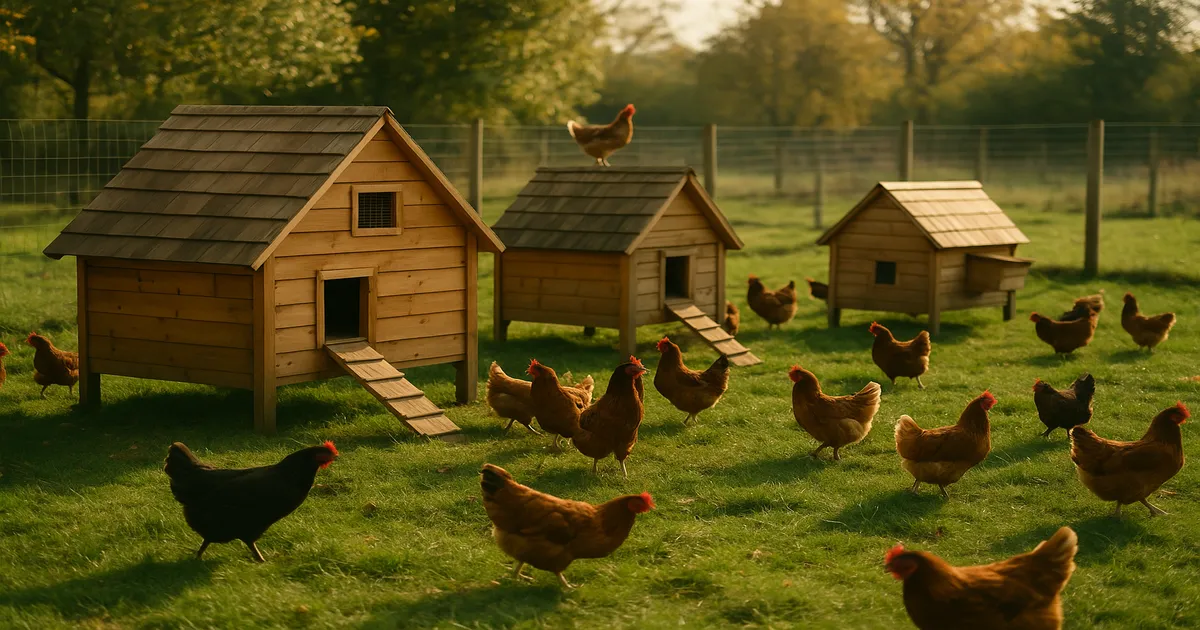
Commercial operations run 0.75–1.0 sq ft per bird in climate-controlled houses — a density that’s economically efficient at scale but controversial from a welfare standpoint. For small farms, plan on a minimum of 4 sq ft per bird inside the coop and 10 sq ft per bird in an outdoor run. This gives birds enough space to grow without the stress and disease pressure that comes with overcrowding.
Cornish Cross birds don’t need roost bars — their weight makes roosting impractical and hard on their joints. Keep them on 4–6 inches of deep pine shavings instead, and turn the litter regularly to control ammonia. Target less than 25 ppm ammonia at bird level — if you can smell it when you walk in, it’s already too high. Poor litter management leads to footpad lesions, which affects bird welfare and can disqualify you from humane certifications. Good cross-ventilation and leak-free waterers are your primary tools. (J&D Manufacturing 36-Inch Poultry Fan)
Temperature Brooding Schedule
| Week | Brooder Temperature |
|---|---|
| Week 1 | 95°F (35°C) at chick level |
| Week 2 | 90°F (32°C) |
| Week 3 | 85°F (29°C) |
| Week 4 | 80°F (27°C) |
| Week 5 | 75°F (24°C) |
| Week 6+ | Ambient (if above 65°F / 18°C) |
Read your chicks, not just your thermometer. Chicks huddled under the heat source are cold; chicks spread to the edges and panting are too hot. Evenly distributed, active chicks mean you’ve got it right. A radiant heat plate is safer than a heat lamp and easier to regulate. (Brinsea EcoGlow Safety 600)
All-In All-Out Biosecurity
Never mix age groups in the same house. Process your entire flock, clean out the house completely, and allow at least a two-week downtime before the next batch arrives. This all-in/all-out approach breaks disease cycles and gives you a clean slate every time — it’s the single most effective biosecurity practice available to small producers.
Water, Health, and Feed Management
Broilers drink approximately twice their feed intake by weight. Even a few hours without clean, fresh water can set back growth measurably, especially in hot weather. Check waterers twice daily and make sure flow isn’t dropping as the flock grows. (Harris Farms 5-Gallon Plastic Poultry Waterer)
Coccidiosis is caused by Eimeria protozoa and spreads rapidly through litter. Symptoms include bloody or watery droppings, lethargy, and hunched posture. Treat with Amprolium (Corid) at 1.5 teaspoons (approximately 10 ml) of the 9.6% liquid solution per gallon of water for 5–7 days as the sole water source. If your chicks were vaccinated for coccidiosis at the hatchery, use unmedicated feed — medicated starter and a live coccidiosis vaccine are incompatible and will cancel each other out.
Ascites (water belly) and Sudden Death Syndrome are the two Cornish Cross-specific conditions that hit hardest in fast-growing flocks. Both are linked to the cardiovascular system being unable to keep pace with rapid muscle growth. You can reduce ascites incidence by mildly restricting feed in weeks 1–3 and ensuring adequate ventilation. Neither condition is treatable once it occurs — prevention through management is your only tool.
For direct-market producers, always observe the withdrawal period on any medicated product — typically 5–14 days — before processing. This is both a legal requirement and a genuine selling point for customers who care about what they’re eating.
Where to Track Current Live Broiler Selling Prices
USDA AMS Poultry Market News
This is your most reliable free resource. USDA AMS publishes weekly broiler market reports at ams.usda.gov covering live prices, dressed prices, and regional breakdowns. Focus on the “live weight equivalent” price for your region — that’s the number most relevant to what you’ll actually receive. Bookmark it and check it weekly if you’re selling regularly.
National Chicken Council
The National Chicken Council publishes broader industry statistics — production volumes, per-capita consumption, and price trend data — at nationalchickencouncil.org. Less granular than USDA AMS, but useful for understanding the macro picture and longer-term trends.
CME Group Broiler Futures
The CME Group lists broiler futures contracts, which give you a forward-looking view of where the market expects prices to go. Most useful for larger operations making purchasing or contracting decisions months out, but worth a periodic look even for small farms.
Frequently Asked Questions About Live Broiler Selling Prices
What are the current live selling prices for broilers at the farm-direct level? Farm-direct Cornish Cross broilers typically sell for $3–$6 per lb live weight, or $15–$35 per bird. Heritage and organic birds command $5–$15 per lb depending on breed and certification.
Can small farms make money selling live broilers at wholesale prices? Generally, no. Wholesale rates of $0.55–$0.90 per lb don’t cover small-farm production costs, which typically run $10–$15 per bird all-in. Direct marketing to consumers or restaurants is where small-farm economics work.
How often do live broiler prices change? Commercial wholesale prices shift weekly and are published by USDA AMS every week. Farm-direct prices are more stable but should be reviewed seasonally — especially ahead of summer grilling season and major holidays when demand peaks.
What certifications add the most value to live broiler prices? USDA Organic certification adds the most — organic live birds sell for $8–$15 per lb versus $3–$6 for conventional farm-direct birds. Certified Humane and Non-GMO Project verification also add meaningful premiums, typically $1–$4 per lb at the farm-direct level.
What’s the best breed for maximizing live broiler selling price? It depends on your market. Cornish Cross maximizes throughput with fast 6–8 week grow-out. Freedom Rangers and heritage breeds like Delaware or Bresse command higher per-pound prices but take longer to raise. Match your breed choice to what your specific buyers are willing to pay.