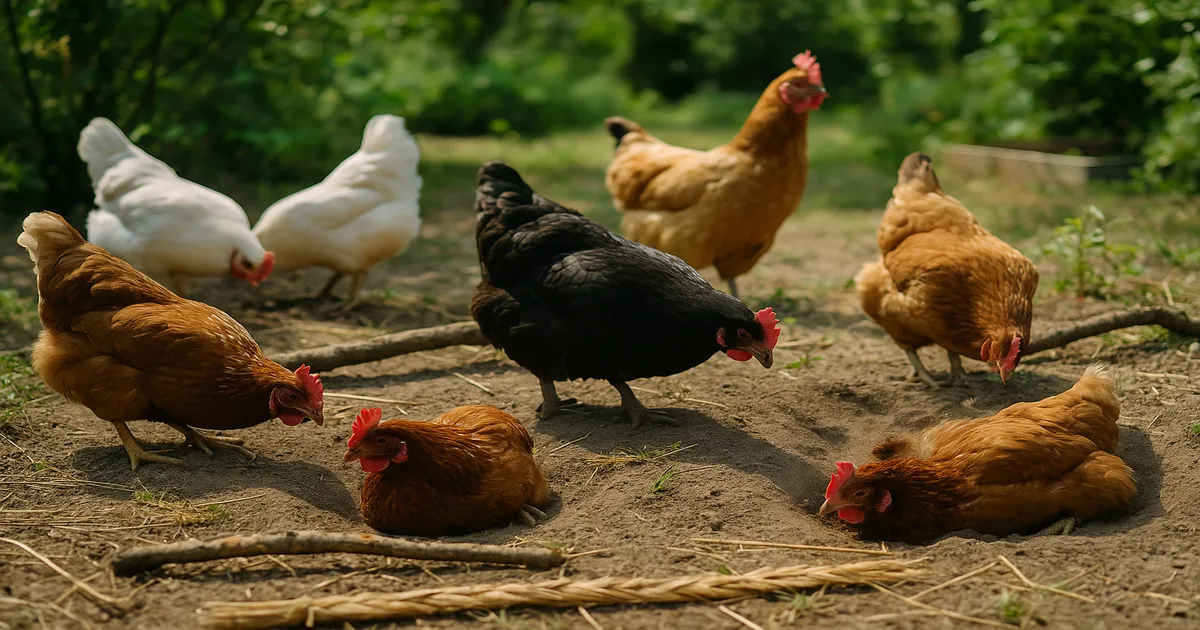
Quick Answer: Chickens spend 60–70% of their daylight hours foraging, and without enough mental and physical stimulation they get bored fast. The most effective ways to keep chickens entertained are scatter feeding, hanging treat dispensers, providing dust baths, adding perches and climbing structures, and rotating novel objects. Ignore enrichment and you’re looking at feather pecking, potential cannibalism, and a 10–25% drop in egg production.
Figuring out how to keep chickens entertained is one of those things that sounds optional — until you see the damage boredom actually causes. Chickens are surprisingly intelligent. Studies suggest their cognitive ability is roughly equivalent to a 4-year-old child, including object permanence, and a bored flock will find destructive ways to occupy itself. The good news is that most enrichment strategies cost little to nothing and take minutes to set up.
Why Chickens Get Bored — and Why It Matters
Chickens are not the brainless birds they’re often made out to be. They demonstrate object permanence, basic problem-solving, and even rudimentary self-control in controlled studies. That level of cognition means they genuinely need mental engagement, not just food and water.
Left to their own devices on open pasture, chickens have a packed daily schedule. They spend 60–70% of daylight hours scratching, pecking, and foraging. The remaining hours go to dust bathing, roosting, exploring new objects, and navigating social hierarchies. Confine them to a small run with nothing to do and every one of those drives gets frustrated.
Boredom also hits your egg basket. Chronic stress raises cortisol, which suppresses laying. A bored Rhode Island Red that should be giving you 5–6 eggs per week can drop to 3–4. Across a flock, that adds up to a 10–25% production loss. Worse, boredom-driven feather pecking can escalate to cannibalism, and egg eating — once a hen learns it out of boredom — is nearly impossible to break.
Which Breeds Need the Most Entertainment
High-Energy Breeds That Demand Stimulation
Some breeds will tolerate a boring environment about as well as a toddler tolerates a long car ride.
- Leghorn — flighty, highly active, and a prolific white-egg layer; needs significant space and varied enrichment
- Easter Egger — playful, curious, excellent natural foragers that lay blue or green eggs
- Ancona — extremely active; confined spaces are genuinely stressful for them
- Hamburg — nervous energy that needs constant environmental variety
- Rhode Island Red — active and intelligent; can turn aggressive when understimulated, though they adapt to confinement better than the breeds above
Calmer Breeds That Still Benefit From Enrichment
Buff Orpington, Brahma, Cochin, Silkie, and Plymouth Rock hens are easygoing and tolerate confinement better. But “tolerates it” doesn’t mean “thrives in it.” Docile heavy breeds like Buff Orpingtons and Cochins are prone to obesity and fatty liver syndrome when inactive. Enrichment keeps them moving — and that matters for their long-term health.
How Flock Size Affects Boredom
A solitary chicken or a pair has almost nothing to occupy its social instincts. Flocks of 3–6 birds show noticeably less boredom-related aggression because the social hierarchy itself provides daily stimulation. If you’re keeping chickens, keep at least three.
How to Keep Chickens Entertained: Space First
No enrichment toy compensates for chronic overcrowding. Inadequate space is the single biggest driver of boredom in backyard flocks, and dropping below minimums is strongly linked to feather pecking.
- Indoor coop: 4 sq ft per bird for standard breeds
- Outdoor run: 10 sq ft per bird minimum; 15–20 sq ft strongly recommended for active breeds
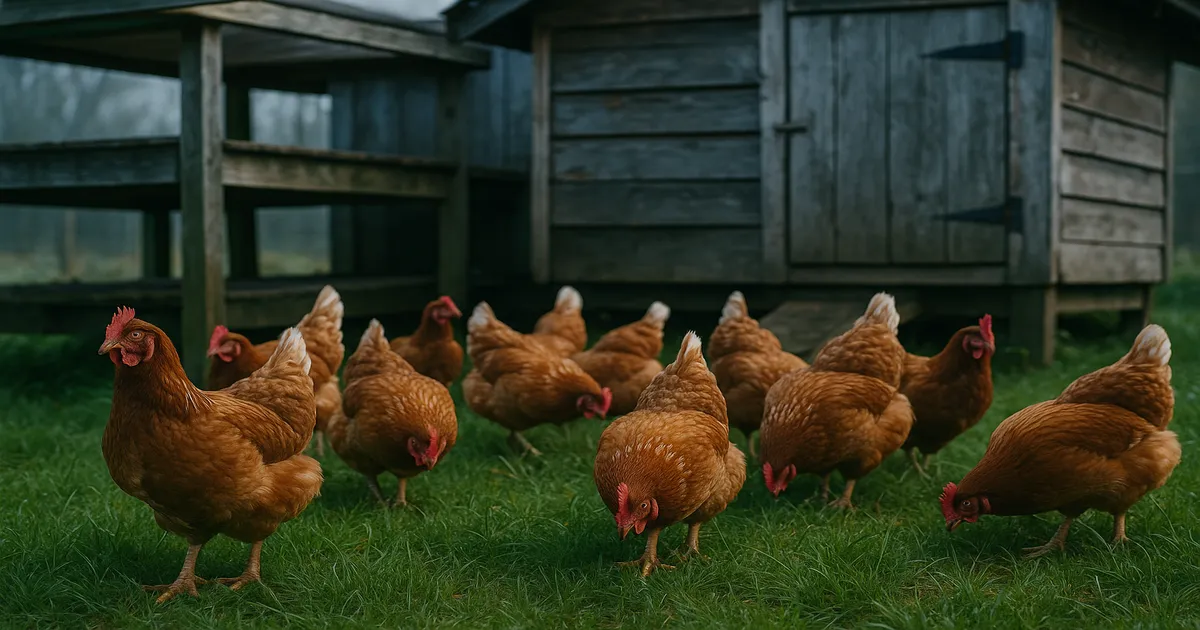
- Free-range: 250+ sq ft per bird for full behavioral expression
Once space is sorted, roost bars are the next priority. Give each bird 8–12 inches of linear roost space on round dowels 1.5–2 inches in diameter — easier on feet than flat boards. Set bars at least 18–24 inches above the floor and install multiple levels at different heights. The variety itself is enriching.
A flat, bare run is a boredom trap. Break it up with stumps, logs, a low platform, and areas of different ground texture. Hens that have corners to investigate, things to hop onto, and varied terrain to scratch through are hens that stay occupied.
Food-Based Enrichment: The Easiest Way to Keep Chickens Entertained
Scatter Feeding and Deep Litter Foraging
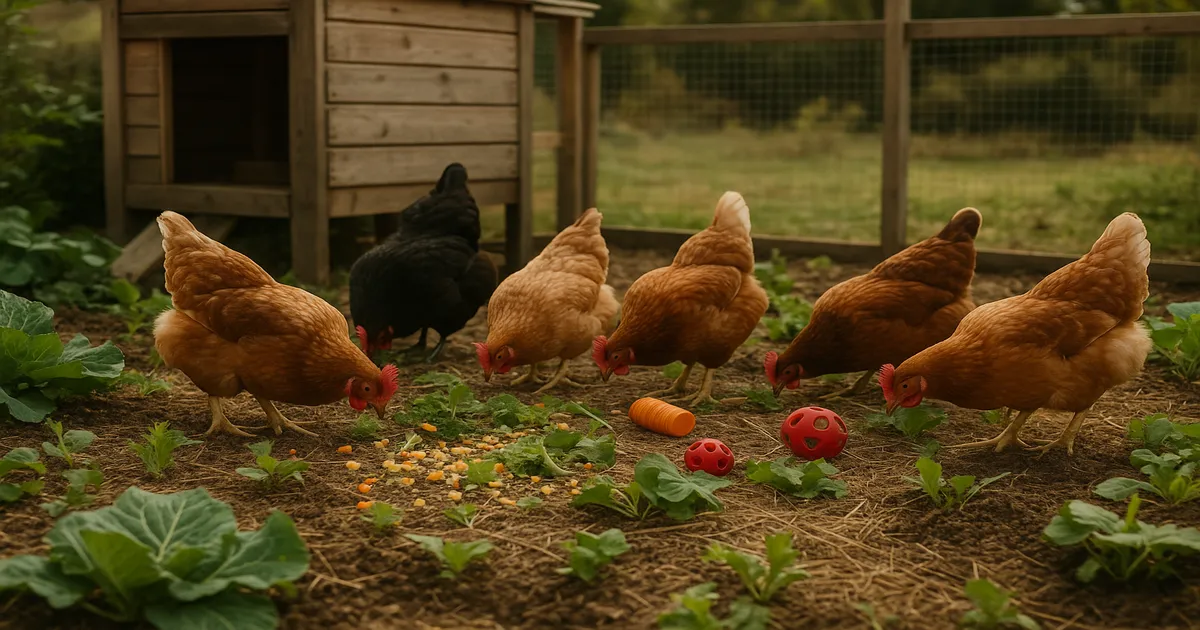
Scatter feeding is the simplest enrichment you can offer. Toss a handful of scratch grains — cracked corn, wheat, milo — into deep litter and your hens will spend 20–40 minutes hunting every last kernel. In winter, cracked corn has the added bonus of generating metabolic heat as it digests.
Keep scratch to 10% of total diet, roughly 11 grams per bird per day. More than that and you’ll dilute their protein intake and invite obesity. Layer feed should provide 16–18% protein and around 4% calcium to support consistent laying; scratch provides neither, so treat it as enrichment, not nutrition.
One underrated tip: switch from pellets to mash or crumbles. Pellets are consumed quickly, leaving hens with more idle time. Mash takes longer to eat and provides passive enrichment throughout the day.
Hanging Treat Dispensers and Pecking Blocks
Hang a whole cabbage head, a bundle of kale, or a corn cob at beak height and watch your flock go to work. A single cabbage can keep hens busy for 30–60 minutes. Suet cakes hung in the coop during winter serve the same purpose with added calories. Commercial pecking blocks are another solid option — they’re designed to resist easy consumption so hens work for every bite. (Ware Manufacturing Chicken Treat Block)
DIY and Commercial Foraging Toys
A simple PVC pipe feeder with drilled holes that dispenses pellets as hens roll it costs almost nothing to make and keeps birds busy for extended periods. Commercial foraging balls work on the same principle and are easy to refill with pellets or dried mealworms. (Lixit Chicken Toy Treat Ball) Scatter mealworms — roughly 53% protein dry weight — into deep litter for an especially intense foraging session.
Frozen Treat Blocks for Summer
In hot weather, freeze a mix of berries, chopped vegetables, and mealworms in a block of water. It gives hens something to peck at while helping them cool down — two problems solved at once. Heat stress begins around 85°F (29°C) and becomes dangerous above 95°F (35°C), so summer enrichment that doubles as cooling is genuinely useful.
Physical Enrichment: Structures and Activities
Dust Baths: A Non-Negotiable Behavioral Need
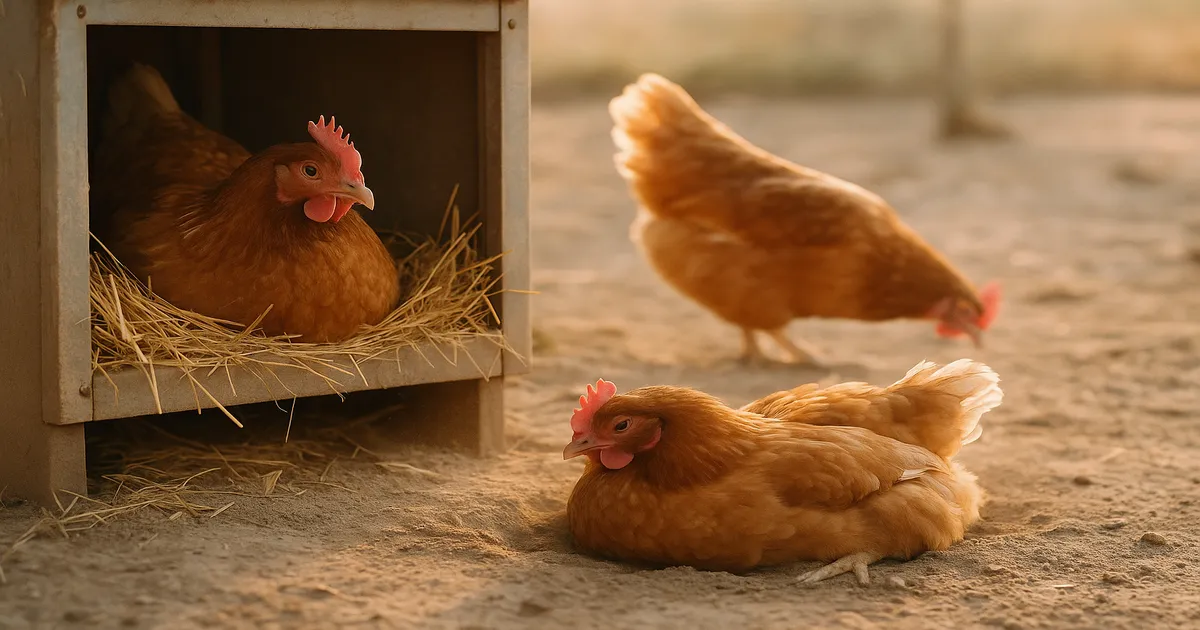
Dust bathing is hardwired. Hens will attempt to dust bathe on a concrete floor if that’s all they have, which tells you how strong the drive is. A proper dust bath is also their primary natural defense against mites and lice, making it both enrichment and preventive health care.
Designate a dust bath area filled with a mix of fine dirt, play sand, and wood ash. Aim for a container at least 12 inches deep and wide enough for two or three hens at once. Keep it dry and sheltered.
Perches, Ladders, and Climbing Structures
Add variety to the run with stumps and logs at different heights, a simple ladder leaning against the run wall, a low platform (a pallet on short legs works perfectly), and branches wedged across corners at different angles. Vertical variety gives hens choices and encourages movement throughout the day.
Mirrors, Balls, and Novel Objects
Chickens are strongly attracted to novel objects and will investigate anything new in their environment. Hang a CD to catch the light, place a small mirror against the coop wall, or toss in a colorful rubber ball. The key word is rotate. Novelty wears off fast, so swap items in and out weekly to keep things interesting.
Free-Range Time
Free-ranging is the gold standard of chicken enrichment. Even a few hours of supervised access to open space — where hens can forage, dust bathe in natural soil, and explore — satisfies behavioral drives that no coop toy fully replicates. If full free-range isn’t possible due to predator pressure, a moveable chicken tractor gives meaningful environmental variety without the risk.
Seasonal Enrichment
Winter: When Confinement Peaks
Winter is the hardest season for boredom because hens are often confined for days at a time. Double down on scatter feeding into deep litter, hang suet cakes and cabbage heads, and add supplemental lighting. Fourteen to sixteen hours of total light per day — using a low-wattage bulb on a timer — maintains laying and extends active hours. Add the light in the morning rather than the evening so hens aren’t plunged into sudden darkness.
Cold-hardy breeds like Rhode Island Red, Plymouth Rock, and Brahma handle winter confinement reasonably well. Cold-sensitive breeds like Leghorn and Silkie need extra warmth and are especially prone to winter boredom stress.
Summer: Staying Active Without Overheating
The challenge in summer is keeping hens active without overheating them. Frozen treat blocks are ideal. Shade structures covering at least 50% of the run are essential once temperatures climb above 85°F (29°C). A cool, shaded dust bath area gives hens a place to regulate their temperature while still engaging in natural behavior.
Integrating New Chicks as Flock Enrichment
Introducing new birds — ideally at 12–16 weeks, using a “see but don’t touch” partition for 1–2 weeks before full integration — is itself a form of enrichment for your existing flock. The new social dynamic and the re-establishment of pecking order keep everyone engaged. Monitor closely for the first 72 hours after full integration and provide multiple feed and water stations to reduce competition.
Health Warning Signs: When Boredom Has Gone Too Far
Feather Pecking: Catch It Early
The escalation pathway moves fast: mild pecking → feather loss → exposed skin → blood → cannibalism. Chickens are attracted to the color red, which means once blood is drawn, more birds join in. Vent pecking — targeting the cloaca — can be fatal within hours. Do a quick visual scan of your flock daily, paying attention to bare patches on backs, necks, and tail bases. If you spot active pecking, separate the injured bird immediately and address the root cause — almost always space, boredom, or both.
Obesity and Fatty Liver Risk
A hen that does nothing but eat and sit is on a path toward fatty liver hemorrhagic syndrome, particularly in heavy breeds like Buff Orpington, Cochin, and Brahma. Signs include lethargy, a pale comb, and sudden death in otherwise healthy-looking birds. Enrichment that encourages movement — scatter feeding, foraging toys, varied terrain — is genuinely preventive medicine for these breeds.
Ruling Out Mites and Lice
Restlessness that looks like boredom isn’t always boredom. Northern fowl mite and red mite cause significant stress that mimics boredom symptoms — hens peck at themselves, seem agitated, and may drop in production. Check monthly under the wings and around the vent. A well-maintained dust bath is the primary prevention tool, which is yet another reason it’s non-negotiable.
Frequently Asked Questions About Keeping Chickens Entertained
What are the signs that chickens are bored?
The most obvious signs are feather pecking (at themselves or flock mates), egg eating, pacing along fence lines, and general lethargy. Bored hens may also drop in egg production or spend long periods standing in one spot rather than actively foraging.
How do I stop my chickens from pecking each other out of boredom?
Start by checking your space — overcrowding is the most common cause. Then add enrichment immediately: hang a cabbage head, scatter scratch into deep litter, and make sure a dust bath is available. If one bird is being targeted, remove her until wounds heal. Persistent pecking in an adequately spaced flock usually means more environmental variety is needed.
What household scraps can I give chickens to keep them entertained?
Good options include leafy greens (kale, lettuce, chard), cooked rice or pasta, vegetable peelings, berries, and melon rinds. Avoid avocado, onion, raw potato, chocolate, and anything salty or heavily processed. Scatter scraps on the ground rather than in a bowl to encourage foraging and extend the enrichment time.
How do you keep chickens entertained in winter?
Deep litter scatter feeding, hanging cabbage or suet cakes inside the coop, and supplemental lighting (14–16 hours total per day on a timer) are the most effective strategies. Rotating novel objects — a new hanging toy, a mirror, a bundle of dried herbs — helps break up the monotony of long confined days.
Do chickens need toys in their coop?
Yes, though “toys” is a loose term. Objects that encourage pecking, investigation, and movement make a real difference. A hanging treat dispenser, a foraging ball, or even a mirror all qualify. The most important thing is variety and rotation — the same object loses its appeal within days, so swap things around regularly to maintain novelty.