Quick Answer: To keep chickens off your deck, move feeders at least 20–30 feet away from the house, install a physical barrier like hardware cloth fencing around the deck perimeter, and add a motion-activated sprinkler as a backup deterrent. Most flocks show significant improvement within 2–4 weeks once you address both physical access and the underlying reasons they’re drawn there.
If you’ve ever stepped outside to find your deck covered in droppings — or watched a hen demolish your potted herbs — you know that figuring out how to keep chickens off your deck becomes urgent fast. The good news is that it’s a solvable problem. It takes a combination of barriers, smart feed placement, and a little behavioral consistency, but it works.
Why Chickens Are Attracted to Your Deck
Warmth, Shelter, and Elevated Surfaces
Wooden decks absorb and radiate heat, making them genuinely comfortable spots for a hen to hang out. Add in the shelter a roof or overhang provides during rain, and you’ve got a five-star chicken lounge. The space underneath a raised deck is especially appealing — dark, dry, and protected from predators.
Chickens are also instinctively drawn to elevated surfaces. A deck that sits a step or two above grade feels like a safe vantage point, which matters a lot to a prey animal.
Food Scraps, Potted Plants, and Shiny Objects
Anything dropped while grilling or snacking is a buffet to a foraging hen. Potted plants are irresistible — chickens will scratch the soil and eat the greenery without hesitation. They’re also attracted to shiny objects, standing water in saucers, and even reflections off glass doors.
Boredom and Insufficient Foraging Space
This is the one most people overlook. A hen confined to a run with less than 10 square feet per bird has exhausted her immediate territory and will actively seek new ground. Experienced keepers consistently find that overcrowded birds push boundaries far more often. If your flock is cramped, your deck will pay for it.
Which Breeds Are Most Likely to Invade Your Deck
Some breeds are far more adventurous than others. The usual suspects:
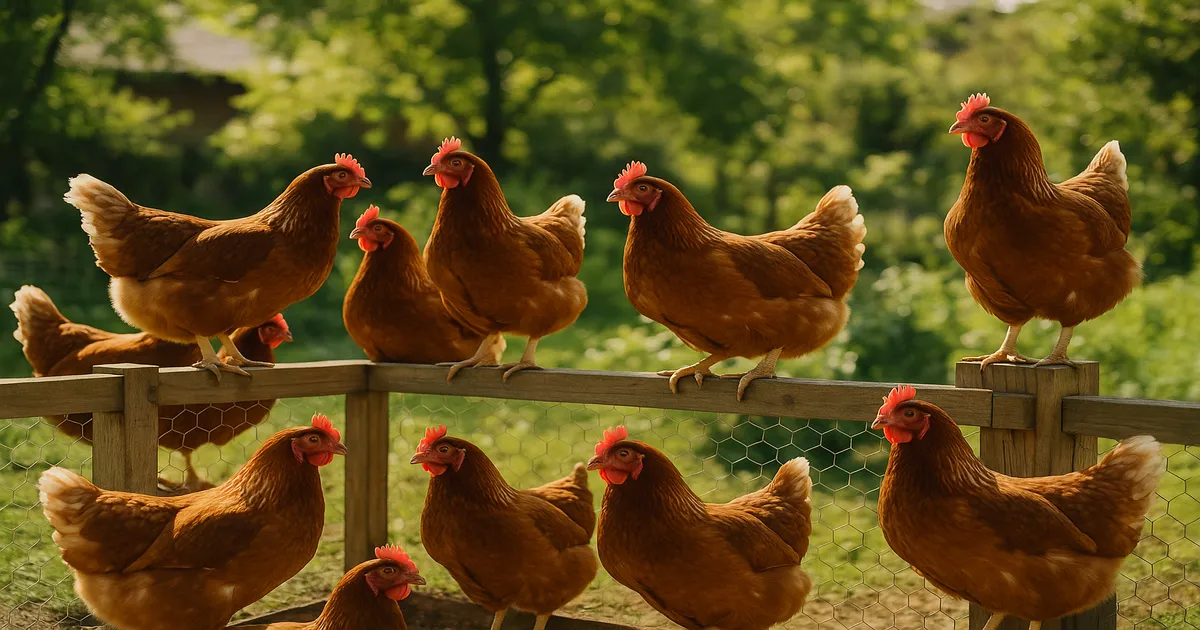
- Leghorns — excellent fliers, easily clear 6-foot fences, and will land directly on elevated decks
- Easter Eggers — bold, curious, and completely comfortable walking up to (and into) human spaces
- Rhode Island Reds — assertive and natural boundary-pushers
- Buff Orpingtons — docile but intensely food-motivated; they’ll follow you anywhere treats have appeared
- Silkies — can’t fly, but will waddle straight toward human activity
Heavy breeds like Brahmas, Cochins, and Jersey Giants are much lower risk. Their weight and calm temperament keep them closer to the coop. Hand-raised hens of any breed are also higher risk — if you’ve ever fed them treats on the deck, they’ve learned that’s where the good stuff lives.
How to Keep Chickens Off Your Deck: Physical Barriers
Fencing Options: What Works and What Doesn’t
Hardware cloth with a 1/2-inch mesh is your best material. It’s rigid, durable, and far stronger than standard chicken wire. Chicken wire is designed to keep chickens in a run — it flexes easily and won’t hold up long-term as a perimeter barrier. For a deck perimeter, hardware cloth attached to simple wooden or metal posts does the job cleanly and looks reasonably tidy.
You can also attach hardware cloth directly to existing deck railings using zip ties or staples — no major construction required.
How High Does the Fence Need to Be?
- Heavy breeds (Brahma, Cochin, Jersey Giant): 3–4 feet is usually sufficient
- Medium breeds (Rhode Island Red, Australorp, Barred Rock): 4–5 feet
- Flighty breeds (Leghorn, Easter Egger): 6 feet minimum — and even then, overhead netting may be needed
A fence that’s too short is almost worse than no fence, because it trains your birds to keep trying.
Gate and Entry Point Solutions
Stairs are the most common invasion route and the easiest to close off. A simple hinged gate that latches securely at the base of the stairs solves most problems overnight. Check for gaps between railings, under the deck skirt, and around support posts — a determined hen will find every single one.
Netting for Flighty Breeds
If you have Leghorns or Easter Eggers, ground-level fencing alone won’t cut it. Lightweight overhead bird netting stretched across the top of the fenced area prevents them from flying directly onto the deck surface. It’s inexpensive and easy to install with a few anchor points.
Deterrents That Actually Work
Motion-Activated Sprinklers
Motion-activated sprinklers are one of the most effective non-harmful deterrents available. A brief burst of water startles chickens without hurting them, and they learn quickly. Position the sprinkler to cover the most common approach path — usually the base of the stairs or the deck edge nearest the run. (Orbit 62100 Yard Enforcer)
Motion-activated lights are less reliable on their own but add a useful extra layer when combined with a sprinkler.
Natural Repellents
Chickens have a genuine aversion to certain scents. These won’t create a hard barrier, but they reinforce other methods during the training period:
- Citrus peels scattered along deck edges — replace every few days
- Lavender and rosemary planted in pots near the deck entrance
- White vinegar spray applied to deck edges and railings
Maintenance-heavy, but worth using as a secondary layer.
Anti-Roosting Strips for Railings
If your chickens are roosting on deck railings, anti-roosting spike tape applied to the top rail makes landing uncomfortable. It’s the same principle used on commercial buildings to deter pigeons — harmless but effective. (Bird-X Stainless Steel Bird Spikes)
What Doesn’t Work
Fake owls and plastic predator decoys fail within days. Chickens habituate to stationary objects almost immediately — after one cautious inspection, they’ll ignore it completely. Casual shooing without follow-through does nothing except teach your birds that humans are mildly annoying obstacles.
Feed Placement and Behavioral Training
Move Feeders at Least 20–30 Feet Away
If your feeder sits near the house, you’ve accidentally trained your flock to patrol that zone multiple times a day. Move feeders and waterers to the far end of the run or pasture — at least 20–30 feet from the deck. This single change redirects daily foraging patterns more effectively than most deterrents.
Scatter Feeding to Reinforce the Right Zone
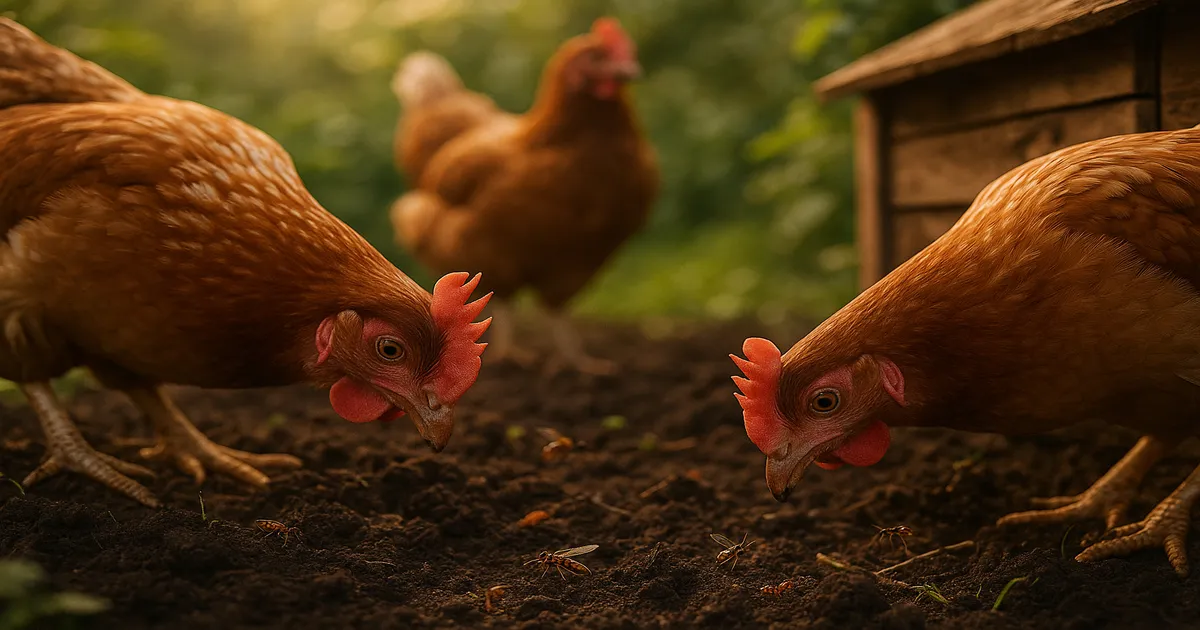
Toss a handful of scratch grains in the area where you want your birds to spend time. Do this daily and consistently. Chickens are creatures of habit, and you’re building a new one. Within a week or two, they’ll gravitate toward that zone on their own.
Never Feed Treats on or Near the Deck
This one is non-negotiable. Even a single treat fed on the deck can undo two weeks of careful training. Chickens have excellent spatial memory for food locations and will return to where the good stuff appeared, every single time.
Consistent Redirection
Every time a bird gets on the deck, calmly herd it away. Don’t chase — chasing excites chickens and turns the whole thing into a game. Walk slowly toward the bird, arms slightly out, and guide it back toward the run. The key is every time. One inconsistent day can reset your progress significantly.
In most flocks, a dominant hen scouts new territory and the others follow. If you can break that lead hen’s habit of visiting the deck — often a Rhode Island Red or Barred Rock — the rest of the flock usually stops as well.
How Long Does It Take?
With consistent management — barriers in place, feeders moved, daily redirection — most flocks show significant improvement within 2–4 weeks. Deeply ingrained habits or highly motivated breeds may take a full month. Chickens are trainable; they just need repetition.
Solving the Root Cause: Space and Enrichment
Run Space Requirements
The numbers matter:
- Minimum run space: 10 sq ft per bird (below this, expect problem behavior)
- Recommended: 20–30 sq ft per bird
- Free-range: 100+ sq ft per bird significantly reduces wandering beyond desired areas
If your birds don’t have enough room, no amount of deterrents will fully solve the deck problem. They’re not misbehaving — they’re looking for more space.
Enrichment to Cure Boredom
A busy chicken is a chicken that stays put. Simple enrichment goes a long way:
- Hang a head of cabbage or bunch of kale at pecking height
- Add a log or two for perching and scratching
- Fill a foraging box with scratch and soil so they have to work for it
- Rotate treat locations to keep things interesting
Dust Bath Placement
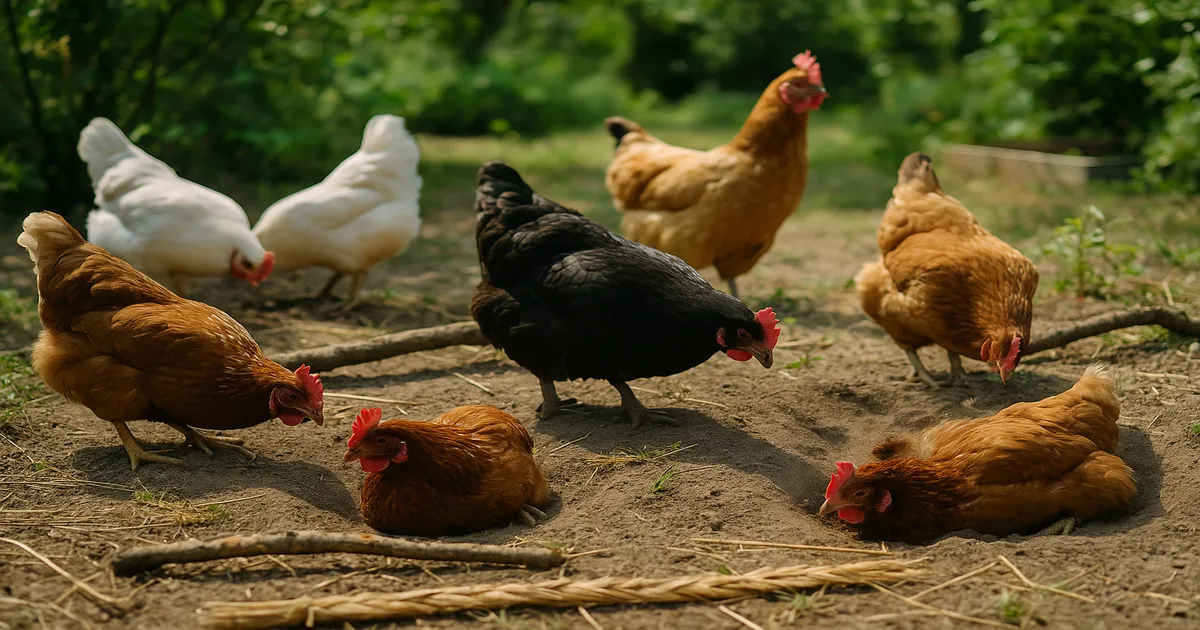
Chickens will dust-bathe wherever they find loose, dry soil — and if that’s near your deck, they’ll keep coming back. Create a dedicated dust bath in the far corner of the run, filled with a mix of dirt, sand, and food-grade diatomaceous earth. Make it appealing and they’ll use it instead of excavating your deck planters.
Health Risks of Letting Chickens on Your Deck
Chicken droppings carry Salmonella and Campylobacter, both genuine human health risks. A contaminated deck is a real hazard, especially in households with young children. Clean any contaminated surfaces with a diluted bleach solution and rinse thoroughly.
Rough or splintered deck wood can also cause small cuts on a hen’s footpad, leading to bumblefoot — a Staphylococcus bacterial infection that causes painful swelling and a characteristic black scab. Treatment involves soaking the foot in a warm Epsom salt solution and careful wound management, but it’s far easier to prevent in the first place.
Beyond health concerns, chickens are destructive guests. They’ll scratch up potted plants, peck at furniture, and leave staining droppings on wood surfaces. The damage adds up quickly over a single season.
Frequently Asked Questions
What is the best deterrent to keep chickens off a deck?
The most effective single deterrent is a motion-activated sprinkler positioned at the main approach to the deck. It’s harmless, requires no supervision, and works consistently. Combine it with a physical barrier at entry points and proper feeder placement for the best results.
Will chickens stop going on the deck on their own?
Unlikely. Once chickens identify a location as rewarding — warm, sheltered, or associated with food — they’ll keep returning. Without active management, the behavior typically gets worse as more flock members learn the route.
How do I stop chickens from pooping on my porch or deck?
Block physical access with fencing or a gate, and use a motion-activated sprinkler to deter approach. Remove any food sources from the area and never feed treats nearby. Clean existing droppings promptly — the scent can actually attract birds back to the same spot.
Can chickens damage a wooden deck?
Yes. Chickens scratch at wood surfaces, peck at gaps and imperfections, and leave droppings that stain and degrade wood over time. Their nails can scratch softer finishes, and frequent traffic from even a small flock can cause noticeable cosmetic damage within a single season.
What smells keep chickens away from an area?
Chickens dislike citrus, lavender, rosemary, and vinegar. Scattering citrus peels along deck edges or planting lavender near entry points can help discourage visits. Scent-based repellents work best as a supplement to physical barriers — on their own, they’re not reliable enough to solve the problem.