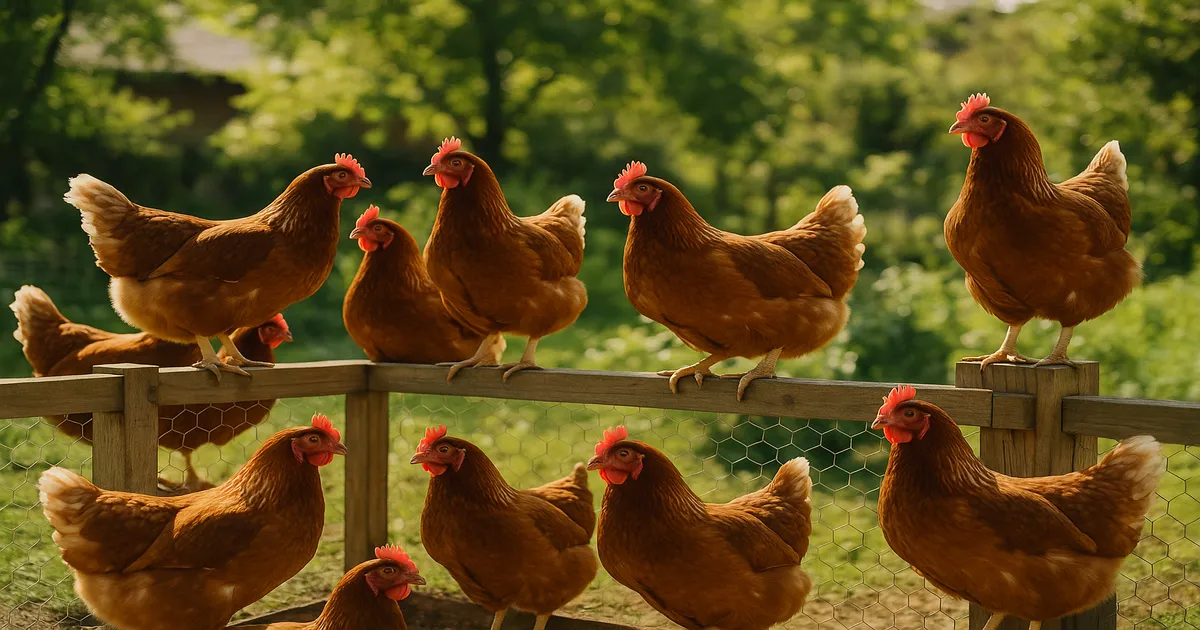
Quick Answer: To keep chickens from jumping or flying over a fence, your three best options are raising fence height to at least 6 feet, adding an outward-angled topper or overhang, and clipping one wing to disrupt flight balance. The right combination depends on your breeds — a Brahma rarely needs more than a 4-foot fence, while a Leghorn will laugh at it.
Figuring out how to keep chickens from jumping fence is one of those problems that seems simple until you’re chasing a hen around your neighbor’s garden for the third time that week. The good news: with the right fence height, a few physical modifications, and an honest look at your run setup, most escape problems are very fixable.
How to Stop Chickens Jumping or Flying Over a Fence: Three Core Strategies
- Raise fence height — 6 feet minimum for medium-risk breeds; 8 feet or a covered run for flighty breeds
- Add a fence topper or overhang — a 12–18 inch outward-angled extension at 45 degrees physically blocks a bird from clearing the top
- Clip one wing — removes the balance needed for controlled flight; takes about two minutes and is painless when done correctly
Use one strategy or combine all three. Flighty breeds often need all of them.
How High Can Chickens Actually Fly?
More than most people expect. Lightweight breeds like Leghorns, Hamburgs, and Egyptian Fayoumis can clear a 6-foot fence without much effort. Heavy breeds like Brahmas, Cochins, and Jersey Giants rarely get airborne at all — their body mass makes sustained flight impractical. Bantams are a special case: even the calmest bantam breeds are agile enough to escape almost any open-top enclosure.
Why Chickens Jump or Fly Over Fences
Overcrowding: The Number One Escape Trigger
If your hens are constantly testing the fence, check your run space first. The minimum is 10 square feet per bird in the run, but escape behavior drops off dramatically at 15–20 square feet per bird. Crowded hens are stressed hens, and stressed hens look for a way out.
Breed Instinct and Natural Flight Drive
Some breeds are simply wired to roam. Leghorns, Hamburgs, Anconas, and Egyptian Fayoumis have strong foraging instincts and nervous, active temperaments — containment goes against their nature. No amount of enrichment will fully override genetics in these breeds, which is why fence height and physical barriers matter so much.
Boredom, Foraging Motivation, and Seasonal Factors
A bare dirt run with nothing to do is an escape waiting to happen. Hens that can see lush grass on the other side of the fence are highly motivated to get there. Spring brings a noticeable uptick in escape attempts as birds become more active after winter — expect it and plan for it.
Predator Pressure
A fox prowling the fence line at dusk can trigger panicked flight attempts that send hens over a fence they’d normally ignore. If escapes seem to happen suddenly and in clusters, look for signs of predator activity around the perimeter. Solving the predator problem often solves the escape problem too.
Choosing the Right Fence Height for Your Breed
Fence Height by Breed Category
| Breed Category | Example Breeds | Weight | Recommended Fence Height |
|---|---|---|---|
| Heavy / Low-risk | Brahma, Cochin, Jersey Giant | 8–13 lbs | 3–4 feet |
| Medium-risk | Rhode Island Red, Barred Rock, Sussex | 6–8 lbs | 4–5 feet |
| High-risk / Flighty | Leghorn, Hamburg, Ancona, Fayoumi | 3.5–5 lbs | 6–8 feet or covered run |
| Bantams (all breeds) | Sebright, Cochin Bantam, Old English Game | 1–2.5 lbs | Fully covered run required |
Heavy breeds like Brahmas (9–12 lbs), Cochins (8–11 lbs), and Jersey Giants (10–13 lbs) are physically poor fliers. A 3–4 foot fence is usually sufficient, though 4 feet gives you a comfortable margin. Buff Orpingtons and Sussex hens fall into a similar category — calm, heavy, and easy to contain.
Flighty breeds are a different story. Leghorns are prolific layers — around 280–320 white eggs per year — but they are escape artists of the highest order. The same goes for Hamburgs, Anconas, and especially Egyptian Fayoumis. For these breeds, plan on 6–8 foot fencing with an overhang, or skip the battle and build a covered run from the start.
Bantams are their own category entirely. No matter how calm a bantam’s temperament, their light weight and agility make open-top enclosures unreliable. A Cochin bantam may be the sweetest bird you’ve ever owned and still routinely clear a 4-foot fence. Budget for a covered run if bantams are in your plans.
Fence Types, Toppers, and Physical Containment Methods
Best Fencing Materials for Keeping Chickens In
- Hardware cloth (1/2-inch mesh, 19-gauge minimum): The gold standard — strong, predator-resistant, and long-lasting
- Welded wire fencing: Good for larger perimeters; less expensive than hardware cloth but not predator-proof at ground level without reinforcement
- Chicken wire: Adequate for keeping chickens in, but offers almost no protection against predators — raccoons can tear through it with their hands
- Electric poultry netting: An excellent portable option for free-ranging flocks; deters both escape attempts and ground predators
Adding an Overhang or Coyote Roller
An outward-angled fence topper — 12–18 inches of fencing or netting extended at a 45-degree angle away from the run — physically prevents a bird from getting purchase at the top of the fence. It works on the same principle as anti-climb barriers used for cats.
Coyote rollers serve double duty. These spinning PVC or aluminum tubes mount along the top rail and stop chickens from gripping the fence top to launch over, while also preventing predators from climbing in. A single strand of electric fencing run 4–6 inches above the top of your existing fence adds another deterrent layer — particularly useful as a retrofit rather than a standalone solution.
Fully Covered Runs
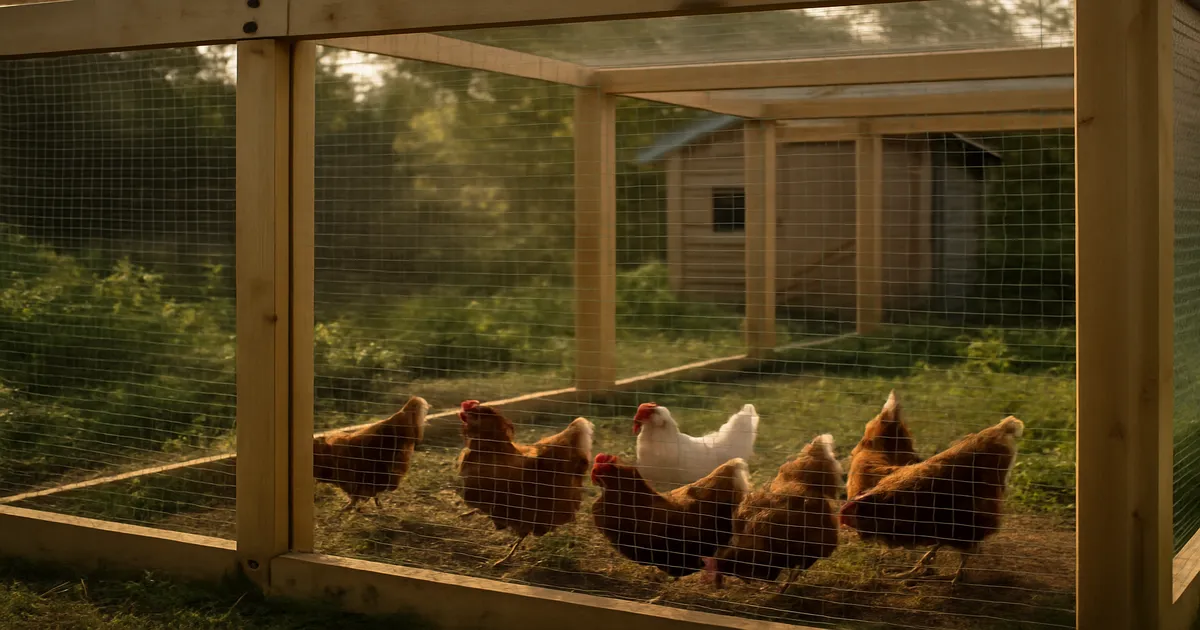
For bantams, Fayoumis, Old English Game, and any breed with serious flight capability, a covered run is the only truly reliable solution. It also eliminates aerial predator threats — hawks and owls — in one step. Hardware cloth or heavy-gauge welded wire over the top is more durable than bird netting, which can sag, tear, and trap birds.
Apron Extensions to Prevent Digging Escapes
Some breeds that can’t fly out will try to dig out instead. Lay a 12–18 inch apron of hardware cloth flat on the ground around the run perimeter, staked down and covered with soil or gravel. Predators and chickens alike instinctively dig right at the fence line — the apron stops them before they get under.
Wing Clipping: How to Do It Safely and When It Works
Clip only one wing, not both. Clipping both wings still allows a bird to achieve a clumsy but functional glide. Clipping one wing creates an imbalance that throws off the controlled takeoff needed to clear a fence. It’s a simple, painless procedure when done correctly.
Step-by-Step Wing Clipping Instructions
- Have a second person hold the bird calmly against their body
- Extend one wing fully
- Identify the 10 primary flight feathers — the long outermost feathers
- Check each feather for a blood feather (a developing feather with a visible dark shaft filled with blood) — do not cut these
- Using sharp poultry shears, cut the primary feathers to roughly half their length
- Fold the wing and confirm the cut feathers sit shorter than the secondary feathers
Wing clipping lasts until the next molt — for most hens, that’s annually in late summer or fall. After a molt, the primary feathers grow back fully and you’ll need to clip again. Mark your calendar so you’re not caught off guard.
One important caveat: very lightweight or highly motivated breeds — Egyptian Fayoumis, Sebrights, Old English Game — may still manage low fences even after clipping. For these birds, clipping is a supplement to good fencing, not a replacement for it.
Run Design Changes That Reduce Escape Attempts
The baseline is 4 square feet per bird inside the coop and 10 square feet per bird in the run — but those are minimums, not targets. Increasing run space to 15–20 square feet per bird makes a noticeable difference in how often hens test the fence.
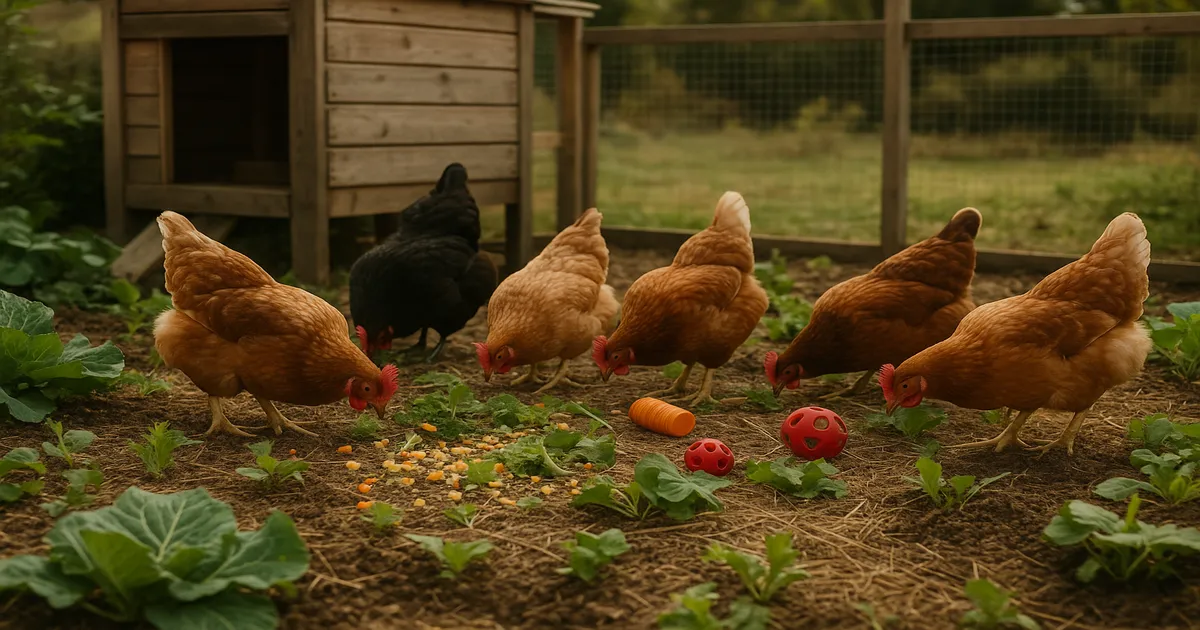
Beyond space, enrichment matters. A hen that has interesting things to do inside the run is a hen that’s less focused on what’s outside it. A few ideas that work well:
- Hang a cabbage or head of lettuce at pecking height — hens will work at it for hours
- Scatter scratch grains in deep litter to encourage natural foraging
- Add perches at varying heights (18, 30, and 42 inches) so birds have vertical space to explore
- Provide a shaded dust bath area with loose, dry soil or sand mixed with wood ash
If the only shade, dust, and interesting ground are outside the fence, your hens will work to get there. Bringing those resources inside the run removes the motivation to escape in the first place.
Breed Selection: Choosing Low-Flight-Risk Chickens from the Start
If you’re still in the planning stage, breed choice is the easiest lever you have. Buff Orpingtons, Brahmas, Cochins, Sussex, and Australorps are the easiest breeds to keep inside a standard fence. Australorps are a particularly smart pick — they lay around 250–300 brown eggs per year, have a calm temperament, and rarely attempt to fly. Strong production without the containment headaches.
Rhode Island Reds and Barred Rocks are active foragers but manageable with 4–5 foot fencing. They’re not as easy as Orpingtons, but far more containable than Leghorns while still delivering 250–300 brown eggs per year.
Leghorns, Hamburgs, Anconas, and Egyptian Fayoumis are excellent chickens — just not suited to small, enclosed runs. If containment is a priority, avoid them or plan for a fully covered run from day one.
One final note on mixed flocks: a single determined Leghorn can teach an entire flock of Orpingtons to jump a fence they’d never have attempted on their own. Watch flock dynamics closely in the first few weeks when mixing breeds. It only takes one escape artist to create a bad habit across the whole group.
Frequently Asked Questions
How high does a fence need to be to keep chickens from flying out?
It depends on your breeds. Heavy breeds like Brahmas and Cochins are typically contained by a 3–4 foot fence. Medium-risk breeds like Rhode Island Reds need 4–5 feet. Flighty breeds like Leghorns and Egyptian Fayoumis require 6–8 feet, and bantams of any breed need a fully covered run. When in doubt, go taller — adding height is much easier than retrofitting a fence that’s already failing.
Does wing clipping stop chickens from jumping over a fence?
Wing clipping works well for most breeds and significantly reduces fence-clearing ability, but it’s not foolproof. Clipping one wing creates a flight imbalance that prevents controlled takeoff. For very lightweight or highly motivated breeds like Egyptian Fayoumis or Sebright bantams, clipping helps but may not be enough on its own — pair it with taller fencing or a covered run. Clipping needs to be repeated after each annual molt.
What is the best fence type to keep chickens from escaping?
Hardware cloth (1/2-inch mesh, 19-gauge minimum) is the strongest and most predator-resistant option, though it’s expensive for large runs. Welded wire fencing is a practical middle ground for perimeter fencing, with hardware cloth added at the base for predator protection. Whatever material you choose, height and an outward-angled topper matter more than the material itself when it comes to preventing escape.
Which chicken breeds are easiest to keep inside a fence?
Brahmas, Cochins, Jersey Giants, Buff Orpingtons, and Australorps are the easiest to contain. Their heavier body weight makes sustained flight impractical, and their calm temperaments mean they’re less motivated to try. Australorps are a standout choice if you want both easy containment and strong egg production.
Will giving chickens more space stop escape attempts?
Often, yes — especially if overcrowding is the root cause. Increasing run space to 15–20 square feet per bird, adding enrichment, and providing shade and dust bathing areas removes most of the motivation to escape. That said, instinctively flighty breeds will still test fences regardless of space, so more room helps but doesn’t replace proper fencing for high-risk breeds.