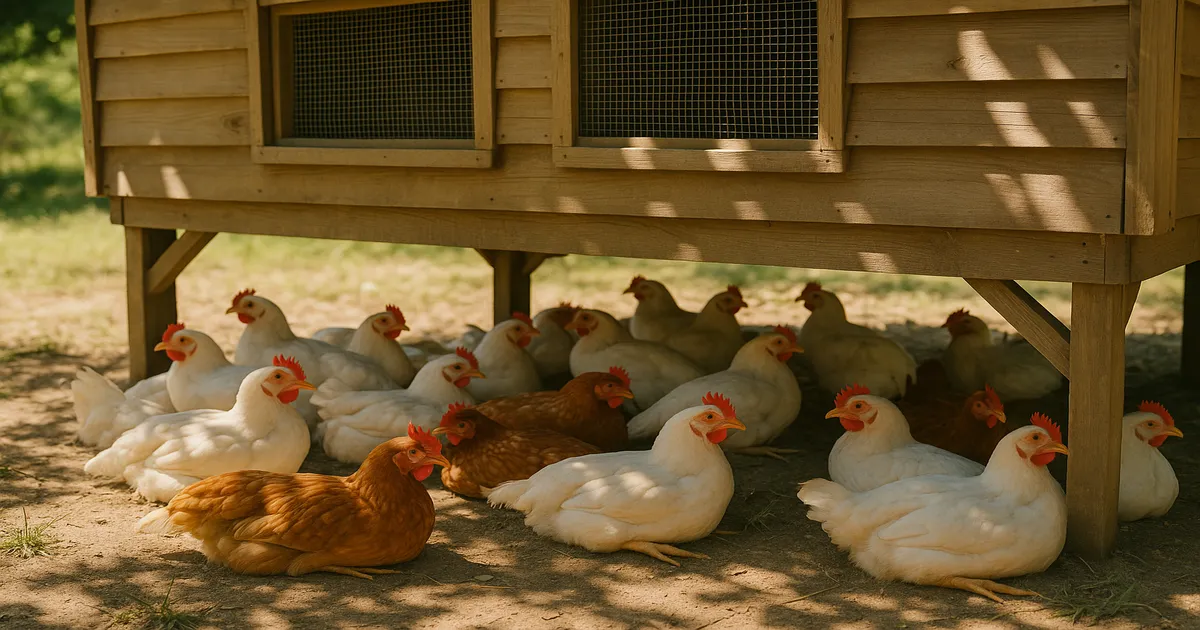
Quick Answer: At 100°F (38°C), your chickens are in genuine danger. Their core body temperature is already 105–107°F, leaving almost no buffer. Right now: maximize coop ventilation, set out multiple stations of cold water with ice, create shade, offer frozen treats, and watch every bird closely for signs of heat stroke.
When temperatures hit triple digits, figuring out how to keep chickens cool in 100 degree weather stops being optional. This is emergency management. Chickens begin showing heat stress at 85°F (29°C) and can die within 30–60 minutes once heat stroke sets in above 104°F (40°C). At 100°F, you have almost no margin for error.
This guide covers the biology of why heat is so dangerous, which breeds handle it best, how to set up your coop for maximum airflow, what to feed and freeze, and how to respond if a bird goes down.
How to Keep Chickens Cool in 100 Degree Weather: The Five Most Important Actions
- Open every vent and window in the coop — airflow is your single most powerful tool.
- Add ice to all waterers and place them in the shade. Change the water 2–3 times today.
- Create shade over the run with shade cloth, a tarp, or natural cover.
- Freeze treats — watermelon chunks, cucumber ice blocks, or plain yogurt cubes — and put them out mid-morning before peak heat.
- Watch every bird. Panting is normal. Collapsing is an emergency.
At What Temperature Do Chickens Become Dangerously Hot?
- 85°F (29°C): Mild heat stress — panting, wings held out, reduced activity.
- 95–104°F (35–40°C): Moderate to severe stress — rapid open-mouth panting, pale combs, lethargy.
- 104°F+ (40°C+): Life-threatening heat stroke. Collapse and death can follow within 30–60 minutes.
At 100°F, you’re one bad hour away from serious losses.
Why 100°F Is So Dangerous for Chickens
Chickens Can’t Sweat — Here’s What They Do Instead
Chickens have no sweat glands. They cool themselves by panting, which evaporates moisture from the respiratory tract. They also hold their wings away from their body to expose bare skin to moving air, and they press their belly against cool ground to shed heat.
These mechanisms work up to a point, but they’re far less efficient than sweating. They also cost the bird energy and moisture — two things in short supply during a heat wave.
How Combs, Wattles, and Wing Position Help
The comb and wattles aren’t decorative. Blood vessels in these tissues dilate in heat, radiating excess warmth outward. Breeds with large, upright single combs — like Leghorns and Minorcas — have a real cooling advantage over breeds with small rose or pea combs.
Wing position tells you a lot. A hen holding her wings out from her sides is actively trying to dump heat. Pair that with rapid panting and she’s working hard just to stay alive.
Recognizing Mild, Moderate, and Severe Heat Stress
Mild (85–95°F / 29–35°C):
- Open-beak panting
- Wings slightly away from body
- Reduced movement and feed intake
- Seeking shade
Moderate (95–104°F / 35–40°C):
- Rapid, labored open-mouth breathing
- Pale or discolored comb and wattles
- Extreme lethargy, huddling near water
- Egg production may drop within 24 hours
Severe / heat stroke (104°F+ / 40°C+):
- Collapse or inability to stand
- Seizures or uncoordinated movement
- Unresponsiveness
- Death without immediate intervention
Best and Worst Breeds for 100-Degree Heat
Top Heat-Tolerant Breeds
| Breed | Origin | Comb Type | Why They Handle Heat |
|---|---|---|---|
| Leghorn | Italy | Single | Lean build, large comb, exceptional heat tolerance |
| Ancona | Italy | Single | Mediterranean hardiness, active forager |
| Egyptian Fayoumi | Egypt | Single | Ancient desert breed, extremely heat-hardy |
| Minorca | Spain | Single (very large) | Largest comb of any breed — maximum heat dissipation |
| Penedesenca | Spain | Carnation | Lean body, excellent heat management |
| Andalusian | Spain | Single | Lean, active, handles heat well |
| Naked Neck (Turken) | Transylvania | Single | 40–50% fewer feathers than standard breeds |
| Dominique | USA | Rose | Moderate heat tolerance, American heritage breed |
The Naked Neck deserves special mention. Fewer feathers means dramatically less insulation, and these birds handle sustained triple-digit heat noticeably better than fully feathered breeds. The Dominique is the mild outlier here — its rose comb is less efficient at heat dissipation than a single comb, but its lean build and hardy constitution still make it more heat-tolerant than most heavy breeds.
Breeds That Struggle Most in Extreme Heat
These birds need extra help at 100°F — more shade, more cold water, more hands-on monitoring.
- Brahma — heavily feathered feet and body trap heat aggressively
- Cochin — dense, fluffy plumage acts like a down jacket in July
- Buff Orpington — thick feathering combined with a heavy body is a tough combination
- Jersey Giant — the largest standard breed generates the most metabolic heat
- Silkie — fluffy, non-waterproof feathers trap both heat and humidity
If you own these breeds, don’t panic — but do prioritize them for shade, cold water, and daily checks during any heat wave.
Does Comb Type Really Matter?
Yes. A large single comb has significantly more surface area than a rose or pea comb, giving blood more opportunity to cool as it circulates through those tissues. Rose and pea combs are an advantage in cold climates (less frostbite risk), but in sustained heat they’re a minor disadvantage. It’s not the only factor, but it’s a real one.
Coop Setup and Ventilation: The Most Important Factor
Ventilation for Hot Weather
Fix your ventilation first. In hot climates, aim for 1 sq ft of ventilation per 4–5 sq ft of floor space — well above the standard baseline. Cross-ventilation is essential: openings on opposite walls create actual airflow rather than stagnant pockets of hot air.
Ridge vents at the roof peak let hot air escape upward. Hardware cloth-covered windows on multiple walls provide airflow while keeping predators out. In serious heat, consider removing solid wall panels entirely and replacing them with hardware cloth for the summer months.
Coop Orientation, Roofing, and Paint Color
Orient your coop so the longest wall faces north-south, reducing how much direct east-west sun hits the structure throughout the day. Roof overhangs of 18–24 inches on the south and west sides block high summer sun while still allowing lower winter sun to warm the space.
Paint matters more than most people realize. White or light-colored exterior paint can reduce interior temperatures by 10–15°F compared to dark paint. If you have a metal roof, add radiant barrier insulation underneath — metal in direct sun gets brutally hot without it.
Shade, Roost Height, and Nesting Box Placement
30–50% shade cloth stretched over the run and coop can drop ambient temperature by 10–15°F on its own. Shade trees are better long-term, but shade cloth works immediately.
Raise your coop 12–18 inches off the ground if possible. Airflow underneath the floor makes a meaningful difference in floor temperature, and chickens spend a lot of time resting on the ground in extreme heat.
Heat rises, so lower roost bars are cooler roost bars. Give birds the option of roosting closer to the ground in summer, and space them at least 12 inches per bird so they’re not pressed together generating combined body heat.
Avoid placing nesting boxes on south or west walls — afternoon sun heats these hardest. Elevated nesting boxes also trap heat near the ceiling, so lower placement or direct ventilation above the boxes keeps them from becoming ovens by mid-afternoon.
Water and Frozen Treats: Your Best Cooling Tools at 100°F
How Much Water Chickens Need in Extreme Heat
On a normal day, a chicken drinks roughly 0.5–1 cup (120–240 ml) of water. At 100°F, that jumps to 1.5–2 cups (360–480 ml) per bird per day — sometimes more. For a flock of 10 hens, that means a minimum of 2–3 gallons of fresh, cold water available at all times.
Dehydration is the number one driver of heat-related production drops and the primary factor that pushes a stressed bird into heat stroke.
Keeping Water Cold All Day
- Place all waterers in shade — water in direct sun heats up within an hour.
- Add ice every morning and again at midday.
- Change water 2–3 times daily — warm water is less palatable and bacteria multiply fast in the heat.
- Use nipple waterers to keep water cleaner and cooler longer than open dishes.
- Set out multiple stations so dominant birds can’t monopolize access.
Frozen Treats That Actually Help
Frozen treats provide hydration and give birds something engaging to work on during the hottest part of the day.
- Frozen watermelon chunks — 92% water content, natural electrolytes, universally loved
- Berry and cucumber ice blocks — freeze berries, cucumber slices, and halved grapes in a block of water
- Frozen plain yogurt cubes — probiotics plus cooling; freeze in an ice cube tray
- Bundt pan flock block — fill a bundt pan with water, scratch, herbs, and fruit; freeze overnight and hang in the run for the flock to peck at
Put these out around 9–10 a.m., before the day peaks, so birds are already hydrated when the worst heat arrives.
Electrolyte Supplements During Heat Waves
Heavy panting depletes electrolytes along with moisture. Add a commercial poultry electrolyte powder to their water, or make your own: 1 tsp salt + 1 tsp baking soda + 1 tbsp sugar per gallon of water. Offer this alongside plain water — don’t replace plain water entirely — and use it for 2–3 days during a heat wave.
Feeding Adjustments to Reduce Heat Stress
Shift Feeding Times
Digestion generates heat — a process called diet-induced thermogenesis. Feeding at the wrong time can push an already-hot bird closer to heat stroke. Move your main feeding to early morning and again in the evening when temperatures are lower and birds are more willing to eat.
Cut Back on Scratch and High-Fat Treats
Scratch grains are the worst offender. High-carbohydrate feeds generate the most metabolic heat during digestion. During a heat wave, reduce scratch significantly or cut it out entirely — save it for fall and winter when that extra warmth is useful. High-fat treats like sunflower seeds and mealworms in large quantities also generate extra heat during metabolism, so scale those back too.
Protein and Calcium in Summer
Because birds eat 10–20% less in extreme heat, their overall nutrient intake drops. Switching to an 18% protein layer feed during summer helps compensate, ensuring hens still get adequate nutrition even when appetite is suppressed.
Heat also disrupts calcium metabolism, leading to thinner, more fragile shells and slightly smaller eggs. Keep oyster shell available free-choice in a separate container at all times — roughly 1 lb per 8–10 hens per week is a practical starting point.
Heat Stroke: Emergency Response and Vulnerable Birds
Step-by-Step Treatment for a Bird in Heat Stroke
If you find a bird collapsed, unresponsive, or seizing, act immediately:
- Move her to a cool area — ideally 65–75°F (18–24°C). A shaded porch, garage, or air-conditioned room works.
- Submerge her feet and legs in cool (not ice cold) water. Ice water can cause shock.
- Wet the comb and wattles with cool water to help blood in those tissues cool down.
- Offer cool electrolyte water — do not force it. Let her drink on her own when she’s able.
- Call a vet if there’s no meaningful improvement within 30 minutes.
Which Birds Are Most at Risk?
- Heavy breeds (Brahma, Cochin, Jersey Giant, Buff Orpington)
- Overweight hens
- Birds over 3 years old
- Any bird currently recovering from illness
Check these birds first, and check them more often throughout the day.
Parasites and Disease in Summer Heat
Heat doesn’t just stress your birds directly — it creates ideal conditions for parasites and disease.
Coccidiosis thrives in warm, moist soil, especially around waterers. Wet ground near water stations is prime habitat. Elevate waterers or use drip-free nipple systems to keep surrounding ground dry. Watch for bloody or watery droppings, lethargy, and pale combs. Treat with Amprolium (Corid) at the label rate — typically 1.5 tsp of the 9.6% liquid solution per gallon of water for 5–7 days in severe cases. Always follow current label directions, as concentrations vary by product.
Red mites and northern fowl mites explode in summer. Red mites hide in coop cracks during the day and feed on birds at night — heavy infestations cause anemia, pale combs, and significant production drops. Treat birds with permethrin dust and spray coop cracks thoroughly. Food-grade diatomaceous earth in dust bath areas helps as a preventive measure.
A bird that’s been panting and stressed for days also has a compromised immune system, making the flock more susceptible to Mycoplasma (rattling breath, swollen sinuses) and Infectious Bronchitis (highly contagious, hits egg production hard). If respiratory symptoms appear during or after a heat wave, get a diagnosis before treating — bacterial infections may warrant antibiotics like Tylosin or Oxytetracycline, but only under veterinary guidance.
How Extreme Heat Affects Egg Production
How Much Will Production Drop at 100°F?
Hens begin reducing or stopping egg production when sustained temperatures exceed 90°F (32°C). At 100°F, expect a 10–25% drop in heat-tolerant breeds like Leghorns and Anconas. Heavy breeds — Buff Orpingtons, Brahmas, Jersey Giants — may drop 40–60% during a prolonged heat wave. Dehydration and reduced feed intake drive most of this, not just the heat itself.
Summer Egg Production by Breed
| Breed | Eggs/Week (Summer) | Annual Estimate | Egg Color |
|---|---|---|---|
| Leghorn | 5–6 | 250–320 | White |
| Ancona | 4–5 | 220–260 | White |
| Minorca | 4–5 | 200–220 | White |
| Egyptian Fayoumi | 3–4 | 150–200 | White/Tinted |
| Andalusian | 3–4 | 160–180 | White |
| Naked Neck | 3–4 | 150–180 | Tinted/Brown |
Mediterranean breeds are also generally non-broody — a real advantage in summer. A broody hen stops laying entirely and generates significant extra body heat while sitting on a nest, compounding the heat problem.
Tips to Minimize Production Loss
- Keep cold water available at all times — dehydration is the #1 production killer
- Offer free-choice oyster shell
- Shift feeding to morning and evening
- Maximize coop ventilation
- If you use supplemental lighting, switch to LED bulbs — they add far less heat than incandescent while still providing the 14–16 hours of light hens need to maintain production
Frequently Asked Questions
Can chickens survive 100-degree heat without intervention? Healthy, heat-tolerant breeds in a well-ventilated coop with constant access to cold water can survive brief periods at 100°F. But without shade, airflow, and cold water, even hardy birds can die within an hour or two. Don’t assume they’ll manage on their own.
How do I know if my chicken has heat stroke vs. just being hot? Normal heat stress looks like panting with wings held out and reduced activity. Heat stroke looks like collapse, inability to stand, uncoordinated movement, or unresponsiveness. If a bird can’t right herself or doesn’t respond to your touch, treat it as an emergency.
Should I mist my chickens with water to cool them down? Light misting of the surrounding area — the ground, the run walls, the shade cloth — can help through evaporative cooling. Avoid soaking the birds directly, especially in humid climates where wet feathers trap heat rather than releasing it. Wetting the comb and wattles during an active heat stroke event is appropriate.
Will a fan help keep chickens cool in 100-degree weather? Yes, but with limits. A fan moves air and speeds evaporative cooling from panting, which genuinely helps. In very humid conditions, though, a fan blowing hot humid air provides less relief. Position fans to create cross-ventilation through the coop rather than just circulating stale air inside it.
How long does it take for egg production to recover after a heat wave? Most hens return to normal production within 2–4 weeks after temperatures drop, assuming they stayed healthy and well-hydrated during the heat wave. Severe heat stroke, significant weight loss, or prolonged dehydration can extend recovery. Older hens and heavy breeds may take longer than young, lean Mediterranean breeds.