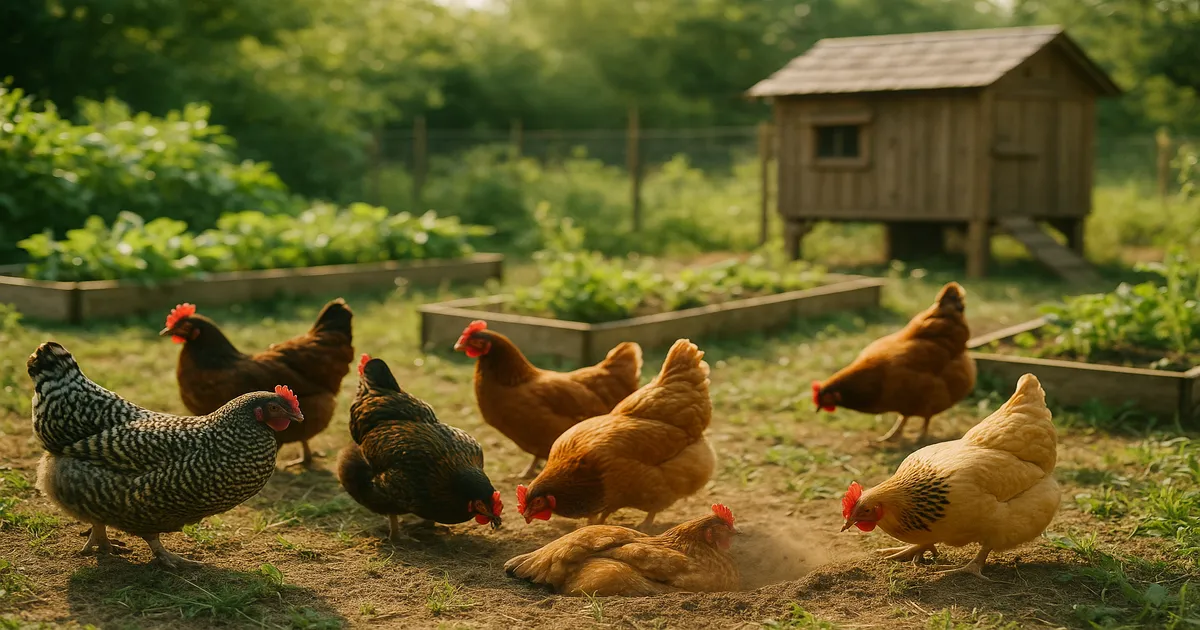
Quick Answer: To safely free range your girls, start with a predator-proofed coop built with hardware cloth and raccoon-proof latches, choose alert breeds suited to open pasture, add mid-field cover so birds can escape aerial predators, and lock them in before dark every night. The sections below cover breed selection, fencing, nutrition, health risks, and everything in between.
Figuring out how to safely free range your girls is one of the most rewarding challenges in backyard chicken keeping — and one of the most common questions new and experienced keepers wrestle with. Done right, free ranging produces healthier, happier hens and those gorgeous deep-orange yolks. Done carelessly, it’s an open invitation to every fox, hawk, and raccoon in your neighborhood. This guide gives you the full picture, from setting up your coop to managing health risks through the seasons.
What Does “Free Ranging” Actually Mean?
“Free range” means something very different in a backyard than it does on a supermarket carton. The USDA’s commercial definition requires only some outdoor access — often a small concrete pad. Your girls deserve better than that.
In practice, backyard free ranging falls into three approaches:
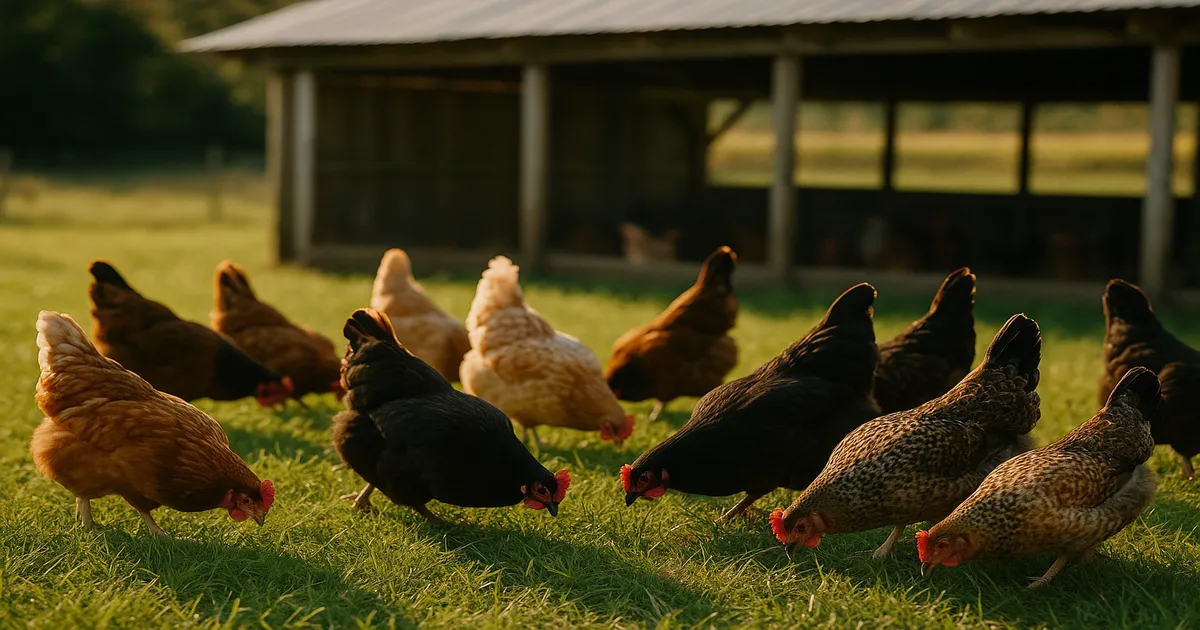
- True free range — Hens have unrestricted daytime access to open pasture, lawn, or woodland and roam wherever they choose within your property.
- Supervised free range — You or someone else is present while the birds are out, and they’re brought in before dusk. Best for high-predator areas or vulnerable breeds.
- Rotational free range — Birds access a series of fenced paddocks in rotation, letting each section recover before the flock returns. This protects pasture quality and reduces parasite buildup in the soil.
The core pillars of safe free ranging are the same regardless of which approach you use: a predator-proofed coop, alert breeds, consistent return routines, and smart pasture management.
Choosing the Right Breeds for Free Ranging
Not all chickens are built for life outdoors. The best free-range breeds combine strong foraging instincts with predator awareness and the physical ability to evade threats.
| Breed | Weight | Alertness | Notes |
|---|---|---|---|
| Rhode Island Red | 6–8 lbs | High | Tough, self-sufficient, excellent all-around |
| Barred Plymouth Rock | 7–8 lbs | High | Curious and active; one of the most well-rounded choices |
| Black Australorp | 6–8 lbs | Medium-High | Calm but capable; handles heat well |
| Dominique | 5–7 lbs | High | Rose comb reduces frostbite risk; exceptional forager |
| Easter Egger | 4–6 lbs | High | Quick and flighty in a good way — fast to evade predators |
| Welsummer | 6–7 lbs | High | Strong instincts; handles varied terrain |
| Speckled Sussex | 7–8 lbs | Medium-High | Natural camouflage coloring is a genuine advantage in open fields |
| Leghorn | 4–5 lbs | Very High | Fastest evader of the group; prolific white-egg layer |
| Buff Orpington | 7–8 lbs | Medium | Docile and slower — needs more protective infrastructure |
Breeds That Need Extra Protection Outdoors
Some breeds look charming but are genuinely at risk in open spaces. Silkies have crests that block their vision and weigh only 2–3 lbs — a hawk’s dream. Polish hens have the same vision problem, arguably worse. Cochins are heavy-bodied with feathered feet that collect mud and slow them down considerably. Frizzles have curled feathers that reduce both insulation and flight ability. If you love these breeds, supervised free ranging in a covered run is the safer choice.
Should You Keep a Rooster?
A good rooster is one of the best free-range safety tools available. He’ll sound alarm calls at aerial threats, position himself between the flock and danger, and in many cases physically confront small predators like weasels or young opossums. He also keeps the flock moving together as a unit. If your local ordinances allow it and you can handle the crowing, a rooster is worth serious consideration.
Predator-Proofing Your Coop and Run
Hardware Cloth vs. Chicken Wire
Chicken wire keeps chickens in. It does not keep predators out. Raccoons can reach through the openings and pull birds apart. A determined dog or fox can tear through it in minutes. Use 19-gauge, half-inch hardware cloth on every window, vent, and opening — no exceptions.
Stopping Diggers
Foxes, skunks, and dogs will dig under a run wall if given the chance. The fix is an apron: extend hardware cloth 12–18 inches horizontally outward from the base of your run, either buried 6 inches underground or laid flat on the surface and secured with landscape staples. Vegetation grows through it quickly and hides it from view, but a digging predator hits wire almost immediately and gives up.
Raccoon-Proof Latches
Raccoons have dexterous hands and genuine problem-solving ability. A simple hook-and-eye latch is not a barrier — it’s a puzzle they’ll solve in under a minute. Use two-step latches or add a carabiner clip to every door on your coop and run. It takes you two seconds longer to open; it stops raccoons entirely.
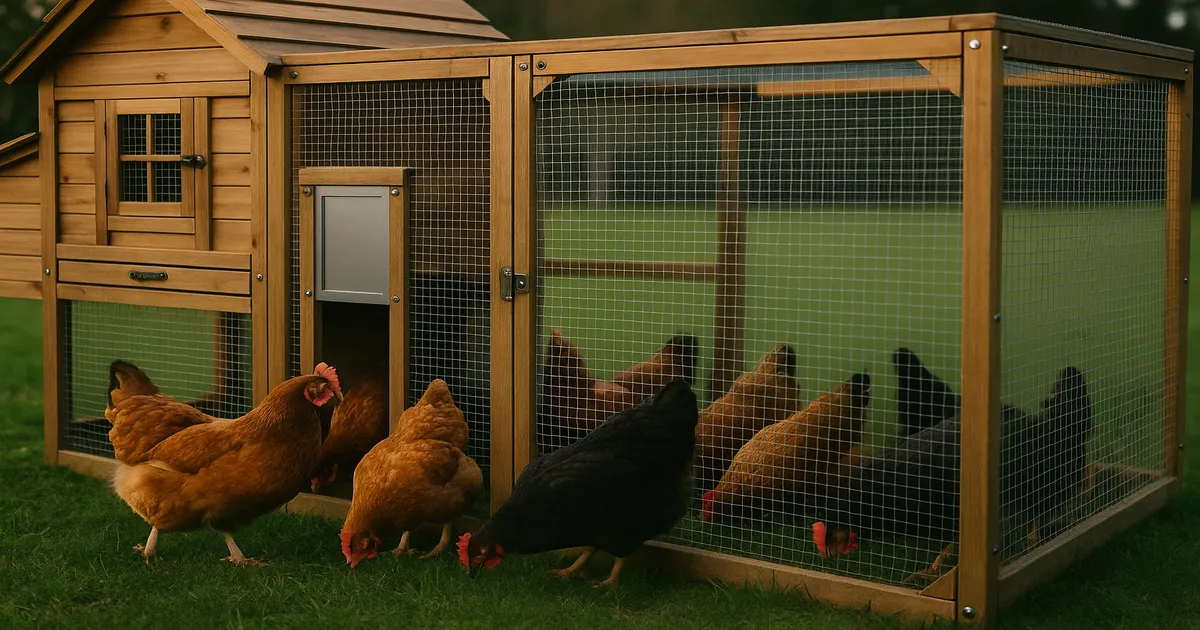
Automatic Coop Doors
An automatic door is one of the smartest investments you can make, especially if your schedule doesn’t always allow you to close up at dusk. A light-sensor or timer-operated door closes reliably every evening regardless of whether you’re home. The ChickenGuard Extreme and the Omlet Automatic Coop Door are two well-regarded options. Expect to spend $80–$200 — cheap insurance against a single predator attack that could wipe out your entire flock.
Aerial Predators
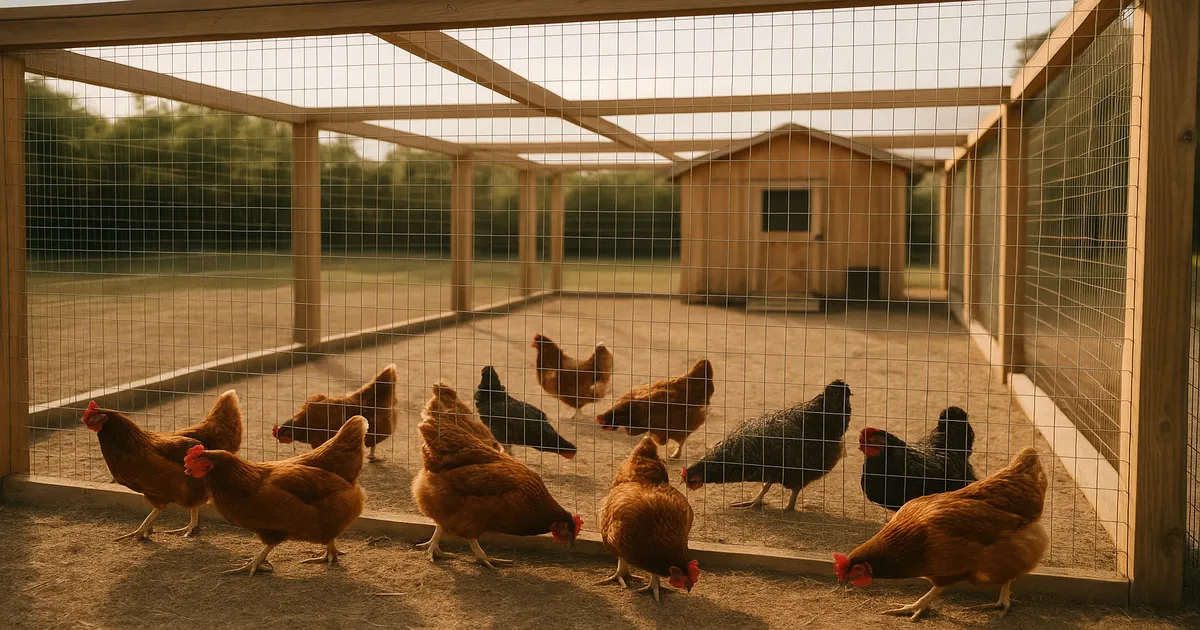
Hawks and owls are a real threat, particularly for smaller breeds. A fully covered run with hardware cloth or metal roofing stops aerial predators and also prevents climbing predators from getting in from above. If a fully covered run isn’t practical, mid-field cover becomes critical — more on that in the next section.
How to Safely Free Range Your Girls: Setting Up the Space
How Much Space Do Free-Range Hens Need?
For true rotational grazing, aim for 50–100+ square feet per bird across your total ranging area. If you’re running a rotational paddock system, plan for at least 2–4 paddocks with a minimum of 100 square feet per bird in each section. This gives each paddock enough recovery time to regrow vegetation and naturally reduce parasite loads in the soil.
For supervised free ranging on a lawn or yard, the space requirement is more flexible — the supervision itself provides the safety margin.
Rotational Paddock Systems
The idea is simple: divide your ranging area into sections, let the flock graze one section while the others rest, and rotate every 2–4 weeks. This prevents the bare, muddy, parasite-laden ground that develops when hens work the same patch of earth continuously. Electric poultry netting makes this approach practical and flexible — it’s moveable, relatively affordable, and provides a meaningful deterrent to ground predators when properly energized. Premier 1 PoultryNet is a popular and well-tested choice.
Mid-Field Cover
Open sky is the enemy of a relaxed free-range flock. Hens will not range far from cover if they feel exposed — and they’re right to be cautious. A hawk can strike from above with almost no warning. Planting shrubs, positioning pallets on legs, or installing shade structures throughout your ranging area gives birds a place to duck under when they spot a threat. It also reduces heat stress in summer. Mid-field cover is one of the most overlooked free-range upgrades, and it makes a visible difference in how confidently your birds range.
Coop Setup for Free-Range Flocks
Even hens that spend most of the day outside need adequate indoor space. The minimums are 4 square feet per bird inside the coop and 10 square feet per bird in an attached run. In cold climates where birds spend more time confined, bump the interior space to 6–8 square feet per bird.
For roost bars, provide 8–12 linear inches per standard-breed hen. Flat 2×4 lumber installed wide-side-up is the gold standard — it lets hens cover their toes with their breast feathers at night, which is the most effective frostbite prevention available. Round dowels are less comfortable and leave toes exposed.
Position nesting boxes lower than your roost bars. Hens always want to sleep at the highest point. If boxes are at roost height, they’ll sleep in them, soil the nesting material, and eventually decide the outdoors is a better laying option. One box per 3–4 hens is the standard ratio, sized at least 12×12 inches (14×14 for large breeds).
Ventilation is the most overlooked coop feature. Moisture and ammonia are the real enemies of flock health — not cold. Provide at least 1 square foot of ventilation per 10 square feet of coop floor space, positioned above roost height so there’s no direct draft on sleeping birds. A dry, well-ventilated coop at 20°F is far healthier than a damp, sealed coop at 40°F.
If you need supplemental heat below 0°F (-18°C), use a flat panel radiant heater with tip-over protection — not a heat lamp. Heat lamps are one of the leading causes of coop fires.
Feeding and Nutrition for Free-Range Hens
How Much Will They Eat?
A standard hen eats roughly ¼ lb (4 oz) of feed per day. Free-range hens grazing actively in spring and summer typically eat 15–25% less commercial feed as they supplement with insects, seeds, and greens. In winter, expect consumption to increase 10–15% as birds burn more calories staying warm. Keep feeders stocked and let the birds self-regulate.
Calcium and Grit
Laying hens need 4–5 grams of calcium per day for proper eggshell formation. Layer feed (typically 16% protein) provides a baseline, but high-producing hens often need more. Offer crushed oyster shell free-choice in a separate container at all times — hens will take what they need and ignore it when they don’t.
Grit is a separate matter. Insoluble grit (granite or flint) helps the gizzard grind food. Free-range birds often pick up sufficient grit naturally, but offering it free-choice is easy insurance. Don’t confuse the two: oyster shell dissolves and provides calcium; grit does not dissolve and provides grinding action.
Protein During Molt
When hens go into molt — typically in fall, lasting 8–16 weeks — egg production stops and feather regrowth becomes the body’s priority. Bump protein up to 18–20% during this period. Switch to a higher-protein feed, or supplement with dried mealworms (around 50% protein) or black soldier fly larvae (40–44% protein). Limit mealworms to 1–2 tablespoons per bird per day — they’re high in fat and shouldn’t replace balanced feed.
Foods to Avoid
Keep treats to 10% or less of total daily intake. Avoid these entirely:
- Avocado — persin is toxic and can be fatal
- Raw or dried uncooked beans — contain phytohaemagglutinin, a dangerous toxin
- Chocolate — theobromine toxicity
- Rhubarb leaves — oxalic acid
- Onions in large quantities — can cause hemolytic anemia
- Moldy or spoiled feed — mycotoxins are serious
- Salty foods — sodium toxicity
Water
Hens drink 0.5–1 pint of water per day under normal conditions, and that doubles in hot weather. Dehydration causes egg production to drop rapidly — sometimes within 24 hours. In winter, a heated waterer base keeps water from freezing. Check it at least twice daily in hard freezes.
Health Risks for Free-Range Flocks
Marek’s Disease
Marek’s disease is a highly contagious herpesvirus that spreads through feather dander and dust. Symptoms include leg and wing paralysis, gray iris (not the whole eye), tumors, and sudden death — most commonly in birds between 6 and 30 weeks old. Vaccinate at hatch; most hatcheries offer this for $0.25–$1.00 per chick. Vaccination prevents tumors and paralysis but does not prevent infection or shedding. Free-range birds that contact wild birds or unknown soil face higher exposure risk, making vaccination non-negotiable.
Coccidiosis
Coccidiosis is caused by Eimeria protozoa living in soil and spreading through fecal contamination. Wet, muddy areas near waterers are the highest-risk zones. Rotating your paddocks regularly and keeping ground drainage good are your best preventive tools. Chicks raised outdoors should be on medicated starter feed or receive a coccidiosis vaccine at hatch — not both, as the medication will interfere with the live vaccine. Adult birds generally develop immunity through gradual exposure, but watch for bloody droppings, lethargy, or sudden weight loss and treat promptly with Amprolium if needed.
Internal Parasites
Free-range hens pick up worms — roundworms, cecal worms, and capillary worms — through contaminated soil and earthworms. Fecal float testing through your vet is the most accurate way to know what you’re dealing with before treating. Rotational grazing reduces worm burden significantly by breaking the lifecycle. In the US, Fenbendazole (Safeguard) is commonly used off-label; always observe the appropriate egg withdrawal period.
Respiratory Illness from Wild Bird Contact
Free-range birds that share space with wild waterfowl or passerines face elevated risk of Mycoplasma, Newcastle disease, and avian influenza. You can’t eliminate this risk entirely, but keeping feeders and waterers away from areas where wild birds congregate helps considerably.
Egg Production: What to Expect
Free-range hens typically produce 3–6 eggs per week depending on breed, season, and age. Here’s a quick reference:
| Breed | Eggs/Week | Eggs/Year | Egg Color |
|---|---|---|---|
| Rhode Island Red | 5–6 | 250–300 | Brown |
| Black Australorp | 5–6 | 250–300 | Light brown |
| Leghorn | 6–7 | 280–320 | White |
| Barred Plymouth Rock | 4–5 | 200–280 | Brown |
| Easter Egger | 4–5 | 200–280 | Blue/green/pink |
| Dominique | 3–4 | 180–230 | Brown |
| Welsummer | 3–4 | 160–250 | Dark brown (speckled) |
| Buff Orpington | 3–4 | 150–200 | Light brown |
Hens need 14–16 hours of daylight to maintain peak production. Without supplemental lighting, winter production in northern climates drops 50–80%. A simple timer-controlled coop light that extends the “day” to 16 hours will keep most hens laying through the cold months.
Watch for broody hens that disappear outdoors — they’ll stop laying, sit on a hidden clutch, and be exposed to predators around the clock. Check under shrubs, behind structures, and in tall grass if a hen goes missing. Move her to a secure broody pen inside the coop when you find her.
Frequently Asked Questions
How do I get my free-range hens back in the coop at night? Establish a consistent routine from day one. Train your flock by offering a small treat — scratch grains or mealworms — at the coop door at the same time each evening. Most hens will return on their own as dusk approaches once the habit is set. An automatic coop door provides a reliable backup if you’re running late.
How do I safely free range my girls if I have a lot of hawks in my area? Add mid-field cover throughout your ranging area — shrubs, pallet shelters, or shade structures — so birds always have somewhere to duck under. Reduce the size of your ranging area so birds stay closer to the coop. A rooster helps significantly. In very high-pressure hawk areas, supervised free ranging or a covered run may be the only truly safe option.
At what age can chicks start free ranging? Wait until chicks are fully feathered, typically 6–8 weeks old, before allowing outdoor access. Start with short, supervised sessions in a safe, enclosed area. Young birds have not yet developed the predator awareness of adult hens, so close supervision is essential for the first few weeks outdoors.
Will free-range hens stop using the nesting boxes? They can, especially if outdoor laying spots feel more private or appealing. Make your nesting boxes genuinely attractive: dark, lined with 3–4 inches of clean bedding, and positioned lower than the roost bars. Collect eggs consistently so nests don’t accumulate and attract broody behavior outdoors.
Do free-range hens need a different feed than confined hens? Not necessarily, but their consumption patterns change. They’ll eat less commercial feed in spring and summer when forage is abundant, and more in winter. The biggest nutritional gap to watch is calcium — always offer oyster shell free-choice alongside their regular layer feed, regardless of how much they’re foraging.