Quick Answer: To handle an aggressive rooster, stand your ground — never run — and use calm, assertive body language to establish dominance. The most effective approach combines understanding why he’s attacking, correcting how you respond in the moment, and fixing any husbandry issues fueling the behavior. Persistent, unpredictable aggression that poses a genuine safety risk — especially around children — may ultimately warrant rehoming or culling.
Dealing with an aggressive rooster is one of the most common frustrations in backyard chicken keeping. Knowing how to handle an aggressive rooster safely can mean the difference between a functional flock and a genuinely dangerous situation. The good news: most rooster aggression is manageable. The bad news: the instinctive responses most people have — running away, shouting, or swatting back — make the problem significantly worse.
Why Roosters Become Aggressive
Hormonal Surges at Puberty (4–6 Months)
Testosterone is the primary driver of rooster aggression. At 4–6 months, a cockerel’s hormone levels surge dramatically, triggering territorial and protective instincts that simply didn’t exist when he was a fluffy chick. Many keepers are blindsided because a friendly young bird suddenly becomes a problem seemingly overnight.
Improper Handling During Chick-Rearing
This is the most preventable cause of human-directed aggression. When you hand-feed, cuddle, and carry a cockerel constantly, you inadvertently teach him that humans are flock members — and flock members get challenged for rank. A rooster who has lost his healthy respect for humans is far more likely to attack than one who hasn’t.
Flock Stress: Overcrowding, Too Few Hens, and Predator Pressure
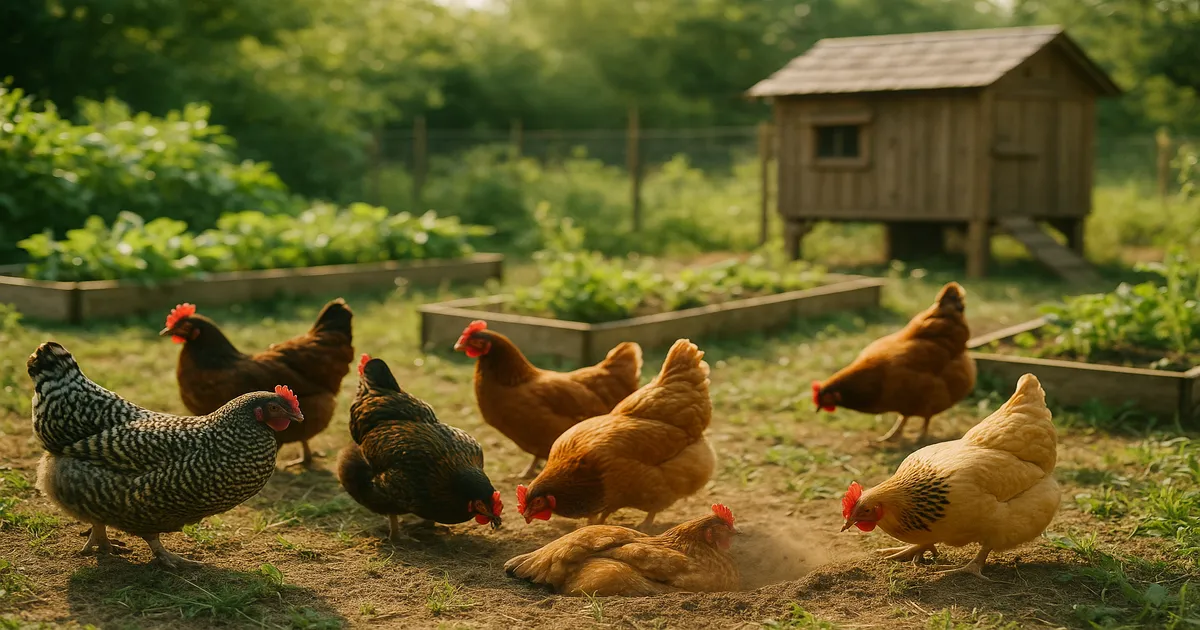
The ideal hen-to-rooster ratio is 8–12 hens per rooster. Fewer hens means over-mating stress, competition for resources, and a rooster with no productive outlet for his protective instincts. Overcrowding amplifies all of this. Add regular predator pressure — a hawk circling overhead, a dog at the fence — and his threat-detection stays dialed up constantly.
Seasonal Aggression Spikes in Spring
March through May is peak aggression season. Longer days trigger hormonal activity, breeding instincts intensify, and even a previously manageable rooster can become difficult. If he’s been fine all winter and suddenly attacks in April, seasonality is likely a factor.
Pain and Illness as Hidden Triggers
Always rule out health issues before starting behavioral training. A rooster suffering from mites, lice, bumblefoot, or an injury is in pain — and pain makes any animal more irritable and defensive. Check him thoroughly before assuming the problem is purely behavioral.
Reading Rooster Body Language Before an Attack
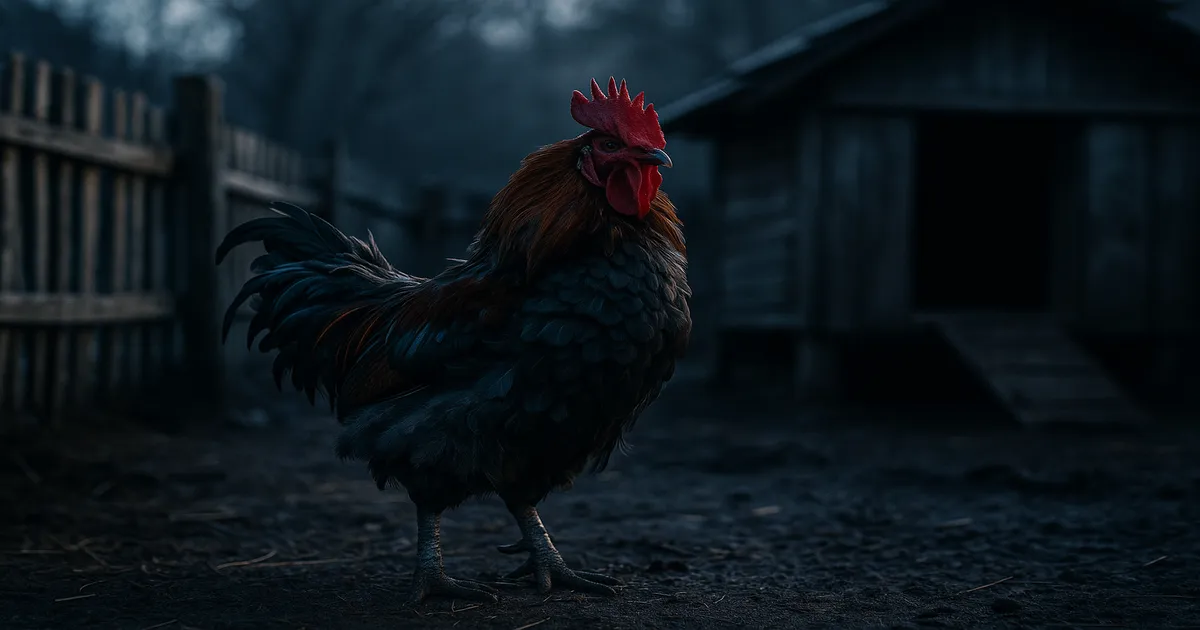
Learning to read pre-attack posture gives you time to respond correctly rather than react in surprise. The sequence typically goes:
- Hackle feathers rise along the neck and shoulders
- Wings drop and drag slightly, making him look larger
- Head lowers and tilts sideways — the classic “one-eye” stare as he assesses you
- Circling begins, often with deliberate foot-stomping
- The charge — fast, low, and aimed at your legs or face
A bluff charge usually stops short. A genuine attack doesn’t. Once you recognize the early signs, you can respond before he fully commits.
Spurs start developing at 3–6 months and harden fully by 12–18 months, eventually reaching 1–3 inches in length. They’re his primary weapon, capable of causing deep lacerations — especially on bare legs or a child’s face. A bantam rooster at 2–3 lbs is annoying; a Jersey Giant at 10–13 lbs is genuinely dangerous. Scale your response and protective measures accordingly.
How to Handle an Aggressive Rooster: Step-by-Step Techniques
Hold Your Ground — Never Run
When a rooster charges, your job is simple: don’t move backward. Face him directly, stand tall, and step toward him — slowly and calmly. This tells him you are not prey and not a rival to be chased off. Most roosters will stop, reassess, and back down when their charge doesn’t produce the expected result.
Assert Dominance Without Violence: The Carry Technique
This is the most effective rehabilitation tool for a rooster who has started attacking. When he charges or shows pre-attack posture:
- Move toward him calmly
- Pick him up firmly but gently — one hand under his body, one securing his wings
- Hold him tucked under your arm, calm and controlled, not punishing
- Carry him around for 10–15 minutes while you do chores
- Set him down without drama
Repeat every time he challenges you. In flock dynamics, a dominant bird pins a subordinate — this mimics that signal. Done consistently, most roosters begin to associate your presence with calm submission rather than a challenge.
Use a Barrier as a Non-Harmful Deterrent
A long stick, a boot, or a feed bucket can serve as a physical barrier between you and a charging rooster. The goal isn’t to hit him — it’s to block and redirect. Hold the object between you and him, move it gently toward him, and let him work out that the approach isn’t going to succeed. This is especially useful while training is still ongoing.
What You Should Never Do
- Don’t run. Flight signals prey behavior and tells him the tactic works.
- Don’t kick or throw things at him. This teaches fear-based aggression and can escalate attacks.
- Don’t laugh it off with small roosters. Unchecked aggression always gets worse, regardless of size.
- Don’t assume it will resolve on its own. It rarely does without intervention.
Protective Gear for the Meantime
Until training takes hold, dress appropriately. Wear thick leather gloves when handling him directly, long pants and long sleeves (denim is ideal), and sturdy closed-toe boots. If he’s prone to going for the face, safety glasses are worth considering. A pair of heavy-duty work gloves such as Wells Lamont Heavy Duty Leather Work Gloves will protect your hands during daily handling sessions.
Housing and Space Fixes That Reduce Aggression
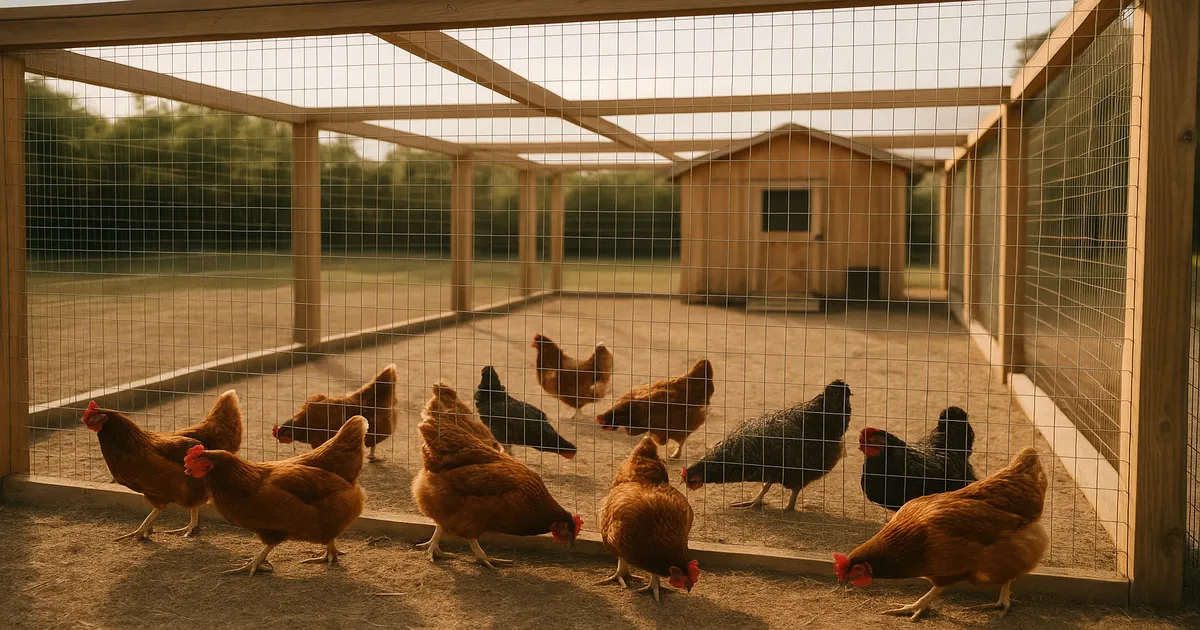
Overcrowding is one of the most reliable aggression triggers — and one of the easiest to fix. Provide at least 4 sq ft per bird indoors and 10 sq ft per bird in the run, and give your rooster at least 25% more than those minimums. He needs space to patrol, to move away from conflict, and to feel like his territory is secure.
Resource guarding is another major source of tension. Use one feeder per 8–10 birds, placed at bird-back height, and position feeders in multiple locations so subordinate birds can eat without confrontation. A well-designed hanging feeder such as a Little Giant 12-Pound Hanging Poultry Feeder keeps feed accessible and reduces competition at the source.
Make sure your roost bars are 1.5–2 inches in diameter, spaced so your rooster has 10–12 inches of personal space, and positioned with at least 18 inches of clearance to the ceiling. A cramped roost creates nighttime stress that carries into the day.
If you can smell ammonia when you walk into the coop, ventilation is inadequate. Ammonia above 25 ppm causes respiratory irritation and measurable behavioral changes, including increased aggression. Target below 10 ppm at bird height with adequate ventilation and properly managed deep litter.
A rooster under constant predator pressure is a rooster in permanent high-alert mode. Secure your run with ½-inch hardware cloth buried 12 inches deep with an L-shaped footer extending 12 inches outward. An automatic coop door such as a ChickenGuard Extreme Automatic Coop Door that closes reliably at dusk removes a major source of overnight stress.
Breed Selection: Choosing a Less Aggressive Rooster
If you’re choosing a rooster for the first time, these breeds give you the best odds of a manageable bird:
- Buff Orpington — slow to aggress, excellent with children
- Australorp — calm and consistent, great for mixed flocks
- Brahma — gentle giant, though slow to mature at 6–8 months
- Cochin — famously mellow, feather-footed, low aggression reports
- Salmon Faverolles — sweet-natured, rarely challenges humans
- Sussex — even-tempered and curious
Breeds with fighting heritage — Old English Game, Malay, Aseel, and Sumatra — require experienced handling and are not suitable for beginners or households with children. Barred Rock, Wyandotte, and Delaware roosters sit in the middle ground: productive and generally manageable with consistent early handling. Rhode Island Reds can be assertive, but many keepers handle them successfully. Breed sets a baseline — individual temperament and early handling shape the bird just as much as genetics do.
Nutrition and Health Checks That Support Calmer Behaviour
Layer feed contains 3.5–4.5% calcium — appropriate for laying hens, but damaging to roosters over time. That excess calcium accumulates in the kidneys, leading to visceral gout and kidney disease. Switch to an all-flock or flock raiser feed with 18–20% protein and around 1% calcium, then offer oyster shell free-choice in a separate container. Hens self-regulate their calcium intake; roosters largely ignore the oyster shell. This approach meets everyone’s nutritional needs without compromising the rooster’s long-term health.
Before starting any behavioral work, do a thorough health inspection. Part the feathers around the vent, under the wings, and along the neck — look for mites, lice, or skin irritation. Check the feet for the black scab of bumblefoot. If you find mites, treat with permethrin dust or spray at 0.25% concentration and repeat in 7–10 days to break the egg cycle. A rooster in pain will not respond to behavioral training the way a healthy one will.
Mealworms and black soldier fly larvae are excellent high-protein treats during molt or periods of stress — limit mealworms to about 1 tablespoon per bird per day to avoid displacing balanced nutrition.
When to Rehome, Cull, or Spur-Trim an Aggressive Rooster
Trimming spurs doesn’t fix aggression, but it significantly reduces injury risk while training is ongoing. File them down with a rotary tool such as a Dremel 3000 Variable Speed Rotary Tool or a coarse nail file. Alternatively, push a raw potato onto the spur, twist, and the outer sheath often pops off cleanly. Never cut into the quick — the blood vessel inside the spur.
If training isn’t working, rehoming is a reasonable option. Breed-specific Facebook groups, experienced local keepers, and small farms are the best placements. Be completely honest about his aggression history — rehoming a known-aggressive rooster without disclosure puts other people and animals at risk.
Culling is not failure. When a rooster’s aggression is severe, unpredictable, and poses a genuine safety risk — particularly to children — it is the most responsible decision. A rooster who has drawn blood multiple times despite consistent training is unlikely to become safe. Cockfighting is illegal in all 50 U.S. states, all Canadian provinces, the UK, and Australia; never rehome an aggressive rooster to someone who may intend to use him for fighting.
Frequently Asked Questions About Aggressive Roosters
Why is my rooster suddenly attacking me?
Sudden aggression is most often triggered by hormonal surges at puberty (4–6 months), seasonal breeding instincts peaking in spring, or a health issue causing pain and irritability. If the behavior changed overnight, check for mites, lice, or injury first, then consider whether his environment has changed — new birds, predator pressure, or overcrowding can all flip a previously calm rooster.
Can an aggressive rooster be trained to stop attacking?
Yes. Many aggressive roosters respond well to the carry technique and consistent assertive body language. The key is responding correctly every single time — holding your ground, never running, and reinforcing your dominant position through calm daily handling. Most roosters improve significantly within 2–4 weeks of consistent work, though results vary by individual temperament and how long the behavior has been reinforced.
Should I get rid of an aggressive rooster?
Not necessarily, and not immediately. Try the techniques in this article before making that call. Rehoming or culling becomes the right answer when aggression is severe and unpredictable, when children are at genuine risk, or when several weeks of consistent training produce no improvement.
How do I protect myself from a rooster attack?
Face him directly and step calmly toward him rather than away — this alone stops most charges. Wear sturdy boots, long pants, and thick gloves whenever you’re in the run with an aggressive bird. A long stick or bucket held between you and him works as a non-harmful physical barrier. Never turn your back on him until training is well established.
What is the least aggressive rooster breed for a backyard flock?
Buff Orpington, Australorp, Brahma, Cochin, and Salmon Faverolles roosters are consistently rated as the most docile and beginner-friendly. Buff Orpingtons and Cochins are particularly recommended for families with children. Breed sets a baseline — early handling and proper husbandry shape the individual bird just as much as genetics do.