Quick Answer: To stop a mice invasion while feeding chickens outdoors, switch to a treadle feeder, remove all feed at least one hour before sunset, store your supply in sealed metal containers, and sweep the feeding area every evening. Mice can smell spilled grain from up to 50 feet away, and a single pair can grow into a full infestation within 6–8 weeks — so acting early and consistently is everything.
Dealing with a mice invasion while feeding chickens outdoors is one of the most common frustrations backyard flock keepers face — and it’s almost entirely preventable. The problem isn’t that you’re doing something wrong. It’s that outdoor chicken feeding creates a near-perfect environment for rodents without a few key countermeasures in place. This guide walks you through exactly what to change, starting with the highest-impact fixes.
Why Outdoor Chicken Feeding Attracts Mice
Chicken Feed Is a Perfect Mouse Diet
Layer pellets, crumbles, and scratch grains are packed with carbohydrates, protein, and fat. Nutritionally, they’re almost ideal for rodents. Mice aren’t just opportunistic here — your chicken feed is genuinely one of the best food sources they can find.
The Overnight Feeding Window
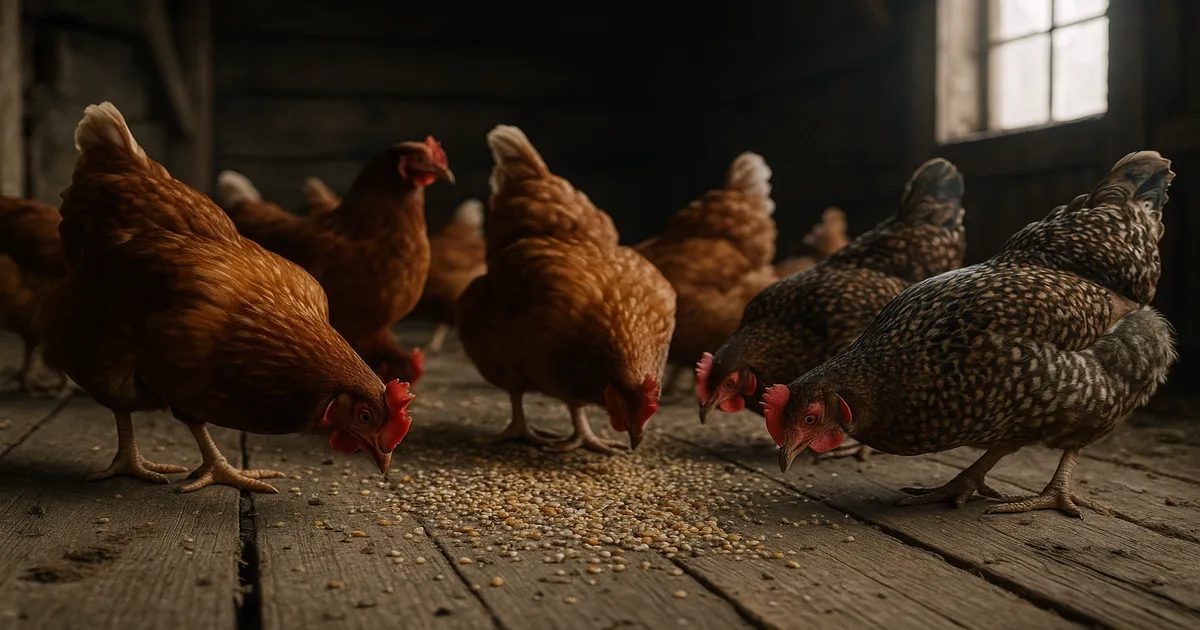
Mice do the vast majority of their foraging between dusk and 2 a.m. If your feeders are still outside overnight, they’re sitting out through the entire peak activity window. Under calm wind conditions, mice can detect spilled feed from up to 50 feet (15 meters) away, so even a small amount of grain left on the ground after your afternoon session is broadcasting a dinner invitation to every mouse in the neighborhood. One pair can produce up to 60 offspring per year, meaning what looks like a minor nuisance in week one can be a serious infestation by week six or eight.
Which Flocks Create the Most Feed Waste?
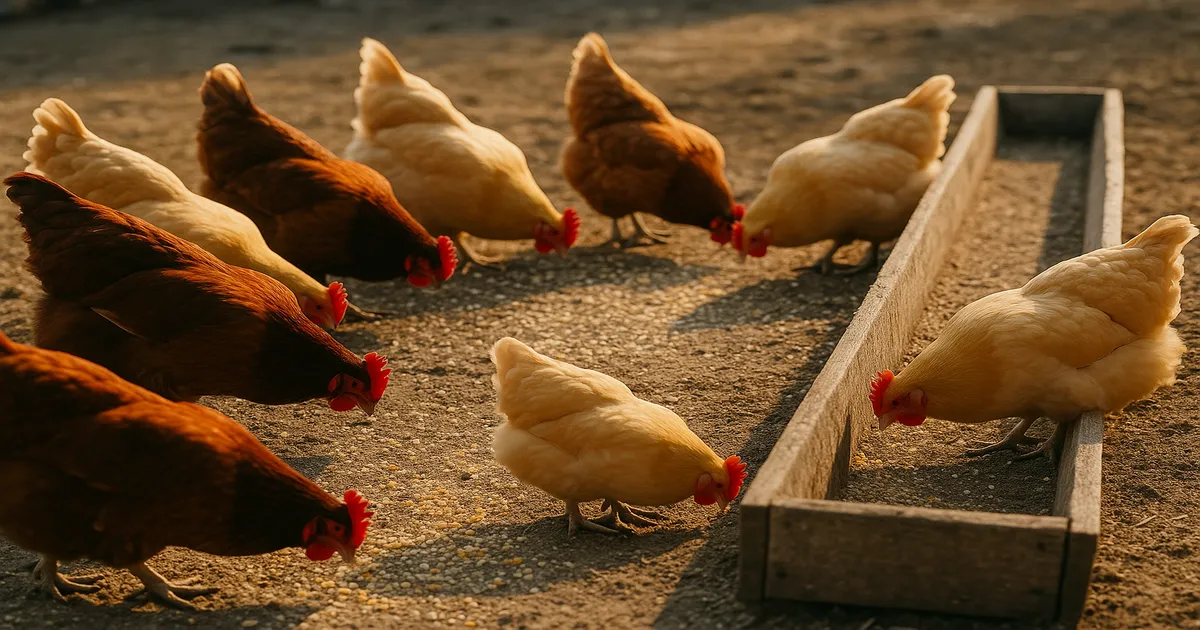
Not all flocks are equally messy. Active foragers — Buckeyes, Dominiques, and Australorps — tend to scratch and scatter feed more aggressively. Flighty breeds like Leghorns knock feeders around, spreading grain further. Bantams produce roughly half the waste of standard breeds (around 2 oz / 57 g per bird per day versus ¼–⅓ lb for standards), but they still attract rodents if spills aren’t managed.
How to Stop Mice Invasion While Feeding Chickens Outdoors: Feeder Choice
Treadle Feeders: The Single Most Effective Option
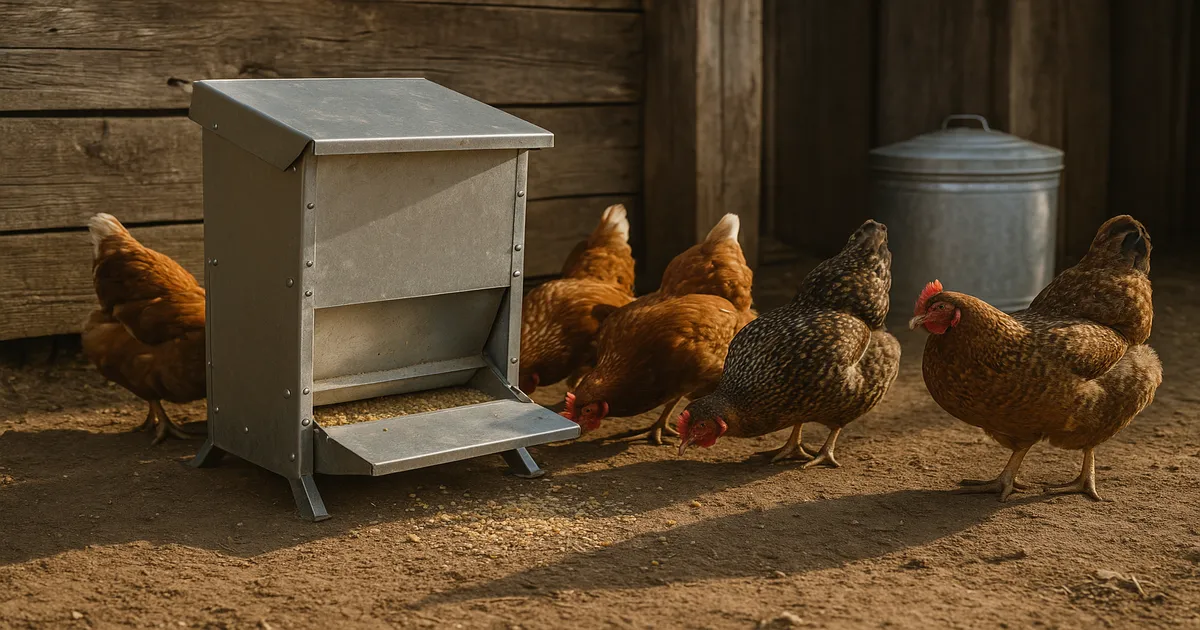
A treadle feeder requires 4–6 lbs of pressure to open the lid — far more than a mouse, which weighs just 0.5–1 oz, can ever provide. This makes treadle feeders the single most effective tool for keeping mice out of your chicken feed during the day. They’re an upfront investment, but they pay for themselves quickly in feed savings alone.
Hanging Feeders: Helpful but Not Mouse-Proof
Hanging feeders suspended at hen’s back height — roughly 12–18 inches off the ground for standard breeds — reduce ground spillage significantly. They don’t eliminate it, though. Chickens still bill-sweep feed out while eating, and anything that hits the ground becomes fair game overnight.
PVC Gravity Feeders: A Useful Option with One Big Weakness
PVC gravity feeders limit scatter and work well for small flocks, but moisture buildup inside the tube creates mold quickly. If you use one, clean it thoroughly every 1–2 weeks. A moldy feeder is a health risk for your flock and still attracts rodents.
Feeder Placement Rules That Reduce Rodent Access
- Position feeders at least 100 feet from coop walls where your layout allows — this keeps rodent activity away from the structure itself
- If distance isn’t possible, use a covered feeding station with a hardware cloth floor to catch spilled grain before it hits the ground
- Replace open water dishes with nipple waterers — mice are attracted to standing water just as much as food
Timed Feeding: The Most Underused Mice Deterrent
Remove Feeders Before Sunset Every Night
Removing feeders at least one hour before sunset eliminates the primary overnight food source for mice, which become active roughly 30 minutes after dark. Research suggests timed feeding can reduce rodent activity around coops by up to 70% compared to 24-hour free-choice feeding. It’s the simplest high-leverage change you can make.
How to Transition Chickens to Timed Feeding
Most hens adapt within a week. Start by pulling feeders 30 minutes before sunset, then work back to a full hour over 5–7 days. Your flock will quickly learn to eat more during the windows you provide.
Calm breeds like Buff Orpingtons and Cochins adapt with minimal fuss. Flighty breeds like Leghorns and Anconas may take longer and can be more disruptive at the feeder, scattering more grain in the process. With these breeds, slow the transition down and consider an extra early-morning feeding session to reduce competition stress.
Portion Sizes to Minimise Waste
Offer feed 2–3 times per day in amounts your hens finish within 20–30 minutes. General daily targets:
- Standard layer hens: ~¼ lb (113 g) per bird per day
- Heavy breeds (Buff Orpingtons, Jersey Giants): up to ⅓ lb (150 g) per bird per day
- Bantams: ~2 oz (57 g) per bird per day
If feed is left after 30 minutes, reduce the amount slightly. If they’re cleaning up in under 10 minutes, increase it a little. It takes a few days to dial in, but it’s worth it.
Ground Management and Spill Control
Daily Sweeping: Non-Negotiable
Spilled feed on the ground is the primary overnight mouse attractant. Sweeping or raking the feeding area every evening before dark takes two minutes and removes the main reason mice show up. Don’t skip it.
Concrete Pads Under Feeders
A concrete pad makes daily cleanup faster, prevents burrowing directly beneath feeders, and eliminates the damp soil environment that mice love nesting in. If a full pour isn’t practical, even a few paving slabs under and around the feeder make a meaningful difference.
Diatomaceous Earth as a Supplementary Barrier
Food-grade diatomaceous earth applied in a 6-inch ring around feeder bases creates an uncomfortable surface for mice to cross repeatedly. It’s not a repellent — mice won’t smell it and turn around — but it adds friction to their foraging route. Reapply after rain.
Remove Treats and Scraps Within 30 Minutes
Fruit scraps, bread, and grain-based treats are even more attractive to mice than regular feed. The 10% treat rule is good for your flock’s health, but the mouse-prevention rule is stricter: remove everything uneaten within 30 minutes, every time. Don’t wait until your evening sweep.
Mouse-Proof Feed Storage
Why Plastic Bins Fail and Metal Cans Succeed
Mice chew through plastic storage bins within days — sometimes hours if they’re motivated. The minimum standard is a galvanized steel trash can (30–32 gallon) with a bungee-secured or locking lid. It’s not glamorous, but it works.
Storage Habits That Matter
Store cans on pallets or shelving with at least 6 inches of clearance from the floor — mice nest beneath objects sitting directly on the ground. Keep storage humidity below 60% to prevent mold and reduce attractiveness to rodents. Buy feed in 2-week quantities maximum; the less you have on site at any one time, the smaller the target.
Clean up any spills inside the storage area immediately. Even a small amount of feed between containers will attract mice within 24–48 hours. This is one of those habits that feels minor until you realize it’s what was bringing mice in all along.
Sealing Your Coop Against Mice Invasion
The ¼-Inch Rule
A mouse can squeeze through any gap ¼ inch (6 mm) or larger — roughly the diameter of a pencil. Walk your coop and run and look at every junction, vent, and door frame with fresh eyes. Gaps that seem too small to matter often aren’t.
Hardware Cloth vs. Window Screen
Standard window screen is not sufficient — mice chew through it within days. Cover all vents with ½-inch welded wire hardware cloth at minimum. For lower vents and any openings close to the ground, ¼-inch mesh provides maximum rodent exclusion and is worth the extra cost.
Sealing Gaps
- Steel wool: Pack into small gaps and cracks — mice won’t chew through it
- Hardware cloth: Staple or screw over larger openings
- Metal flashing: Use at ground level along walls and around door frames
- Avoid: Foam sealant and wood filler alone — mice gnaw through both quickly
Check nesting boxes weekly for droppings, chewed bedding, or signs of a nest being built. Catching it early — before a pair becomes a colony — is dramatically easier than dealing with an established infestation.
Health Risks Mice Pose to Your Flock
Salmonella and Other Diseases
Mice are asymptomatic Salmonella carriers. They contaminate feed, water, and surfaces with their droppings without showing any signs of illness. Your chickens can contract Salmonella from contaminated feed, and it can transfer to eggs and to the people handling them.
Beyond Salmonella, mice are linked to several other serious diseases:
- Leptospirosis spreads through mouse urine in water sources and wet bedding
- Lymphocytic Choriomeningitis (LCM) is rare but transmissible to humans via mouse droppings in feed
- Fowl Cholera (Pasteurella multocida) — rodents are documented reservoir hosts and can introduce it to an otherwise healthy, closed flock
Mites: The Hidden Consequence of a Mouse Problem
This one catches a lot of keepers off guard. Mice carry Northern Fowl Mites and Red Mites (Dermanyssus gallinae) into coops. Red Mites hide in cracks during the day and feed on birds at night, causing anemia, feather loss, and significant stress. If your hens are suddenly restless at night or showing pale combs without another obvious cause, check for mites — and check for mice.
Rodent control isn’t a separate task from flock biosecurity. Every measure you take — quarantining new birds, dedicated coop footwear, vaccination schedules — is partially undermined if mice have free access to your feed and coop.
Frequently Asked Questions
What is the best feeder to stop mice getting into chicken feed?
A treadle feeder (also called a step feeder) is the most effective option. It requires 4–6 lbs of pressure to open, which a mouse weighing less than 1 oz cannot provide. Hanging feeders at hen’s back height help reduce spillage but don’t prevent mice from accessing feed that falls to the ground.
Should I remove chicken feeders at night to prevent mice?
Yes. Remove all feeders at least one hour before sunset, since mice become most active about 30 minutes after dark. This single change can reduce rodent activity around coops by up to 70% compared to leaving feeders out around the clock.
Can mice make my chickens sick?
Yes, in several ways. Mice are asymptomatic Salmonella carriers and contaminate feed and water with their droppings. They also carry Red Mites and Northern Fowl Mites into coops, and they’re reservoir hosts for Fowl Cholera and Leptospirosis. Controlling rodents is a core part of flock biosecurity, not just a nuisance issue.
How do I store chicken feed so mice cannot get into it?
Use a galvanized steel trash can (30–32 gallon) with a bungee-secured or locking lid — mice chew through plastic bins within days. Store it on a pallet or shelving with at least 6 inches of floor clearance, keep the area below 60% humidity, and clean up any spilled feed immediately. Buying in 2-week quantities keeps the volume of attractant low.
Does diatomaceous earth keep mice away from chicken feeders?
Food-grade diatomaceous earth doesn’t repel mice by smell, but a 6-inch ring applied around feeder bases creates an uncomfortable surface that discourages repeated crossings. It’s a useful supplementary measure, not a standalone solution. Use it alongside timed feeding, treadle feeders, and daily sweeping for best results.