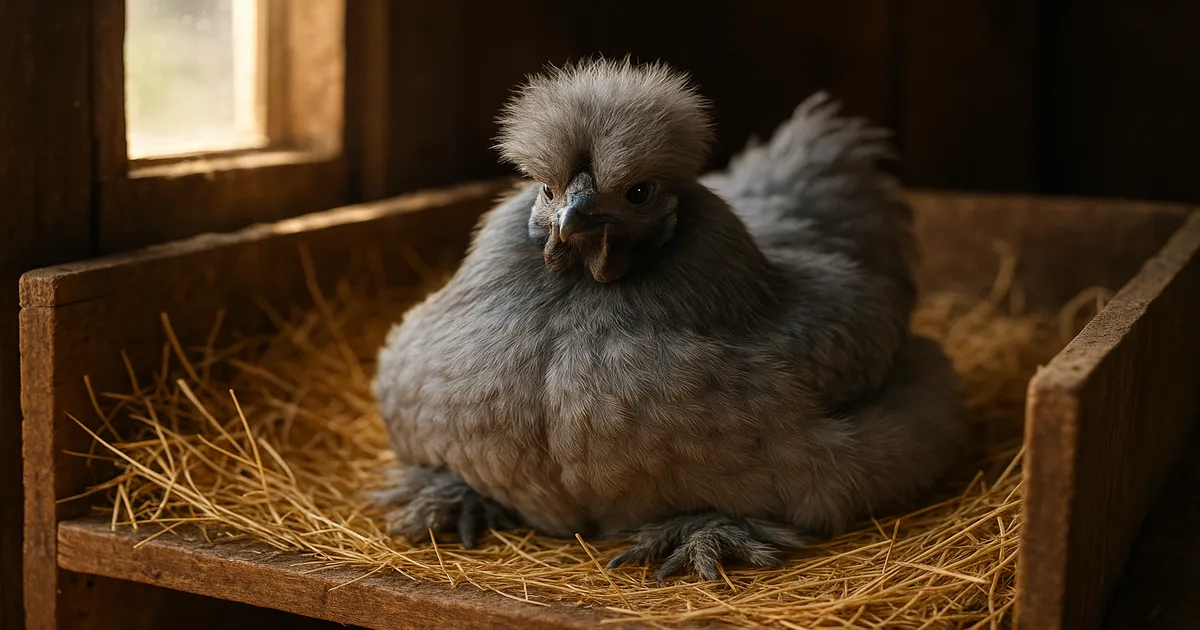
Quick Answer: Silkie chickens are one of the best breeds for beginners — they’re docile, small (2–4 lbs), and genuinely enjoy human company. Expect modest egg production of 100–150 eggs per year, a lifespan of 7–9 years, and some extra management around their feathered feet, limited vision, and strong broody instincts. Go in with realistic expectations and they’ll reward you with years of personality-packed backyard keeping.
If you’re new to keeping chickens, raising Silkie chickens for beginners is one of the most forgiving entry points into the hobby. These fluffy, calm birds are gentle enough for kids, manageable in small spaces, and genuinely seem to enjoy human company. That said, they come with real quirks — poor predator awareness, a talent for going broody at inconvenient times, and feathered feet that need a watchful eye. Understanding the breed before you bring any home makes all the difference.
What Are Silkie Chickens? Breed Background and Unique Traits
Origin and History
Silkies have been documented in China for over 2,000 years. Marco Polo wrote about “fur-covered” chickens during his 13th-century travels through Asia, and those were almost certainly Silkies. The American Poultry Association (APA) recognized the breed in 1874 and classified it in the Featherleg Bantam class, where it still competes today.
Appearance: Feathers, Skin, Combs, and Five Toes
Nothing looks quite like a Silkie. Their feathers lack barbicels — the tiny hooks that hold normal feather fibers together — which creates that signature fluffy, fur-like texture. Beneath all that fluff, their skin, bones, and meat are a striking blue-black color, a trait called fibromelanosis that’s prized in Asian culinary traditions.
Other standout features:
- Walnut comb — dark mulberry to black
- Turquoise-blue earlobes — one of the most distinctive traits in the poultry world
- Pom-pom crest on the head, which can block their vision (more on that below)
- Five toes instead of the usual four, with feathering down the outer toes
Recognized Color Varieties
The APA recognizes six standard colors: White, Black, Blue, Buff, Partridge, and Splash. White is the most common, especially on the show circuit. Non-standard colors like Lavender, Cuckoo, and Paint are gaining popularity among backyard keepers, though they aren’t yet APA-recognized.
Silkie Temperament
Silkies are about as calm and people-oriented as chickens get. They rarely panic, don’t try to escape, and many will walk right up to you looking for attention. Roosters are notably less aggressive than most breeds, making them a reasonable option even for families with young children. The one caveat: in a mixed flock, their gentle nature can make them targets for more assertive breeds.
Silkie Chicken Egg Production: What to Realistically Expect
How Many Eggs Do Silkies Lay Per Year?
Silkies lay roughly 2–4 eggs per week, which works out to 100–150 eggs per year under good conditions. That’s a far cry from a production breed like a Leghorn or Rhode Island Red. If eggs are your primary goal, Silkies probably aren’t your best match — think of them as dual-purpose birds, part layer and part pet.
Egg Size and Color
Silkie eggs are cream to light tan in color and bantam-sized — about 60–70% the size of a standard large egg. Shell quality is generally solid as long as hens have access to adequate calcium. You’ll need roughly three Silkie eggs to equal two standard eggs in a recipe.
When Do Silkies Start Laying?
Don’t expect eggs early. Most Silkies begin laying at 7–9 months of age, and show-line birds sometimes don’t start until 10–12 months. Compare that to faster-maturing breeds that can start at 4–5 months, and you’ll understand why patience is part of the deal.
Seasonal Laying and Winter Production
Like all chickens, Silkies respond to daylight length. When days drop below 14 hours of light, production typically falls 40–60%. Adding a low-wattage bulb on a timer to bring total daily light exposure to 14–16 hours can help maintain winter production. A heated waterer also matters in cold months — water consumption drops sharply below 50°F (10°C), and dehydration tanks egg output fast.
Silkie Broodiness: A Feature, Not a Bug
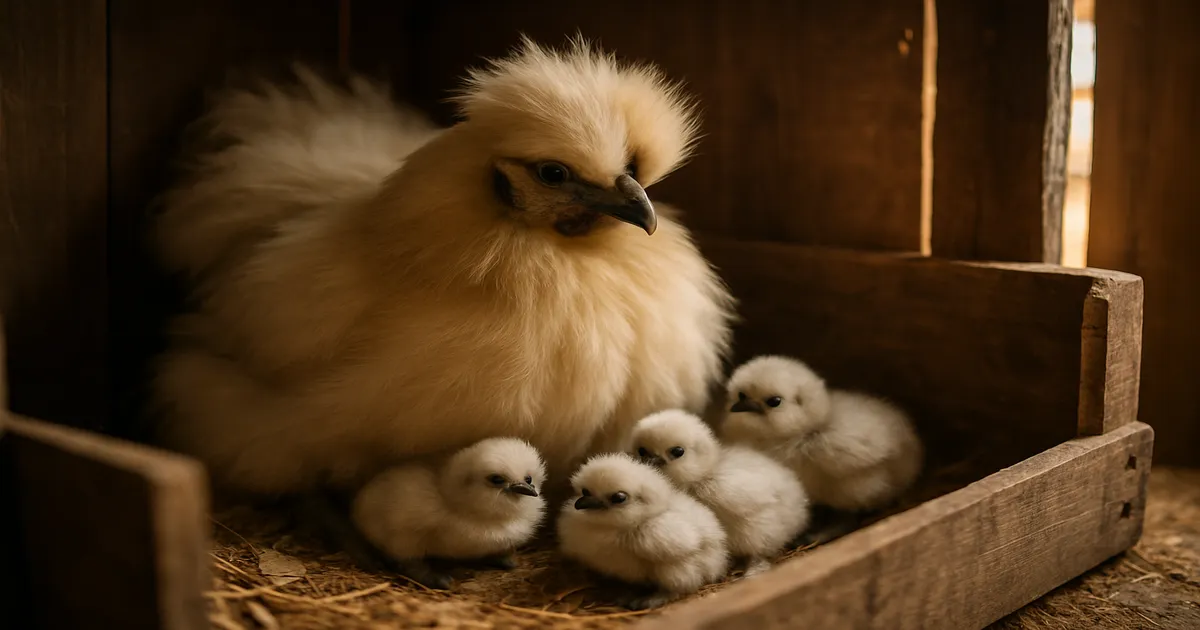
Silkies may be the broodiest breed in existence. A hen can go broody 3–5 times per year, and each spell means she stops laying for the duration — 21 days of incubation plus recovery time. That’s a real dent in your annual egg count.
The flip side is that Silkies are extraordinary surrogate mothers. They’ll happily hatch eggs from other chickens, ducks, turkeys, or guinea fowl, and a single hen can cover 6–8 standard eggs or 10–12 bantam eggs. Many keepers keep a Silkie hen for this purpose alone.
To break a broody hen, remove her from the nest repeatedly throughout the day. For persistent cases, place her in a wire-bottomed “broody breaker” cage elevated off the ground for 3–5 days — the airflow underneath reduces the body temperature that triggers brooding behavior.
Coop and Housing Setup for Silkie Chickens
How Much Space Do Silkies Need?
The minimum is 4 sq ft per bird inside the coop, but 6 sq ft is better for Silkies because they tend to stay indoors during wet weather. For the run, aim for at least 10 sq ft per bird, with 15–20 sq ft being ideal.
Roost Bars and Floor Sleeping
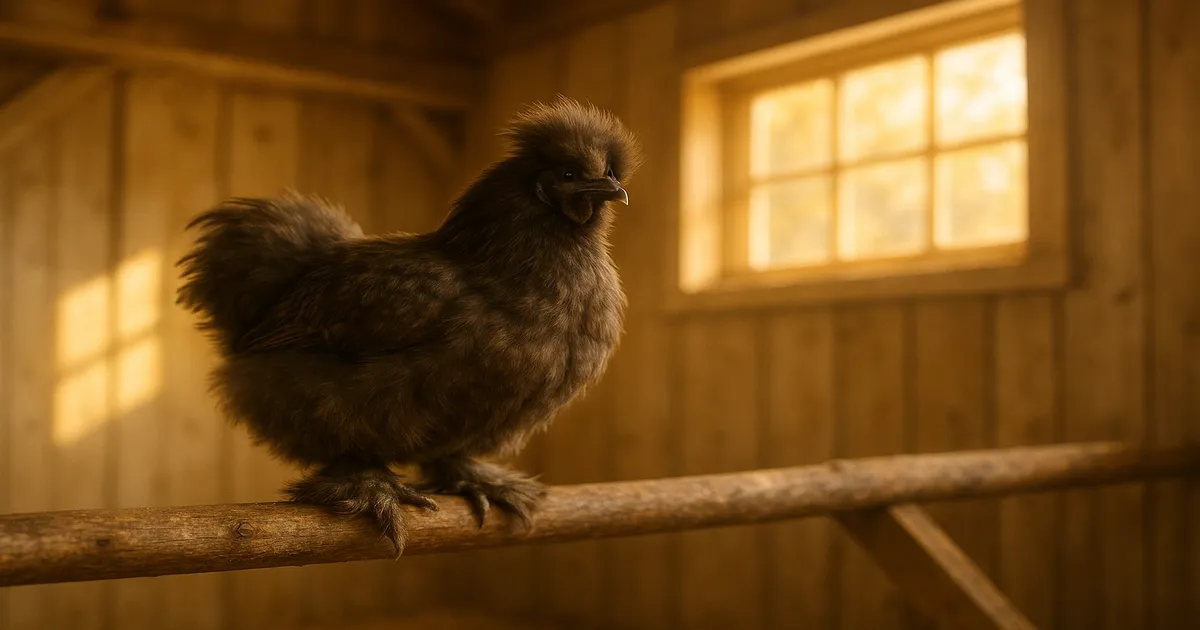
New keepers often worry when they find their Silkies sleeping on the floor — don’t. This is completely normal for the breed. Their feather structure prevents them from flying up to elevated perches. If you do provide roost bars, keep them just 6–12 inches off the ground to prevent leg injuries. A flat 2–4 inch wide surface is more comfortable than a narrow round dowel.
Nesting Boxes
Standard nesting box dimensions of 12×12×12 inches work well for Silkies. Keep boxes low to the ground — 6–12 inches — since they can’t easily jump to elevated boxes. Plan on one box per 3–4 hens, though a broody Silkie will claim a box and defend it fiercely. Adding curtains or privacy covers encourages use and discourages egg eating.
Ventilation
Good ventilation is non-negotiable. Target at least 1 sq ft of vent space per 10 sq ft of coop floor, with vents positioned high on the walls near the roofline. This lets moisture and ammonia escape without creating drafts at bird level. If you can smell ammonia when you walk in, ventilation is inadequate — levels should stay below 10 ppm to protect respiratory health.
Cold Weather Management
Silkies are moderately cold-hardy. They’re comfortable in the 40–50°F (4–10°C) range and can tolerate brief dips to around 20°F (-7°C), but sustained freezing temperatures stress the flock. Their feathered feet are especially vulnerable to frostbite, so keep bedding deep and dry — 4–6 inches of pine shavings insulates feet from frozen ground.
Skip the heat lamp. The fire risk in a coop full of dry bedding and feathers is serious. A ceramic heat emitter or a low-wattage flat panel heater is a much safer option for taking the edge off on brutal nights.
Predator-Proofing Your Silkie Flock
Why Silkies Are Especially Vulnerable
Two things make Silkies unusually easy targets: they can’t fly, and their crests block peripheral vision. They can’t spot a hawk overhead or a fox approaching from the side the way a sharp-eyed production breed might. A fully enclosed run isn’t optional with this breed — it’s essential.
Trimming the feathers around a Silkie’s eyes improves their field of vision significantly and takes about two minutes with blunt-tipped scissors. Many keepers do this routinely.
Hardware Cloth vs. Chicken Wire
Use hardware cloth (welded wire), not chicken wire. Chicken wire keeps chickens in but does almost nothing to keep determined predators out — raccoons can tear through it, and weasels can squeeze through the openings. Hardware cloth with ½-inch openings on all windows, vents, and run panels is the standard for serious predator protection.
Securing Against Diggers, Climbers, and Aerial Threats
- Diggers (foxes, dogs, skunks): Bury hardware cloth 12 inches down, or lay an L-shaped apron 12–18 inches out from the base of the run
- Climbers (raccoons): Cover the top of the run with hardware cloth or welded wire
- Aerial threats (hawks, owls): A solid roof or netting over the run is the only reliable solution
Raccoons are clever enough to open simple hook-and-eye latches. Use carabiner clips, locking latches, or two-step closures on every coop door. An automatic coop door on a timer adds another layer of security and ensures the pop door closes at dusk even when you’re away.
Feeding Silkie Chickens: A Life-Stage Nutrition Guide
What to Feed and When
| Life Stage | Feed Type | Protein % |
|---|---|---|
| Chicks (0–8 weeks) | Chick Starter | 20–22% |
| Pullets (8–18 weeks) | Grower/Developer | 16–18% |
| Laying Hens (18+ weeks) | Layer Feed | 15–18% |
| Broody/Molting Hens | All-Flock + oyster shell | 18–20% |
Do not feed layer feed to chicks. The high calcium content (3.5–4.5%) can cause kidney damage in birds under 16–18 weeks. Keep starter and layer feed strictly separated if you have birds of different ages.
Best Feed Format for Silkies
Crumbles or mini-pellets are the best choice. Their small beaks and facial feathering make it harder to pick up standard-sized pellets efficiently, and mash tends to compact and go to waste. Use crumbles for chicks and young birds, then transition to mini-pellets or crumbles as adults.
Calcium, Grit, and Supplements
Offer free-choice oyster shell in a separate dish at all times — don’t mix it into the feed. Laying hens need about 4 grams of calcium per day for proper eggshell formation, and free-choice access lets each bird self-regulate. Crushed eggshells baked at 250°F (121°C) for 30 minutes are a useful supplement if you want to recycle what your hens produce.
Granite grit is equally important and often overlooked. It stays in the gizzard and grinds up food — it’s not the same as oyster shell, which dissolves for calcium. Confined birds must have insoluble granite grit available free-choice since they can’t pick it up naturally from the ground. Start chicks on chick-sized grit around 2 weeks of age if they’re receiving any treats.
Safe Treats and Foods to Avoid
Adult Silkies eat just 2–3 oz (57–85 g) of feed per day, so treats add up quickly. Keep them to no more than 10% of the daily diet.
Good treat options: mealworms, leafy greens, watermelon, cooked squash, berries, plain yogurt
Never feed: avocado (contains persin, which is toxic to birds), chocolate, raw or dried beans, onions or garlic in large quantities, rhubarb leaves, or anything moldy
Silkie Chicken Health: Common Problems and Prevention
Marek’s Disease
Silkies are documented to be more susceptible to Marek’s Disease than most breeds. This highly contagious herpesvirus causes tumors, paralysis, and immunosuppression — and there’s no cure. Vaccination at hatch is critical. The vaccine doesn’t prevent infection, but it does prevent tumor development. Most hatcheries vaccinate automatically; if you’re buying from a local breeder, ask specifically whether chicks have been vaccinated.
Coccidiosis in Chicks
Coccidiosis is the top killer of young chicks, especially between 3–6 weeks of age. Watch for bloody or watery diarrhea, lethargy, hunched posture, and pale combs. Treat immediately with Amprolium (Corid) at 9.6 ml per gallon of water for 5–7 days as the sole water source. Medicated chick starter contains Amprolium as a preventive and is a smart choice for Silkie chicks.
Mites and Lice
That gorgeous fluffy plumage is prime real estate for mites and lice, and infestations can escalate quickly. Check weekly by parting feathers near the vent, under the wings, and around the neck — you’re looking for tiny moving insects or pepper-like specks at feather bases. Check the coop at night with a flashlight for red mites hiding in crevices.
Treatment options:
- Permethrin dust or spray (0.25%) applied to birds and coop surfaces
- Spinosad (Elector PSP) — highly effective and OMRI-listed for organic use
- Ivermectin (off-label) — observe egg withdrawal periods
Always treat birds and the coop simultaneously, and repeat in 10–14 days to catch newly hatched eggs. A dedicated dust bathing area with wood ash or food-grade diatomaceous earth helps with ongoing prevention.
Bumblefoot
Bumblefoot is a bacterial infection (usually Staphylococcus aureus) that starts with a small cut or abrasion on the foot pad. Silkies are at higher risk because their feathered feet trap moisture and debris, and floor sleeping on hard or wet surfaces creates abrasion. Check foot pads weekly — early signs are a small black scab and mild swelling. Caught early, bumblefoot responds well to cleaning, Vetericyn or Betadine treatment, and bandaging. Advanced cases may need veterinary care.
Routine Health and Biosecurity Habits
A few simple habits prevent most problems:
- Quarantine new birds for a minimum of 30 days before introducing them to your flock
- Clean waterers every 2–3 days (daily in summer) to prevent bacterial growth
- Monitor ammonia levels — if you can smell it, ventilation needs improving
- Weigh birds monthly — unexplained weight loss is often the first sign of illness
- Vaccinate for Marek’s at hatch and keep records for all birds
Frequently Asked Questions About Raising Silkie Chickens for Beginners
Are Silkie chickens good for beginners?
Yes — Silkies are one of the best starter breeds available. They’re docile, small, easy to handle, and tolerant of children. Their main management considerations are predator vulnerability (they can’t fly and have limited vision from their crests), feathered feet that need monitoring in wet conditions, and strong broody tendencies that reduce egg production.
How many eggs do Silkie chickens lay per year?
Silkies lay approximately 100–150 eggs per year, or 2–4 eggs per week under good conditions. That’s significantly less than production breeds. Frequent broodiness reduces annual totals further, since hens stop laying while sitting on a nest.
Can Silkie chickens live with other breeds?
They can, but it requires careful management. Silkies’ gentle temperament makes them vulnerable to bullying by more assertive breeds. If you’re mixing breeds, choose similarly calm companions like Cochins, Brahmas, or Orpingtons, and provide plenty of space and multiple feeding stations to reduce competition.
How do you stop a Silkie hen from going broody?
Remove her from the nest consistently throughout the day and block access to nesting boxes when possible. For persistent cases, place her in a wire-bottomed broody breaker cage elevated off the ground for 3–5 days — the airflow cools her underside and disrupts the hormonal cycle driving broodiness. Most hens break within a week.
Do Silkie chickens need a special coop?
Not a completely different coop, but a few modifications help. Keep roost bars very low (6–12 inches) or skip them entirely, since Silkies prefer to sleep on the floor. Position nesting boxes at ground level, and pay extra attention to ventilation and dry bedding to protect their feathered feet.