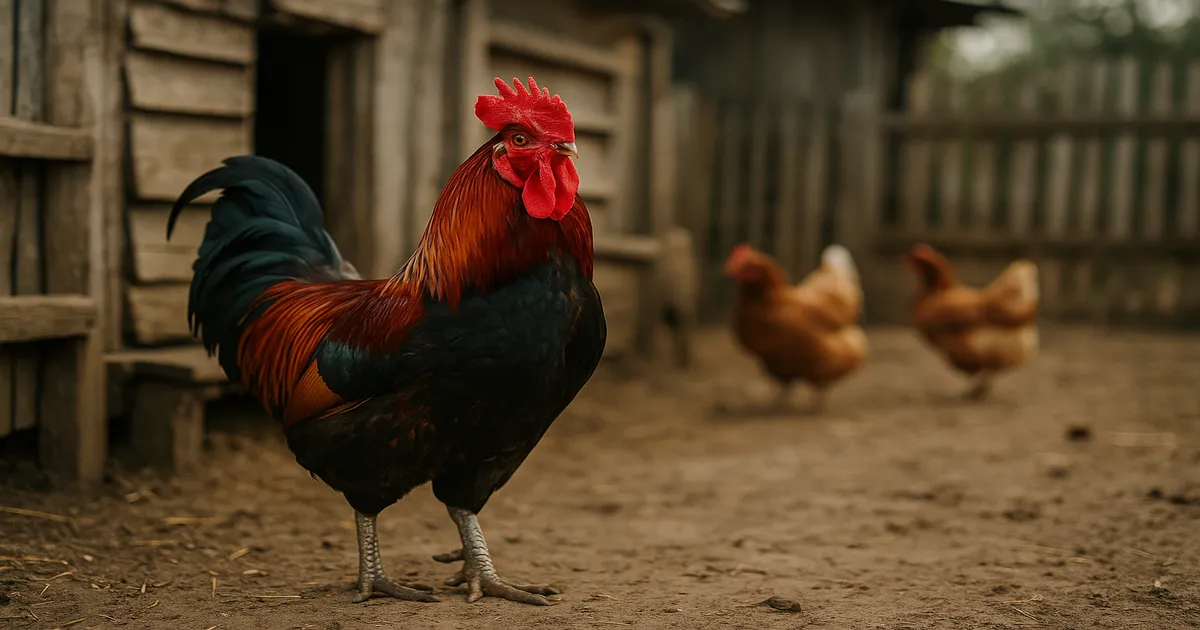
Quick Answer: The three fastest ways to tell if you have a rooster are crowing, pointed saddle and hackle feathers, and long curved sickle tail feathers. Most of these signs become obvious between 12–20 weeks of age. If your bird is crowing — even a raspy, broken crow — you almost certainly have a rooster.
So you ordered a batch of “pullets” and one of them is starting to look a little… different. Maybe the comb is bigger, the posture is prouder, or you heard something suspiciously like a crow at 5 a.m. You’re not alone — figuring out whether you have a rooster is one of the most common questions new chicken keepers face, and even experienced flock owners get surprised sometimes.
The good news: once you know what to look for, the answer is usually pretty clear.
Do You Have a Rooster? The Three Fastest Ways to Tell
- Crowing — Even a broken, off-key attempt at a crow means rooster. No hen makes that sound.
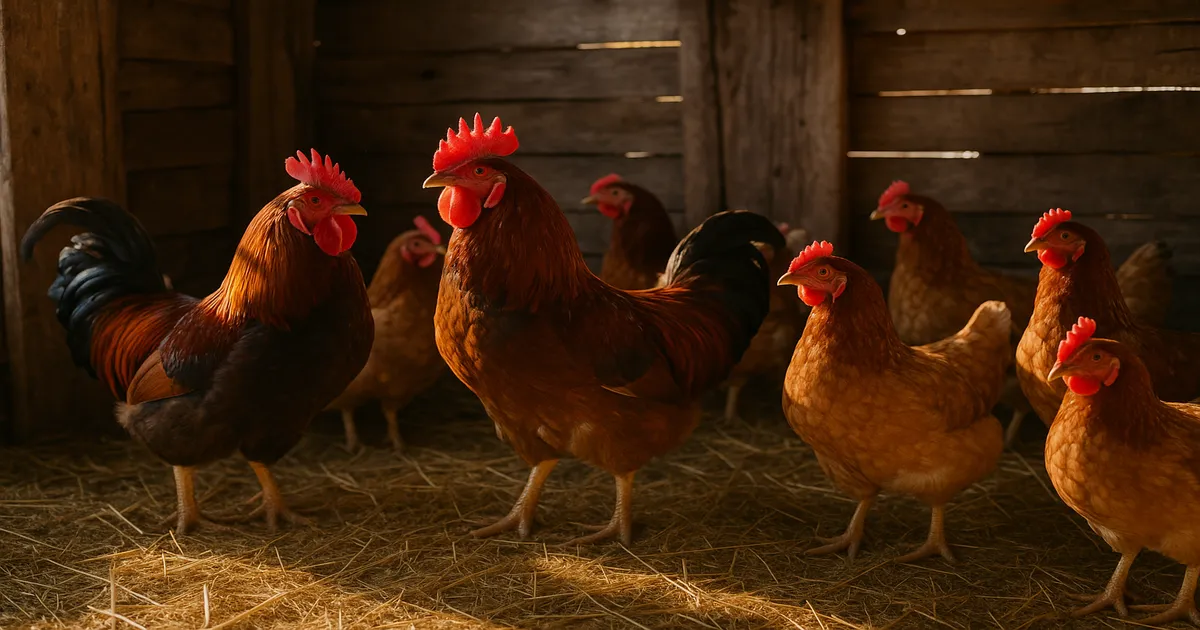
- Pointed saddle and hackle feathers — Look at the neck and lower back. Roosters grow long, tapered, often iridescent feathers in both spots. Hens have rounded, blunt-tipped feathers.
- Sickle tail feathers — Long, dramatically curved tail feathers arching upward. Hens have neat, uniform tails with no curve.
These signs typically appear between 12–20 weeks, so a young chick may not give you a clear answer right away.
Rooster vs. Hen at a Glance
| Trait | Rooster | Hen |
|---|---|---|
| Comb size | Large, upright, vivid red | Smaller, paler |
| Hackle feathers | Long, pointed, iridescent | Short, rounded |
| Saddle feathers | Long, flowing, pointed | None |
| Tail feathers | Long curved sickles | Short, uniform |
| Spurs | Pronounced by 5–6 months | Rarely present |
| Body size | 20–30% larger, upright stance | Smaller, rounder build |
| Behavior | Crows, mounts hens, patrols | Nests, lays eggs |
Physical Signs You Have a Rooster
Comb and Wattles
A cockerel’s comb starts pulling ahead of his sisters’ early. By 8–10 weeks, his comb will be noticeably larger, more upright, and a deeper red than a pullet of the same breed and age. The wattles — those fleshy dangles under the chin — follow the same pattern. This is one of the earliest reliable clues, well before feather patterns become obvious.
Hackle and Saddle Feathers
Run your fingers along the neck feathers. On a hen, they’ll feel blunt and rounded at the tips. On a rooster, they’ll be long, narrow, and often shimmer with an iridescent sheen. By 12–16 weeks, a cockerel also starts growing saddle feathers — long, flowing plumes that drape over his lower back toward the tail. Hens simply don’t grow them.
Sickle Tail Feathers
These are the showstoppers. Sickle feathers are the long, dramatically arched tail feathers that give roosters their iconic silhouette. They emerge between 16–20 weeks and are essentially unmistakable once present. If your bird’s tail feathers are curving upward in a graceful arc, you have a rooster.
Spurs
Both sexes are born with a small bump on the back of each leg, but in roosters these develop into actual spurs starting around 5–6 months. A mature rooster’s spurs can reach 1–3 inches depending on breed and age. Hens occasionally develop small spur nubs — especially older hens — but they’re rarely pronounced.
Body Size and Posture
Stand back and look at your whole flock together. A rooster carries himself differently — chest forward, head high, legs planted wide. He’ll typically be 20–30% larger than hens of the same breed, with a broader chest and noticeably thicker legs. It’s a confident, almost theatrical stance that’s hard to miss once you’ve seen it.
Behavioral Signs You Have a Rooster
Crowing
Crowing is the gold standard of rooster identification. Most roosters start crowing between 4–8 months, but some individuals start as early as 6–8 weeks. Early crows are often raspy and broken — more of a strangled squawk than the classic cock-a-doodle-doo. Don’t let that fool you. An active rooster may crow 15–20 times per hour, and not just at dawn.
Mating Behavior
Watch for tidbitting — a rooster drops one wing, shuffles in a circle around a hen, and clucks rapidly to get her attention. Treading (mounting hens) can begin as early as 12–16 weeks in cockerels. To keep things stress-free for your hens, aim for a ratio of 8–12 hens per rooster. A single rooster can mate up to 10–12 times per day, so too few hens leads to feather loss and stress injuries.
Flock Protection
A rooster earns his keep by watching over the flock. He’ll position himself on the perimeter while hens feed, scan for aerial and ground predators, and sound a sharp alarm call when he spots a threat. He’ll also food-call — a rapid tuk-tuk-tuk — to summon hens when he finds something good to eat, often stepping aside to let them eat first.
Dominance and Aggression
Some roosters are perfect gentlemen. Others decide you’re a rival. Cockerels can begin showing dominance behavior toward people as early as 16–20 weeks. If yours is squaring up to you, wear long pants and closed-toe shoes in the coop. Spurs can cause real injury.
Hard-to-Sex Breeds
Silkies
Silkie roosters are the classic headache of backyard chicken sexing. Their fluffy, fur-like plumage hides the pointed hackle and saddle feathers that make other breeds easy to read. Most Silkie keepers simply wait for crowing — which typically starts at 4–6 months — as the most reliable confirmation.
Hen-Feathered Breeds: Sebright and Campine
Sebright and Campine roosters are genetically hen-feathered, meaning they lack pointed saddle and hackle feathers entirely. They can look convincingly female right up until they crow or mount a hen. If you keep either of these breeds, don’t rely on feather shape alone.
Easter Eggers and Mixed-Breed Birds
Easter Eggers and mixed-breed birds can show delayed or atypical sex characteristics — a male might not develop obvious sickle feathers or a prominent comb on the usual schedule. If you’re on the fence, give it a few more weeks and watch for behavioral cues.
Common Dual-Purpose Roosters
Knowing your breed helps. Here’s what to expect from some common males at maturity:
- Rhode Island Red: Deep mahogany body, black tail, large upright single comb — about 8.5 lbs
- Buff Orpington: Solid golden-buff, broad and fluffy with a calm temperament — up to 10 lbs
- Barred Plymouth Rock: Barring appears lighter and whiter than hens due to the double-barring gene — about 9.5 lbs
- Leghorn: White with a large, floppy single comb that tips to one side — lean at about 6 lbs
- Australorp: Stunning beetle-green sheen over black feathers — about 8.5 lbs
What Having a Rooster Means for Your Flock
Egg Production
Hens lay eggs on their own hormonal cycle — no rooster required. His presence has no direct effect on how many eggs your hens produce. A fertilized egg collected daily is also indistinguishable from an unfertilized one in taste, appearance, and nutrition. An embryo only begins developing if the egg is incubated at 99–102°F (37–39°C) for a sustained period, so collect eggs daily and you’ll never notice a difference.
The indirect impact is broodiness. Fertilized eggs can trigger broody behavior in susceptible hens — particularly Buff Orpingtons, Silkies, Cochins, and Brahmas. A broody hen stops laying for the 21-day incubation period plus several weeks of chick-rearing, which can cost you 50–75 eggs per episode. Collect eggs daily and break up broody behavior quickly if egg production is your priority.
Feeding a Mixed Flock With a Rooster
Why Roosters Should Not Eat Layer Feed
Layer feed contains 3.5–4.5% calcium — the amount laying hens need for strong eggshells. That same calcium load can cause kidney damage in roosters over time. It’s a slow, cumulative problem, but a serious one.
The solution is simple: switch your whole flock to an all-flock or flock raiser pellet (typically 18–20% protein) and offer calcium separately. Purina Flock Raiser Crumbles is a widely available option that works well for mixed flocks. Laying hens will self-regulate their calcium intake when it’s offered free-choice.
Calcium for Hens
Put crushed oyster shell in a separate dish and leave it available at all times. Laying hens will eat it as needed; roosters generally ignore it. Crushed eggshells baked at 250°F (121°C) to eliminate pathogens work just as well and cost nothing. A small hanging feeder keeps the oyster shell clean and accessible without taking up floor space.
Daily feed amounts:
- Standard laying hen: ~¼ lb (113g) per day
- Large rooster: ~⅓ lb (150g) per day
Keep treats to 10% or less of daily intake. Good options include leafy greens, watermelon, berries, mealworms, and cooked eggs. Avoid avocado, chocolate, onions, raw beans, and anything salty.
Coop and Housing With a Rooster
Space Requirements
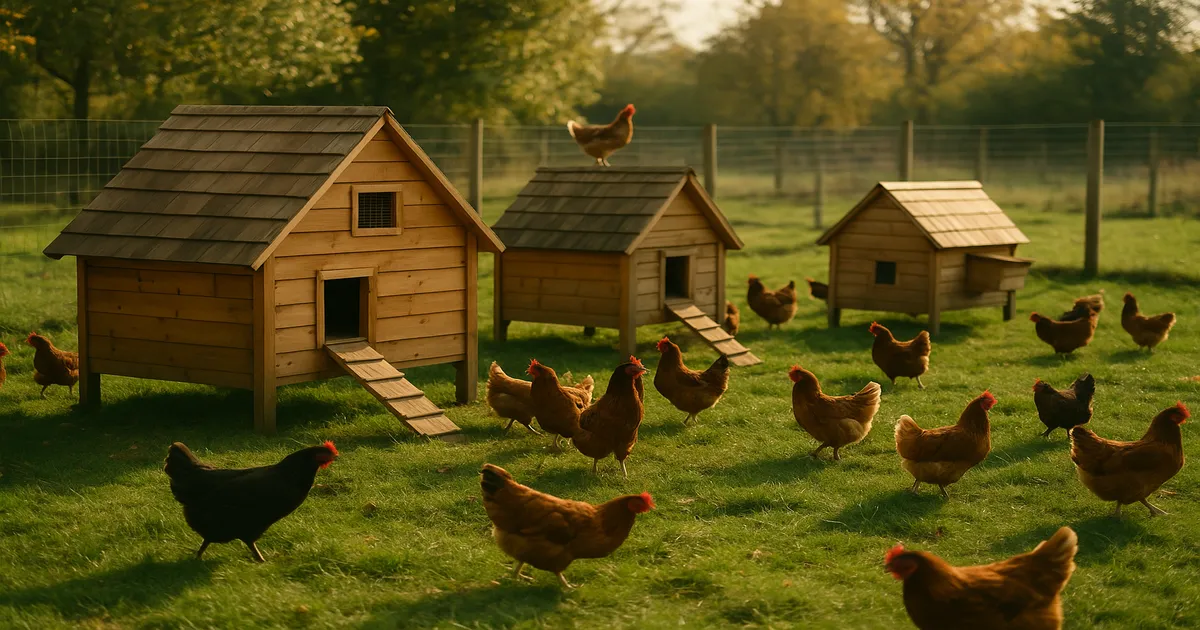
Plan for a minimum of 4 sq ft per bird inside the coop and 10 sq ft per bird in the run. More is always better — tight quarters increase stress, pecking, and disease. A rooster doesn’t need extra space beyond the standard per-bird allotment, but he’ll make the whole flock tense if things are cramped.
Roost Bars and Nesting Boxes
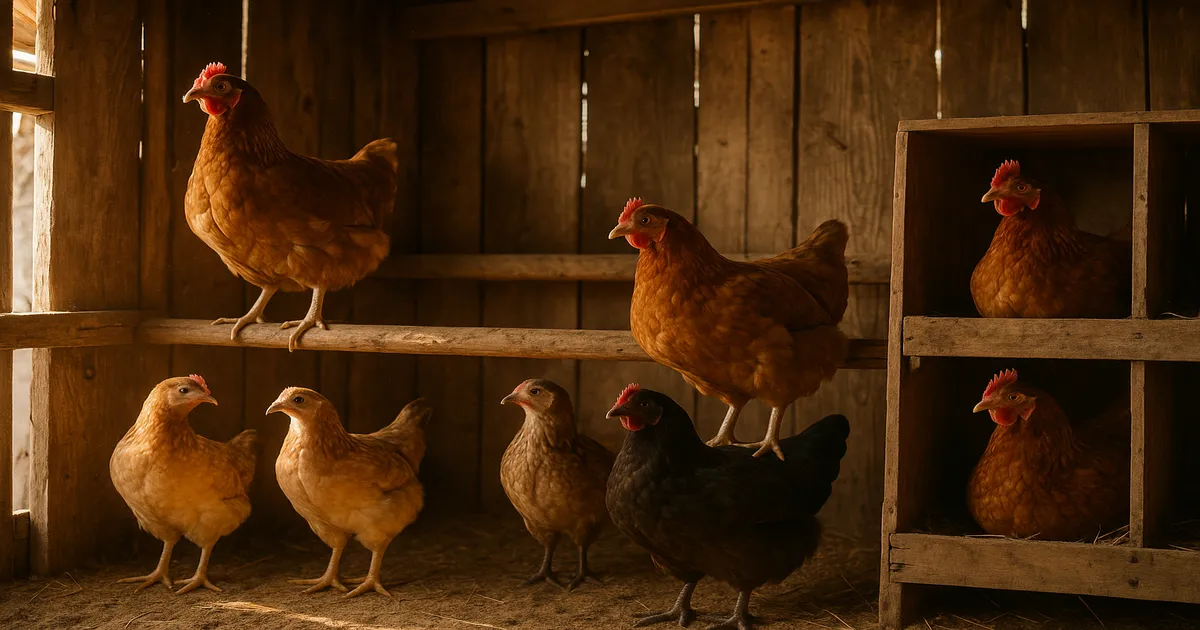
Allow 8–10 linear inches of roost bar per bird, with bars spaced 18–24 inches apart so birds below don’t get soiled. Roosters naturally claim the highest roost, so make sure the top bar has at least 18 inches of clearance from the ceiling for large breeds. A height of 2–4 feet off the ground works well for most standard breeds.
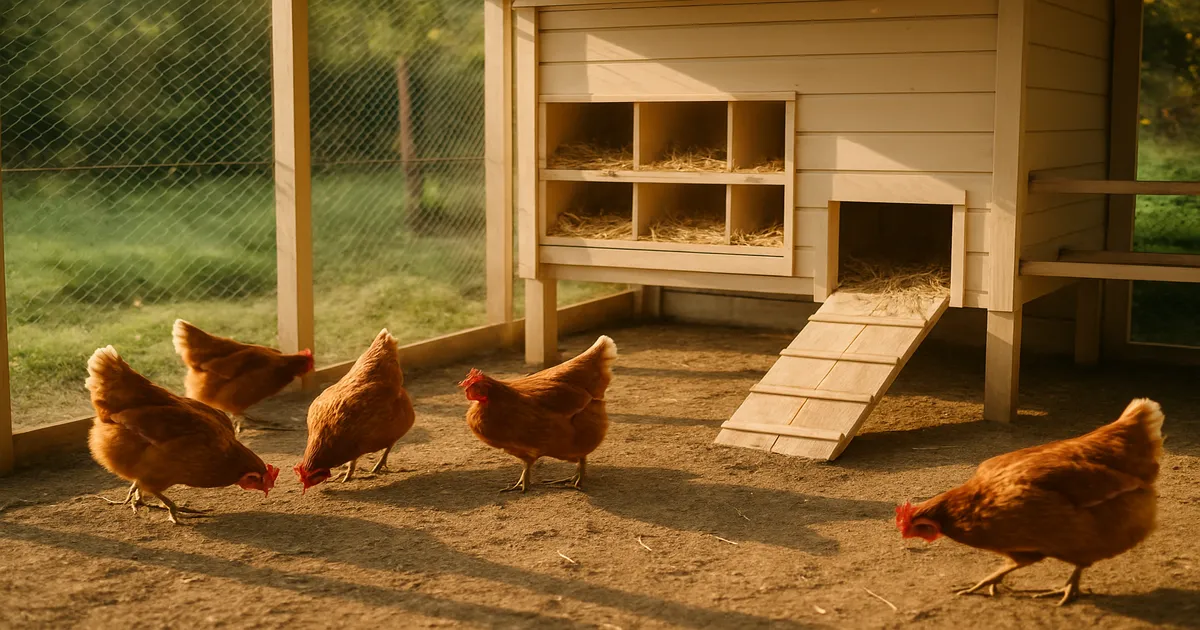
Plan for one nesting box per 4–5 hens — your rooster won’t use them. Standard box size is 12×12×12 inches with 3–4 inches of nesting material like straw or pine shavings.
Ventilation and Frostbite Prevention
Good airflow is non-negotiable. Aim for 1 sq ft of ventilation per 10 sq ft of coop floor, positioned high on the walls or in the eaves to prevent drafts at roost level. Most standard breeds handle cold down to 20°F (-7°C) without supplemental heat, but large-combed roosters — especially Leghorns — face real frostbite risk below 32°F (0°C). Apply petroleum jelly to the comb and wattles before freezing nights. A damp coop causes more cold-weather problems than cold air alone, so resist the urge to seal everything up tight.
Predator-Proofing
- Use ½-inch hardware cloth on all openings — standard chicken wire is not predator-proof; raccoons tear through it easily
- Bury hardware cloth 12 inches deep around the perimeter, or extend it outward as an apron
- Secure latches with carabiner clips or padlocks — raccoons can open hook-and-eye latches
- An automatic coop door that closes at dusk adds a strong layer of nightly protection. The ChickenGuard Extreme Auto Door is a reliable option that opens and closes on a timer or light sensor
Rooster Health: What to Watch For
Bumblefoot
Roosters are more prone to bumblefoot than hens because of their heavier weight and occasional spur-related cuts. Look for a hard black scab on the bottom of the foot pad, swelling, and lameness. Soak the foot in warm Epsom salt solution (1 cup per gallon of water), gently clean the wound, apply antibiotic ointment, and bandage. Repeat daily until healed. Soft roost surfaces and avoiding high perches for heavy breeds help prevent it.
Mites and Lice
Check your birds regularly — part the feathers near the vent and under the wings. Signs of infestation include feather damage, bare patches, and a pale comb from anemia in severe cases. Red mites hide in coop cracks during the day, so inspect the coop at night if your birds seem reluctant to go in. Treat with permethrin-based poultry dust or spray on both the birds and the coop, and repeat in 7–10 days to break the life cycle.
Respiratory Infections
Rattling breath, nasal discharge, swollen sinuses, and eye bubbling are all warning signs. Common culprits include Mycoplasma gallisepticum, Infectious Bronchitis, and Newcastle Disease. Bacterial infections can be treated with antibiotics like Tylosin or Doxycycline under veterinary guidance. Your most powerful tool is biosecurity — enforce a 30-day quarantine for any new bird before it joins your existing flock.
Marek’s Disease
Marek’s is a herpesvirus that causes leg paralysis, tumors, and gray iris discoloration. Most hatcheries vaccinate at hatch — confirm this when you buy chicks. There’s no cure once a bird is infected, but vaccination prevents tumor development.
| Vaccine | Timing | Method |
|---|---|---|
| Marek’s Disease | Day 1 at hatch | Subcutaneous injection |
| Newcastle/IB combo | 1–3 weeks | Drinking water or eye drop |
| Fowl Pox | 8–12 weeks | Wing-web stab |
Frequently Asked Questions: Do I Have a Rooster?
At what age do roosters start crowing?
Most roosters begin crowing between 4–8 months, though some start as early as 6–8 weeks. Early crows are raspy and broken before maturing into a full crow. If you hear any crow-like sound from a young bird, assume it’s a rooster.
Can I legally keep a rooster in a backyard flock?
It depends on where you live. Many urban and suburban municipalities ban roosters outright due to noise, while others allow them with restrictions on numbers or distance from neighboring properties. Check your local zoning ordinances and HOA rules before keeping a rooster — regulations vary widely even within the same city.
How many hens do I need per rooster?
The recommended ratio is 8–12 hens per rooster. A single rooster can mate up to 10–12 times per day, and too few hens means over-mating — which causes feather loss, stress, and injury. One rooster can comfortably manage a flock of up to 12 hens.
Are fertilized eggs safe to eat?
Yes, completely safe. Fertilized eggs are nutritionally identical to unfertilized eggs and look the same when cracked open. Collect eggs daily and refrigerate them promptly, and you’ll never notice any difference.
My hen is crowing — does that mean she’s a rooster?
Not necessarily, but it’s worth investigating. Hens very rarely crow, and when they do it’s usually due to a hormonal imbalance or a damaged ovary causing the hen to take on rooster-like behavior. If your bird is crowing consistently and showing other male characteristics, have a vet check it out — but the most likely explanation is that you do, in fact, have a rooster.