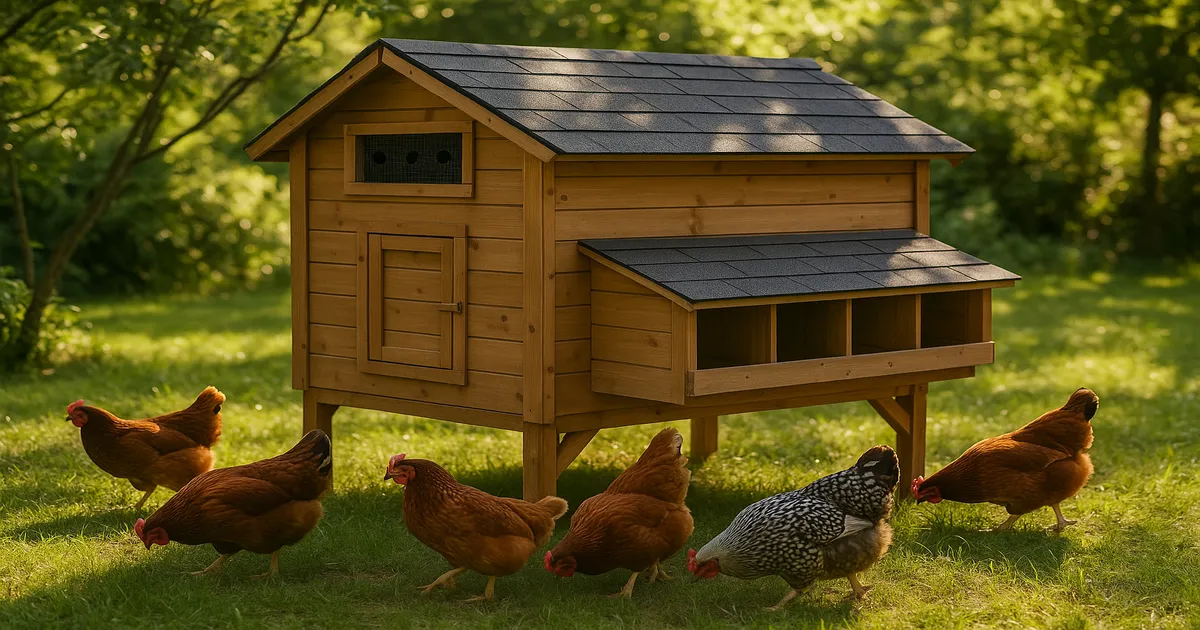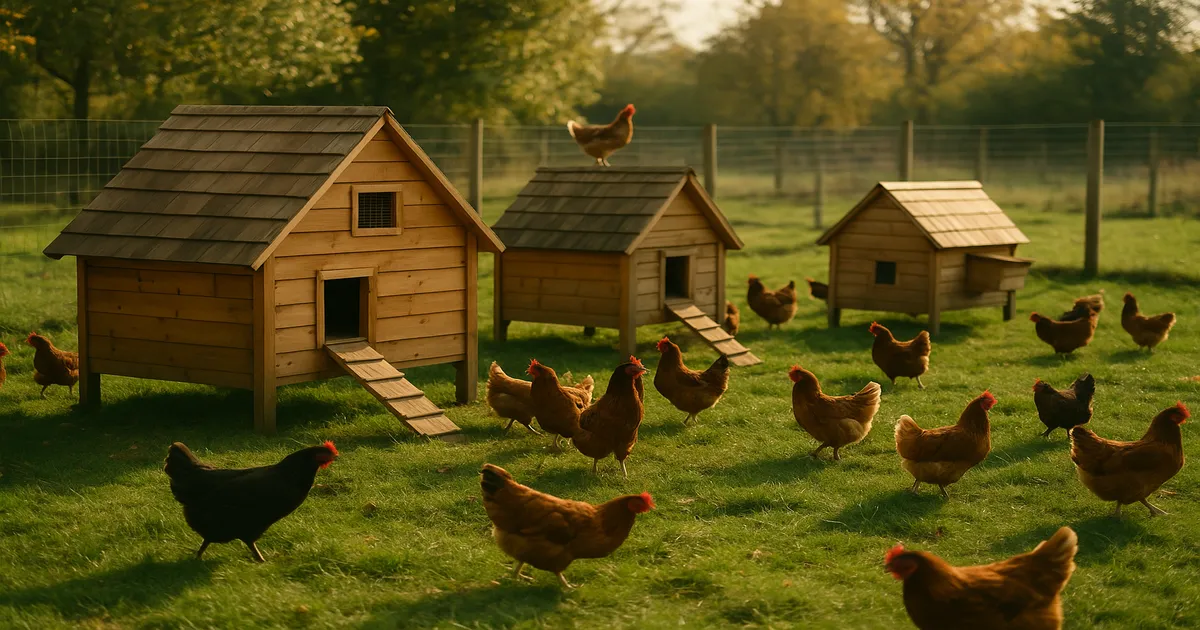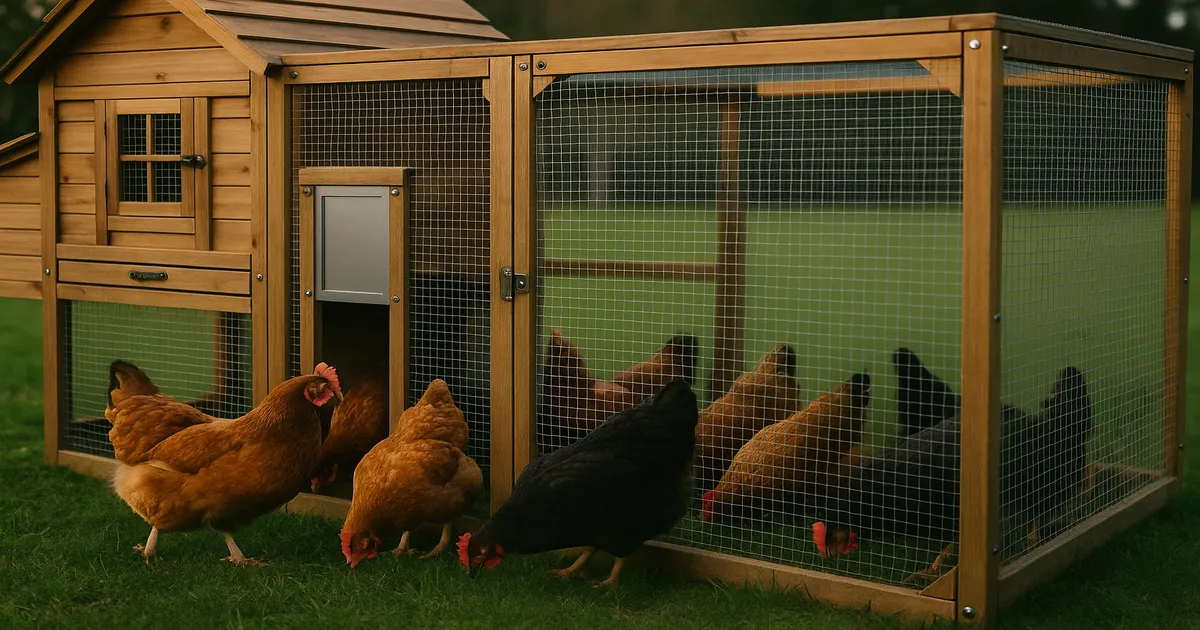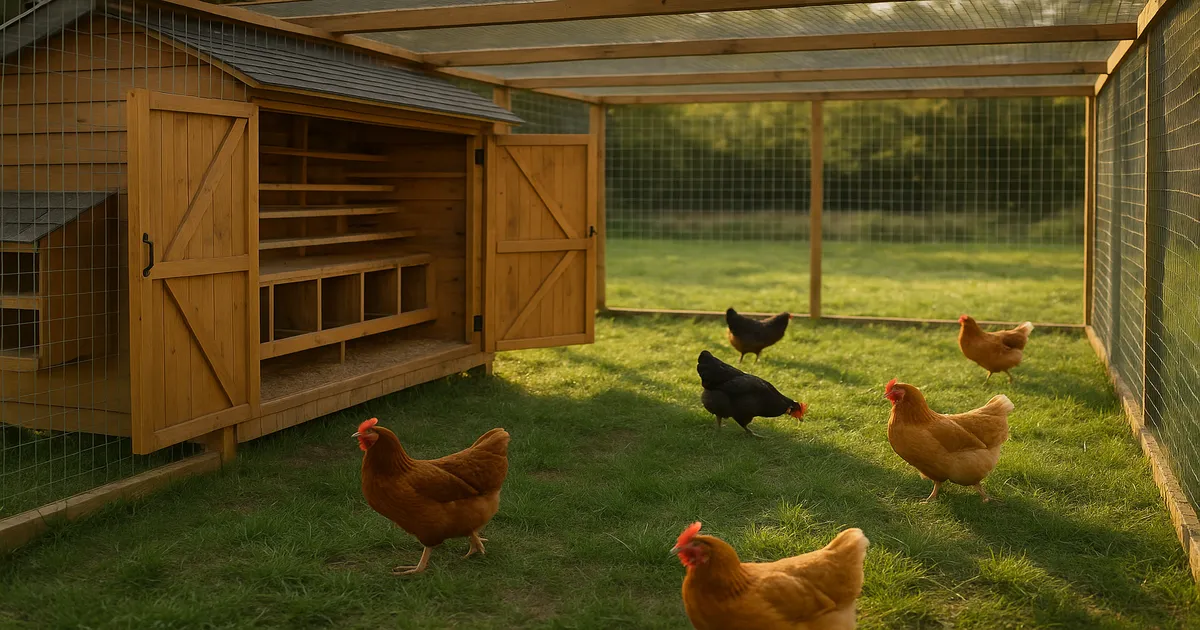
Quick Answer: The two rules that answer “how many hens is this set up suitable for?” every time: allow 4 sq ft per standard hen inside the coop and 10 sq ft per hen in the outdoor run. Most commercially sold coops overstate their capacity by 2–3×, so always do the math yourself before buying birds.
How Many Hens Is This Setup Suitable For?
Every coop evaluation starts with two numbers. Get these right and everything else falls into place.
The 4 Sq Ft Indoor Rule Explained
Four square feet per standard-sized hen is the comfortable minimum for a confined flock — birds that spend significant time inside or in a covered run rather than free-ranging all day. That’s not a generous allowance; it’s the floor. Drop below it and you’ll see feather pecking, stress, and disease spread faster than you’d expect.
If your hens have consistent access to an outdoor run or pasture, you can work with 2–3 sq ft per bird inside, since they’re only using the coop to sleep and lay. Don’t bank on that flexibility, though, if your climate means birds get locked in for days at a time during winter.
The 10 Sq Ft Outdoor Run Rule Explained
Ten square feet per hen in the run is the minimum that keeps things manageable — grass stays alive (mostly), manure doesn’t pile into a mud pit, and birds can move without constant competition. More is always better. Aim for 15 sq ft per bird if you can build it.
Free-ranging changes the math entirely. Hens with access to a large yard or pasture — ideally 100 sq ft or more per bird, and 250+ sq ft if you want to maintain vegetation — need far less run space because they’re not confined to it.
Why Coop Marketing Claims Are Almost Always Wrong
A coop sold as “suitable for 8–10 hens” is almost never that. Manufacturers calculate capacity using the absolute minimum square footage — sometimes as low as 1–2 sq ft per bird — and assume hens spend most of their time outside. In practice, that same coop comfortably holds 3–4 standard hens. Always measure the interior floor space yourself and apply the 4 sq ft rule. Don’t trust the box.
Coop Size Calculator: How Many Hens Is This Setup Suitable For?
Indoor Space Requirements by Setup Type
The right stocking density depends on how much time your birds actually spend inside. A coop with a large attached run is a very different situation from one where hens are locked in during harsh winters.
- Confined (no run or limited outdoor access): 4 sq ft per standard hen
- With a good-sized run: 2–3 sq ft per standard hen inside
- Free-range access most days: 2 sq ft per standard hen inside is workable
Outdoor Run Space Requirements
- Minimum: 8–10 sq ft per standard hen
- Recommended: 10–15 sq ft per hen for healthy ground and bird welfare
- Bantams: 4–6 sq ft per bird in the run
- Free-range: 100–250+ sq ft per bird
Quick-Reference Sizing Table for Common Coop Dimensions
| Coop Size | Sq Ft | Hens (Confined) | Hens (With Run) | Run Size Needed |
|---|---|---|---|---|
| 4×4 ft | 16 sq ft | 4 hens | 5–8 hens | 50–80 sq ft |
| 4×8 ft | 32 sq ft | 8 hens | 10–16 hens | 100–160 sq ft |
| 6×8 ft | 48 sq ft | 12 hens | 16–24 hens | 160–240 sq ft |
| 8×10 ft | 80 sq ft | 20 hens | 26–40 hens | 260–400 sq ft |
| 10×12 ft | 120 sq ft | 30 hens | 40–60 hens | 400–600 sq ft |
These are comfortable minimums, not maximums. If you’re on the fence between two flock sizes, build for the larger one — you’ll thank yourself later.
Free-Range vs. Confined: How Management Style Changes the Numbers
Free-ranging dramatically reduces pressure on both your indoor space and your run. Hens that spend 6–8 hours a day foraging across a yard come back to the coop tired and well-exercised, and they consume 20–30% less commercial feed in the process. The trade-off is predator exposure and the reality that not every keeper has the yard space or fencing to make it safe.
If you can’t free-range but want a larger flock, prioritize building a bigger run over buying a bigger coop. Outdoor space matters more to hen welfare than indoor square footage, as long as the coop is large enough for comfortable overnight roosting.
How Breed Size Changes the Answer
Large and Heavy Breeds: More Space Per Bird
Breeds like Brahma, Jersey Giant, and Cochin tip the scales at 8–10 lbs or more. They need 5–6 sq ft inside the coop, wider roost bars, and larger nesting boxes. Their manure output is proportionally larger too, so ventilation and litter management need to keep pace.
Medium Breeds: The Standard Sizing Benchmark
Most coop calculators — including the table above — are built around medium-weight hens in the 5–7 lb range. Wyandottes, Easter Eggers, and Leghorns fall here. The 4 sq ft rule was written for these birds.
Bantam Breeds: Half the Space, Double the Charm
Bantams like Silkies and Belgian d’Uccles weigh just 1.5–3 lbs and can be kept comfortably at roughly half the standard space requirement — about 2 sq ft inside and 4–6 sq ft in the run per bird. That makes them genuinely practical for small urban backyards where a standard flock simply wouldn’t fit.
Space Needs for the Most Popular Backyard Breeds
Rhode Island Red — 6.5 lb hens, standard 4 sq ft inside. Confident and occasionally assertive in the flock, so don’t overcrowd them. They start laying at 16–18 weeks and produce 5–6 brown eggs per week.
Buff Orpington — 7–8 lb hens; push toward 5 sq ft inside given their fluffy build and calm, slow-moving temperament. Famously docile and cold-hardy. Expect 3–4 light brown eggs per week and a higher tendency toward broodiness.
Barred Plymouth Rock — 7.5 lb hens, 4–5 sq ft inside. One of the most adaptable breeds for both confined and free-range setups. Friendly, cold-hardy, and consistent at 4–5 brown eggs per week.
Black Australorp — 6.5 lb hens, standard 4 sq ft. Exceptionally well-suited to confinement — quiet, gentle, and rarely aggressive. Excellent layers at 5–6 light brown eggs per week.
White Leghorn — 4.5 lb hens, the most space-efficient standard breed at 3–4 sq ft inside. Active and flighty; they do best with free-range access or a large run. Top producers at 5–6 white eggs per week.
Silkie — 1.5–2 lb hens, 2 sq ft inside is sufficient. Extremely broody, which cuts into egg count (only 2–3 cream or tinted eggs per week when laying). Ideal for small spaces and families with young children.
Inside the Coop: Roosts, Nesting Boxes, and Ventilation
Roost Bar Space: How Many Inches Per Hen?
Every hen needs her own spot on the roost bar. They won’t double up willingly, and crowding at roost time is a major source of pecking injuries.
- Standard breeds: 8–12 inches of linear roost space per bird
- Bantams: 6 inches per bird
- Large breeds (Brahma, Cochin): 12–14 inches per bird
Mount roosts 18–36 inches off the floor. Use a 2×4 laid flat side up — the flat surface lets hens cover their feet on cold nights, which prevents frostbite far better than a narrow dowel. Space parallel roost bars at least 12 inches apart (18 inches preferred) and keep them 10–12 inches from the wall so droppings fall clear.
Nesting Box Ratios: How Many Boxes Do You Actually Need?
Fewer than you think. Hens are perfectly happy sharing, and they’ll often queue for the same favorite box even when others sit empty.
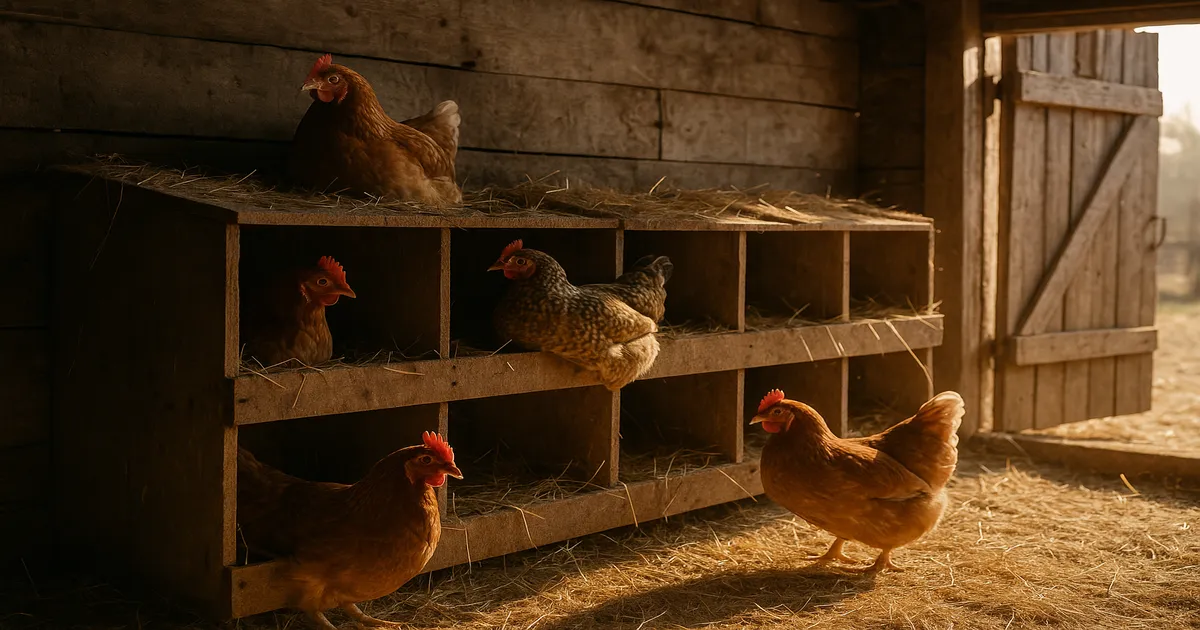
- 1 nesting box per 3–4 hens is the standard, and it works
- Minimum dimensions: 12×12 inches for standard breeds; 14×14 for large breeds; 10×10 for bantams
- Mount boxes 18–24 inches off the floor, but always below roost height — if boxes sit higher than the roosts, hens will sleep in them and soil the nesting material every night
A curtain or partial hood on each box reduces egg eating and encourages hens to use all available boxes rather than fighting over one.
Ventilation: The Most Overlooked Factor in Coop Sizing
Ammonia is the silent killer in backyard coops. If you can smell it when you open the door, the concentration is already above 25 ppm — the threshold where respiratory damage begins. The fix is airflow, not added heat.
Provide at least 1 sq ft of ventilation per 10 sq ft of floor space, positioned high on the walls near the roofline. This lets moist, ammonia-laden air escape without creating drafts at bird level. In hot climates, scale that up to 1 sq ft of vent per 4 sq ft of floor. Cover all openings with ½-inch hardware cloth — never solid panels that seal off airflow in winter.
Chickens handle cold far better than most keepers expect. A dry Buff Orpington at 10°F (−12°C) is fine. A wet one at 35°F (2°C) is in trouble. Moisture is the real enemy. The deep litter method — building up 4–6 inches of pine shavings and turning the material regularly — generates modest composting heat and absorbs moisture well. In climates that regularly drop below 20°F (−7°C), add rigid foam insulation (R-10 minimum) to walls and ceiling. Just don’t seal the coop; a well-ventilated, draft-free space beats a sealed one every time.
Egg Production: What to Expect From Your Flock Size
Eggs Per Week by Breed
| Breed | Eggs/Week | Eggs/Year | Egg Color | Egg Size |
|---|---|---|---|---|
| White Leghorn | 5–6 | 260–300 | White | Large–XL |
| Rhode Island Red | 5–6 | 250–300 | Brown | Large–XL |
| Black Australorp | 5–6 | 250–300 | Light brown | Large |
| Barred Plymouth Rock | 4–5 | 200–280 | Brown | Large |
| Easter Egger | 4–5 | 200–280 | Blue/Green/Pink | Medium–Large |
| Buff Orpington | 3–4 | 150–200 | Light brown | Large |
| Wyandotte | 3–4 | 150–220 | Brown | Large |
| Black Copper Marans | 3–4 | 150–200 | Dark chocolate brown | Large |
| Silkie | 2–3 | 80–120 | Cream/tinted | Small |
When Will Your Hens Start Laying?
- Early-maturing breeds (Leghorn, Rhode Island Red, Black Australorp): 16–18 weeks
- Average breeds (Plymouth Rock, Easter Egger, Wyandotte): 18–22 weeks
- Heavy/late breeds (Orpington, Brahma, Jersey Giant): 24–28 weeks
- Bantams (Silkie, Sebright): 20–24 weeks
Don’t be alarmed if your pullets are a few weeks behind these ranges — stress, season, and diet all affect timing.
Seasonal Production Drops and How to Manage Them
Hens need 14–16 hours of daylight to maintain peak laying. Come October, most flocks in the Northern Hemisphere drop production by 50–80% without intervention. Adding a 9-watt LED bulb on a timer (Cozy Products CL Chicken Coop Light) to extend the light period to 16 hours per day solves this. Set the light to come on in the early morning rather than at night — a sudden light-out leaves hens stranded off the roost.
Summer heat above 85°F (29°C) also suppresses laying by 10–25%, and above 95°F (35°C) production can stop entirely. Shade, ventilation, and cold fresh water are your tools there.
How Broodiness Affects Your Flock’s Output
A broody hen stops laying completely for the duration of her brood — typically 3–8 weeks — costing you 15–40 eggs per episode. Silkies, Buff Orpingtons, and Cochins are the most reliably broody breeds. Leghorns, Rhode Island Reds, and Black Australorps rarely go broody at all. If you want consistent production without interruption, stick to the low-broodiness breeds. If you want to hatch chicks naturally, a Silkie or Orpington is worth every missed egg.
Feeding Your Flock
How Much Feed Does Each Hen Need Per Day?
- Standard laying hen: ~4 oz (113 g) per day — roughly ¼ lb
- Bantam hens: 1.5–2 oz (42–57 g) per day
- Large breeds (Brahma, Jersey Giant): 5–6 oz (140–170 g) per day
Free-choice feeding — keeping feed available at all times — is standard practice for laying hens and prevents the production dips that come with restricted feeding. Hens on pasture will eat 20–30% less commercial feed, which adds up quickly across a full flock.
Choosing the Right Feed for Your Flock’s Life Stage
| Feed Type | Protein % | For |
|---|---|---|
| Chick Starter (medicated) | 18–20% | 0–8 weeks |
| Grower/Developer | 14–16% | 8–18 weeks |
| Layer Pellets or Crumbles | 15–18% | 18+ weeks (laying hens) |
| All-Flock / Flock Raiser | 18–20% | Mixed-age or mixed-species flocks |
One hard rule: never feed layer pellets to chicks under 18 weeks. The added calcium in layer feed can damage developing kidneys. If you’re raising chicks alongside adult hens, use an all-flock feed for everyone and offer oyster shell separately so laying hens can self-regulate their calcium intake.
Calcium Supplementation
Laying hens need 4–5 grams of calcium per day to build a proper eggshell. Layer feed covers most of that, but offering oyster shell free-choice in a separate container gives hens the ability to top up as needed — and they’re surprisingly good at self-regulating. Thin-shelled or soft eggs are your first sign that calcium is falling short.
Crushed baked eggshells work as a free alternative. Bake shells at 250°F (121°C) for 30 minutes, crush them finely so hens don’t associate them with whole eggs, and offer in a small dish alongside the oyster shell.
Treats and Scraps: The 10% Rule
Treats should make up no more than 10% of the daily diet. Beyond that, you’re diluting the balanced nutrition in their layer feed and inviting soft eggs and nutritional gaps.
Safe treats: leafy greens, cooked vegetables, berries, melon, squash, oats, plain yogurt, cooked eggs.
Never feed: avocado (the persin toxin can be fatal), raw or dried beans (phytohaemagglutinin toxin), chocolate, caffeine, onions or garlic in large amounts, or salty processed foods.
Predator-Proofing Your Run
Hardware Cloth vs. Chicken Wire
Chicken wire keeps chickens in. It does not keep predators out. A determined raccoon will tear through standard chicken wire with its hands. Use ½-inch galvanized hardware cloth on every opening — windows, vents, run walls, and any gap larger than half an inch. It costs more upfront and is absolutely worth it.
Burying an Apron to Stop Diggers
Foxes, dogs, and coyotes dig. The solution is an apron of hardware cloth extending 12–18 inches outward from the base of your run, either buried 6–12 inches deep or laid flat on the surface and staked down (grass will grow through it). Flat aprons are faster to install and just as effective — a digging animal hits the wire immediately and gives up.
Raccoon-Proof Latches and Automatic Coop Doors
Raccoons can open simple slide bolts and hook latches. Use carabiner clips or two-step latches on every door — anything that requires two separate actions to open. For the main pop door, an automatic coop door on a light sensor removes human error entirely. If you forget to close the coop one night, the door closes itself at dusk. That single feature has saved more flocks than any other upgrade.
Overhead Run Coverage for Aerial Predators
Hawks and owls are a real threat, especially for smaller breeds and bantams. Cover the top of your run with welded wire, bird netting, or corrugated roofing panels. A fully covered run also keeps wild bird droppings out, which reduces disease risk significantly. If full coverage isn’t practical, run monofilament lines across the top at 12-inch intervals — the movement and reflection deter most hawks without blocking light.
Frequently Asked Questions
How many hens is this setup suitable for if I have a 4×8 ft coop with an attached run? A 4×8 ft coop gives you 32 sq ft. With a good-sized run attached, that comfortably houses 8–10 standard hens. Without a run, stick to 8. Always verify your run meets the 10 sq ft per bird minimum — so 8 hens need at least 80 sq ft of run space.
Can I mix bantams and standard hens in the same coop? Yes, but plan space around your standard hens and treat the bantams as a bonus. Bantams can be bullied by larger birds, so make sure there are enough feeding stations and hiding spots to reduce competition. Roost bars at multiple heights also help, since bantams often prefer to roost higher.
How many nesting boxes do I need for 6 hens? Two boxes is sufficient for 6 hens. The 1-box-per-3–4-hens rule holds up well in practice. Hens will often share or queue for the same box regardless of how many you provide, so adding extra boxes beyond this ratio rarely changes behavior.
Does flock size affect how often I need to clean the coop? Directly. More birds means more manure, more ammonia, and faster litter breakdown. A 4-hen flock in a 4×8 coop might need a full clean every 4–6 weeks using deep litter. Double the flock and you’re cleaning every 2–3 weeks. When you can smell ammonia at the door, you’ve waited too long.
What’s the minimum flock size for a happy, healthy group of hens? Three hens is the practical minimum. Chickens are social animals and a lone hen or a pair will show stress behaviors — pacing, excessive vocalization, and reduced laying. Three gives you a stable pecking order, some insurance if you lose a bird, and a meaningful supply of eggs without overwhelming a small setup.