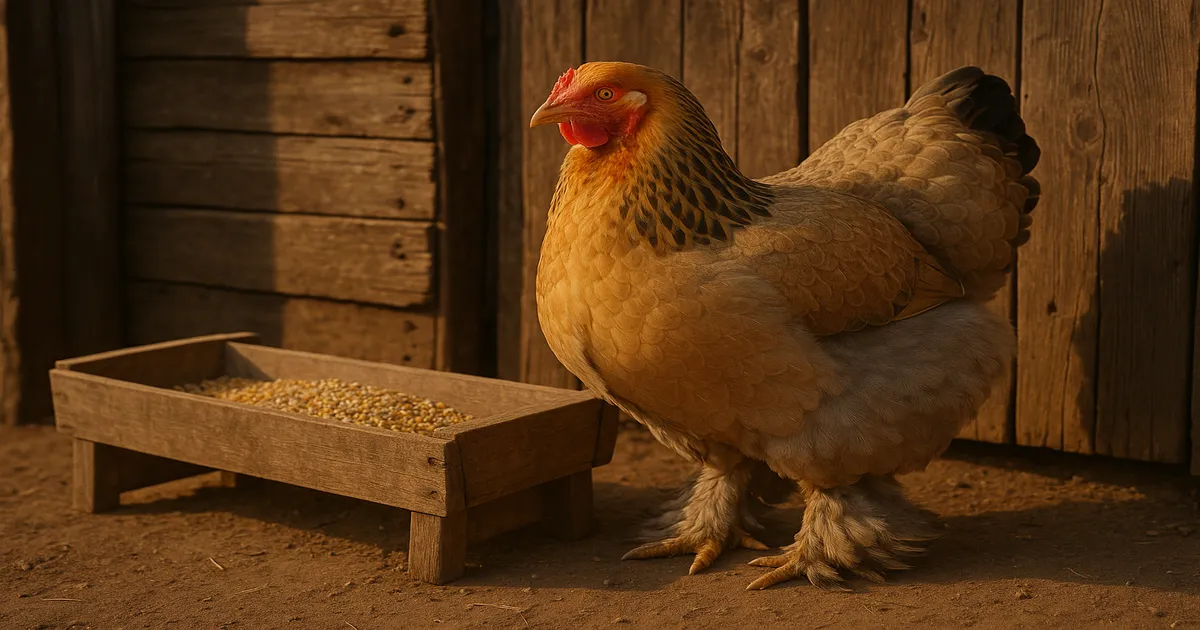
Quick Answer: To feed Brahma chickens correctly, match feed to their life stage — chick starter (18–20% protein) for the first 8 weeks, grower feed (16–18%) through 18–24 weeks, then layer pellets (15–17%) once they begin laying. Adult hens eat 6–8 oz of feed per day; roosters need 8–10 oz. Always offer free-choice oyster shell for laying hens, insoluble grit for all birds, and unlimited fresh water. Brahmas are large, heavily feathered birds that eat more than most breeds and have specific nutritional needs at every stage of life.
Understanding Brahma Chickens and Their Nutritional Needs
Brahmas — sometimes called the “King of All Poultry” — are one of the largest chicken breeds you can keep in a backyard flock. Roosters tip the scales at 10–12 lbs and hens at 8–10 lbs, with a broad chest, upright carriage, and dense feathering that runs all the way down to their feet. Developed in the United States from large fowl imported from India and China, they served as the country’s primary meat breed from roughly 1850 to 1930. Today they’re prized as dual-purpose birds that lay brown eggs reliably through winter — a trait most lightweight breeds can’t match.
Why Brahmas Eat More Than Average Chickens
Sheer body mass is the main driver. Where a lightweight layer like a Leghorn might eat 4–5 oz of feed per day, a Brahma hen routinely needs 6–8 oz just to maintain her weight and keep laying. More mass means more calories burned — it’s that straightforward. Budget for it before you bring this breed home.
How Dense Plumage Affects Protein Needs
Feathers are made of keratin, a protein. Brahmas carry significantly more feather mass than clean-legged breeds, and their feathered feet and shanks require a steady protein supply to stay in good condition. During the annual molt, that demand spikes. Too little protein shows up quickly: slow feather regrowth, dull plumage, feather pecking among flockmates, and a noticeable drop in egg production.
Slow Maturity and Your Feed Budget
Most Brahma pullets don’t start laying until 6–8 months of age, and some Dark Brahmas hold out until 9 months. That’s a longer stretch on grower feed before you ever see an egg — plan for it. The payoff is a hen that often keeps producing brown eggs through October to February, when many other breeds have slowed to a crawl.
How to Feed Brahma Chickens at Every Life Stage
Chicks (0–8 Weeks): Chick Starter Feed
Start every Brahma chick on a chick starter with 18–20% protein. Medicated starter containing amprolium is a smart choice — coccidiosis is the leading killer of young chicks, and Brahmas’ slower development keeps them in the vulnerable window a little longer than faster-maturing breeds. Unmedicated starter works fine if your chicks were vaccinated for Marek’s disease at the hatchery, but don’t use medicated feed alongside a coccidiosis vaccine, as the amprolium will undermine it.
Keep the brooder dry. Wet bedding combined with Brahma chicks’ early foot feathering is a reliable recipe for pasty butt and bacterial infections. A quality brooder setup with good ventilation makes a real difference in those first weeks.
Growers (8–18 Weeks): Grower and Developer Feed
At 8 weeks, transition to a grower or developer feed at 16–18% protein. The lower calcium level in grower feed is critical — young birds’ kidneys can’t handle the calcium load in layer feed, and switching too early causes real, lasting damage. Don’t rush it just because a pullet is getting big.
Pre-Lay Pullets (18–24 Weeks): Holding on Grower Feed
Brahma pullets are still maturing at 18 weeks, so stay on grower feed or a flock raiser (15–16% protein) through this stage. Watch for physical signs that laying is approaching: a deepening red comb and wattles, and the classic squatting behavior when you reach down toward them. Only then should you make the switch to layer feed.
Laying Hens (24+ Weeks): Layer Pellets or Crumbles
Once your Brahma hens are actively laying, move to layer pellets or crumbles at 15–17% protein. Pellets are the better choice for this breed specifically — crumbles and mash create more moisture around the feeder, which mats feathered feet and raises the risk of frostbite and infection in cold weather. Offer oyster shell free-choice in a separate dish from the first day of laying.
If you keep a mixed flock that includes roosters or non-laying birds, a flock raiser at 18–20% protein is a cleaner solution — just supplement calcium separately for your laying hens.
Molting Brahmas: Boosting Protein for Feather Regrowth
Molt typically hits in late summer or early fall. Temporarily bump protein to 18–20% by switching to a higher-protein feed or adding approved supplements:
- Black soldier fly larvae (BSFL): ~40% protein by dry weight — the most efficient molt supplement available
- Dried mealworms: ~50% protein; treat quantities only, not a staple
- Black oil sunflower seeds: ~16% protein with healthy fats that support feather sheen
- Canned fish (no salt added): sardines or mackerel provide a solid protein and omega-3 boost
Cut back on low-nutrition treats during molt. Every bite counts when your bird is regrowing a full coat of feathers — and birds going into winter need to finish that process before cold weather arrives.
Raising Brahmas for Meat: Finisher Feed
If you’re raising Brahmas for the table, switch to a broiler or finisher feed at 18–22% protein in the final weeks before processing. Their large frame fills out beautifully with proper finishing nutrition, which is exactly why they dominated the American meat market for nearly a century.
How Much Feed Do Brahma Chickens Need Per Day?
- Hens: 6–8 oz (170–225 g) per day
- Roosters: 8–10 oz (225–285 g) per day
Free-choice feeding — keeping feed available at all times — is the standard approach and works well for most backyard flocks. It reduces stress and supports consistent egg production. Twice-daily scheduled feeding (morning and late afternoon) is worth considering if you want to monitor consumption closely; a bird that suddenly ignores the morning feed is often the first sign something is wrong. For breeding birds prone to obesity, limiting access to 8–10 hours per day can help manage weight without compromising nutrition.
Choosing the Right Feeder
Hanging feeders or elevated trough-style feeders work best for Brahmas. Set the feeder at back-height — roughly level with the bird’s back — to prevent scratching feed onto the ground and, more importantly, to keep feathered feet out of spilled feed. Wet or soiled feet are a persistent problem with this breed. Avoid wet mash entirely; it mats foot feathering quickly and creates conditions ripe for frostbite and bacterial infection.
Calcium, Grit, and Supplements for Brahma Hens
Calcium for Laying Hens
A laying hen needs 4–5 grams of calcium per day to produce a strong eggshell. Brahma hens lay large-to-extra-large brown eggs, which demand more calcium per egg than smaller breeds. Layer feed provides a baseline, but free-choice supplementation is the safety net.
Offer oyster shell in a separate dish — never mixed into the feed — so hens can self-regulate. They know when they need it. Crushed eggshells are a cost-free alternative: bake them at 250°F for 20 minutes to kill pathogens, crush them finely so they don’t resemble whole eggs (which can encourage egg eating), and offer them the same way.
Never offer oyster shell to chicks, growers, or roosters. Excess calcium causes irreversible kidney damage in non-laying birds.
Insoluble Grit
Grit and oyster shell serve completely different purposes. Oyster shell provides calcium. Grit — made from granite or flint — sits in the gizzard and physically grinds food. Without it, birds eating anything beyond commercial pellets can’t digest properly. Free-ranging Brahmas usually pick up enough grit naturally; confined birds need it offered free-choice in its own dish. Match grit size to age: fine for 0–8 weeks, medium for 8–16 weeks, coarse for 16 weeks and up.
Apple Cider Vinegar and Probiotics
Adding apple cider vinegar (ACV) at 1 tablespoon per gallon of water supports gut health and helps control algae in waterers. Use it in plastic or stainless steel containers only — ACV corrodes galvanized metal and leaches zinc into the water, which is toxic to chickens. Probiotic supplements and fermented feed are solid options for supporting digestive health, especially after antibiotics or during periods of stress.
Best Treats for Brahma Chickens (and What to Avoid)
The 10% Treat Rule
For a Brahma hen eating 7 oz of feed per day, treats max out at roughly 0.7 oz (about 20 grams) — a small handful. Treats that push past 10% of the diet dilute protein and calcium intake, which shows up as softer eggshells, slower feather regrowth, and reduced laying over time.
Safe treats:
- Leafy greens (kale, spinach, Swiss chard): vitamins A and K; a few times a week is plenty
- Pumpkin and pumpkin seeds: seeds have mild anti-parasitic properties; a good fall treat
- Berries (blueberries, strawberries): antioxidants; feed sparingly due to sugar content
- Cooked or scrambled eggs: excellent molt protein boost
- Plain yogurt or kefir: 1–2 tablespoons per bird for a probiotic hit
- Scratch grains: digesting scratch generates body heat, making it a smart evening treat in winter
Foods to avoid:
- Avocado (flesh, skin, and pit): contains persin, which is toxic to poultry
- Raw or dried beans: contain hemagglutinin, a natural toxin; cooked beans are safe
- Chocolate and caffeine: both toxic to chickens
- Salty foods: chickens have poor sodium tolerance; excess salt damages kidneys
- Moldy or spoiled food: mycotoxins can cause serious illness and death
- Large amounts of onion or garlic: can cause hemolytic anemia in quantity
- Excess citrus: may reduce calcium absorption and irritate the digestive tract
Water Requirements and Seasonal Feeding Tips
How Much Water Brahmas Need
Under normal conditions, Brahmas drink 1–2 pints (0.5–1 liter) per day. Above 90°F (32°C), that doubles. A bird that can’t access water stops eating within hours and can stop laying shortly after — hydration and feed intake are directly linked.
Change water daily and scrub waterers weekly. Nipple waterers or elevated founts keep Brahmas’ feathered feet out of the water source, which matters enormously for this breed. (RentACoop Automatic Chicken Waterer) Feathered feet that stay wet become a breeding ground for bacteria and scaly leg mites.
In climates that drop below freezing, a heated waterer base is non-negotiable. Breaking ice twice a day is not a reliable system — you will miss a morning, and your flock will go hours without water in the coldest part of winter.
Summer: Managing Heat Stress
Above 90°F, Brahmas’ appetite drops and egg production can fall 20–30%. Their dense plumage makes heat stress a genuine concern. Feed in the cooler morning hours, refresh water frequently, and consider electrolyte supplements during heat waves to help birds recover faster.
Winter: Supporting Cold-Weather Laying
This is where Brahmas earn their keep. Their cold-hardy build and winter-laying tendency make them genuinely valuable flock members from October through February. Keep feed available at all times, keep the waterer thawed, and toss a cup of scratch into the coop an hour before lights out on cold nights — the heat generated by digesting scratch helps birds stay warm through the night. Supplemental lighting at 14–16 hours per day can help maintain laying through the shortest days if you choose to use it.
Feeding Broody Brahma Hens
Broody Brahmas are devoted sitters — sometimes too devoted. A hen can go many hours without eating or drinking if left unchecked. Verify daily that she’s getting off the nest to eat and drink. If she isn’t, place a small feeder and waterer close to the nest box. Broody hens have elevated nutritional needs, so make sure what she does eat is quality feed, not just scratch or treats.
Frequently Asked Questions About How to Feed Brahma Chickens
How much feed does a Brahma chicken need per day?
Adult Brahma hens eat 6–8 oz (170–225 g) of feed per day; roosters eat 8–10 oz (225–285 g). Both figures are significantly higher than lighter breeds, which typically average 4–5 oz per day. Their large body mass and heavy plumage drive the higher caloric demand.
When should I switch Brahma pullets from grower to layer feed?
Wait for clear signs of approaching lay — a deepening red comb and wattles, squatting behavior, or the first egg itself. For most Brahmas this happens between 6–9 months of age. Switching too early exposes developing kidneys to excess calcium and causes lasting damage.
Do Brahma chickens need oyster shell?
Yes — once they begin laying. Offer oyster shell free-choice in a separate dish so hens can self-regulate. Brahma hens produce large-to-extra-large eggs and need 4–5 grams of calcium daily for strong shells. Do not offer oyster shell to chicks, growers, or roosters, as excess calcium harms non-laying birds.
What color eggs do Brahma chickens lay?
Brahmas lay brown eggs, typically in the large-to-extra-large range. They are not prolific layers by modern standards — expect roughly 3–4 eggs per week — but their tendency to lay through winter makes them a reliable year-round contributor to a backyard flock.
What treats are safe for Brahma chickens?
Safe options include leafy greens, pumpkin seeds, berries, cooked eggs, plain yogurt or kefir, and scratch grains in winter. Keep all treats under 10% of the daily diet — about 0.7 oz (20 g) for a typical Brahma hen. Avoid avocado, raw beans, chocolate, salty foods, moldy scraps, and large amounts of onion or citrus.