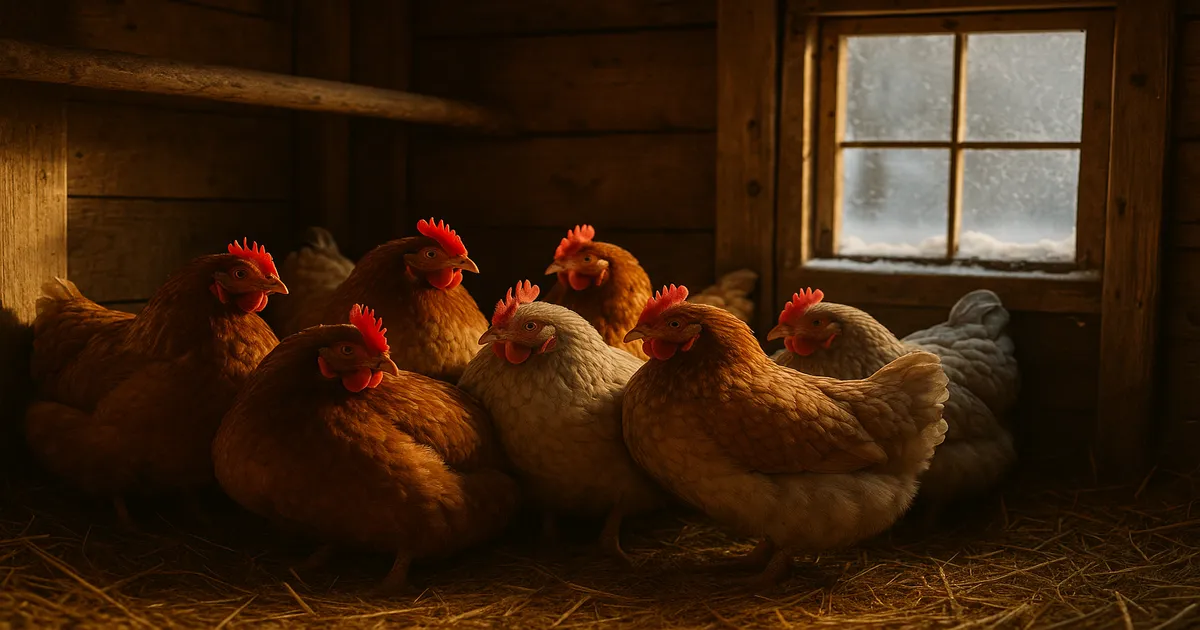
Quick Answer: To keep chickens warm during winter, focus on five things: choose cold-hardy breeds with small, low-profile combs, build a dry and well-ventilated coop, use the deep litter method for passive floor heat, increase feed rations slightly, and protect combs and wattles from frostbite. Most healthy cold-hardy chickens don’t need a heat lamp — the right housing does the heavy lifting.
Knowing how to keep chickens warm during winter is less about cranking up the heat and more about working with your birds’ natural biology. Chickens are remarkably tough animals. Given a dry, draft-free space and enough calories, breeds like the Wyandotte or Barred Plymouth Rock can handle temperatures well below freezing without much trouble.
This guide covers everything from breed selection and coop setup to winter feeding and frostbite prevention. Whether you’re prepping for your first winter or troubleshooting problems in an established flock, there’s something here for you.
Best Cold-Hardy Chicken Breeds for Winter
Top Cold-Hardy Breeds and What Makes Them Winter-Ready
Breed choice is your single best investment in winter chicken keeping. Large, heavily feathered birds with compact combs are built for the cold. Here are the standouts:
| Breed | Eggs/Week | Eggs/Year | Egg Color | Comb Type | Cold Tolerance |
|---|---|---|---|---|---|
| Rhode Island Red | 5–6 | 250–300 | Brown | Single | Good |
| Buff Orpington | 3–4 | 175–200 | Light Brown | Single | Excellent |
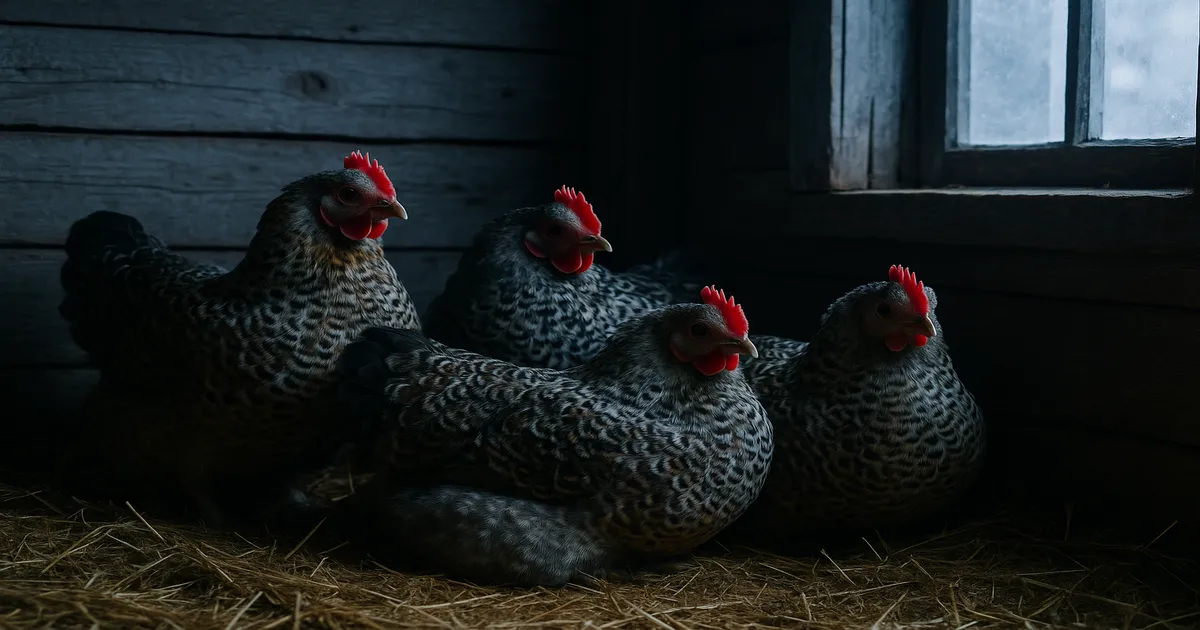
| Barred Plymouth Rock | 4–5 | 200–280 | Brown | Single | Excellent |
| Black Australorp | 5–6 | 250–300 | Light Brown | Single | Excellent |
| Dominique | 3–4 | 180–230 | Brown | Rose | Excellent |
| Wyandotte | 4–5 | 200–240 | Brown | Rose | Excellent |
| Speckled Sussex | 4–5 | 200–250 | Light Brown | Single | Very Good |
| Chantecler | 3–4 | 180–220 | White/Tinted | Cushion | Superior |
The Chantecler is the gold standard for extreme cold — a Canadian breed developed specifically for Quebec winters, with a nearly flat cushion comb and dense underfeathering. The Buff Orpington brings exceptional fluffiness that traps body heat effectively. Black Australorps and Rhode Island Reds are reliable winter layers with calm temperaments that make confinement easier on everyone.
Comb Types and Frostbite Risk: Rose, Pea, and Cushion vs. Single Comb
The taller and more upright a comb, the more exposed it is to freezing air. Here’s a quick ranking from highest to lowest frostbite risk:
- Single comb — tall, pointed tips; highest risk (Leghorn, Rhode Island Red)
- Rose comb — flat, low-profile; much lower risk (Wyandotte, Dominique)
- Pea comb — three small ridges; excellent cold tolerance (Ameraucana, Buckeye)
- Cushion comb — nearly flat; best option for extreme cold (Chantecler)
- Walnut comb — compact and bumpy; good cold tolerance (Silkie)
Even single-combed breeds like Rhode Island Reds do fine in winter with proper coop management and a little petroleum jelly before extreme cold snaps.
Breeds to Avoid or Monitor Closely in Cold Climates
Some breeds genuinely struggle when temperatures drop. Leghorns have large, floppy single combs and lean Mediterranean frames that lose heat quickly. Silkies look fluffy, but their unique feathering absorbs moisture instead of repelling it, which becomes a real problem in damp winter conditions. Polish hens have large crests that collect ice and snow. Seramas are a tropical breed that can struggle below 40°F (4°C) and really need supplemental heat.
Flighty, active breeds also become stressed during long periods of confinement, which can trigger pecking and feather-pulling. If your birds are going to spend weeks in a run, docile dual-purpose breeds are far easier to manage.
Winter Coop Setup: How to Keep Chickens Warm Without a Heat Lamp
How Much Space Do Chickens Need in Winter?
The minimum is 4 sq ft per bird inside the coop, but in winter — when birds spend far more time confined — aim for 6–8 sq ft per bird. Crowding is the leading cause of ammonia buildup, disease spread, and aggressive pecking in cold months. If you’re on the fence about flock size, winter is when you’ll regret having too many birds in a small space.
For outdoor runs, 10 sq ft per bird is the minimum; 15–20 sq ft is much better for flocks that can’t free-range in deep snow.
Ventilation vs. Drafts: Keep the Vents Open
This is the most misunderstood aspect of winter chicken keeping. Cold air is not your enemy — moisture and ammonia are. A flock of hens exhales a surprising amount of water vapor overnight. If that moisture has nowhere to go, it condenses on walls and feathers, dramatically increasing frostbite and respiratory disease risk.
The rule: vents stay open, drafts get blocked. Place vents high on the walls or in the roofline — above roosting birds — so cold air doesn’t blow directly on them. Aim for at least 1 sq ft of ventilation per 10 sq ft of coop floor. Keep humidity below 50–60%; anything above 70% is asking for trouble. If you smell ammonia or see condensation on the windows, you need more airflow, not less.
Insulating Your Coop Without Sealing It Shut
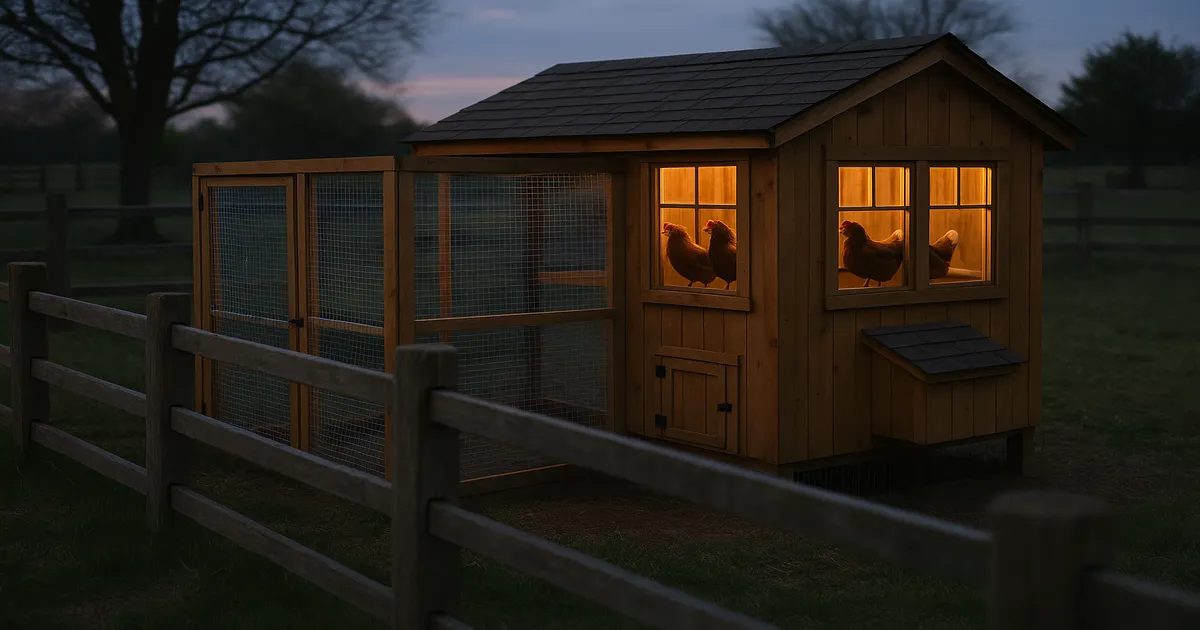
Insulation helps maintain a stable temperature, not necessarily a warm one. The goal is keeping the interior above freezing (32°F / 0°C) using your birds’ own body heat. Fiberglass batts work well in wall cavities; rigid foam board is another solid option, but cover it with plywood so birds can’t peck it apart. Insulate walls, ceiling, and floor — but never seal the coop completely. Insulation and ventilation work together, not against each other.
The Deep Litter Method: Free Heat From Your Coop Floor
Instead of cleaning out bedding every week, add fresh pine shavings on top of existing litter and let it build up to 6–12 inches over the course of the winter. Microbial decomposition in the lower layers generates real heat — enough to raise floor temperature by 5–10°F (3–6°C) — and the thick layer also insulates against a cold floor.
Turn the litter occasionally to keep it aerated, and make sure ventilation is adequate to handle the extra moisture the decomposition process produces. A properly maintained deep litter bed shouldn’t smell. If it does, add dry shavings and improve airflow.
Roost Bar Design to Protect Feet From Frostbite
Flat 2×4 lumber installed wide-side-up is the best roost bar material for winter. It lets hens sit flat-footed, covering their toes with their breast feathers — exactly how they’re designed to stay warm. A few specs to get right:
- 8–12 inches of linear space per bird (12 inches preferred in cold climates, since birds fluff up)
- 18–36 inches off the ground — high enough to feel safe, low enough to dismount safely on cold mornings
- Higher than nesting boxes — otherwise hens will sleep in the boxes, creating soiled eggs and extra moisture
Heating, Water, and Winter Essentials
Do Chickens Need Supplemental Heat?
Properly housed cold-hardy breeds can tolerate temperatures as low as 0°F (-18°C) as long as the coop is dry and draft-free. Their combined body heat, good insulation, and deep litter is usually enough to keep the interior above freezing. Adding artificial heat also prevents birds from naturally acclimating to cold — and that creates a real vulnerability if the power goes out on the coldest night of the year.
Heat lamps are the leading cause of chicken coop fires. Beyond the fire risk, they create extra moisture and leave your flock dangerously exposed during power outages. If you have a genuinely vulnerable bird — a recovering hen, a cold-sensitive breed, or a coop in an unusually exposed location — a flat panel radiant heater is a much safer choice. These mount to the wall or ceiling, don’t create fire risk from contact with bedding, and warm birds directly rather than heating the whole coop. Target 35–45°F (2–7°C) inside. Always use a GFCI outlet for any electrical equipment in the coop.
How to Keep Chicken Water From Freezing
Hens without water for more than 8 hours will drop egg production noticeably. Your options, in order of reliability:
- Heated water base under a standard metal waterer — most reliable, low wattage (60–150 watts)
- Purpose-built heated waterer with a built-in thermostat
- Two-waterer rotation — bring the frozen one inside to thaw while the second is in use; check at least twice daily
Winter Feeding: What and How Much to Feed Chickens in Cold Weather
Increasing Feed Rations for Cold-Weather Energy
Chickens burn more calories staying warm, so expect feed consumption to rise 10–20% in cold weather. The baseline is about ¼ lb (113 grams) of layer feed per hen per day in summer — bump that up and watch your feeders closely. Running out of feed overnight in January is a real problem.
Evening Scratch Grains: A Natural Overnight Warmer
Scratch grains — cracked corn, wheat, milo — are high in carbohydrates and generate body heat as they’re digested. Offering 1–2 tablespoons per bird about an hour before roosting gives hens a gentle metabolic boost that helps them stay warm overnight. Think of it as their winter hot water bottle.
The catch: scratch is only 8–10% protein, so keep it under 10% of total diet. It’s a treat, not a feed replacement.
Boosting Protein During Molt and Winter Stress
Feathers are roughly 85% protein. A hen going through molt in October while also dealing with cold and short days has enormous protein demands. Switch your flock to a 20–22% protein feed during heavy molt, and consider supplementing with:
- Dried mealworms — 50–53% protein; limit to 1 tablespoon per bird per day
- Black soldier fly larvae — 40–45% protein; an excellent treat option
- Black oil sunflower seeds — around 16% protein plus high fat for cold-weather energy; 1 tablespoon per bird per day
Safe Winter Treats and Foods to Avoid
Good winter treats that double as boredom busters:
- Warm plain oatmeal on cold mornings
- Cooked squash or pumpkin (seeds included)
- A whole cabbage hung at head height to peck at
- Cooked sweet potato
- Dried oregano and thyme
Avoid: avocado (toxic to chickens), raw potato skins (solanine), chocolate, moldy feed, and salty foods.
Grit and Calcium in Winter
When the ground is frozen solid, hens can’t pick up natural grit. Without insoluble grit, they can’t properly grind feed in the gizzard. Keep a separate container of free-choice granite or flint grit available at all times through winter — it’s cheap and easy to overlook.
Calcium is just as important in winter for bone density maintenance, even when production slows. Offer free-choice oyster shell in its own dish, separate from grit.
Egg Production in Winter: What to Expect
Why Hens Slow Down or Stop Laying
Egg production is driven by light. Hens need 14–16 hours of light per day for peak laying, and natural winter daylight in most of North America drops to 8–10 hours. That’s enough to trigger a 30–80% production drop in many hens, and some will stop completely. It’s not a malfunction — it’s biology.
Molt typically runs September through November and lasts 8–16 weeks. During that time, hens redirect protein from egg production to feather regrowth. When you combine molt with short days, near-zero production from October through January is common. High-protein feed (20–22%) accelerates feather regrowth and gets hens back to laying sooner.
Using Supplemental Lighting to Maintain Winter Egg Production
If consistent egg production through winter matters to you, supplemental lighting works reliably. Here’s how to do it right:
- Use a warm white LED bulb (40–60 watt equivalent) on a timer
- Add light in the morning (pre-dawn), not the evening — abrupt darkness at night can leave birds caught off-roost
- Increase light duration gradually, no more than 15 minutes per week, until you reach 14–16 total hours
- Keep the schedule consistent — irregular lighting stresses the flock
Many experienced keepers let older hens take a natural winter break and rely on first-year pullets — who often lay through their first winter without any intervention — to keep eggs coming in.
Preventing Frostbite and Cold-Weather Health Problems
How to Identify and Treat Frostbite in Chickens
Frostbite shows up as white, grey, or eventually black discoloration on combs, wattles, and toes. Early-stage frostbite (white or grey) can recover if the bird is brought into a warmer environment and the affected tissue is gently warmed — never rubbed. Black discoloration indicates tissue death; a vet visit is warranted.
The best treatment is prevention: a dry coop with good ventilation and wide roost bars that let hens cover their feet.
Applying Petroleum Jelly to Combs and Wattles
Before an extreme cold snap, apply a thin layer of plain petroleum jelly or a beeswax-based balm to your birds’ combs and wattles. It creates a barrier against wind and cold and takes about 30 seconds per bird. This is especially worth doing for single-combed breeds. (Rooster Booster Vita-Charge Liquid Gold)
Respiratory Disease in Damp Winter Coops
High humidity — above 70% — dramatically increases the risk of respiratory illness. Signs include rattling or wheezing breath, nasal discharge, lethargy, and puffed-up posture. If you see these symptoms, isolate the affected bird and consult a vet. The root cause is almost always inadequate ventilation, so address the housing before the illness spreads.
Monitoring Body Condition Through Winter
Make a habit of picking up each hen periodically and feeling her keel bone (breastbone). You should feel a small amount of flesh on either side. If the keel feels sharp and prominent, she’s losing weight and needs more feed. Broody hens in winter are especially vulnerable and should be checked and encouraged to eat and drink regularly.
Frequently Asked Questions About Keeping Chickens Warm in Winter
At what temperature is it too cold for chickens?
Most cold-hardy breeds can tolerate temperatures as low as 0°F (-18°C) if the coop is dry and draft-free. Mediterranean breeds like Leghorns and tropical breeds like Seramas start to struggle below 20–40°F (-7 to 4°C). The temperature inside the coop matters more than the outdoor air temperature — a well-insulated, well-ventilated coop will stay significantly warmer than outside.
Do chickens need a heat lamp in winter?
No — cold-hardy breeds in a properly built coop do not need a heat lamp. Heat lamps are the leading cause of coop fires, prevent birds from naturally acclimating to cold, and leave your flock vulnerable during power outages. If you need supplemental heat for a vulnerable bird or breed, a flat panel radiant heater targeting 35–45°F (2–7°C) is a much safer option.
How do I keep my chicken coop warm without electricity?
Focus on the deep litter method (6–12 inches of pine shavings generates microbial heat), good insulation on walls and ceiling, and a draft-free but ventilated design. A flock of hens generates substantial body heat — the goal is to trap it without trapping moisture. Choose cold-hardy breeds and make sure roost bars are wide enough for birds to sit flat-footed and cover their toes.
What do you feed chickens in winter to keep them warm?
Keep high-quality layer feed available at all times and expect to use 10–20% more than in summer. Offer 1–2 tablespoons of scratch grains per bird in the evening — digestion generates warmth overnight. During molt or extreme cold, boost protein with dried mealworms or black soldier fly larvae. Always provide free-choice grit and oyster shell separately.
How do I prevent frostbite on my chickens’ combs?
Keep the coop dry and well-ventilated — humidity is the main frostbite trigger, not cold alone. Install wide, flat roost bars so hens can cover their toes with their feathers. Before extreme cold snaps, apply a thin layer of petroleum jelly to combs and wattles, especially on single-combed breeds. If you see white or grey discoloration, warm the tissue gently and monitor closely.